

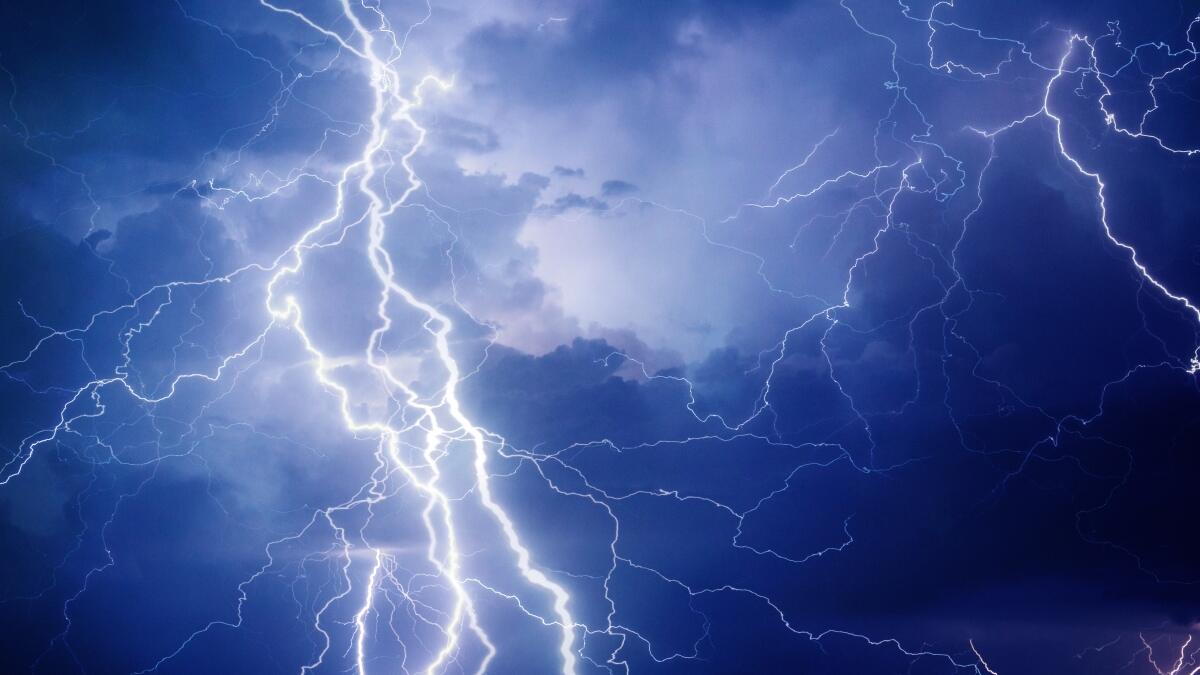
A decade-old thunderstorm that stretched across the Great Plains, from eastern Texas to nearly Kansas City—spanning 515 miles—has set a new world record for lightning, as discovered through an advanced global network of antennas located above Earth's surface.
In a recent study led by scientists at Arizona State University (ASU) and published in the Bulletin of the American Meteorological Society, the team re-examined satellite data from October 2017. They identified an astonishing megaflash extending 38 miles longer than the previous record set in April 2020.
From Antennas on Earth to Lightning Mappers in Orbit
Traditionally, lightning networks have relied on ground-based antenna arrays scattered across regions to locate strikes. However, this megaflash could only be fully mapped using space-based sensors. NOAA’s GOES-16 satellite, the first geostationary satellite equipped with a lightning mapper, joins similar instruments operated by Europe and China, enabling the detection of lightning from orbit.
These lightning mappers function like ultra-precise antennas in space. Each time a flash occurs, the sensors record its origin to the millisecond and trace its horizontal extent across continents.
Weaving Together Petabytes of Flash Data
The volume of data is staggering. GOES-16 detects about one million flashes each day, with each flash logged by time, location, and geographic extent. This massive stream of data must be continuously processed to identify the rare megaflashes, which are defined as exceeding approximately 100 kilometers (60 miles) in length.
Michael Peterson at Georgia Tech, the lead author of the published report, explains that modern data-processing techniques are essential. They sift through the vast number of ordinary lightning flashes, connecting fragmented pulses that belong to the same extended stroke. Only then can researchers reconstruct the full scale of these flashes, which can span hundreds of miles.
Networks of Antennas at Multiple Scales
Imagine dozens of satellite antennas, including GOES-16 in geostationary orbit and its counterparts operated by European and Chinese agencies. Together, they create a continuous, overlapping network of detection. Because these satellites cover most storm regions globally, even sprawling flashes can be captured in great detail.
While traditional ground networks are still useful for finer localization and cross-validation, the real breakthrough lies in the ability to measure continent-sized flashes from space.
Why It Matters—in Curiosity and Science
Fewer than 1% of thunderstorms produce megaflashes, which typically develop over more than 14 hours and cover areas the size of New Jersey. Capturing these rare phenomena allows scientists to explore storm dynamics and extreme weather from a new perspective.
Cerveny, a rapporteur for weather and climate extremes at the World Meteorological Organization, states, “It is likely that even greater extremes still exist.” As satellite systems advance and data archives grow, our ability to detect increasingly longer lightning events continues to improve.
In Summary
Satellites act as a network of space-based antennas, capturing lightning with millisecond precision and continental coverage. Advanced data-processing pipelines analyze millions of flash events each day, enabling the reconstruction of rare megaflashes that stretch across hundreds of miles. Ground networks still play a role, but the true advancement lies in the synergy of multiple satellites, assisting researchers in finding and analyzing the planet’s most extreme electrical events.
ASU’s work illustrates how innovations in detection and processing are redefining the limits of what we thought lightning could achieve—stretching across nations.