

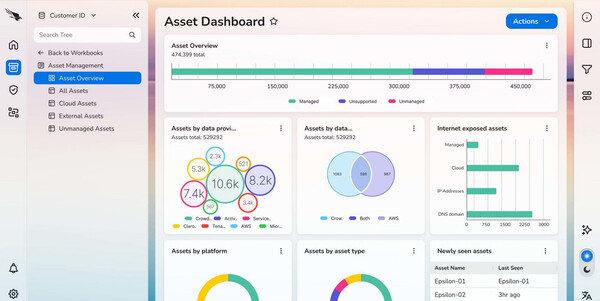
This week at Black Hat USA 2025, CrowdStrike introduced Signal, a groundbreaking self-learning detection engine that represents a significant advancement in AI-driven cybersecurity. Positioned to transform how organizations identify sophisticated threats, Signal aims to detect stealthy intrusions long before they escalate, generating considerable excitement within security circles.
Understanding Signal: Learning normal behavior and spotting subtle anomalies
At the core of Signal is a series of statistical time-series models that continuously learn the normal behavior of each user, host, and process over time and across systems. Rather than relying on static rules, Signal adapts in real-time by detecting even the slightest deviations that could indicate malicious activity.
By correlating these low-signal events over time, Signal generates high-confidence leads grouped into sequences of suspicious actions that cut through the noise of regular activity. This capability enhances the speed of investigation and response, significantly reducing alert fatigue for security teams.
Identifying the invisible: Connecting the dots
While traditional tools may interpret isolated benign behaviors, Signal makes connections among them. It identifies the use of living-off-the-land tools, unusual process executions, or atypical temporary directory activity—activities that may appear harmless in isolation but form part of a larger, more concerning pattern over hours or days.
This layered, temporal intelligence transforms fragmented events into actionable threat leads, enabling defenders to act early, often well before any compromise becomes apparent.
CrowdStrike's cloud-native strength
Signal is integrated into the Falcon platform and supported by the CrowdStrike Security Cloud. It operates at an immense scale, analyzing billions of events in each customer environment daily, yet distills this information into a few high-fidelity leads that can be acted upon.
CrowdStrike’s AI-native architecture allows for swift deployment and effective detection from day one without the need for heavy agents or complex setups.
The role of supercomputing: Enhancing AI detection at scale
While Signal utilizes distributed cloud infrastructure, the development and ongoing refinement of these advanced behavioral models rely heavily on modern high-performance computing (HPC). Research indicates that cutting-edge AI systems—particularly those focused on anomaly detection and time-series learning—benefit immensely from being trained at scale on supercomputers equipped with tens of thousands of cores and GPU clusters.
In fields like gravitational-wave research and anomaly detection, AI models are trained on supercomputing resources utilizing thousands of GPUs, later optimized for swift inference across large datasets using specialized tools like NVIDIA TensorRT.
By developing and testing detection models on such powerful infrastructure, cybersecurity innovators can enhance engines like Signal to become faster, more accurate, and more adaptive, enabling them to manage billions of events in nearly real-time.
Why It Matters
The combination of AI and supercomputing creates a powerful feedback loop:
- Model Training at Scale: Utilizing HPC to identify subtle patterns and behaviors.
- Real-Time Inference at the Edge: Operating in production environments on lightweight Falcon agents, allowing for instant decision-making.
- Continuous Feedback: Models continuously update, learning new baselines as organizational environments evolve.
This synergy allows CrowdStrike to deliver a detection engine that is both intelligent and operationally efficient.
Looking forward: A safer cyber future
Signal represents a transformative step toward an AI-native, proactive defense strategy, one that anticipates stealthy threats rather than simply reacting to them. As adversaries employ increasingly sophisticated tactics to evade detection across time and systems, tools like Signal provide a promising defense, enabling security teams to recognize the early signs of an attack, piece together patterns, and respond rapidly.
In the future, continued progress in supercomputing and cloud AI will further empower detection engines to remain ahead of attackers, paving the way toward a future where cyber resilience is anchored in intelligence, scale, and speed.