

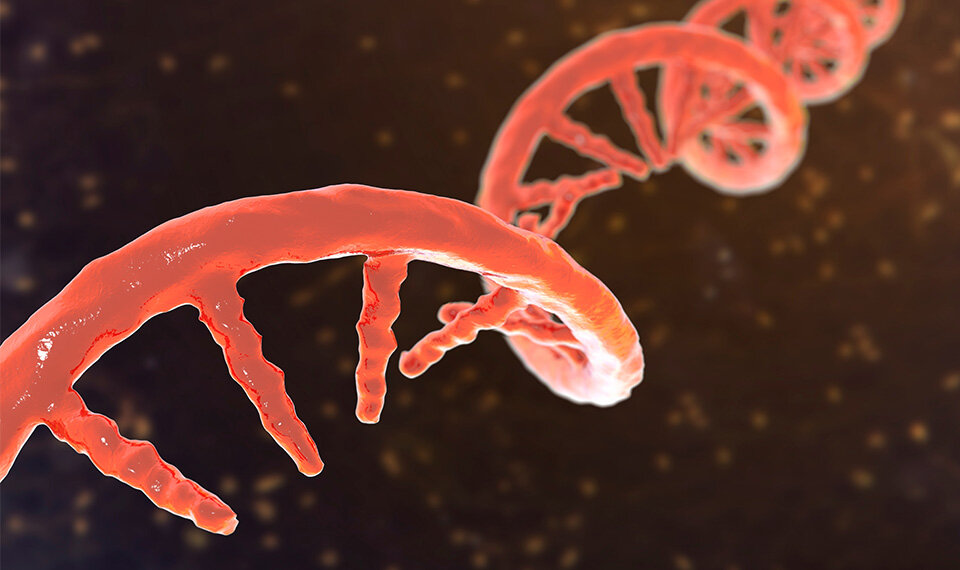
In a quietly riveting development, researchers at the Tokyo University of Science (TUS) have harnessed molecular dynamics simulations to unravel how RNA molecules fold. A new paper from Associate Professor Tadashi Ando’s team reports that they successfully simulated the folding of a broad library of RNA stem-loops with unprecedented accuracy.
Why This Matters
RNA isn’t just a messenger of genetic code; it folds into complex 3-D shapes (secondary & tertiary structures) that determine its function in cells. Understanding this folding is key to the design of RNA-based therapies. However, computationally modeling this process is extremely challenging, as it requires considering every atom, bond, solvent molecule, and timescale. This is where supercomputing comes in.
The team conducted large-scale molecular dynamics (MD) simulations, starting with completely unfolded RNA stem-loops (10–36 nucleotides). They employed two advanced computational components: the DESRES-RNA atomistic force field (refined for high-accuracy RNA modeling) and the GB-neck2 implicit solvent model, which treats the surrounding solvent as a continuous medium, accelerating the simulations.
Results: Out of 26 RNA molecules, 23 folded into their expected shapes. For simpler stem-loops (18 total), they achieved a root mean square deviation (RMSD) of < 2 Å for the stems and < 5 Å for the full molecule, closely matching experimental structures. Even some complex motifs with bulges and internal loops (5 of 8) folded correctly, revealing distinctive folding pathways.
While the article doesn't explicitly state this, the research needs more massively parallel computing, large memory footprints, and high-throughput sampling of molecular trajectories. The use of implicit solvent models (GB-neck2) helped make the problem tractable, though it remained computationally intensive. Given Japan's rich supercomputing history and high-end compute centers, Ando's team effectively applied this level of computing to a biomolecular-folding challenge.
This research establishes a reliable foundation for studying large-scale RNA conformational changes, a previously challenging area. Furthermore, it opens avenues for RNA-based drug design; accurate RNA folding simulations allow us to design molecules that target or mimic this folding.
Finally, it indicates a paradigm shift in supercomputing application, moving beyond raw power to employ smart methods, like force fields and solvent models, to optimize computational efficiency while maintaining accuracy.
Loop regions (parts of the RNA structure with internal loops or bulges) still showed lower accuracy (≈ 4 Å RMSD), indicating the models aren’t perfect yet. Implicit solvent models (GB-neck2) simplify the environment and accelerate simulations but might miss certain effects, such as how divalent cations (e.g., Mg²⁺) influence RNA structure. For supercomputing-scale applications, modeling even larger RNAs or including explicit solvent models will require significantly increased memory, compute time, and algorithmic complexity.
The Big Picture: Supercomputing → Biology → Therapies
The study used a combination of the DESRES-RNA atomistic force field and the GB-neck2 implicit solvent model to simulate 26 RNA stem-loops (10–36 nucleotides) from an unfolded state. They achieved folding success in 23/26 structures, with strong accuracy for many of them. The researchers explicitly mention that the use of an implicit solvent model (GB-neck2) is a compute-speed optimized because fewer explicit water molecules mean fewer total particles and, thus, less compute time.
Given the scale of the problem, simulating 26 RNA molecules using atomistic models starting from an unfolded state, even with an implicit solvent, here's a reasoned estimate: If each RNA simulation ran for tens to hundreds of nanoseconds of physical time, and accounting for simulation overhead, it would likely require hundreds to thousands of core-hours per RNA. Running these simulations in parallel on a mid-sized cluster (e.g., 100–1000 cores), the total wall-time could be anywhere from several days to a couple of weeks. While memory requirements per job might be moderate (a few tens of GB), the aggregate use across parallel jobs could easily reach hundreds of GB.
This work exemplifies the intersection of advanced computing and biology. The progression is clear: supercomputers, combined with refined algorithms, enable accurate simulations, paving the way for potential new medicines. This pipeline, once largely theoretical, is now entering practical application.