

At the bustling halls of the SC25 conference in St. Louis, thousands of high-performance computing (HPC) professionals gathered in America's Ballroom for what may become a pivotal moment in the evolution of digital life. Futurist and author Thomas Koulopoulos delivered a keynote titled "Gigatrends: The Exponential Forces Shaping Our Digital Future", and the tone was nothing short of electric. 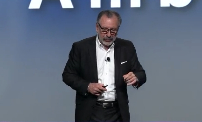
Koulopoulos opened with a challenge: the world is not merely moving forward, it is accelerating. From healthcare to workspaces, from the rise of digital selves to emergent trust frameworks, he mapped a future where computing is no longer a tool but a partner. "We're entering an era where the machine forest breathes alongside us," he said his phrase a metaphor for aligning human intent and computational systems.
He laid out three central pillars of change:
- Exponential connectivity and intelligence: As compute density and network reach expand, machines and humans will co-evolve. The keynote emphasized how existing architectures must shift from linear updates to fractal, self-optimising systems.
- Human-machine symbiosis: Beyond "augmented human," Koulopoulos depicted a world where the digital self (our data profile, our algorithmic twin) participates in decision-making, personal, corporate, societal.
- Trust as an infrastructure: He argued that in the upcoming "digital life" epoch, trust mechanisms (data governance, identity, transparency) will become as fundamental as power grids or fibre-optic networks.
When the slides lit up with a visualization of interconnected nodes representing human lives, devices, data flows, and decisions, the audience sat up. For many in the room, this was more than another HPC talk; it was an invitation to imagine themselves as builders of society's next operating system.
One memorable line: "If you're just scaling faster, you're not doing the job. You're slipping into the past at a higher velocity." This served as both a warning and a rallying cry for the HPC community gathered at SC25.
The keynote did more than inspire, it landed practical imperatives. Koulopoulos urged attendees to:
- rethink how HPC infrastructure supports not just simulation but intelligence-at-scale;
- design systems that are ethically transparent and resilient;
- treat data not as a trace but as a partner ecosystem that learns and gives back.
It resonated. As one attendee later remarked in the lobby, "I came expecting hardware specs and benchmarks; I left thinking about human destiny."
The message resonates deeply with the conference's mission: the annual ACM/IEEE Supercomputing Conference (SC) series brings together thousands of scientists, engineers, researchers, and developers working at the bleeding edge of compute, networking, storage, and analysis.
By choosing Koulopoulos as the keynote, SC25 clearly signalled that the conversation is shifting. The focus isn't just "what can we compute?" but "how should we live alongside our machines?" The keynote sets the tone for what promises to be a week where HPC meets philosophy, infrastructure meets intention, a perfect fit for the city of St. Louis and its spirit of innovation.
Final thought:
In an age of compute-saturation and data deluge, the real frontier is alignment: aligning machines with human values, aligning infrastructure with insight, aligning rapid change with timeless purpose. SC25's opening address made that frontier visible and invited us all to step into it.