

In STL, the high-performance computing world thrives on pushing limits, and this year’s SC25 conference delivered another leap forward, both on the show floor and across the wires of the legendary SCinet network.
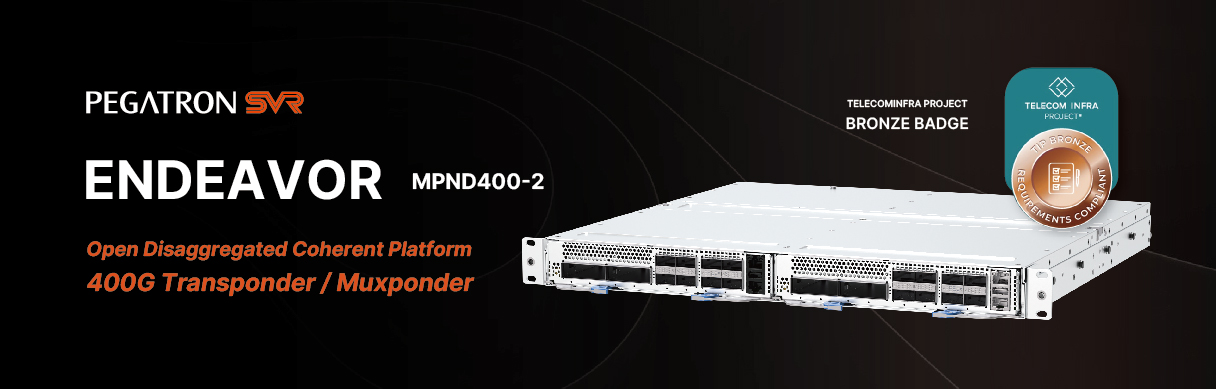
Pegatron, a global leader in electronics manufacturing, showcased its next-generation server roadmap, emphasizing the company’s vision for modular, power-efficient systems engineered for the AI-accelerated era. Today’s press release has highlighted a strategic expansion into advanced rack-scale design, with an emphasis on flexibility, field-replaceable modules, and full-stack energy optimization. But even that technical momentum was matched, if not eclipsed, by the sheer scale of the network beneath attendees’ feet.
SCinet Hits a New Threshold: 13.72 TB/s
SCinet, the volunteer-built engineering marvel that powers every Supercomputing conference, announced its highest throughput ever recorded: 13.72 terabytes per second (TB/s) for SC25.
To put this into perspective, SCinet’s wide-area network (WAN) backbone has grown at a pace few global networks can match:
- SC25 (St. Louis): 13.72 TB/s
- SC24 (Atlanta): 8.71 Tbps
- SC23 (Denver): 6.71 Tbps
- SC22: 5.01 Tbps
- SC19: 4.22 Tbps
Every year, SCinet is torn down and rebuilt by an army of volunteers of engineers, network architects, and researchers from around the world, who converge to create the fastest temporary network on Earth. Its sole mission: enable the bleeding-edge demos that define the HPC community.
As datasets balloon and GPU clusters grow hungrier by the day, SCinet’s growth isn’t a luxury; it’s a necessity.
Pegatron’s Modular Pivot: A Server for the AI Era
In its SC25 release, Pegatron detailed its next-gen server platform built around modularity, thermal efficiency, and rapid deployment, all themes dominating this year’s conference.
Key takeaways from Pegatron’s announcement include:
• Modular AI-ready infrastructure
Pegatron outlined blade-style compute modules designed to scale from traditional HPC to dense GPU and accelerator configurations.
Pegatron outlined blade-style compute modules designed to scale from traditional HPC to dense GPU and accelerator configurations.
• Energy-optimized design
The company emphasized new power-distribution and cooling architectures intended to support the surge of high-wattage AI accelerators without sacrificing stability or serviceability.
The company emphasized new power-distribution and cooling architectures intended to support the surge of high-wattage AI accelerators without sacrificing stability or serviceability.
• Manufacturing muscle
Leveraging Pegatron’s global supply chain, the company aims to support hyperscalers, enterprise AI builders, and research labs that need rapid, consistent deployment cycles as models grow more compute-intensive.
Pegatron’s SC25 presence signals its intent to be more than an OEM; it wants to shape the future of rack-scale AI infrastructure.
Why the Two Stories Intersect
SCinet’s explosive bandwidth growth and Pegatron’s hardware ambitions aren’t isolated trends, they’re parallel responses to the same fundamental shift: AI workloads are becoming the dominant driver of HPC system design.
Training runs now require:
- Uncompressed terabyte-scale dataset transfers
- Multi-site distributed training
- Real-time visualization pipelines
- Exascale-class telemetry
At SC25, the relationship between compute, cooling, networking, and manufacturing has never been more visible. Pegatron’s modular hardware approach pairs naturally with a world where SCinet-class networks will soon be the norm, not the exception.
A Future Built on Collaboration and Momentum
SCinet’s volunteers, the invisible heroes of the SC conference, have once again demonstrated what’s possible when the global HPC community collaborates without restraint.
Pegatron’s announcement adds another layer of optimism: that the companies powering AI and HPC infrastructure are evolving just as quickly as the workloads they support.
SC25 feels like a hinge moment. Faster networks. Smarter servers. Greener cooling systems. More modular racks. And an industry that’s learning to innovate at the pace of AI itself.
The bar has officially been raised. And judging by the energy on the SC25 floor, the community seems ready to clear it again next year.