

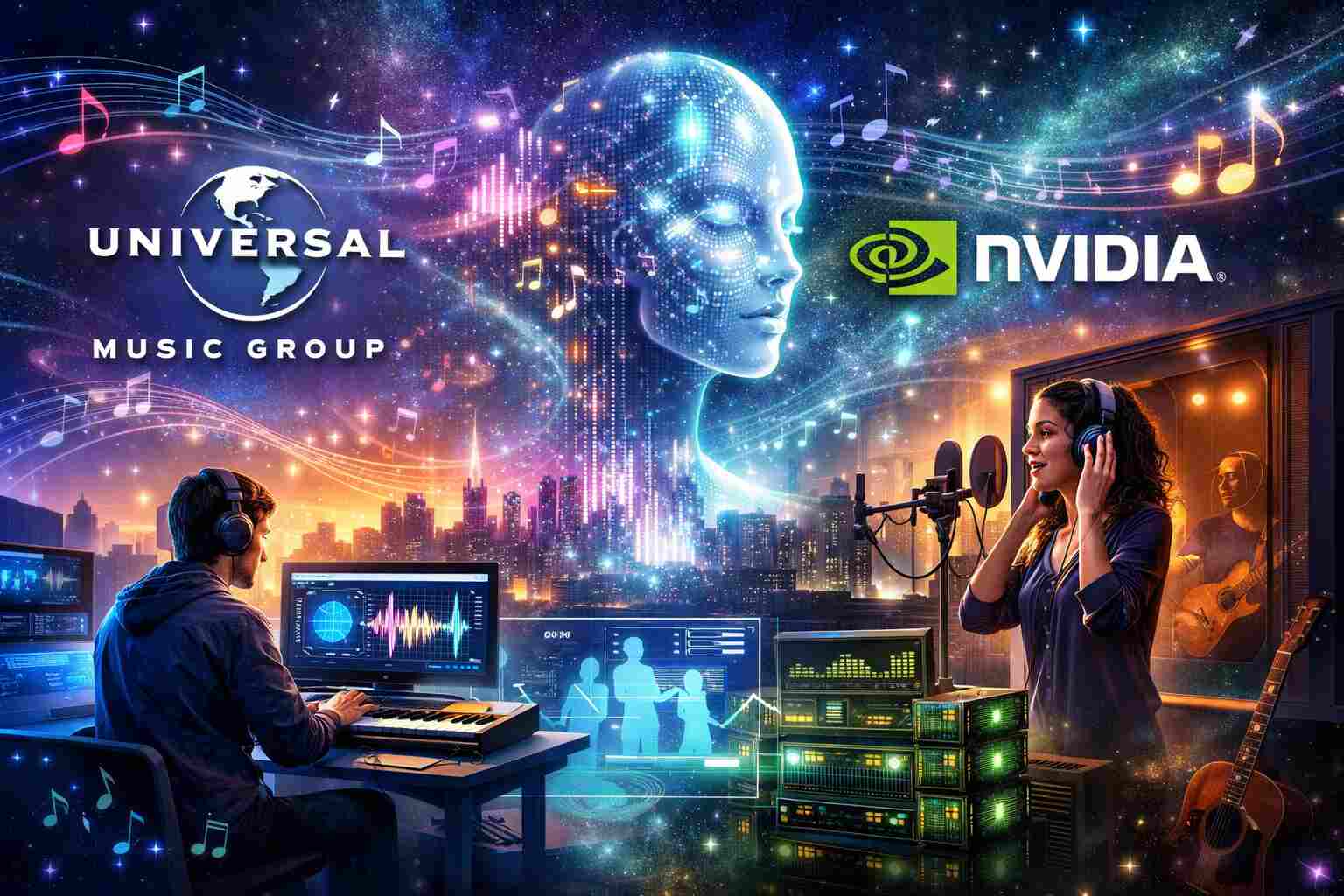
Amidst a sea of streaming services and algorithms, Universal Music Group (UMG) and NVIDIA are joining forces to revolutionize the way billions engage with music. No longer confined to passive listening, audiences can now participate in a more immersive, AI-driven musical landscape. For the supercomputing community, this collaboration marks a significant milestone: the fusion of artistic creativity and artificial intelligence on an unprecedented scale, made possible by extraordinary computational power.
Central to this partnership is NVIDIA AI infrastructure and the cutting-edge Music Flamingo model, an audio-language AI system crafted to interpret music with a depth of understanding once reserved for expert listeners and years of cultural context. Capable of analyzing tracks up to 15 minutes in length, Music Flamingo surpasses basic genre or tempo classifications. It explores harmony, structure, timbre, lyrics, emotional progression, and cultural significance, translating songs into a form that AI can process with genuine insight.
This isn't just a futuristic concept; it's a computational heavyweight challenge that relies on high-performance AI training and inference, the very domains where supercomputing shines. Training a model to parse millions of tracks with rich, expressive understanding demands massive parallel processing, optimized data pipelines, and cutting-edge GPU acceleration. NVIDIA AI infrastructure, the same underlying systems that power scientific simulations, large language models, and climate modeling, becomes the engine that unlocks this new musical intelligence.
Imagine a world where discovering music transcends playlist algorithms and popularity charts. With this collaboration, fans may one day navigate music libraries through conversational exploration, asking an AI to find tracks that match their mood, evoke the emotional depth of a favorite lyric, or reflect cultural moments they care about. Rather than passively consuming, listeners could engage with music as if exploring an intelligent, contextual universe of sound.
But the ambitions here extend beyond discovery. Fan engagement and creative tools are poised for transformation. Music Flamingo's outputs will help artists analyze and describe their own work with unprecedented depth, facilitating intimate connections with audiences and empowering creators to communicate their intentions in richer ways. UMG and NVIDIA are also establishing a dedicated artist incubator where musicians, songwriters, and producers collaborate with AI tools, co-designing workflows that preserve authenticity and originality rather than producing generic outputs often derided as AI slop.
What makes this partnership especially inspirational for the HPC and AI communities is how it marries computational innovation with cultural impact. The same architectures and algorithms that power weather forecasting, genomics, and materials discovery will help millions of music fans tear down the walls between creation and understanding. Supercomputers aren't just crunching numbers; they’re helping to amplify emotional resonance, cultural narrative, and human connection in the world’s most ubiquitous art form.
Critically, both Universal and NVIDIA emphasize responsible AI development, protecting artist rights, ensuring proper attribution, and embedding ethical principles into the technology stack. In an era when AI’s rapid rise has sparked debates about creativity, ownership, and fairness, this collaboration stands out for actively involving artists in shaping the very tools that will influence their craft and livelihood.
For SC Online readers, this story isn’t just about music; it’s about how AI and supercomputing can elevate human experience at scale. Here, cutting-edge GPU clusters and advanced neural architectures aren’t confined to laboratories; they’re weaving into the cultural fabric of everyday life, inviting billions of fans to connect with music in ways once thought impossible.
As this collaboration unfolds, it will be fascinating to watch how supercomputing continues to push boundaries not only in science and industry but also in art, emotion, and global cultural engagement. This isn't just a technological leap; it's a celebration of what happens when AI amplifies, rather than replaces, human creativity.