

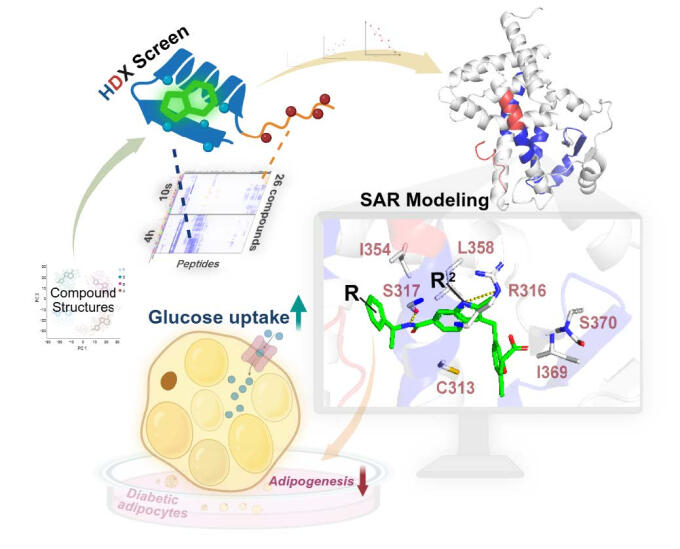
Showcasing the transformative impact of high-performance computing on biomedical research, scientists at The Herbert Wertheim UF Scripps Institute for Biomedical Innovation & Technology have leveraged the HiPerGator supercomputer to fast-track the discovery of new treatments for Type 2 diabetes. By employing advanced computational simulations, their research is overcoming some of the toughest challenges in drug design, reducing development timelines, and significantly improving predictive accuracy at the earliest stages.
Type 2 diabetes affects tens of millions of people worldwide and is characterized by the body’s reduced sensitivity to insulin, a hormone essential for glucose metabolism. Current treatment options, while effective for some patients, carry limitations and significant side effects, particularly for individuals with chronic kidney disease. Researchers led by molecular biologist Patrick Griffin, Ph.D., and his team set out to design compounds that improve insulin sensitivity by modulating a complex cellular protein known as PPAR gamma, a “master regulator” of fat cell and insulin metabolism that has long eluded safe, effective therapeutic targeting.
Crucially, the team integrated multiple technologies in their workflow, combining biochemical assays, structural analyses, and high-fidelity molecular simulations performed on HiPerGator, one of academia’s most powerful supercomputers. These simulations allowed researchers to model the dynamic motion and flexibility of PPAR gamma when bound to potential therapeutic compounds, yielding insights that would be exceedingly difficult to obtain through laboratory experiments alone.
Molecular dynamics simulations are indispensable tools in modern drug discovery. For this project, a single 100-nanosecond simulation run on HiPerGator required approximately six hours, and with 26 candidate compounds and three replicates for each, the total compute time approached 20 days of continuous processing. This illustrates not only the computational intensity of structure-based drug design but also the indispensable role of HPC in making such calculations feasible.
Without access to a high-performance infrastructure like HiPerGator, such simulations could take months or longer on conventional computing systems, a pace that stands at odds with the urgency of unmet medical needs. HiPerGator’s vast array of CPU and GPU resources provides the parallel processing capabilities necessary to execute numerous complex simulations concurrently, enabling researchers to explore multiple molecular interactions and conformations in a compressed timeframe.
Beyond accelerating individual simulation runs, supercomputing enables scientists to adopt iterative, data-driven design strategies. By rapidly simulating how different chemical modifications influence protein dynamics, researchers can refine their hypotheses and prioritize the most promising compounds for subsequent experimental validation. This creates a computational feedback loop that bridges theory and laboratory work, ultimately streamlining the early phases of drug development.
The implications of this work extend well beyond diabetes. The framework established by Griffin’s team, integrating structural characterization with HPC-driven simulations and biological testing, provides a transferable blueprint for other drug discovery challenges, particularly those involving “difficult” signaling proteins with complex, multifaceted roles in human physiology.
As supercomputing resources such as HiPerGator evolve, with increased core counts and architectures tailored for scientific modeling and artificial intelligence, their impact on biomedical innovation is set to expand dramatically. For diseases that have long defied conventional treatments, advanced computational power now opens a new frontier, enabling researchers to test hypotheses in silico with speed and precision previously unimaginable.
For SC Online readers, this story underscores a clear reality: supercomputers are no longer just tools of physics, climate, or astrophysics research; they have become indispensable engines of discovery in biology and medicine. By enabling detailed simulations that inform experimental science, HPC platforms like HiPerGator are helping transform the pace and promise of drug discovery for diseases that affect millions worldwide.