

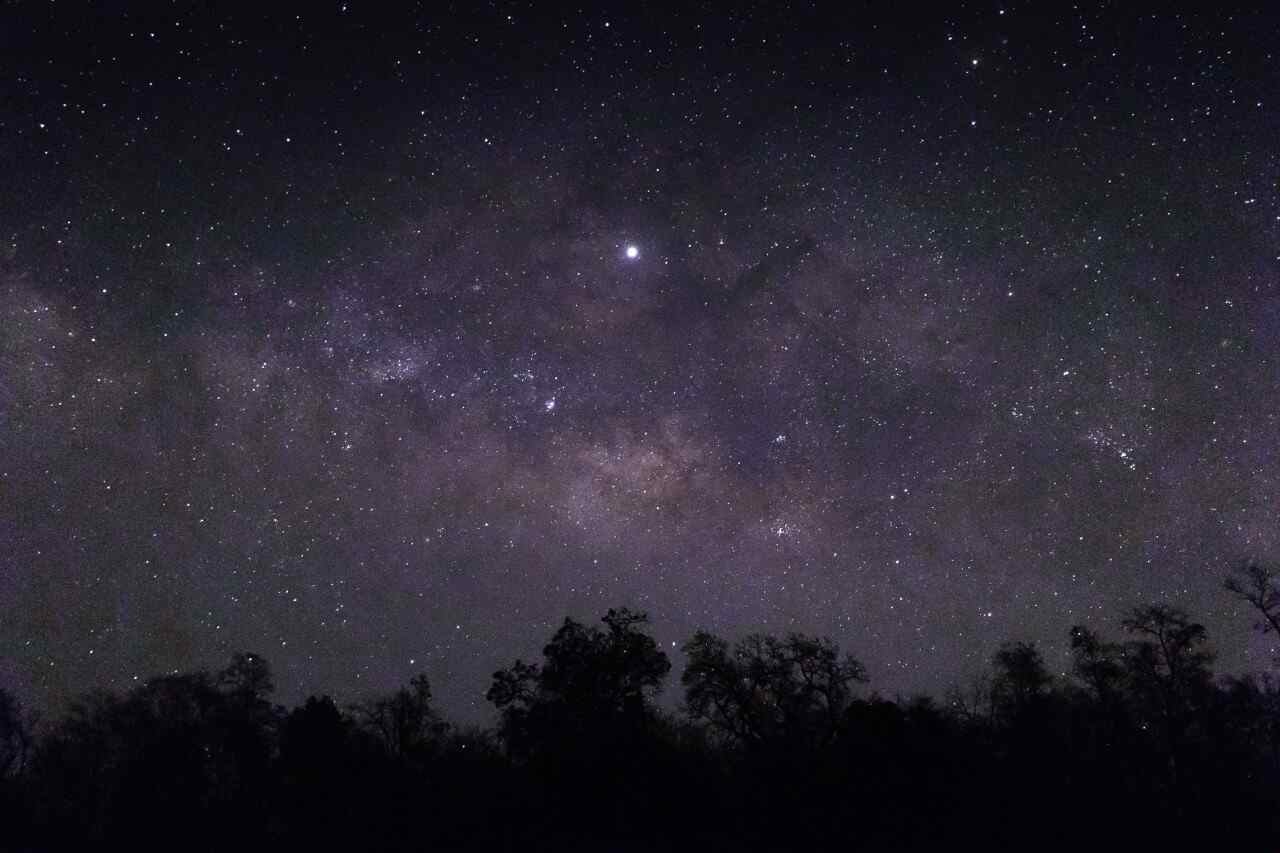
In a significant step toward solving a longstanding puzzle in cosmology, a team led by Simon Fraser University is leveraging supercomputing power to investigate the Hubble tension, a paradox at the core of modern astrophysics that questions our grasp of the universe’s expansion. Their latest findings merge creative theoretical perspectives with sophisticated numerical simulations, suggesting that primordial magnetic fields may be crucial in reconciling conflicting measurements of the cosmic expansion rate. Importantly, these advances were only possible thanks to state-of-the-art supercomputing infrastructure.
The Hubble tension refers to the persistent discrepancy between two independent methods of measuring the rate of expansion of the universe. Local measurements using Type Ia supernovae and other distance indicators yield a higher value for the Hubble constant (H₀) than estimates derived from the cosmic microwave background, the afterglow of the Big Bang, as observed by missions such as Planck. This mismatch has challenged the standard cosmological model (ΛCDM) and inspired a plethora of hypotheses that require rigorous theoretical and numerical assessment.
In the new study, the research team proposes that primordial magnetic fields, tiny magnetic fields present in the early universe, could have subtly altered the physics of recombination, the epoch when electrons and protons first combined to form neutral atoms. This alteration affects the interpretation of the cosmic microwave background and, consequently, inferences about the Hubble constant. If confirmed, the existence and influence of such fields would not merely ease the tension between different measurements; they could also illuminate the origin of cosmic magnetism observed throughout galaxies and intergalactic space.
However elegant the theory, testing it against the wealth of cosmological data requires formidable computational effort. Over the past three years, the international collaboration, including SFU’s Levon Pogosian, Karsten Jedamzik, Tom Abel, and Yacine Ali-Haimoud has utilized SFU’s Cedar supercomputer and its successor, Fir, to run large-scale simulations of recombination processes under various magnetic field scenarios. These simulations incorporate the physics of the early universe at high resolution and are used to generate predicted observational signatures that can be directly compared against data from the Hubble Space Telescope, Planck, and ground-based observatories.
Supercomputing plays an indispensable role in this endeavor. The complex dynamics of recombination and its imprint on cosmological observables involve solving coupled systems of equations that govern plasma physics, radiative transfer, and statistical inference. By breaking down these calculations into parallel tasks, HPC systems such as Cedar and Fir allow researchers to execute large parameter sweeps and statistical fits that would otherwise take prohibitively long on conventional machines. The result is a computational feedback loop in which simulations refine theoretical models, which in turn guide the next generation of simulations.
According to Pogosian, “We wouldn’t have been able to carry out our research without the supercomputer. It was crucial for our tests and calculations.” The ability to process vast datasets in parallel not only saves time but dramatically expands the scope of inquiry, enabling tests of subtle physical effects in regimes where analytical approximations fail.
The simulations have yielded encouraging outcomes: the primordial magnetic field hypothesis “survives the most detailed and realistic tests available today,” and the work provides clear targets for future observational campaigns. In the coming years, next-generation observatories and more refined simulations will be key to determining whether these ancient magnetic fields indeed influenced the evolution of the early universe.
For the supercomputing community, this research embodies the inspirational synergy between numerical simulation and fundamental physics. Here, HPC is not a mere amplifier of computational throughput; it is an enabler of discovery, allowing scientists to probe phenomena at the intersection of theory and observation. As cosmologists continue to confront deep questions about the universe’s origin, composition, and fate, supercomputers like Cedar and Fir stand at the forefront of a new era in astrophysical research.