

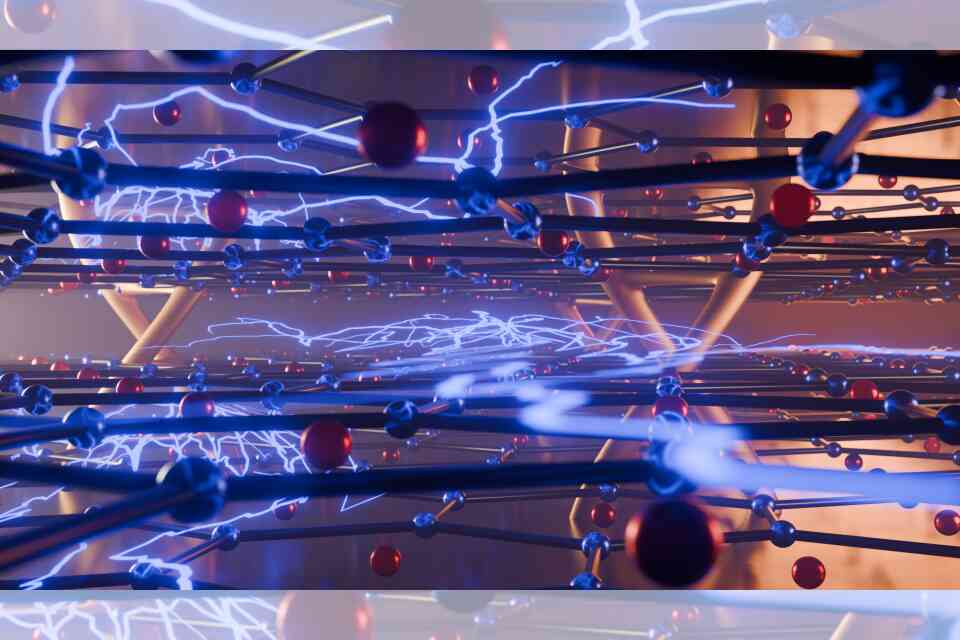
Marking a major advance in sustainable computing, researchers at the University of Liverpool have developed a groundbreaking three-dimensional material that mirrors the remarkable electronic properties of two-dimensional graphene, while offering the durability needed for practical use.
Detailed in the journal Matter, this innovation holds the potential to enable greener, more energy-efficient electronics and underscores the essential role of supercomputing in discovering and designing new materials, a development that could reshape the landscape of high-performance and low-power computing.
Graphene is a single layer of carbon atoms organized in a honeycomb pattern. This material has fascinated scientists and engineers due to its exceptional electrical, thermal, and mechanical characteristics. Electrons in graphene act like massless Dirac fermions, which allows for extremely fast electron movement with minimal energy loss. Despite these impressive qualities, applying graphene's unique properties to practical, large-scale devices has faced persistent obstacles: its ultra-thin structure is fragile, hard to incorporate into bulk technologies, and expensive to manufacture at scale.
The new study addresses this by demonstrating that hafnium tin, HfSn₂, a fully three-dimensional crystal, can mimic graphene’s fast, two-dimensional electron flow. In the HfSn₂ structure, honeycomb layers are arranged in a special chiral stacking pattern that preserves the signature electronic behavior of graphene, specifically, high electron mobility with low energy dissipation, despite the material being fully 3D. This electronic behavior is associated with Weyl points in the material’s band structure, points where conduction and valence bands touch, allowing electrons to move with minimal resistance.
These insights emerged from a combination of theoretical modeling, crystallographic simulations, and experimental characterization, and could not have been realized without high-performance computational tools. Supercomputers enable researchers to explore how atomic arrangement, chemical bonding, and quantum mechanical effects interplay across multiple length scales, from electrons to crystals, and to identify Weyl electronic states and transport properties that are inaccessible to simpler computational methods.
In particular, density functional theory (DFT) and related ab initio simulation frameworks, inherently computationally intensive, were crucial in predicting how electrons behave within the 3D honeycomb lattice and how different stacking arrangements influence transport. These simulations, typically run on supercomputing clusters equipped with optimized parallel solvers and high memory bandwidth, allow researchers to map out electronic band structures and isolate topological features such as Weyl points with high precision. Without this scale of computation, evaluating the energetic and structural feasibility of such new materials would be prohibitively slow and less reliable.
The ability to use supercomputer-driven simulations to screen candidate materials accelerates the discovery process dramatically. Instead of relying solely on costly and time-consuming experimental synthesis of countless samples, researchers can now refine materials candidates through in silico modeling, identifying promising structures that combine desired electronic properties with robustness and environmental resilience.
Why does this matter for the green computing agenda? Modern computing systems, from mobile devices to data centers, consume vast amounts of energy. Next-generation logic and spintronic devices (which exploit electron spin as well as charge) require materials that combine low-energy electronic transport with stability under operational conditions. A 3D material that mimics graphene’s electron transport while being easier to integrate into conventional device architectures could lead to significantly lower energy consumption in future information processing and memory technologies, directly addressing sustainability challenges in both artificial intelligence and high-performance computing sectors.
Moreover, supercomputing plays a central role beyond discovery; it enables multiscale modeling that connects atomic-scale electronic behavior with device-level performance predictions. By integrating quantum mechanical simulations with larger-scale finite-element and mesoscopic models, researchers can assess how new materials will behave under real operational loads, including temperature variation, stress, and electron-phonon interactions, before ever fabricating a prototype.
The discovery of HfSn₂ highlights a compelling convergence of materials science, quantum physics, and high-performance computing. Together, these disciplines are enabling new approaches to energy-efficient electronics. As researchers increasingly rely on supercomputing resources to navigate complex materials landscapes, the pace of breakthroughs aimed at reducing the environmental footprint of computing is expected to accelerate, pointing toward a more sustainable and environmentally responsible digital infrastructure.