

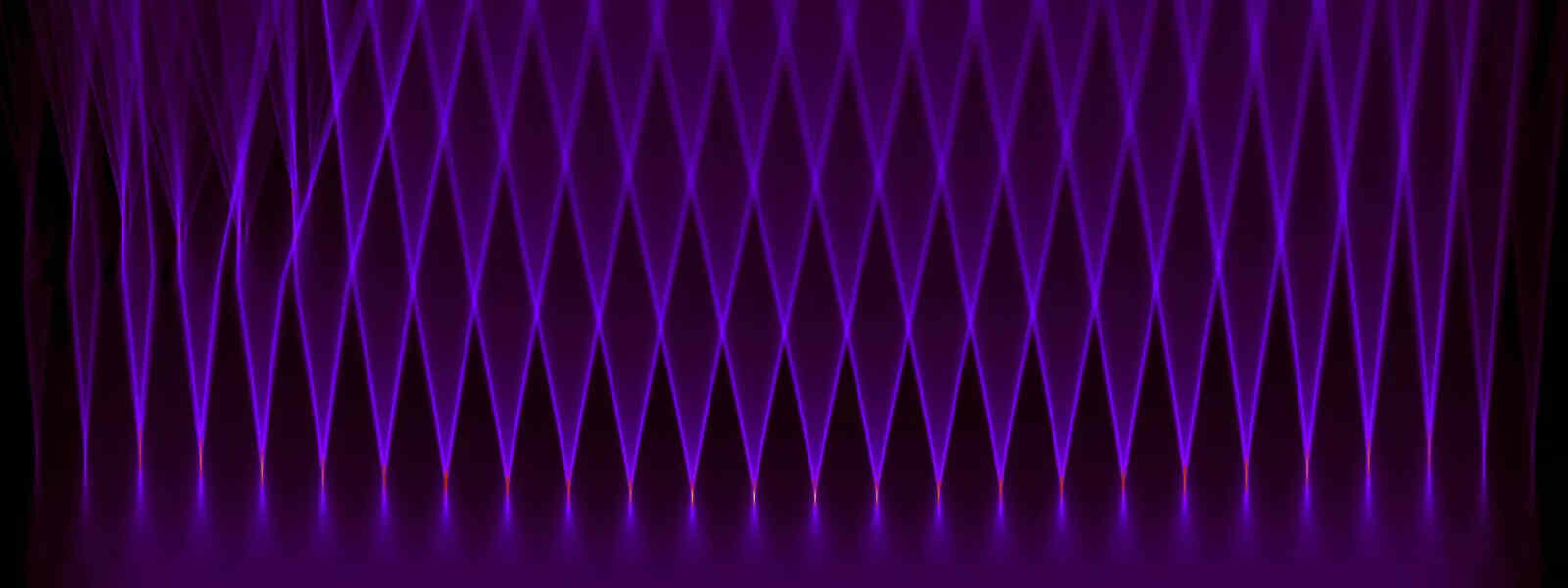
Researchers at the University of Strathclyde in Scotland are leveraging advanced computational techniques to transform scientific discovery. By integrating machine learning algorithms with powerful supercomputer models, they have significantly accelerated the design process for robust optical components used in high-power laser systems. This innovative approach not only shortens design cycles but also uncovers new physical phenomena, marking a breakthrough with wide-reaching impacts across science, industry, and emerging technologies.
High-power lasers are vital to advancements in nuclear fusion, high-field physics, and advanced manufacturing, but their optical components must endure extreme intensities without failing. Traditional optics are often large, expensive, and challenging to scale, which restricts the development of next-generation laser facilities. To overcome these limitations, Strathclyde’s multidisciplinary team is developing plasma photonic structures, temporary, self-assembled mirrors formed in ionized gas, that can fulfill the same roles at a much smaller and more cost-effective scale.
The central challenge lies in navigating a highly complex parameter space where interdependent variables determine performance. Traditional design methods involve resource-intensive, trial-and-error iterations that may require hundreds of thousands to millions of individual evaluations before an acceptable design can be identified. By coupling machine learning algorithms with supercomputer-driven physical models, specifically deep kernel Bayesian optimization (DKBO) paired with particle-in-cell (PIC) simulations, researchers have reduced this process to just a few dozen iterations, enabling rapid identification of high-reflectivity, robust plasma mirror designs.
This achievement depends on computationally intensive supercomputer simulations to model the spatio-temporal evolution of transient plasma structures and evaluate performance metrics such as reflectivity and pulse compression. The simulations, executed at high resolution with millions of interacting particles, are inherently demanding and could not be conducted at scale without HPC resources. In fact, the team’s use of national supercomputing services, including the ARCHER2 UK National Supercomputing Service, exemplifies how targeted computational power can transform scientific inquiry.
According to lead Dr. Slavi Ivanov of Strathclyde’s Department of Computer and Information Sciences, the integration of DKBO with particle-in-cell models enables not just faster design optimization but also unexpected discovery. In their work, the optimization framework found regimes where incident laser pulses are compressed by the plasma mirror structure, a phenomenon that emerged from the simulations rather than human intuition, underscoring the capacity of machine-assisted design to reveal new physics.
Professor Dino Jaroszynski, co-author and distinguished laser physicist, described the research as an engine of discovery that expands the objectives beyond mere performance targets. “By specifying innovative or unconventional design goals, we can uncover mechanisms that might otherwise remain hidden,” he noted, suggesting that this approach could redefine how optical components are conceived for extreme environments.
The implications of this work extend well beyond high-power lasers themselves. The general nature of the machine learning and simulation framework means it can be adapted to other optical elements, from beam splitters to focusing devices, and even to real-time experimental optimization workflows where objective functions are derived from empirical measurements. This flexibility opens new pathways for rapid, HPC-enabled design across photonics, telecommunications, and other advanced technologies.
Importantly for the supercomputing community, this research illustrates how machine learning and HPC models can be coupled in powerful synergy. Machine learning provides an intelligent search strategy that dramatically reduces the number of required simulation runs, while the supercomputer executes the high-fidelity physical models necessary to evaluate each candidate design. This integrated loop, where algorithms guide simulations and simulations train algorithms, is becoming a hallmark of contemporary computational science.
As high-performance computing infrastructure continues to advance in both capability and accessibility, hybrid approaches such as deep kernel Bayesian optimisation are becoming essential tools for addressing complex, multidisciplinary challenges. From the design of next-generation optical components to the discovery of previously unknown physical phenomena, the integration of machine learning with high-fidelity simulation is accelerating innovation and narrowing the gap between theoretical research and practical application.
For the Supercomputing community, the Strathclyde plasma mirror project illustrates how supercomputing has evolved beyond traditional numerical analysis into a collaborative force in scientific discovery, enabling researchers to navigate vast design spaces, reveal unexpected behaviors, and redefine how technologies are engineered for extreme operating conditions.