

Imagine a city capable of sensing trouble before it occurs, anticipating traffic jams, worsening air quality, infrastructure strain, or emerging health concerns, much like a living organism responds to its surroundings. According to a new research center at the University of Glasgow, this vision is closer to reality than many realize.
Launched this week, the Centre for Integrated Sensing and Communication Enabling Cognitive Cities (ISAC³) is set to explore how next-generation digital technologies, particularly 6G communications, artificial intelligence, and large-scale data analytics, can transform today’s “smart cities” into cognitive ones. Unlike current urban systems, which primarily monitor conditions in real-time, cognitive cities aim to predict and adapt, shifting city management from a reactive response to proactive decision-making.
At the heart of this ambition lies data, vast volumes of it. Future 6G networks are expected to collect streams of information from advanced sensors embedded throughout urban infrastructure, as well as from next-generation mobile devices carried by residents. Processing, analyzing, and acting on this data in real time will demand not just clever algorithms, but significant computational power, placing high-performance computing and AI-driven analytics at the core of the cognitive city concept.
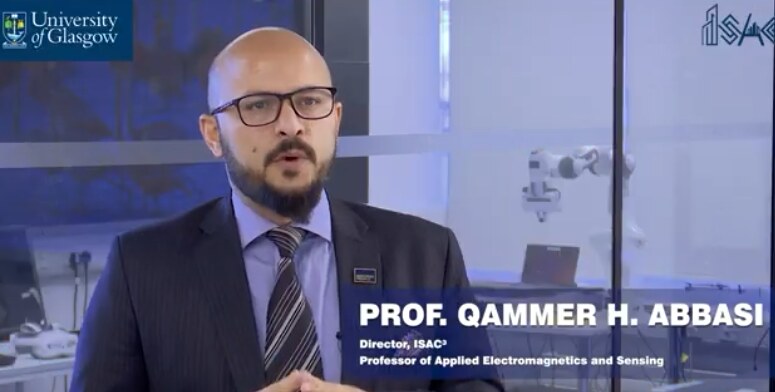
Professor Qammer H. Abbasi, Founding Director of ISAC³ and Professor at the University of Glasgow’s James Watt School of Engineering, describes the initiative as a response to mounting global pressures on cities. Population growth, climate change, cybersecurity risks, and the push toward decarbonization are converging challenges that traditional urban planning struggles to address in isolation.
“Next-generation technologies like real-time data collection, advanced communications, cyber-physical systems, and AI-driven analytics will provide the tools required to turn urban spaces into cognitive cities,” Abbasi said. “ISAC³ brings together the expertise needed to explore how these tools can work together responsibly and at scale.”
The center unites researchers across engineering, computing science, cybersecurity, public health, business, social science, and urban planning, reflecting the inherently interdisciplinary nature of future cities. Cognitive systems, the researchers suggest, will require tightly coupled sensing, communication, computation, and action, an architectural challenge that mirrors the integrated workflows increasingly seen in modern supercomputing environments.
One intriguing aspect of ISAC³’s vision is its focus on health and well-being. Professor Frances Mair, Head of the University of Glasgow’s School of Health & Wellbeing, notes that healthcare services have often lagged behind other sectors in adopting advanced digital tools. Cognitive city technologies, she argues, could change that dynamic by identifying early warning signs of health risks and connecting people to support before conditions worsen.
"In the future, ISAC technology could work quietly in the background,” Mair said, “helping communities stay healthier, safer, and more supported."
Beyond technical innovation, ISAC³ is also emphasizing responsible and inclusive development. Professor Nuran Acur of the Adam Smith Business School highlighted the Centre’s “quadruple helix” approach, which brings together academia, industry, public services, and society from the earliest stages of research. The goal is to ensure that technologies are not only advanced but also practical, socially responsible, and ready for real-world deployment.
The center's first year will focus on building a deployment roadmap through workshops and webinars with international experts in integrated sensing, communication, and computing. A key question underpinning this work is how to balance innovation with robust data protection, particularly as cities collect increasingly sensitive information from sensors and personal devices.
Glasgow itself will serve as a living laboratory. The University’s campus will be used as a testbed for prototype systems, developed in collaboration with industry partners including BT, Virgin Media O2, Ericsson, InterDigital, and Neutral Wireless. According to Mallik Tatipamula, CTO of Ericsson Silicon Valley, the work underway in Glasgow could have global implications.
“Cities that succeed will be those that can sense, interpret, and respond to their environments in real time,” Tatipamula said. “ISAC³ has the potential to help redefine how future societies function.”
ISAC³ presents the supercomputing community with intriguing challenges: How can vast urban data streams be processed both efficiently and securely? What part will high-performance computing and AI accelerators play in facilitating real-time, citywide predictions? And how might computational models allow policymakers to test decisions virtually before they are implemented?
As ISAC³ embarks on its mission, it does not claim to possess all the solutions. Rather, it is establishing a research environment driven by curiosity, exploring how cities could learn, adapt, and evolve, and examining the computational backbone necessary to make these ambitions a reality. Through this work, Glasgow is setting itself apart as a hub where the future of urban life is not just envisioned, but rigorously investigated through computation.