

Australia’s biodiversity crisis has evolved into a data challenge as much as an ecological one.
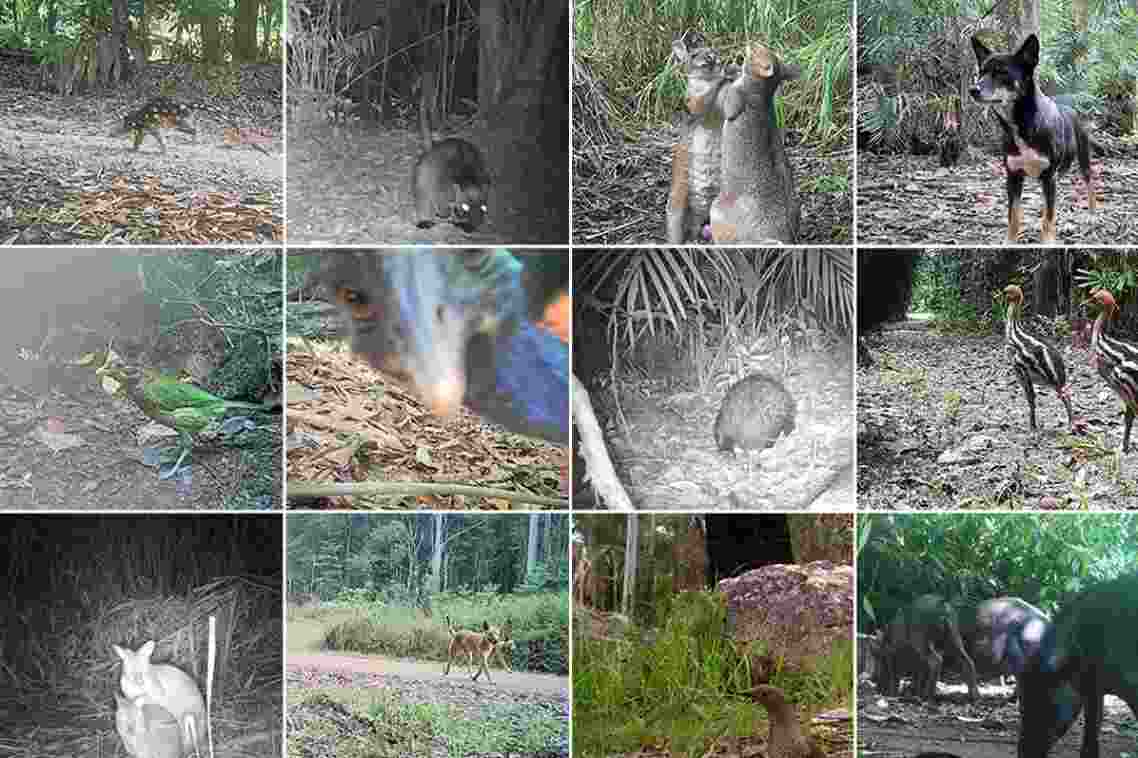
Across the continent, thousands of wildlife monitoring cameras quietly capture millions of images and videos each year, documenting everything from endangered marsupials to invasive predators.
While these camera traps have transformed ecological research, they have also created an unexpected problem: researchers are drowning in data.
Now, scientists at the University of Queensland have unveiled a solution that combines artificial intelligence, cloud computing, and large-scale data infrastructure to transform how wildlife monitoring is conducted across Australia.
The newly launched Wildlife Observatory of Australia (WildObs) uses AI-powered computer vision systems to analyze millions of camera-trap images, enabling conservationists to identify species, detect ecological changes, and respond to threats far faster than traditional methods allow. The platform represents a significant step toward data-driven conservation at the national scale.
Turning millions of images into actionable science
Affordable camera traps have become ubiquitous tools for ecological research. Mounted to trees and left in the field for months at a time, they continuously record wildlife activity across remote forests, deserts, wetlands, and conservation reserves.
The result is unprecedented visibility into Australia’s ecosystems, but also an unprecedented analytical burden.
According to Associate Professor Matthew Luskin from the University of Queensland’s School of the Environment, researchers have been collecting enormous quantities of ecological data without an efficient means of processing it. WildObs was developed specifically to address this challenge by bringing AI, cloud infrastructure, and collaborative data management together in a single platform.
The platform can identify hundreds of Australian species from camera-trap imagery and performs classification tasks approximately ten times faster than human analysts, dramatically reducing the time required to convert raw imagery into usable ecological information.
AI-powered conservation
At the core of WildObs are specialized computer vision models trained on Australian wildlife and environmental conditions.
The platform hosts multiple AI classifiers developed by research institutions and conservation organizations, including:
- WildObs-QCIF image classification models
- Google’s SpeciesNet platform
- Australian Wildlife Conservancy’s AWC135 model
- University of Tasmania species-recognition systems
- AddaxAI’s Victorian Species Recognition Model
Together, these models create a shared national ecosystem for AI-driven wildlife monitoring.
Researchers can upload imagery, run classification workflows in the cloud, and access results through interactive dashboards without requiring advanced machine learning expertise.
The result is a practical example of how artificial intelligence is moving beyond laboratory demonstrations and becoming operational infrastructure for environmental science.
Computing infrastructure behind the platform
Although the public focus is often on AI algorithms, the real innovation lies equally in the computing infrastructure supporting them.
WildObs is hosted on the ARDC Nectar Research Cloud, providing the storage, processing, and scalability necessary to manage millions of wildlife observations. The platform was developed through collaboration among the University of Queensland, QCIF Digital Research, the Australian Research Data Commons (ARDC), the Terrestrial Ecosystem Research Network (TERN), and international partners including Agouti, Wageningen University, and INBO.
This cloud-based architecture allows conservation organizations, universities, government agencies, and non-governmental organizations to access advanced AI capabilities without maintaining their own high-performance computing infrastructure.
Instead of downloading software, configuring machine-learning pipelines, and provisioning storage systems, researchers can simply upload images and allow the platform’s computing resources to perform the analysis.
From observation to conservation action
The implications extend well beyond image classification.
WildObs enables conservation teams to:
- Detect rare and elusive species more rapidly.
- Identify declines in native populations earlier.
- Evaluate invasive-species management programs.
- Track changes in biodiversity across large geographic regions.
- Prioritize conservation resources based on real-time ecological evidence.
In conservation biology, timing can be critical. Species declines often become apparent only after significant population losses have already occurred. By accelerating data processing and analysis,
AI systems may provide earlier warning signals and support faster intervention strategies.
A new model for ecological research
One of the most significant aspects of WildObs is its emphasis on collaboration.
Historically, wildlife monitoring datasets have been fragmented across institutions, stored in incompatible formats, and difficult to share at scale. WildObs addresses this challenge by creating a common computational environment where data, AI models, and analytical workflows can be accessed by a broad community of researchers and conservation practitioners.
The platform also allows external developers to host new species-recognition models, creating an expandable ecosystem that can evolve as AI capabilities improve.
This approach mirrors broader trends in scientific computing, where cloud-native research environments increasingly replace isolated data silos.
The growing role of AI in environmental science
WildObs illustrates how artificial intelligence is becoming a foundational tool for ecological research.
As environmental monitoring technologies continue to generate larger datasets, from camera traps and acoustic sensors to drones and satellite imagery, the limiting factor is no longer data collection.
It is data interpretation.
AI systems are uniquely suited to address this challenge because they can process vast quantities of information consistently and at speeds impossible for human researchers alone.
For Australia, where biodiversity faces mounting pressure from habitat loss, invasive species, climate change, and environmental fragmentation, the ability to transform data into timely decisions may prove increasingly valuable.
Computing for conservation
The launch of WildObs highlights a broader shift occurring across scientific disciplines: modern discovery increasingly depends on the integration of AI, cloud computing, and large-scale data infrastructure.
In this case, advanced computing is not being used to model galaxies or train large language models. It is being deployed to help scientists understand, monitor, and protect living ecosystems.
By combining artificial intelligence with national research infrastructure, WildObs demonstrates how computational innovation can directly support conservation outcomes.
The challenge facing Australian wildlife is immense. But with AI-powered platforms capable of turning millions of images into actionable ecological intelligence, researchers are gaining a powerful new ally in the effort to preserve biodiversity for future generations.