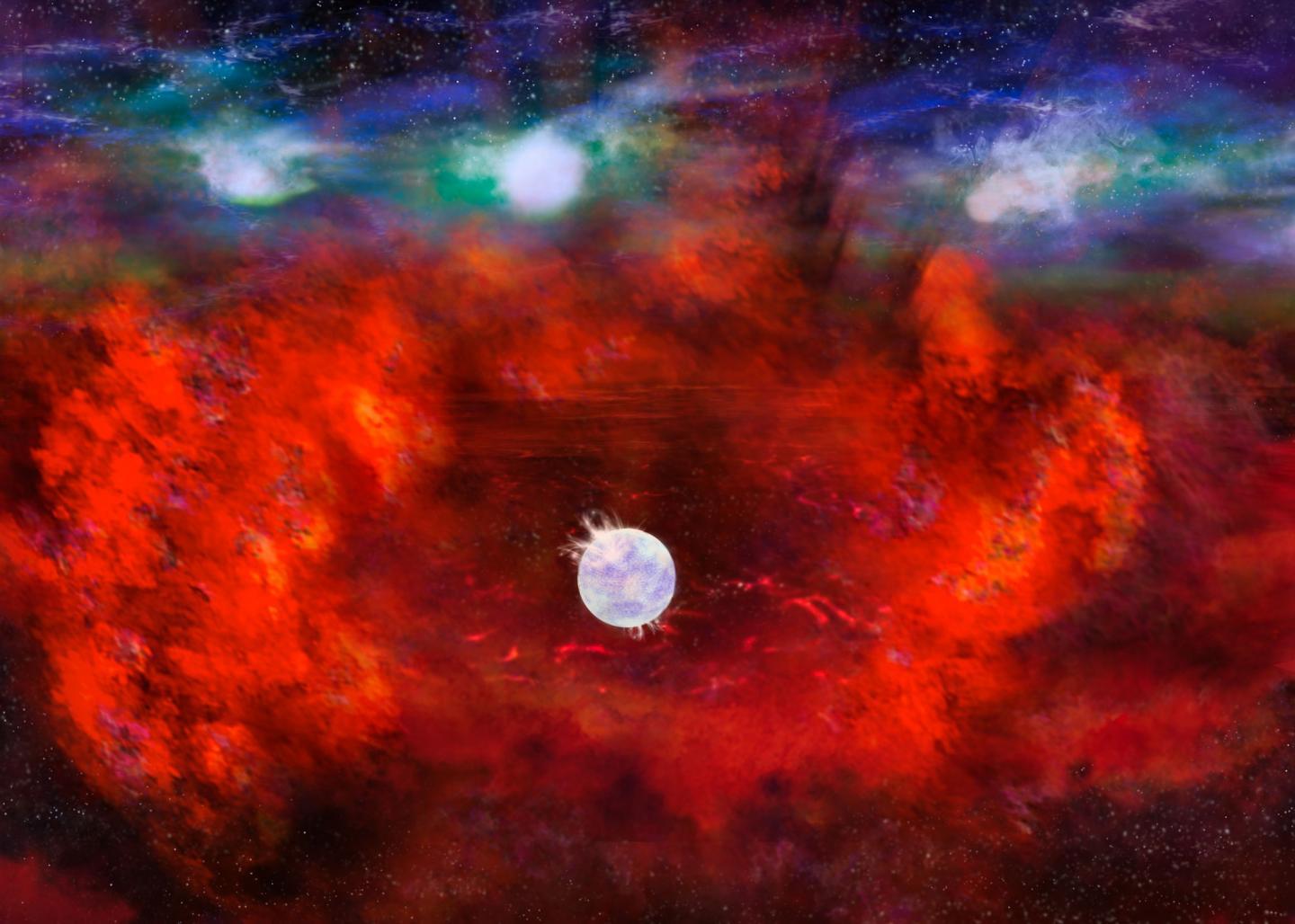
University of Oregon astronomer's new approach refines the Hubble's constant, age of universe

The study led by a University of Oregon physicist reconfigures a distance-calculation technique built around empirical observations

Using known distances of 50 galaxies from Earth to refine calculations in Hubble's constant, a research team led by a University of Oregon astronomer estimates the age of the universe at 12.6 billion years.

Approaches to date the Big Bang, which gave birth to the universe, rely on mathematics and computational modeling, using distance estimates of the oldest stars, the behavior of galaxies, and the rate of the universe's expansion. The idea is to compute how long it would take all objects to return to the beginning.

A key calculation for dating is Hubble's constant, named after Edwin Hubble who first calculated the universe's expansion rate in 1929. Another recent technique uses observations of leftover radiation from the Big Bang. It maps bumps and wiggles in spacetime - the cosmic microwave background, or CMB - and reflects conditions in the early universe as set by Hubble's constant.

However, the methods reach different conclusions, said James Schombert, a professor of physics at the UO. In a paper published on July 17 in the Astronomical Journal, he and colleagues unveiled a new approach that recalibrates a distance-measuring tool known as the baryonic Tully-Fisher relation independently of Hubble's constant.

"The distance scale problem, as it is known, is incredibly difficult because the distances to galaxies are vast and the signposts for their distances are faint and hard to calibrate," Schombert said.

Schombert's team recalculated the Tully-Fisher approach, using accurately defined distances in a linear computation of the 50 galaxies as guides for measuring the distances of 95 other galaxies. The universe, he noted, is ruled by a series of mathematical patterns expressed in equations. The new approach more accurately accounts for the mass and rotational curves of galaxies to turn those equations into numbers like age and expansion rate.

His team's approach determines the Hubble's constant - the universe's expansion rate - at 75.1 kilometers per second per megaparsec, give or take 2.3. A megaparsec, a common unit of space-related measurements, is equal to one million parsecs. A parsec is about 3.3 light-years.

All Hubble's constant values lower than 70, his team wrote, can be ruled out with a 95 percent degree of confidence.

Traditionally used measuring techniques over the past 50 years, Schombert said, have set the value at 75, but CMB computes a rate of 67. The CMB technique, while using different assumptions and supercomputer simulations, should still arrive at the same estimate, he said.

"The tension in the field occurs from the fact that it does not," Schombert said. "This difference is well outside the observational errors and produced a great deal of friction in the cosmological community."

Calculations drawn from observations of NASA's Wilkinson Microwave Anisotropy Probe in 2013 put the age of the universe at 13.77 billion years, which, for the moment, represents the standard model of Big Bang cosmology. The differing Hubble's constant values from the various techniques generally estimate the universe's age at between 12 billion and 14.5 billion years.

The new study, based in part on observations made with the Spitzer Space Telescope, adds a new element to how calculations to reach Hubble's constant can be set, by introducing a purely empirical method, using direct observations, to determine the distance to galaxies, Schombert said.

"Our resulting value is on the high side of the different schools of cosmology, signaling that our understanding of the physics of the universe is incomplete with the hope of new physics in the future," he said.

AI finds patterns of mutations, survival in tumour images

AI applied to tumor microscopy images detects patterns of 167 different mutations and predicts patient survival in 28 cancer types

Researchers at EMBL's European Bioinformatics Institute (EMBL-EBI), the Wellcome Sanger Institute, Addenbrooke's Hospital in Cambridge, UK, and collaborators have developed an artificial intelligence (AI) algorithm that uses computer vision to analyze tissue samples from cancer patients. They have shown that the algorithm can distinguish between healthy and cancerous tissues, and can also identify patterns of more than 160 DNA and thousands of RNA changes in tumors. The study, published today in Nature Cancer, highlights the potential of AI for improving cancer diagnosis, prognosis, and treatment.

Cancer diagnosis and prognosis are largely based on two main approaches. In one, histopathologists examine the appearance of the cancer tissue under the microscope. In the other, cancer geneticists, analyze the changes that occur in the genetic code of cancer cells. Both approaches are essential to understand and treat cancer, but they are rarely used together. CAPTION A mosaic of tumour microscopy images forming broken DNA molecules.  CREDIT Credit: Yu Fu, Moritz Gerstung, Spencer Phillips/EMBL{module INSIDE STORY}

"Clinicians use microscopy slides for cancer diagnosis all the time. However, the full potential of these slides hasn't been unlocked yet. As computer vision advances, we can analyze digital images of these slides to understand what happens at a molecular level," says Yu Fu, Postdoctoral Fellow in the Gerstung Group at EMBL-EBI.

Computer vision algorithms are a form of artificial intelligence that can recognize certain features in images. Fu and colleagues repurposed such an algorithm developed by Google - originally used to classify everyday objects such as lemons, sunglasses and radiators - to distinguish various cancer types from healthy tissue. They showed that this algorithm can also be used to predict survival and even patterns of DNA and RNA changes from images of tumor tissue.

Teaching algorithms to detect molecular changes

Previous studies have used similar methods to analyze images from single or a few cancer types with selected molecular alterations. However, Fu and colleagues generalized the approach on an unprecedented scale: they trained the algorithm with more than 17 000 images from 28 cancer types collected for The Cancer Genome Atlas and studied all known genomic alterations.

"What is quite remarkable is that our algorithm can automatically link the histological appearance of almost any tumor with a very broad set of molecular characteristics, and with patient survival," explains Moritz Gerstung, Group Leader at EMBL-EBI.

Overall, their algorithm was capable of detecting patterns of 167 different mutations and thousands of gene activity changes. These findings show in detail how genetic mutations alter the appearance of tumor cells and tissues.

Another research group has independently validated these results with a similar AI algorithm applied to images from eight cancer types. Their study was published in the same issue of Nature Cancer.

A potential tool for personalized medicine

The integration of molecular and histopathological data provides a clearer picture of a tumor's profile. Detecting the molecular features, cell composition, and survival associated with individual tumors would help clinicians tailor appropriate treatments to their patients' needs.

"From a clinician's point of view, these findings are incredibly exciting. Our work shows how artificial intelligence could be used in clinical practice," explains Luiza Moore, Clinician Scientist, and Pathologist at the Wellcome Sanger Institute and Addenbrooke's Hospital. "While the number of cancer cases is increasing worldwide, the number of pathologists is declining. At the same time, we strive to move away from the 'one size fits all' approach and into personalized medicine. A combination of digital pathology and artificial intelligence can potentially alleviate those pressures and enhance our practice and patient care."

Sequencing technologies have propelled genomics to the forefront of cancer research, yet these technologies remain inaccessible to most clinics around the world. A possible alternative to direct sequencing would be to use AI to emulate a genomic analysis using data that is cheaper to collect, like microscopy slides.

"Getting all that information from standard tumor images in a completely automatic manner is revolutionary," says Alexander Jung, PhD student at EMBL-EBI. "This study shows what might be possible in the coming years, but these algorithms will have to be refined before clinical implementation."

Leeds researchers save a world drowning in plastic pollution

  • Plastic waste flowing into the seas each year could more than double by 2040, according to research
  • Scientists track the fate of global plastic pollution, including open burning
  • Integrated action can cut pollution - the single most effective step is to increase waste collection

More than 1.3 billion tonnes of plastic will be dumped on land and in the oceans over the period from 2016 to 2040 unless the world acts, say a team of 17 global experts who have developed a supercomputer model to track the stocks and flows of plastic around the world.

The modeling suggests that even with immediate and concerted efforts, 710 million tonnes of plastic waste will be discarded into the environment - 460 million tonnes on land and 250 million tonnes in watercourses.

In a groundbreaking study, they have revealed the scale of a problem caused by global waste management systems unable to cope with the increasing volume of plastic waste.

Although the study's primary focus was to investigate how plastic reached the oceans, it has also revealed that each year nearly 30 million tonnes is dumped on land and nearly 50 million tonnes is burned in the open - in addition to the 11 million tonnes ending up in the seas.

The level of pollution is predicted to rise on an annual basis. In the year 2040, 133 million tonnes will be burnt and 77 million tonnes dumped on land, with 29 million tonnes ending up in the oceans. That will happen even if governments act on their commitments to reduce plastic pollution.

Academics from the University of Leeds provided an analysis of the role that effective waste management plays in reducing pollution, and in modeling what happens when waste is either not collected or is mismanaged. {module INSIDE STORY}

The lead investigator from Leeds was Dr. Costas Velis, a Lecturer in Resource Efficiency Systems in the School of Civil Engineering who has been involved in various international initiatives to stem the flow of plastic into the oceans.

He said: "This scientific inquiry has for the first time given us a comprehensive insight into the staggering amounts of plastic waste that are being dumped into the world's terrestrial and aquatic ecosystems. We now have a much clearer picture of the sources of pollution and where it eventually ends up.

"Unless the world acts, we estimate more than 1.3 billion tonnes of plastic pollution will end up on land or in water bodies by 2040. Enormous as that figure is, it could be even bigger if it were not for the fact that a vast quantity of waste is openly burned - but that burning also carries a major environmental cost."

The scientists say there is no single magic bullet to reduce plastic pollution in the seas, and call for a range of interventions from industry and governments which they say are achievable.

Their findings - Breaking the Plastic Wave - are published today. A separate scientific paper describing the assumptions that went into the supercomputer model underpinning the report is published in the peer-review journal Science.

The project was funded by the US philanthropic organization, The Pew Charitable Trusts. The research was conducted by four key institutions: The Pew Charitable Trusts, SYSTEMIQ, University of Leeds, and the University of Oxford.

The scale of the challenge

Around 95 percent of aggregate plastic packaging is used just once before it becomes waste.

The analysis showed that the biggest source of plastic pollution was an uncollected solid municipal waste, a lot of it from households.

Currently, around a quarter of all plastic waste is not collected, leaving individuals to dispose of it themselves. By 2040, a third of all plastic waste generated will be uncollected. That will amount to 143 million tonnes a year.

As the scientists modeled the flows of waste plastics through the economy, they identified a hidden aspect to the problem - the vast quantities of plastic waste being openly burnt.

Although burning reduces the amount of waste being discarded onto land and into the seas, it generates potentially toxic fumes and contributes to greenhouse gas emissions.

Without action, the supercomputer modeling estimates that approximately two and a quarter billion tonnes of plastic waste will be openly burned between 2016 and 2040, which is more than twice the amount that is projected to be dumped on land and into the aquatic environment.

Ed Cook, Research Fellow in the School of Civil Engineering at the University of Leeds and one of the scientists involved in the study, said: "Modern incinerators with air pollution control technology, emit very few hazardous substances. But with open burning, the combustion is often incomplete, and all sorts of potentially toxic emissions are released, which can result in a range of negative health outcomes.

"Those obnoxious substances are being breathed in by people who are working with waste and also in the communities that live nearby.

"Burning is a double-edged sword. It reduces the amount of plastic that could eventually end up in the seas and on land but it also poses many other environmental problems, including a significant contribution to global warming"

The solutions

The study revealed that improving waste collection services would be the single most influential factor in reducing pollution.

According to the UN's Global Waste Management Outlook, around two billion people in the world do not have access to a waste collection service - and that is expected to grow to four billion people by 2040, according to the research.

Dr. Velis said: "In the absence of collection services, people have to make difficult choices about how to manage the waste themselves by openly burning it, dumping it on land, or putting it directly into rivers and coastal waters. Our modeling shows that every additional tonne of plastic collected reduces pollution of the aquatic environment by 0.18 tonnes.

"Waste collection is indeed the most effective way to prevent pollution.

"So at the heart of any effective solution should lie the provision of solid waste management services and infrastructure to all, a key target of the UN Sustainable Development Goal 11."

The lack of a formal waste collection service has resulted in the growth of an informal waste collection system made up of waste pickers.

A conservative estimate indicates that there are at least 11 million waste pickers worldwide. This marginalized sector makes a living sifting through uncollected waste, looking for material that they can sell-on for recycling. It is believed they collect about 58 percent of all plastic material that is recycled worldwide - more than all the formal authorities put together.

Despite playing a major role in reducing global plastic waste, many waste pickers lack basic employment rights or safe working conditions.

Dr. Velis said: "Waste pickers are the unsung heroes of recycling in the Global South, without whom the mass of plastic entering the aquatic environment would be considerably greater. Thus, it is critical that supportive policies are implemented to eliminate the health and safety challenges and wider societal challenges associated with their activities."

Inclusion, integration, and enabling self-organization of waste pickers is critical to supporting the circular economy in the Global South.

The scientists conclude that there is no single solution that would reduce the flow of plastic waste into the oceans. They used the supercomputer model to investigate the effectiveness of various interventions involving six scenarios, which ranged from business as usual to improving levels of recycling or finding alternatives to plastics - to a complete overhaul of the system. None of the single solutions was sufficient. Brought together, though, they could reduce plastic flow into the oceans by 80 percent of the level projected for 2040.

Although the task is huge, the report says it is attainable and can be achieved using existing technology and know-how, by:

  • Reducing growth in plastic production and consumption to avoid nearly one-third of projected plastic waste generation.
  • Substituting plastic with paper and compostable materials.
  • Designing products and packaging for recycling.
  • Expanding waste collection rates in middle/low-income countries to around 90% in all urban areas and around 50% in rural areas and support the informal collection sector.
  • Building facilities to dispose of the 23% of the plastic that cannot be recycled economically, as a transitional measure.
  • Reduce plastic waste exports.

The focus in high-income countries should be to decrease plastic consumption, improve product design, and recycling. In low-to-middle income economies, the push should be on improving waste collection and investing in sorting and recycling, say the scientists.

Mr. Cook said: "The interventions explored here are all achievable using existing and already mature technologies. The suite of approaches we've proposed is already within our capability - but it requires the political, societal, and corporate will in order to achieve it.

"There is not one single solution. We can't simply say we're going to recycle everything or use less material, we need to take a holistic approach and look at the whole system.

"Although the report looks at the flows of plastic waste into the oceans, the benefits will extend far beyond the marine environment."

Breaking the Plastic Wave acknowledges that these interventions will reduce - but not stop - plastic pollution into the seas. Trying to reach near-zero plastic pollution would require "...technological advances, new business models, significant spending and, most crucially... innovation".

For Dr. Velis, the plastic pollution study has the potential to kickstart a scientific revolution, similar to the way that early reports from the Intergovernmental Panel on Climate Change began to raise awareness of global warming - and the steps needed to tackle it.

Dr. Velis added: "This paper shows the huge mobilization across the global scientific community and our determination to find cost-effective solutions to the problems of plastic pollution in the marine environment and elsewhere.

"I can't predict the future but I hope our most realistic scenarios could be a reality in 2040."