Structured Quartet Research Ensemble study how changing community networks impact disease spread

The COVID-19 pandemic has made clear the importance of understanding precisely how diseases spread throughout networks of transportation. However, rigorously determining the connection between disease risk and changing networks—which either humans or the environment may alter—is challenging due to the complexity of these systems. In a paper publishing on Thursday in the SIAM Journal on Applied Mathematics, Stephen Kirkland (University of Manitoba), Zhisheng Shuai (University of Central Florida), P. van den Driessche (University of Victoria), and Xueying Wang (Washington State University) study how changes in a network of multiple interconnected communities impact the ensuing spread of disease. The four researchers were hosted as a Structured Quartet Research Ensemble by the American Institute of Mathematics.

A common mathematical model uses several interconnected patches to represent separate geographical regions that are connected by transportation networks. Diseases are often transmitted along with these kinds of networks via insects like mosquitoes and ticks, which may hitch rides on people or goods. Pathogenic microorganisms, such as bacteria and protozoa, can also spread diseases through river networks. “This disease transmission could increase due to flooding, which could possibly create a new shortcut,” Shuai said. “How would disease dynamics then change in response to this change in the network?”

To answer this question, the researchers sought to measure the basic reproduction number R0 of the network as a whole. R0 determines a disease’s invasibility — if it is greater than 1, the number of infections will most likely grow; if it is less than 1, the disease will eventually die out. “When the dispersal between patches is faster than the dynamics of the disease or population, it turns out that the network reproduction number R0 can be approximated as a weighted average of the individual patch reproduction numbers,” Wang said. For example, if pathogens in a river are infecting people with cholera and the water is moving faster than the pathogens decay, one can approximate R0 for the entire river network as a combination of the basic reproduction numbers for each separate community along the river. This is important because the value of R0 can guide disease control strategies, though the information it provides is limited, and it cannot predict the actual size of an outbreak.mat

The authors developed new techniques based on several areas of applied mathematics to determine how R0 changes when the structure of a network is altered. Their mathematical approach enabled analysis on two different types of model networks: a star network, which contains several branches that stem from a central hub, and a path network, which consists of several communities that are located sequentially along a track. “A star network can represent human transport between one hub—like a large city—and several leaves, which would represent small cities or suburbs,” Wang said. “A path network can represent communities along a river or stream.” These frameworks are also flexible — for example, the star network is useful for modeling multiple possible scenarios. “In the star network, we can think of a central water source—the center of the star—with several communities supplied by that source,” van den Driessche said.

It is possible to add an arc to the path network that bypasses several locations along the river, which could represent a major flood. If a new arc appears that connects a downstream patch to an upstream patch, for instance, the team’s model indicated that the disease transmission risk decreased at downstream locations and increased at upstream locations. The model also incorporated a certain “hot spot” along the river at which the disease transmission rate is higher; the bypass could potentially avoid this location. In an example scenario of a path network with five patches numbered 1 (most upstream) through 5 (most downstream) in which there is a bypass from patch 2 to 4, hot spots at different locations produce different effects. When patch 3 is the hot spot, there is no change in R0 for the whole river network; a hot spot at patch 1 or 2 leads to a decrease in R0, while a hot spot at patch 4 or 5 leads to an increase in R0.

The authors utilized their results to explore possible strategies for controlling disease outbreaks by introducing new connections on a network or changing the strength of existing connections. “Our findings from both the star and the path networks highlight that the placement of the hot spot and the connections among patches are crucial in determining the optimal strategy for reducing the risk of an infection,” Wang said. The researchers’ techniques quantified the effectiveness of different approaches in controlling invasibility and found the mathematical conditions under which it is best to change the amount of movement between certain locations.

The insights from this study could help form future disease intervention strategies. “In some practical settings, we may not have much control over the level of invasibility in the individual patches, but we may have better control over the structure of the network connecting those patches — for example, in a network of airports,” Kirkland said. “The insights gained from our research may inform network-based strategies to control the invasibility of disease.”

OU astronomers discover a 'changing-look' blazar

A University of Oklahoma doctoral student, graduate and undergraduate research assistants, and an associate professor in the Homer L. Dodge Department of Physics and Astronomy in the University of Oklahoma College of Arts and Sciences are lead authors on a paper describing a "changing-look" blazar - a powerful active galactic nucleus powered by the supermassive black hole at the center of a galaxy. The paper is published in The Astrophysical Journal.

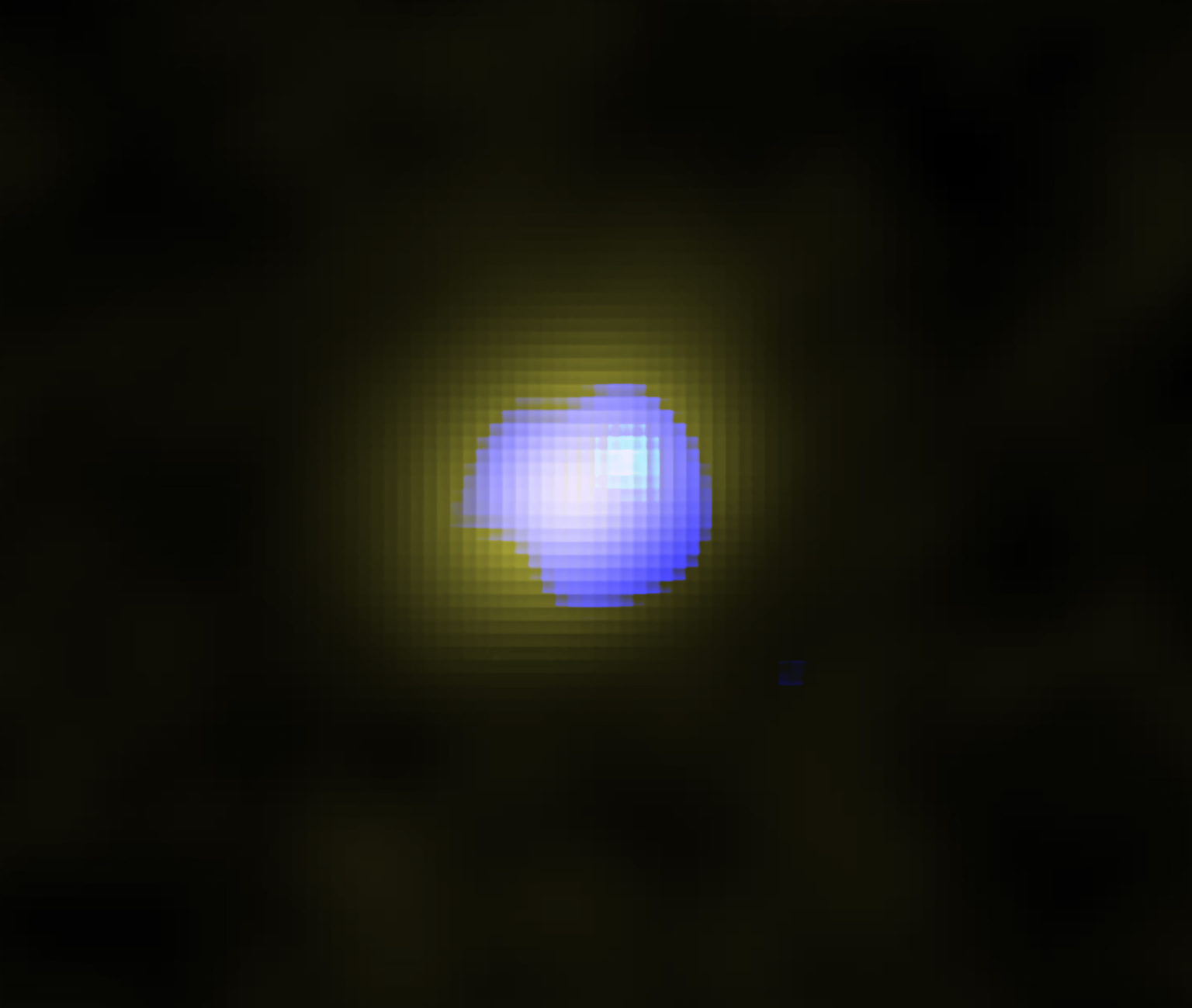
Hora D. Mishra, a Ph.D. student, and faculty member Xinyu Dai are lead authors of the paper, along with Christopher Kochanek and Kris Stanek at the Ohio State University and Ben Shappee at the University of Hawaii. The paper represents the findings of researchers from 12 different institutions who participated in a two-year collaborative project involving the collection of spectra or imaging data in different electromagnetic bands. The OU team led the effort in analyzing all the data collected from the collaboration and contributed primarily to the interpretation of the analysis results, assisted by OU graduate student Saloni Bhatiani and undergraduate students Cora DeFrancesco and John Cox who performed ancillary analyses to the project. Sloan Digital Sky Survey archival image from March 2004 (top) and the image from the authors' observation campaign of the blazar, B2 1420+32, taken in January 2020 using ASAS-SN (bottom). The blazar brightness increased by a factor of 100.  CREDIT Sloan Digital Sky Survey archival image from March 2004 (top) and the image from the authors' observation campaign of the blazar, B2 1420+32, taken in January 2020 using ASAS-SN (bottom).

Blazars explain Mishra, who also serves as president of Lunar Sooners, appears as parallel rays of light or particles, or jets, pointing to observers and radiating across all wavelengths of the electromagnetic spectrum. These jets span distances on the million light-year scales and is known to impact the evolution of the galaxy and galaxy cluster in which they reside via radiation. These features make blazars ideal environments in which to study the physics of jets and their role in galaxy evolution.

"Blazars are a unique kind of AGN with very powerful jets," she said. "Jets are a radio mode of feedback and because of their scales, they penetrate the galaxy into their large-scale environment. The origin of these jets and processes driving the radiation are not well-known. Thus, studying blazars allows us to understand these jets better and how they are connected to other components of the AGN, like the accretion disk. These jets can heat up and displace gas in their environment affecting, for example, the star formation in the galaxy."

The team's paper highlights the results of a campaign to investigate the evolution of a blazar known as B2 1420+32. At the end of 2017, this blazar exhibited a huge optical flare, a phenomenon captured by the All-Sky Automated Survey for SuperNovae telescope network.

"We followed this up by observing the evolution of its spectrum and light curve over the next two years and also retrieved archival data available for this object," Mishra said. "The campaign, with data spanning over a decade, has yielded some most exciting results. We see dramatic variability in the spectrum and multiple transformations between the two blazar sub-classes for the first time for a blazar, thus giving it the name changing look blazar."

The team concluded that this behavior is caused by the dramatic continuum flux changes, which confirm a long-proposed theory that separates blazars into two major categories.

"In addition, we see several very large multiband flares in the optical and gamma-ray bands on different timescales and new spectral features," Mishra said. "Such extreme variability and the spectral features demand dedicated searches for more such blazars, which will allow us to utilize the dramatic spectral changes observed to reveal AGN/jet physics, including how dust particles around supermassive black holes are destructed by the tremendous radiation from the central engine and how energy from a relativistic jet is transferred into the dust clouds, providing a new channel linking the evolution of the supermassive black hole with its host galaxy."

"We are very excited by the results of discovering a changing-look blazar that transforms itself not once, but three times, between its two sub-classes, from the dramatic changes in its continuum emission," she added. "In addition, we see new spectral features and optical variability that is unprecedented. These results open the door to more such studies of highly variable blazars and their importance in understanding AGN physics."

"It is really interesting to see the emergence of a forest of Iron emission lines, suggesting that nearby dust particles were evaporated by the strong radiation from the jet and released free Iron ions into the emitting clouds, a phenomenon predicted by theoretical models and confirmed in this blazar outburst," Dai said.

Illustris-TNG simulation shows the unexpected effect of black holes beyond their own galaxies

At the heart of almost every sufficiently massive galaxy, there is a black hole whose gravitational field, although very intense, affects only a small region around the center of the galaxy. Even though these objects are thousands of millions of times smaller than their host galaxies our current view is that the Universe can be understood only if the evolution of galaxies is regulated by the activity of these black holes because without them the observed properties of the galaxies cannot be explained.

Theoretical predictions suggest that as these black holes grow they generate sufficient energy to heat up and drive out the gas within galaxies to great distances. Observing and describing the mechanism by which this energy interacts with galaxies and modifies their evolution is, therefore, a basic question in present-day Astrophysics. Artistic composition of a supermassive black hole regulating the evolution of its environment.

With this aim in mind, a study led by Ignacio Martín Navarro, a researcher at the Instituto de Astrofísica de Canarias (IAC), has gone a step further and has tried to see whether the matter and energy emitted from around these black holes can alter the evolution, not only of the host galaxy but also of the satellite galaxies around it, at even greater distances. To do this, the team has used the Sloan Digital Sky Survey, which allowed them to analyze the properties of the galaxies in thousands of groups and clusters. The conclusions of this study started during Ignacio's stay at the Max Planck.

"Surprisingly we found that the satellite galaxies formed more or fewer stars depending on their orientation with respect to the central galaxy", explains Annalisa Pillepich, a researcher at the Max Planck Institute for Astronomy (MPIA, Germany) and co-author of the article. To try to explain this geometrical effect on the properties of the satellite galaxies the researchers used a cosmological simulation of the Universe called Illustris-TNG whose code contains a specific way of handling the interaction between central black holes and their host galaxies. "Just as with the observations, the Illustris-TNG simulation shows a clear modulation of the star formation rate in satellite galaxies depending on their position with respect to the central galaxy", she adds.

This result is doubly important because it gives observational support for the idea that central black holes play an important role in regulating the evolution of galaxies, which is a basic feature of our current understanding of the Universe. Nevertheless, this hypothesis is continually questioned, given the difficulty of measuring the possible effect of the black holes in real galaxies, rather than considering only theoretical implications.

These results suggest, then, that there is a particular coupling between the black holes and their galaxies, by which they can expel matter to great distances from the galactic centers, and can even affect the evolution of other nearby galaxies. "So not only can we observe the effects of central black holes on the evolution of galaxies, but our analysis opens the way to understand the details of the interaction", explains Ignacio Martín Navarro, who is the first author of the article.

"This work has been possible due to collaboration between two communities: the observers and the theorists which, in the field of extragalactic Astrophysics, are finding that cosmological simulations are a useful tool to understand how the Universe behaves", he concludes.