

Cambridge researchers find a new way to measure dark energy

The researchers, from the University of Cambridge, found that it may be possible to detect and measure dark energy by studying Andromeda, our galactic next-door neighbor that is on a slow-motion collision course with the Milky Way. 

Since it was first identified in the late 1990s, scientists have used very distant galaxies to study dark energy but have yet to directly detect it. However, the Cambridge researchers found that by studying how Andromeda and the Milky Way are moving toward each other given their collective mass, they could place an upper limit on the value of the cosmological constant, the simplest model of dark energy. The upper limit they found is five times higher than the value of the cosmological constant that can be detected from the early universe.

Although the technique is still early in its development, the researchers say that it could be possible to detect dark energy by studying our cosmic neighbourhood.

Everything we can see in our world and the skies – from tiny insects to massive galaxies – makes up just five percent of the observable universe. The rest is dark: scientists believe that about 27% of the universe is made of dark matter, which holds objects together, while 68% is dark energy, which pushes objects apart.

“Dark energy is a general name for a family of models you could add to Einstein’s theory of gravity,” said first author Dr David Benisty from the Department of Applied Mathematics and Theoretical Physics. “The simplest version of this is known as the cosmological constant: a constant energy density that pushes galaxies away from each other.”

Einstein temporarily added the cosmological constant to his theory of general relativity. From the 1930s to the 1990s, the cosmological constant was set at zero, until it was discovered that an unknown force – dark energy – was causing the expansion of the universe to accelerate. There are at least two big problems with dark energy, however: we don’t know exactly what it is, and we haven’t directly detected it.

Since it was first identified, astronomers have developed various methods to detect dark energy, most of which involve studying objects from the early universe and measuring how quickly they are moving away from us. Unpacking the effects of dark energy from billions of years ago is not easy: since it is a weak force between galaxies, dark energy is easily overcome by the much stronger forces inside galaxies.

However, there is one region of the universe that is surprisingly sensitive to dark energy, and it’s in our cosmic backyard. The Andromeda galaxy is the closest to our own Milky Way, and the two galaxies are on a collision course. As they draw closer, the two galaxies will start to orbit each other – very slowly. A single orbit will take 20 billion years. However, due to the massive gravitational forces, well before a single orbit is complete, about five billion years from now, the two galaxies will start merging and falling into each other.  

“Andromeda is the only galaxy that isn’t running away from us, so by studying its mass and movement, we may be able to make some determinations about the cosmological constant and dark energy,” said Benisty, who is also a Research Associate at Queens’ College.

Using supercomputer simulations based on the best available estimates of the mass of both galaxies, Benisty and his co-authors – Professor Anne Davis from DAMTP and Professor Wyn Evans from the Institute of Astronomy – found that dark energy is affecting how Andromeda and the Milky Way are orbiting each other.

“Dark energy affects every pair of galaxies: gravity wants to pull galaxies together, while dark energy pushes them apart,” said Benisty. “In our model, if we change the value of the cosmological constant, we can see how that changes the orbit of the two galaxies. Based on their mass, we can place an upper bound on the cosmological constant, which is about five times higher than we can measure from the rest of the universe.”

The researchers say that while the technique could prove immensely valuable, it is not yet a direct detection of dark energy. Data from the James Webb Telescope (JWST) will provide far more accurate measurements of Andromeda’s mass and motion, which could help reduce the upper bounds of the cosmological constant.

In addition, by studying other pairs of galaxies, it could be possible to further refine the technique and determine how dark energy affects our universe. “Dark energy is one of the biggest puzzles in cosmology,” said Benisty. “It could be that its effects vary over distance and time, but we hope this technique could help unravel the mystery.”

The research conducted by Cambridge researchers has provided a new and innovative way to measure dark energy. This new method has the potential to revolutionize our understanding of dark energy and its impact on the universe. With further research and development, this new method could lead to a better understanding of the universe and its components.
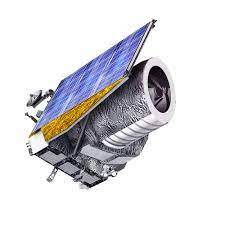
Unveiling the mysteries of the Universe: Exploring dark energy, dark matter with ESA's Euclid mission

The Euclid mission of the European Space Agency aims to produce a three-dimensional map of the Universe. This map will be used by scientists to measure the characteristics of dark energy and dark matter, as well as to uncover the nature of these enigmatic components. The map will contain a significant amount of data and will cover more than a third of the sky. Furthermore, the third dimension of the map will represent time, covering 10 billion years of cosmic history. 

Handling the vast and intricate amount of new data that Euclid's observations will generate is a challenging task. To address this, the Euclid Consortium's scientists have created one of the most precise and extensive supercomputer simulations of the Universe's large-scale structure ever made. They have called it the Euclid Flagship simulation. 

Running on large banks of advanced processors, supercomputer simulations provide a unique laboratory to model the formation and evolution of large-scale structures in the Universe, such as galaxies, galaxy clusters, and the filamentary cosmic web they form. These state-of-the-art computational techniques allow astrophysicists to trace the motion and behavior of an extremely large number of dark-matter particles over cosmological volumes under the influence of their gravitational pull. They replicate how and where galaxies form and grow, and are used to predict their distribution across the celestial sphere. 

Explore the Euclid Flagship simulation in this video and get a sneak preview of the structure of the dark Universe, as we currently model it. New insights will be brought to you by the Euclid mission in the coming years.

The ESA's Euclid mission is a groundbreaking endeavor that will revolutionize our understanding of the universe. By creating a 3D map of the universe, scientists will be able to measure the properties of dark energy and dark matter, uncovering the mysteries of these mysterious components. This mission will open up new possibilities for understanding the universe and its evolution and will be a major step forward in our understanding of the cosmos. With this mission, we can continue to explore the unknown and push the boundaries of our knowledge.

Credit: Melissa Weiss, CfA

Ride the wave of stellar discovery: Witness the magnificent power of the Universe

A unique "heartbreak" star, which exhibits pulsating changes in brightness and surface waves, provides a rare opportunity to study the development of massive double star systems.

An extreme star system is giving new meaning to the phrase "surf's up."

The star system intrigued researchers because it is the most dramatic "heartbeat star" on record. Now new models have revealed that titanic waves, generated by tides, are repeatedly breaking on one of the stars in the system—the first time this phenomenon has ever been seen on a star.

Heartbeat stars are a type of binary stars that pulsate in brightness, similar to a beating heart on an EKG machine. These stars follow elongated oval orbits, resulting in periodic close encounters. During these encounters, the gravitational forces between the stars create tides, which alter the shape of the stars and affect the amount of visible starlight. This phenomenon occurs as the wide or narrow sides of the stars face Earth in an alternating pattern. Video: {joomvideos id=328}

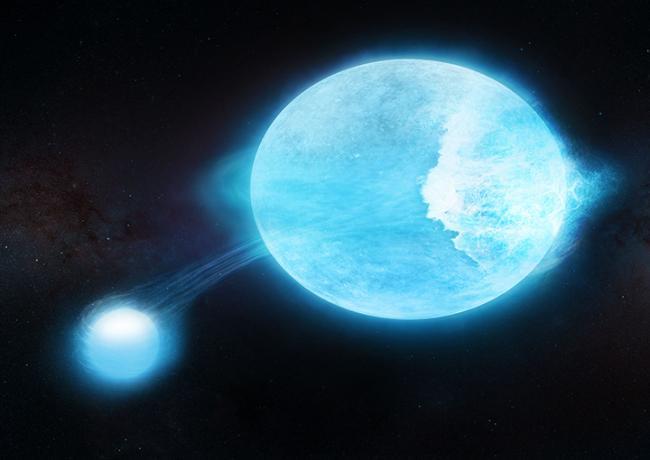
A new study explains why the brightness fluctuations from one particularly extreme heartbeat star system measure some 200 times greater than typical heartbeat stars. The cause: gargantuan waves that roll across the bigger star, kicked up when its smaller companion star regularly makes close passes. These tidal waves attain such towering heights and high speeds, the study finds, that the waves break—similar to ocean waves—and crash down onto the big star's surface.

Dubbed a "heartbreak star" by astronomers, the system offers an unprecedented look at how massive stars interact.

"Each crash of the star's towering tidal waves releases enough energy to disintegrate our entire planet several hundred times over," says Morgan MacLeod, a Postdoctoral Fellow in Theoretical Astrophysics at the Center for Astrophysics | Harvard & Smithsonian (CfA) and author of a new study. "These are really big waves."

And yet, according to Professor Abraham (Avi) Loeb, MacLeod's advisor, the Director of the Institute for Theory and Computation at CfA, and the paper's other author, "Breaking waves in stars are as beautiful as those on the beaches of our oceans."

Heartbeat stars were first seen when NASA's exoplanet-hunting Kepler space telescope picked out their telltale, usually subtle stellar brightness pulsations.

The extreme heartbreak star, though, is anything but subtle. The larger star in the system is nearly 35 times the mass of the Sun and, together with its smaller companion star, is officially designated MACHO 80.7443.1718 — not because of any stellar brawn, but because the system's brightness changes were first recorded by the MACHO Project in the 1990s, which sought signs of dark matter in our galaxy.

Most heartbeat stars vary in brightness only by about 0.1%, but MACHO 80.7443.1718 jumped out to astronomers because of its unprecedentedly dramatic brightness swings, up and down by 20%. "We don't know of any other heartbeat star that varies this wildly," says MacLeod.

To unravel the mystery, MacLeod created a supercomputer model of MACHO 80.7443.1718. His model captured how the interacting gravity of the two stars generates massive tides in the bigger star. The resulting tidal waves rise to about a fifth of the behemoth star's radius, which equates to waves about as tall as three Suns stacked on top of each other, or roughly 2.7 million miles high.

The simulations show that the massive waves start as smooth and organized swells, just like ocean water waves, before curling over on themselves and breaking. As beachgoers know, powerfully crashing ocean waves launch sea spray and bubbles, leaving "a big foamy mess" where there was once a smooth wave, MacLeod says.

The tremendous energy release of the crashing waves on MACHO 80.7443.1718 has two effects, MacLeod's model shows. It spins the stellar surface faster and faster and hurls stellar gas outward to form a rotating and glowing stellar atmosphere.

About once a month, the two stars pass each other, and a fresh monster wave barrels across the heartbreak star's surface. Cumulatively, this agitation has caused the big star in MACHO 80.7443.1718 to bulge at its equator by about 50% more than at its poles. And, with each new passing wave, more material is flung outward, like "spinning pizza crust flinging off chunks of cheese and sauce" says MacLeod. The signature glow of this atmosphere was one of the key clues that waves were breaking on the star's surface, according to MacLeod.

As unprecedented as MACHO 80.7443.1718 is, it is unlikely to be unique. Of the nearly 1,000 heartbeat stars discovered so far, about 20 of them display large brightness fluctuations approaching those of the system simulated by MacLeod and Loeb. "This heartbreak star could just be the first of a growing class of astronomical objects," MacLeod says. "We're already planning a search for more heartbreak stars, looking for the glowing atmospheres flung off by their breaking waves."

All things considered, MacLeod says we are lucky to have caught the star in this phase, "We are watching a brief and transformative moment in a long stellar lifetime." And by watching the colossal surf roll across a stellar surface, astronomers hope to gain an understanding of how close interactions shape the evolution of stellar pairs.

This article concludes that stellar surf's up is an incredible phenomenon that can be seen in the night sky. The monster waves crashing upon a colossal star are an awe-inspiring sight that will remain in the memories of those lucky enough to witness it. Although the waves are incredibly powerful, they are also a reminder of the beauty and power of nature. With further research, we may be able to better understand the physics behind this phenomenon and use it to our advantage.