SUPERCOMPUTING NEWS SUPERCOMPUTING NEWS
    • MEDIA KIT
    • MOST READ
    • RSS FEED
    • ACADEMIA
    • AEROSPACE
    • APPLICATIONS
    • ASTRONOMY
    • AUTOMOTIVE
    • BIG DATA
    • BIOLOGY
    • CHEMISTRY
    • CLIENTS
    • CLOUD
    • DEFENSE
    • DEVELOPER TOOLS
    • EARTH SCIENCES
    • ECONOMICS
    • ENGINEERING
    • ENTERTAINMENT
    • GAMING
    • GOVERNMENT
    • HEALTH
    • OIL & GAS
    • INDUSTRY
    • INTERCONNECTS
    • MANUFACTURING
    • MIDDLEWARE
    • MOVIES
    • NETWORKS
    • PHYSICS
    • PROCESSORS
    • RETAIL
    • SCIENCE
    • STORAGE
    • SYSTEMS
    • VISUALIZATION
    • AcyMailing subscription form

    • ADD YOUR VIDEOS
    • MANAGE VIDEOS
    • CONVERSATION INBOX
    • SOCIAL ADVERTISER
    • SOCIAL NETWORK VIDEOS
    • SURVEYS
    • GROUPS
    • PAGES
    • MARKETPLACE LISTINGS
    • APPLICATIONS BROWSER
    • PRIVACY CONFIRM REQUEST
    • PRIVACY CREATE REQUEST
    • LEADERBOARD
    • POINTS LISTING
      • BADGES
    • TRADE SHOWS
Sign In
Tyler O'Neal, Staff Editor HEALTH November 30, 2020, 11:12 am

Korean bio simulations open a new way to reverse cell aging

Turning off a newly identified enzyme could reverse a natural aging process in cells

Research findings by a KAIST team provide insight into the complex mechanism of cellular senescence and present a potential therapeutic strategy for reducing age-related diseases associated with the accumulation of senescent cells.

Simulations that model molecular interactions have identified an enzyme that could be targeted to reverse a natural aging process called cellular senescence. The findings were validated with laboratory experiments on skin cells and skin equivalent tissues, and published in the Proceedings of the National Academy of Sciences (PNAS).

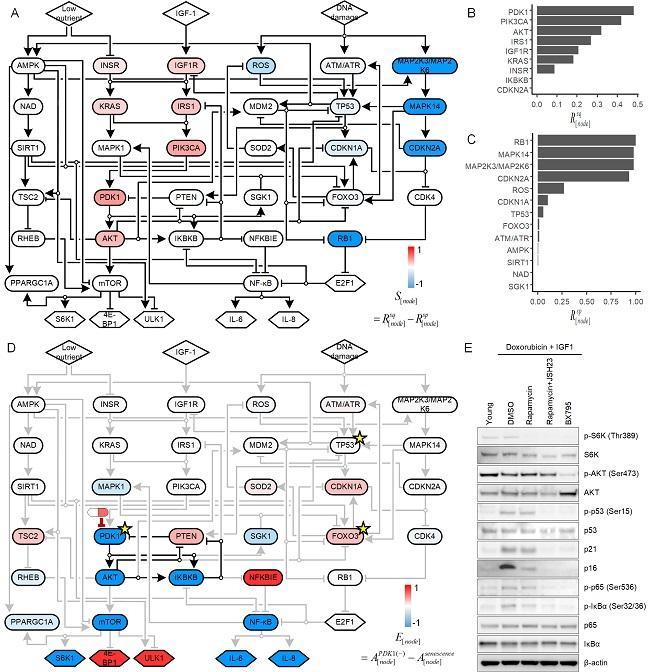
"Our research opens the door for a new generation that perceives aging as a reversible biological phenomenon," says Professor Kwang-Hyun Cho of the Department of Bio and Brain Engineering at the Korea Advanced Institute of Science and Technology (KAIST), who led the research with colleagues from KAIST and Amorepacific Corporation in Korea. The scientists conducted what is known as an ensemble model simulation to identify molecules that could be targeted to reverse cell senescence. They then used the model to predict the effects of inhibiting PDK1 in senescent cells, and confirmed the results in lab-cultured cells and skin equivalent tissue models.{module INSIDE STORY}
Cells respond to a variety of factors, such as oxidative stress, DNA damage, and shortening of the telomeres capping the ends of chromosomes, by entering a stable and persistent exit from the cell cycle. This process, called cellular senescence, is important, as it prevents damaged cells from proliferating and turning into cancer cells. But it is also a natural process that contributes to aging and age-related diseases. Recent research has shown that cellular senescence can be reversed. But the laboratory approaches used thus far also impair tissue regeneration or have the potential to trigger malignant transformations.

Professor Cho and his colleagues used an innovative strategy to identify molecules that could be targeted for reversing cellular senescence. The team pooled together information from the literature and databases about the molecular processes involved in cellular senescence. To this, they added results from their own research on the molecular processes involved in the proliferation, quiescence (a non-dividing cell that can re-enter the cell cycle), and senescence of skin fibroblasts, a cell type well known for repairing wounds. Using algorithms, they developed a model that simulates the interactions between these molecules. Their analyses allowed them to predict which molecules could be targeted to reverse cell senescence.

They then investigated one of the molecules, an enzyme called PDK1, in incubated senescent skin fibroblasts and three-dimensional skin equivalent tissue models. They found that blocking PDK1 led to the inhibition of two downstream signaling molecules, which in turn restored the cells' ability to enter back into the cell cycle. Notably, the cells retained their capacity to regenerate wounded skin without proliferating in a way that could lead to malignant transformation.

The scientists recommend investigations are next done in organs and organisms to determine the full effect of PDK1 inhibition. Since the gene that codes for PDK1 is overexpressed in some cancers, the scientists expect that inhibiting it will have both anti-aging and anti-cancer effects.
TU Dresden scientists determine the structure of glass-shaping protein in sponges

Tyler O'Neal, Staff Editor HEALTH November 25, 2020, 8:14 pm

Sponges are some of the oldest animals on Earth. They live in a wide range of waters, from lakes to deep oceans. Remarkably, the skeleton of some sponges is built out of a network of highly symmetrical glass structures. These glass scaffolds have intrigued researchers for a long time. How do sponges manipulate disordered glass into the skeletal elements which are so regular? Researchers from B CUBE – Center for Molecular Bioengineering at TU Dresden together with the teams from the Center for Advancing Electronics Dresden (cfaed) and the Swiss Light Source at the Paul Scherrer Institute in Switzerland are the first to determine the three dimensional (3D) structure of a protein responsible for glass formation in sponges. They explain how the earliest and, in fact, the only known natural protein-mineral crystal is formed. The results were published in the journal “PNAS.”

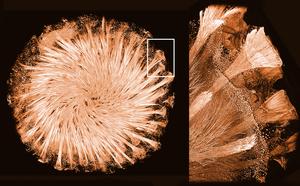
Glass sponges – as the name suggests – have a glass-based skeleton composed of a network of glass needles, hooks, stars, and spheres. To achieve such a unique architecture they have to manipulate the shape of the disordered glass to form highly regular and symmetrical elements. Thin crystalline fibers made of a protein, known as silicatein, are present in channels inside of these glass elements. It is known that silicatein crystals are responsible for glass synthesis in sponges and for shaping the glass skeleton. However, until now efforts to determine the 3D structure of this protein, describe how it assembles into crystals, and how those form the glass skeleton were unsuccessful. Mainly, because nobody was able to reproduce these crystals in the lab. Glass skeleton of the Demosponge Tethya aurantium imaged with non-invasive X-ray microtomography  © Ronald Seidel/Igor Zlotnikov{module INSIDE STORY}

A team of researchers led by Dr. Igor Zlotnikov from the B CUBE –Center for Molecular Bioengineering at TU Dresden tried an unusual approach. Instead of producing silicatein in the lab and trying to obtain lab-grown crystals to study the structure, the researchers decided to take the glass needles from a sponge skeleton and analyze the tiny crystals that already exist inside.

The Zlotnikov group together with researchers from the Dresden Center for Nanoanalysis (DCN) at the Center for Advancing Electronics Dresden (cfaed) used high-resolution transmission electron microscopy (HRTEM) to take a closer look at silicatein crystals packed inside the glass needles. “We have observed an exceptionally ordered and at the same time complex structure. Analyzing the sample we have seen that it is a mixture of organic and inorganic matter. Meaning that both proteins and glass form a hybrid superstructure that somehow shapes the skeleton of sponges,” explains Dr. Zlotnikov.

A traditional way of obtaining a 3D structure of a protein is to expose its crystal to a beam of X-rays. Each protein crystal scatters the X-rays in a different way providing a unique snapshot of its internal arrangement. By rotating the crystal and collecting such snapshots from many angles, the researchers can use computational methods to determine the 3D protein structure. Such an approach is widely used and is the basis of modern structural biology. It works well for crystals of at least 10 microns in size. However, the Zlotnikov group wanted to analyze silicatein crystals which were about 10 times smaller. When exposed to X-rays they were almost immediately damaged, making it impossible to collect a complete data set of snapshots from multiple angles.

With support from the team at PSI’s Swiss Light Source (SLS), the researchers used a newly emerging method known as serial crystallography. “You combine diffraction images from many crystals,” says Filip Leonarski, beamline scientist at PSI, who was involved in the study. “With the traditional method, you shoot a movie. With the new method, you get many snapshots which you combine afterward to decipher the structure.” Each snapshot is taken at a different part of the tiny crystal or even from a different crystal.

In total, the researchers collected more than 3500 individual X-ray diffraction snapshots from 90 glass needles at completely random orientations.  Using state-of-the-art computational methods they were able to find order within the chaos and assemble the data to determine the first complete 3D structure of silicatein.

“Before this study, the structure of silicatein was hypothesized based on its similarity to other proteins,” says Dr. Zlotnikov. Using the newly obtained 3D structure of silicatein, the researchers were able to understand its assembly and function inside the glass skeleton of the sponge. They built a computational model of the superstructure within the glass needle and explained the initial complex images of the protein-glass superstructures obtained with the HRTEM.

“We provided detailed information on the existence of a functional 3D protein-glass superstructure in a living organism. In fact, what we describe is the first known naturally occurring hybrid mineral-protein crystalline assembly,” concludes Dr. Zlotnikov.

Japanese scientists study killer electrons in strumming sky lights

Tyler O'Neal, Staff Editor HEALTH November 25, 2020, 6:23 pm

Wisps of pulsating aurora lights are a rare, yet magical sight. Now, scientists suggest they could be associated with the destruction of part of the ozone.

Supercomputer simulations explain how electrons with wide-ranging energies rain into Earth's upper and middle atmosphere during a phenomenon known as the pulsating aurora. The findings, published in the journal Geophysical Research Letters, suggest that the higher-energy electrons resulting from this process could cause the destruction of the part of the ozone in the mesosphere, about 60 kilometers above Earth's surface. The study was a collaboration between scientists in Japan, including at Nagoya University, and colleagues in the US, including from NASA.

The northern and southern lights that people are typically aware of, called the aurora borealis and australis, look like colored curtains of reds, greens, and purples spreading across the night skies. But there is another kind of aurora that is less frequently seen. The pulsating aurora looks more like indistinct wisps of clouds strumming across the sky. Low-energy (blue) and high-energy (yellow) electrons form  during the process that generates the pulsating aurora.  The high-energy 'relativistic' electrons could cause localized  destruction of the ozone.  (Credit: PsA project){module INSIDE STORY}

Scientists have only recently developed the technologies enabling them to understand how the pulsating aurora forms. Now, an international research team, led by Yoshizumi Miyoshi of Nagoya University's Institute for Space-Earth Environmental Research, has developed a theory to explain the wide-energy electron precipitations of pulsating auroras and conducted supercomputer simulations that validate their theory.

Their findings suggest that both low- and high-energy electrons originate simultaneously from interactions between chorus waves and electrons in the Earth's magnetosphere.

Chorus waves are plasma waves generated near the magnetic equator. Once formed, they travel northwards and southwards, interacting with electrons in Earth's magnetosphere. This interaction energizes the electrons, scattering them down into the upper atmosphere, where they release the light energy that appears as a pulsating aurora.

The electrons that result from these interactions range from lower-energy ones, of only a few hundred-kilo electron volts, to very high-energy ones, of several thousand-kilo electron volts, or 'mega electron' volts.

Miyoshi and his team suggest that the high-energy electrons of pulsating auroras are 'relativistic' electrons, otherwise known as killer electrons, because of the damage they can cause when they penetrate satellites.

"Our theory indicates that so-called killer electrons that precipitate into the middle atmosphere are associated with the pulsating aurora, and could be involved in ozone destruction," says Miyoshi.

The team next plans to test their theory by studying measurements taken during a space rocket mission called 'loss through auroral microburst pulsations' (LAMP), which is due to launch in December 2021. LAMP is a collaboration between NASA, the Japan Aerospace Exploration Agency (JAXA), Nagoya University, and other institutions. LAMP experiments will be able to observe the killer electrons associated with the pulsating aurora.

  1. OU's Crossley wins $2 million NSF grant to advance polymer recycling tech
  2. Iowa State researchers make sense of a universe of corn based on genomics, data analytics

Page 20 of 28

  • 15
  • 16
  • 17
  • 18
  • 19
  • 20
  • 21
  • 22
  • 23
  • 24
POPULAR RIGHT NOW
  • Supercomputers replace ‘bathtub’ flood maps with physics-based digital twins of Britain’s coastline
    Supercomputers replace ‘bathtub’ flood maps with physics-based digital twins of Britain’s coastline
  • Supercomputers push neural quantum simulation beyond previous limits
    Supercomputers push neural quantum simulation beyond previous limits
  • Intel’s AI supercomputing revival: Q2 financial surge signals new era for CPU-powered HPC infrastructure
    Intel’s AI supercomputing revival: Q2 financial surge signals new era for CPU-powered HPC infrastructure
  • AWS supercomputing investment reaches historic scale as Amazon’s AI strategy powers record financial results
    AWS supercomputing investment reaches historic scale as Amazon’s AI strategy powers record financial results
  • AI infrastructure financing fears shake semiconductor sector
    AI infrastructure financing fears shake semiconductor sector
  • Catching the wave of the future: Supercomputers unlock the hidden dynamics of Venus
    Catching the wave of the future: Supercomputers unlock the hidden dynamics of Venus
  • NCAR supercomputers run planet scale climate experiments impossible in the real world
    NCAR supercomputers run planet scale climate experiments impossible in the real world
  • AI hunts the cosmos: Machine learning helps astronomers discover the first ‘Wandering’ supermassive black hole caught destroying a star
    AI hunts the cosmos: Machine learning helps astronomers discover the first ‘Wandering’ supermassive black hole caught destroying a star
  • Supercomputing for the masses: Meta's vision of a personal superintelligence for everyone
    Supercomputing for the masses: Meta's vision of a personal superintelligence for everyone
  • NVIDIA helps turn AI compute into a new asset class as Wall Street mobilizes $500 billion
    NVIDIA helps turn AI compute into a new asset class as Wall Street mobilizes $500 billion
THIS YEAR'S MOST READ
  • Wall Street wants to trade supercomputing power like oil
    Wall Street wants to trade supercomputing power like oil
  • Beamforming the future: BeammWave's 6G push signals the rise of orbital-terrestrial wireless networks
    Joakim Axmon
    Joakim Axmon
  • Cosmic ambition at scale: UK’s supercomputer unlocks a 2.5 petabytes universe
    Cosmic ambition at scale: UK’s supercomputer unlocks a 2.5 petabytes universe
  • Hidden order, revealed at scale: Supercomputing, electron ptychography uncover the inner workings of relaxor ferroelectrics
    Hidden order, revealed at scale: Supercomputing, electron ptychography uncover the inner workings of relaxor ferroelectrics
  • Intel's Q1 results signal supercomputing surge driving Xeon momentum
    Intel's Q1 results signal supercomputing surge driving Xeon momentum
  • When stars fall apart: Supercomputing reveals the hidden physics of black holes
    When stars fall apart: Supercomputing reveals the hidden physics of black holes
  • MIT develops computational framework to probe dark matter via gravitational waves
    MIT develops computational framework to probe dark matter via gravitational waves
  • Explainable AI moves into the watershed: FAMU-FSU engineers build predictive framework for real-time E. coli forecasting
    FAMU-FSU College of Engineering Assistant Professor Nasrin Alamdari. (Scott Holstein/FAMU-FSU College of Engineering)
    FAMU-FSU College of Engineering Assistant Professor Nasrin Alamdari. (Scott Holstein/FAMU-FSU College of Engineering)
  • Multi-layer simulations reveal the hidden supply chain of solar prominences
    Multi-layer simulations reveal the hidden supply chain of solar prominences
  • Japanese scientists decode dolphin speed with supercomputing: Turbulence, vortices, and the hidden physics of propulsion
    Japanese scientists decode dolphin speed with supercomputing: Turbulence, vortices, and the hidden physics of propulsion
  • FRONTPAGE
  • LATEST
  • POPULAR
  • REGISTER
  • SOCIAL
  • VIDEO
  • SUBSCRIPTION
  • RSS
  • GUIDELINES
  • PRIVACY
  • TOS
  • ABOUT
  • +1 (816) 799-4488
  • editorial@supercomputingonline.com
© 2001 - 2026 SuperComputingOnline.com, LLC. All rights reserved. This material may not be published, broadcast, rewritten or redistributed without permission.
Sign In
  • FRONT PAGE
  • LATEST
    • MEDIA KIT
    • MOST READ
    • RSS FEED
    • ACADEMIA
    • AEROSPACE
    • APPLICATIONS
    • ASTRONOMY
    • AUTOMOTIVE
    • BIG DATA
    • BIOLOGY
    • CHEMISTRY
    • CLIENTS
    • CLOUD
    • DEFENSE
    • DEVELOPER TOOLS
    • EARTH SCIENCES
    • ECONOMICS
    • ENGINEERING
    • ENTERTAINMENT
    • HEALTH
    • INDUSTRY
    • INTERCONNECTS
    • GAMING
    • GOVERNMENT
    • MANUFACTURING
    • MIDDLEWARE
    • MOVIES
    • NETWORKS
    • OIL & GAS
    • PHYSICS
    • PROCESSORS
    • RETAIL
    • SCIENCE
    • STORAGE
    • SYSTEMS
    • VISUALIZATION
  • VIDEOS
    • ADD YOUR VIDEOS
    • MANAGE VIDEOS
  • COMMUNITY
    • TRADE SHOWS
    • SOCIAL NETWORK VIDEOS
    • SURVEYS
    • APPLICATIONS BROWSER
    • CONVERSATION INBOX
    • SOCIAL ADVERTISER
    • GROUPS
    • MARKETPLACE LISTINGS
    • PAGES
    • LEADERBOARD
    • POINTS LISTING
      • BADGES
    • PRIVACY CONFIRM REQUEST
    • PRIVACY CREATE REQUEST

Hey there! We noticed you’re using an ad blocker.