

Miami study proposes the public will pay over $500 million a year for hurricane forecast improvements

A survey of those affected by past hurricanes reveals direct benefit to them from scientific advances from supercomputing

A recent survey of people recently affected by hurricanes across four states found that the public is willing to pay more than $500 million a year to improve hurricane forecasts. The study, led by a group of atmospheric scientists and economists at the University of Miami (UM) Rosenstiel School of Marine and Atmospheric Science, comes at a time when Hurricane Ida’s path caused widespread damage across U.S. states.

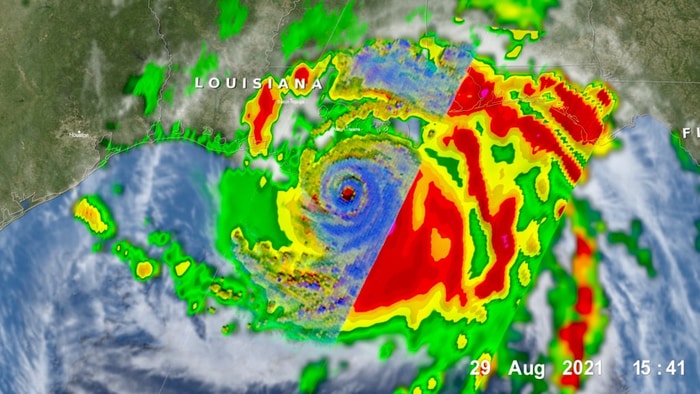
“People see a direct benefit from having better science and information regarding track, wind speed, and precipitation associated with these storms,” said Renato Molina, assistant professor of environmental and resource economics at the UM Rosenstiel School. Hurricane Ida's recent impact to Louisiana and the surrounding Gulf coast states is estimated to reach $95 billion in damages.  CREDIT Credit: JAXA/VPM Satellite, NASA Scientific Visualization Studio
The researchers surveyed middle-class families that were affected by hurricanes Florence or Michael and lived roughly 50 miles from the coast in Florida, Georgia, and North and South Carolina. Respondents were asked to answer a series of questions to understand their attitudes toward forecast improvements.

The researchers found that the respondents were willing to pay for further improvements to hurricane forecasts and that this willingness to pay expands to all attributes tested — storm track, wind speed, and precipitation—with wind speed forecast the most valuable of the improvements. They found that the average willingness to pay for continued storm track improvements was $26.07 per household per year, $28.89 wind speed, and $21.63 for precipitation forecast accuracy.

“When presented with the facts about the science behind hurricane forecasts, the public is able to understand how funding research allows them to make better decisions in the face of a hurricane,” said Molina. “They value this enough that they can assign a price to these improvements and are willing to pay for it.”

In 2018 Hurricane Michael made landfall along the Florida Panhandle as a Category-5 storm, causing an estimated $25.1 billion in damages. 2018 Hurricane Florence made landfall in North Carolina as a category one storm and $24.23 billion in damage.
Google, Microsoft products accumulated the most vulnerabilities in H1 2021

Cybercriminals are constantly attempting to exploit vulnerabilities that affect as many people as possible to maximize their profit opportunities.

According to the recent Atlas VPN team findings, Google and Microsoft accumulated the most vulnerabilities in the first half of 2021. Although not all exposures can cause critical damage, hackers could exploit some of them for severe attacks.

Google had 547 accumulated vulnerabilities throughout the first half of 2021. Exploiting Google products like Chrome is popular among cybercriminals.

Next up, the second most exposures were found in Microsoft products — 432. State-sponsored threat actors from China abused Microsoft Exchange Server vulnerabilities to carry out ransomware attacks.

Oracle registered 316 total vulnerabilities in the first six months of 2021. Usually, the exploits are found in Oracle WebLogic Server, which functions as a platform for developing, deploying, and running enterprise Java-based applications.

Networking hardware company Cisco accumulated 200 vulnerabilities. Lastly, the producer of software for the management of business processes SAP had 118 exploits in total.

Cybersecurity writer and researcher at Atlas VPN William Sword shares his thoughts on Microsoft and Google vulnerabilities:

“Exploiting vulnerabilities in Google or Microsoft products allow cybercriminals to probe millions of systems. While the tech giants are doing a fair job of keeping up with exploits and constantly updating their software, people and organizations need to follow suit and keep up with the updates to prevent further exploitation.”

Vulnerability tiers

Exploits that can be turned into a severe attack get more attention from cyber criminals and companies themselves to fix the flaw as soon as possible.

In the first half of 2021, there were 1,023 vulnerabilities found with a risk tier of 10. One of the exploits that applied to such a tier is CVE-2021-22986, with a score of 9.8.

National Vulnerability Database (NVD) issued risk tier 9 to 927 vulnerabilities. At this tier, exploit CVE-2021-28111 stood out with a score of 8.8.

NVD recorded most vulnerabilities at a risk tier of 8 — 2,164. A notable exploit was CVE-2021-24092, with a score of 7.8.

Finally, NVD recorded 501 vulnerabilities at risk tier 7. While second-most vulnerabilities — 1,765 — were found at tier 6.

To read the full article, head over to:

https://atlasvpn.com/blog/google-and-microsoft-accumulated-the-most-vulnerabilities-in-h1-2021

WVU wins $2 million NSF award to build international gravitational wave detection network

The hunt for more evidence of gravitational waves, ripples in spacetime formed by cataclysmic events in the distant universe, will be accelerated with a nearly $2 million National Science Foundation grant awarded to a West Virginia University scientist and her colleagues.

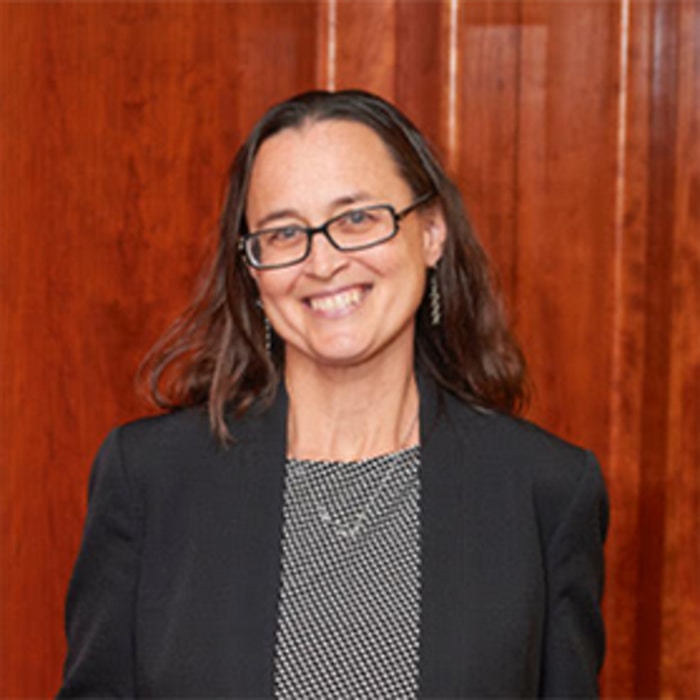
Eberly Distinguished Professor of Physics and Astronomy Maura McLaughlin will serve as principal investigator on the project, which will bolster a global network of researchers and telescopes called the International Pulsar Timing Array. The coalition’s goal is to discover low-frequency gravitational waves – a different sort from what’s already been identified - using high-precision timing observations of exotic stars called millisecond pulsars with the world’s largest radio telescopes. Maura McLaughlin, Eberly Distinguished Professor of Physics and Astronomy at West Virginia University

WVU researchers already played a hand in first detecting gravitational waves in 2015, some 100 years after Albert Einstein predicted their existence in his theory of general relativity. A sensitive instrument called LIGO (Laser Interferometer Gravitational-Wave Observatory) observed the first gravitational waves when two black holes crashed into one another. According to NASA, that collision happened 1.3 billion years ago but the ripples didn’t make it to Earth until 2015.

Those gravitational waves, however, are different from the ones the IPTA is seeking out, McLaughlin said.

“High-frequency waves have already been detected with LIGO,” said McLaughlin, who also directs the WVU Center for Gravitational Waves and Cosmology. “LIGO detected gravitational waves from stellar-mass black holes —objects that are just a little bit bigger than the sun but form from stars that explode.

“The gravitational waves we’ll detect are from supermassive black holes sitting at the cores of galaxies. Think of galactic-sized black holes that are spiraling with much longer orbital periods. This will lead to a broadened understanding of the universe. We’re going to learn about galaxy evolution and growth through cosmic time.”

McLaughlin hopes the recent award will build upon the roles WVU and West Virginia have in this field of research.

In all, 11 telescopes, including the Green Bank Telescope in Pocahontas County, spanning nine countries will be utilized for the project, titled “AccelNet-Implementation: The International Pulsar Timing Array."

“Researchers using these large radio telescopes throughout the world are observing pulsars,” McLaughlin said. “They’re measuring the arrival times of their pulses and then we’re going to combine all the data from all of these telescopes into one very sensitive dataset that can be used to search for correlated perturbations due to gravitational waves.

“In five years, we hope to have the most sensitive dataset in the world to search for gravitational waves.”

This project will expand the IPTA’s reach of gravitational wave hunting from North America, Europe and Australia to include China, India and South Africa.

Beyond the potential scientific discoveries, McLaughlin said she’s also excited about the opportunities the project will provide for students at WVU and across the world. International workshops will be held to train students how to analyze the collected data.

“Giving WVU students the opportunity to collaborate with scientists all over the world and possibly travel to other countries to use their telescopes will be a really valuable experience for them,” McLaughlin said. “I’m also enthusiastic about bringing students in from other countries where they don’t have as much exposure to this kind of technology and science.”