

Brown University physicist discovers a strange metal that could lead to quantum supercomputers, deep insights

Discovery could help scientists to understand “strange metals,” a class of materials that are related to high-temperature superconductors and share fundamental quantum attributes with black holes.

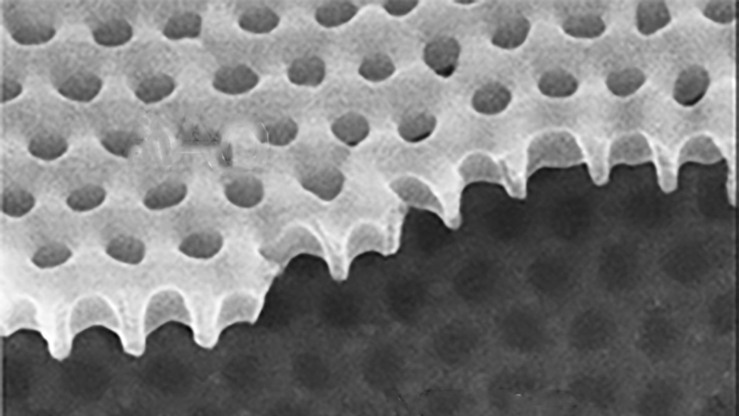
Scientists understand quite well how temperature affects electrical conductance in most everyday metals like copper or silver. But in recent years, researchers have turned their attention to a class of materials that do not seem to follow the traditional electrical rules. Understanding these so-called “strange metals” could provide fundamental insights into the quantum world, and potentially help scientists understand strange phenomena like high-temperature superconductivity. Using a material called yttrium barium copper oxide arrayed with tiny holes, researchers have discovered "strange metal" behavior in a type of system where charge carriers are bosons, something that's never been seen before.
Now, a research team co-led by a Brown University physicist has added a discovery to the strange metal mix. The team found strange metal behavior in a material in which electrical charge is carried not by electrons, but by more “wave-like” entities called Cooper pairs.

While electrons belong to a class of particles called fermions, Cooper pairs act as bosons, which follow very different rules from fermions. This is the first time strange metal behavior has been seen in a bosonic system, and researchers are hopeful that the discovery might help find an explanation for how strange metals work — something that has eluded scientists for decades.

“We have these two fundamentally different types of particles whose behaviors converge around a mystery,” said Jim Valles, a professor of physics at Brown and the study’s corresponding researcher. “What this says is that any theory to explain strange metal behavior can’t be specific to either type of particle. It needs to be more fundamental than that.”

Strange metals

Strange metal behavior was first discovered around 30 years ago in a class of materials called cuprates. These copper-oxide materials are most famous for being high-temperature superconductors, meaning they conduct electricity with zero resistance at temperatures far above that of normal superconductors. But even at temperatures above the critical temperature for superconductivity, cuprates act strangely compared to other metals.

As their temperature increases, cuprates’ resistance increases in a strictly linear fashion. In normal metals, the resistance increases only so far, becoming constant at high temperatures in accord with what's known as Fermi liquid theory. Resistance arises when electrons flowing in a metal bang into the metal’s vibrating atomic structure, causing them to scatter. Fermi-liquid theory sets a maximum rate at which electron scattering can occur. But strange metals don’t follow the Fermi-liquid rules, and no one is sure how they work. What scientists do know is that the temperature-resistance relationship in strange metals appears to be related to two fundamental constants of nature: Boltzmann’s constant, which represents the energy produced by random thermal motion, and Planck’s constant, which relates to the energy of a photon (a particle of light).

“To try to understand what’s happening in these strange metals, people have applied mathematical approaches similar to those used to understand black holes,” Valles said. “So there are some very fundamental physics happening in these materials.”

Of bosons and fermions

In recent years, Valles and his colleagues have been studying electrical activity in which the charge carriers are not electrons. In 1952, Nobel Laureate Leon Cooper, now a Brown professor emeritus of physics, discovered that in normal superconductors (not the high-temperature kind discovered later), electrons team up to form Cooper pairs, which can glide through an atomic lattice with no resistance. Despite being formed by two electrons, which are fermions, Cooper pairs can act like bosons.

“Fermion and boson systems usually behave very differently,” Valles said. “Unlike individual fermions, bosons are allowed to share the same quantum state, which means they can move collectively like water molecules in the ripples of a wave.”

In 2019, Valles and his colleagues showed that Cooper pair bosons can produce metallic behavior, meaning they can conduct electricity with some amount of resistance. That in itself was a surprising finding, the researchers say, because elements of quantum theory suggested that the phenomenon shouldn’t be possible. For this latest research, the team wanted to see if bosonic Cooper-pair metals were also strange metals.

The team used a cuprate material called yttrium barium copper oxide patterned with tiny holes that induce the Cooper-pair metallic state. The team cooled the material down to just above its superconducting temperature to observe changes in its conductance. They found, like fermionic strange metals, a Cooper-pair metal conductance that is linear with temperature.

The researchers say this discovery will give theorists something new to chew on as they try to understand strange metal behavior.

“It’s been a challenge for theoreticians to come up with an explanation for what we see in strange metals,” Valles said. “Our work shows that if you’re going to model charge transport in strange metals, that model must apply to both fermions and bosons — even though these types of particles follow fundamentally different rules.”

Ultimately, a theory of strange metals could have massive implications. Strange metal behavior could hold the key to understanding high-temperature superconductivity, which has vast potential for things like lossless power grids and quantum supercomputers. And because strange metal behavior seems to be related to fundamental constants of the universe, understanding their behavior could shed light on basic truths of how the physical world works.

Texas A&M prof finds late season storms to have greater potential for intensifying than early season storms

Texas A&M Oceanographer and Assistant Professor, Dr. Henry Potter, gathered evidence suggesting that tropical storms in the late hurricane season have a better chance of intensifying than early season storms. In his new research, Potter explains that differences in upper ocean temperatures between the two times of year are key to cyclone strength and longevity. 

“My interest was trying to understand variability in upper ocean heat throughout hurricane season,” Potter said.  Getty Images

Tropical cyclones get their energy by sucking the heat from the warm upper waters of the ocean. Throughout the season from June to November, temperatures vary both at and below the surface which can influence how strong a storm can become. Sea surface temperatures can be tracked by satellite, but not subsurface temperatures, making intensity predictions more difficult.

The most intense storms tend to occur during the peak months of August and September. However, two nearly identical storms that occur in June and November could behave very differently because of these differences in upper ocean temperatures.

The early summer months have a thinner layer of hot water in the upper ocean and the later months of the season have a much deeper layer of warm water for storms to draw energy from. As a storm draws heat from the upper layer, it also draws up the cooler waters from below, cooling the upper waters and thus reducing the surface heat energy available for intensification. In the later months of the season, the cooler waters are further down making it harder for the storm to cool the upper waters and increasing the possibility of storm intensification.

For this study, Potter collected ten years of data from the Argo program, part of the Global Ocean Observing System. The Argo program consists of about 4000 drifting floats globally to measure profiles at Each measuring water temperature from the surface to 2000 m every 10 days. The number of operational floats changes daily and about 20-30 floats are operating in the Gulf of Mexico at any given time. Dr. Potter used the temperature profiles to calculate the tropical storm heat potential.

“The tropical cyclone heat potential is a metric used by the hurricane community that helps improve hurricane forecasts when used in addition to sea surface temperature,” Potter said. “It is important to know what the temperature profile is below the surface, so we have a better idea of how much the ocean is likely to cool due to the hurricane mixing it.”

“It is a very timely work. The role of Upper Ocean Heat Content in tropical cyclone intensification is an important scientific and societal subject,” said Dr. Anthony Knap, Oceanography professor and Director of Texas A&M’s Geochemical & Environmental Research Group (GERG). “Although storm track forecasting has been significantly improved in the past 30 years, long-term intensity forecasts have lagged.”

“I have had a long-term interest in this problem. GERG has a series of gliders which are deployed to help fill the gaps,” Knap said. “However, we need more support to keep these gliders in the water pre-hurricane season in the Gulf of Mexico.”

“Hurricanes do a lot of damage and upend a lot of people’s lives in very serious ways,” Potter said. “One of the best things we can do, as a community of hurricane scientists, is to produce reliable forecasts so that people heed evacuation warnings.”

BU researchers use artificial intelligence to determine extent of damage in kidney disease

Chronic kidney disease (CKD) is caused by diabetes and hypertension. In 2017, the global prevalence of CKD was 9.1 percent, which is approximately 700 million cases. Chronic kidney damage is assessed by scoring the amount of interstitial fibrosis and tubular atrophy (IFTA) in a renal biopsy sample. Although image digitization and morphometric (measuring external shapes and dimensions) techniques can better quantify the extent of histologic damage, a more widely applicable way to stratify kidney disease severity is needed.

Now, researchers from Boston University School of Medicine (BUSM) have developed a novel Artificial Intelligence (AI) tool to predict the grade of IFTA, a known structural correlate of progressive and chronic kidney disease.

"Having a computer model that can mimic an expert pathologist's workflow and assess disease grade is an exciting idea because this technology has the potential to increase efficiency in clinical practices," explained corresponding author Vijaya B. Kolachalama, Ph.D., assistant professor of medicine at BUSM.

Typical workflow by the pathologist on the microscope involves manual operations such as panning as well as zooming in and out of specific regions on the slide to evaluate various aspects of the pathology. In the 'zoom out' assessment, pathologists review the entire slide and perform a 'global' evaluation of the kidney core. In the 'zoom in' assessment, they perform in-depth, microscopic evaluation of 'local' pathology in the regions of interest.

An international team of five practicing nephropathologists independently determined IFTA scores on the same set of digitized human kidney biopsies using web-based software (PixelView, deepPath Inc.). Their average scores were taken as a reference estimate to build the deep learning model. To emulate the nephropathologist's approach to grading the biopsy slides under a microscope, the researchers used AI to incorporate patterns and features from sub-regions (or patches) of the digitized kidney biopsy image as well as the entire (global) digitized image to quantify the extent of IFTA. Through this combination of patch-level and global-level data, a deep learning model was designed to accurately predict IFTA grade.

When validated, Kolachalama believes AI models that can automatically score the extent of chronic damage in the kidney can serve as second opinion tools in clinical practices. "Eventually, it may be possible to use this algorithm to study other organ-specific pathologies focused on evaluating fibrosis. Such methods may hold the potential to give more reproducible IFTA readings than readings by nephropathologists," he adds.