SUPERCOMPUTING NEWS SUPERCOMPUTING NEWS
    • MEDIA KIT
    • MOST READ
    • RSS FEED
    • ACADEMIA
    • AEROSPACE
    • APPLICATIONS
    • ASTRONOMY
    • AUTOMOTIVE
    • BIG DATA
    • BIOLOGY
    • CHEMISTRY
    • CLIENTS
    • CLOUD
    • DEFENSE
    • DEVELOPER TOOLS
    • EARTH SCIENCES
    • ECONOMICS
    • ENGINEERING
    • ENTERTAINMENT
    • GAMING
    • GOVERNMENT
    • HEALTH
    • OIL & GAS
    • INDUSTRY
    • INTERCONNECTS
    • MANUFACTURING
    • MIDDLEWARE
    • MOVIES
    • NETWORKS
    • PHYSICS
    • PROCESSORS
    • RETAIL
    • SCIENCE
    • STORAGE
    • SYSTEMS
    • VISUALIZATION
    • AcyMailing subscription form

    • ADD YOUR VIDEOS
    • MANAGE VIDEOS
    • CONVERSATION INBOX
    • SOCIAL ADVERTISER
    • SOCIAL NETWORK VIDEOS
    • SURVEYS
    • GROUPS
    • PAGES
    • MARKETPLACE LISTINGS
    • APPLICATIONS BROWSER
    • PRIVACY CONFIRM REQUEST
    • PRIVACY CREATE REQUEST
    • LEADERBOARD
    • POINTS LISTING
      • BADGES
    • TRADE SHOWS
Sign In
Dr Caroline Roney
Dr Caroline Roney
Tyler O'Neal, Staff Editor LATEST April 16, 2025, 8:00 am

AI-generated 'synthetic scarred hearts' revolutionize atrial fibrillation treatment

In a groundbreaking development, researchers at Queen Mary University of London have unveiled an artificial intelligence (AI) tool capable of generating synthetic yet medically accurate models of fibrotic heart tissue. This innovation promises to enhance treatment planning for atrial fibrillation (AF), a common heart rhythm disorder affecting approximately 1.4 million individuals in the UK.

AF is characterized by irregular heartbeats caused by scarring (fibrosis) in the heart tissue, which disrupts electrical signals. Traditionally, the extent and pattern of this scarring are evaluated using specialized MRI scans known as Late Gadolinium Enhancement MRI (LGE-MRI). However, the limited availability of high-quality imaging data has presented challenges in developing predictive models for treatment outcomes.

The research team trained their AI model using 100 real LGE-MRI scans from AF patients to address this issue. The AI then generated 100 synthetic fibrosis patterns that closely mimic heart scarring. These virtual models were incorporated into 3D heart simulations to assess the effectiveness of various ablation strategies—a standard treatment that involves creating small scars to block erratic electrical signals.

The results were promising. Predictions based on the AI-generated models proved nearly as reliable as those using actual patient data. This approach preserves patient privacy and allows for exploring a wider range of cardiac scenarios, facilitating more personalized treatment plans.

Dr. Alexander Zolotarev, the study's first author, emphasized AI's supportive role in clinical settings: "This isn't about replacing doctors' judgment. It's about providing clinicians with a sophisticated simulator to test different treatment approaches on a digital model of each patient's unique heart structure before conducting the procedure." b8b43306ccbc25c8f77ce162f0256321

This initiative is part of Dr. Caroline Roney's UKRI Future Leaders Fellowship project, which aims to develop personalized 'digital twin' heart models for AF patients. Dr. Roney highlighted the significance of this research: "We're very excited about this work as it addresses the challenge of limited clinical data for cardiac digital twin models. Our key development enables large-scale in-silico trials and patient-specific modeling to create more personalized treatments for atrial fibrillation patients."

Given that ablation procedures fail in about half of AF cases, this technology has the potential to significantly reduce repeat interventions, ultimately improving patient outcomes and optimizing healthcare resources.

Tulane researchers use AI to improve diagnosis of drug-resistant infections

Tulane researchers use AI to improve diagnosis of drug-resistant infections

Tyler O'Neal, Staff Editor LATEST April 12, 2025, 4:00 am

In a time when drug-resistant infections pose a significant threat to global health, the need for innovative solutions has never been more critical. Recent advancements in technology have provided a glimmer of hope, as researchers at Tulane University have introduced a groundbreaking artificial intelligence (AI)-based approach aimed at revolutionizing the diagnosis and treatment of these challenging infections.

The problem of drug-resistant infections, primarily driven by pathogens like tuberculosis and staphylococcus, continues to worsen, resulting in a serious healthcare crisis. The complexities involved—such as rising treatment costs and higher mortality rates—highlight the urgent need for advanced diagnostic tools. According to the World Health Organization, there were approximately 450,000 cases of multidrug-resistant tuberculosis in 2021, with success rates for treatment plummeting to just 57%.

To address this pressing issue, Tulane University scientists have developed an innovative AI-driven method designed to identify genetic markers of antibiotic resistance in notorious pathogens like Mycobacterium tuberculosis and Staphylococcus aureus. This cutting-edge approach introduces the Group Association Model (GAM)—a novel computational model enhanced by machine learning algorithms.

Unlike traditional diagnostic tools that often struggle to accurately determine resistance mechanisms, GAM represents a paradigm shift by analyzing the complete genetic profile of bacteria to identify the genetic mutations responsible for antibiotic resistance. Dr. Tony Hu, the Weatherhead Presidential Chair in Biotechnology Innovation and the director of the Tulane Center for Cellular & Molecular Diagnostics, describes this methodology as a way to uncover bacteria's resistance patterns without relying on preconceived notions.

The strength of GAM lies in its comprehensive analysis of whole genome sequences, allowing scientists to compare bacterial strains with varying resistance profiles. By identifying genetic changes that indicate resistance to specific drugs, this innovative model not only improves diagnostic accuracy but also reduces the occurrence of false positives, which can lead to inappropriate treatment decisions.

Additionally, GAM's integration with machine learning enhances its predictive capabilities, especially when dealing with limited or incomplete data. Validation studies conducted on clinical samples from China have shown that this advanced model significantly outperforms existing methods based on WHO guidelines in predicting resistance to critical front-line antibiotics.

Beyond its immediate applications in healthcare, the implications of this AI-powered diagnostic tool extend beyond medical laboratories. The potential to apply this methodology to other bacterial strains or even to agricultural contexts—where antibiotic resistance is increasingly problematic—underscores the versatility and impact of Tulane's pioneering research.

As lead author Julian Saliba aptly notes, combating drug-resistant infections requires a proactive approach. This innovative tool serves as a vital ally in this ongoing battle. By deepening our understanding of resistance mechanisms and facilitating early intervention, Tulane's novel AI-based method paves the way for personalized treatment regimens and heralds a new era in the fight against drug-resistant infections.

Artist's illustration of an IMBH ejecting a high-velocity star from a globular cluster.  Credit Jingchuan Yu, Yang Huang and Xiaoling Yu.
Artist's illustration of an IMBH ejecting a high-velocity star from a globular cluster. Credit Jingchuan Yu, Yang Huang and Xiaoling Yu.

Unraveling the mystery of intermediate-mass black holes: A Chinese perspective

Tyler O'Neal, Staff Editor LATEST April 9, 2025, 10:00 am

The cosmos has long been a realm of mystery and fascination, with black holes standing out as enigmatic entities that continue to captivate the minds of astronomers and astrophysicists. Recently, a discovery has sparked curiosity and raised important questions about the existence of intermediate-mass black holes (IMBHs), shedding light on a crucial missing link in black hole evolution.

Associate Professor Yang Huang from the University of Chinese Academy of Sciences, in collaboration with esteemed research institutions, embarked on a groundbreaking journey to uncover the secrets hidden within globular clusters. Their exploration focused on high-velocity stars ejected from these clusters, propelled by a gravitational phenomenon known as the Hills mechanism. This innovative approach aimed to provide compelling evidence for the elusive IMBHs, bridging the gap between stellar-mass black holes and supermassive black holes.

Using meticulous orbital backtracking along with detailed analysis of data from Gaia and LAMOST, the research team made a startling discovery. The high-velocity star J0731+3717, which was ejected from the globular cluster M15 at an astonishing velocity of nearly 550 km/s approximately 20 million years ago, emerged as a key player in this cosmic narrative. Their findings, published as the cover article in the National Science Review, proposed a groundbreaking narrative titled "A High-Velocity Star Recently Ejected by an Intermediate-Mass Black Hole in M15."

The existence of IMBHs, long considered a cosmic puzzle, has sparked intense debates within the scientific community. Globular clusters, known for their dense stellar populations, have been proposed as prime candidates for the formation of these elusive entities. The research journey led by Professor Huang and his team aimed to unveil the mysteries surrounding IMBHs, providing a tantalizing glimpse into the hidden realms of these cosmic giants.

Simulations played a crucial role in unraveling the complex interactions involving the IMBH in M15. By leveraging insights from N-body numerical simulations and pulsar timing studies, the researchers explored new frontiers, challenging traditional understanding and expanding the boundaries of astronomical knowledge. Their bold method of tracing high-velocity stars back to their origins within globular clusters has opened a new chapter in the quest to detect IMBHs, bringing them closer to the heart of these stellar assemblies.

As the study progresses, the implications of this discovery resonate throughout the astronomical community, offering a new perspective on the evolution of black holes. The extensive data from Gaia and large-scale spectroscopic surveys promise to unveil more cosmic secrets, propelling us into previously unexplored territories of discovery.

In a universe filled with celestial wonders and cosmic mysteries, the quest to understand the enigmatic realm of intermediate-mass black holes is a testament to our insatiable curiosity and relentless pursuit of knowledge. As we gaze toward the cosmic horizon, guided by the inquisitive spirit embodied by Professor Huang and his team, we embark on a journey of discovery that transcends the boundaries of space and time, opening doors to realms yet unseen.

  1. Woolpert, Teren leverage geospatial tech for global energy solutions
  2. AI model predicts multi-resistance in bacteria: Unveiling the power of big data
  3. Nvidia sales grow 78% on AI demand

Page 59 of 60

  • 51
  • 52
  • 53
  • 54
  • 55
  • 56
  • 57
  • 58
  • 59
  • 60
POPULAR RIGHT NOW
  • Supercomputers replace ‘bathtub’ flood maps with physics-based digital twins of Britain’s coastline
    Supercomputers replace ‘bathtub’ flood maps with physics-based digital twins of Britain’s coastline
  • Supercomputers push neural quantum simulation beyond previous limits
    Supercomputers push neural quantum simulation beyond previous limits
  • Intel’s AI supercomputing revival: Q2 financial surge signals new era for CPU-powered HPC infrastructure
    Intel’s AI supercomputing revival: Q2 financial surge signals new era for CPU-powered HPC infrastructure
  • AI infrastructure financing fears shake semiconductor sector
    AI infrastructure financing fears shake semiconductor sector
  • AWS supercomputing investment reaches historic scale as Amazon’s AI strategy powers record financial results
    AWS supercomputing investment reaches historic scale as Amazon’s AI strategy powers record financial results
  • Catching the wave of the future: Supercomputers unlock the hidden dynamics of Venus
    Catching the wave of the future: Supercomputers unlock the hidden dynamics of Venus
  • NCAR supercomputers run planet scale climate experiments impossible in the real world
    NCAR supercomputers run planet scale climate experiments impossible in the real world
  • AI hunts the cosmos: Machine learning helps astronomers discover the first ‘Wandering’ supermassive black hole caught destroying a star
    AI hunts the cosmos: Machine learning helps astronomers discover the first ‘Wandering’ supermassive black hole caught destroying a star
  • Supercomputing for the masses: Meta's vision of a personal superintelligence for everyone
    Supercomputing for the masses: Meta's vision of a personal superintelligence for everyone
  • NVIDIA helps turn AI compute into a new asset class as Wall Street mobilizes $500 billion
    NVIDIA helps turn AI compute into a new asset class as Wall Street mobilizes $500 billion
THIS YEAR'S MOST READ
  • Wall Street wants to trade supercomputing power like oil
    Wall Street wants to trade supercomputing power like oil
  • Beamforming the future: BeammWave's 6G push signals the rise of orbital-terrestrial wireless networks
    Joakim Axmon
    Joakim Axmon
  • Cosmic ambition at scale: UK’s supercomputer unlocks a 2.5 petabytes universe
    Cosmic ambition at scale: UK’s supercomputer unlocks a 2.5 petabytes universe
  • Hidden order, revealed at scale: Supercomputing, electron ptychography uncover the inner workings of relaxor ferroelectrics
    Hidden order, revealed at scale: Supercomputing, electron ptychography uncover the inner workings of relaxor ferroelectrics
  • Intel's Q1 results signal supercomputing surge driving Xeon momentum
    Intel's Q1 results signal supercomputing surge driving Xeon momentum
  • When stars fall apart: Supercomputing reveals the hidden physics of black holes
    When stars fall apart: Supercomputing reveals the hidden physics of black holes
  • MIT develops computational framework to probe dark matter via gravitational waves
    MIT develops computational framework to probe dark matter via gravitational waves
  • Explainable AI moves into the watershed: FAMU-FSU engineers build predictive framework for real-time E. coli forecasting
    FAMU-FSU College of Engineering Assistant Professor Nasrin Alamdari. (Scott Holstein/FAMU-FSU College of Engineering)
    FAMU-FSU College of Engineering Assistant Professor Nasrin Alamdari. (Scott Holstein/FAMU-FSU College of Engineering)
  • Multi-layer simulations reveal the hidden supply chain of solar prominences
    Multi-layer simulations reveal the hidden supply chain of solar prominences
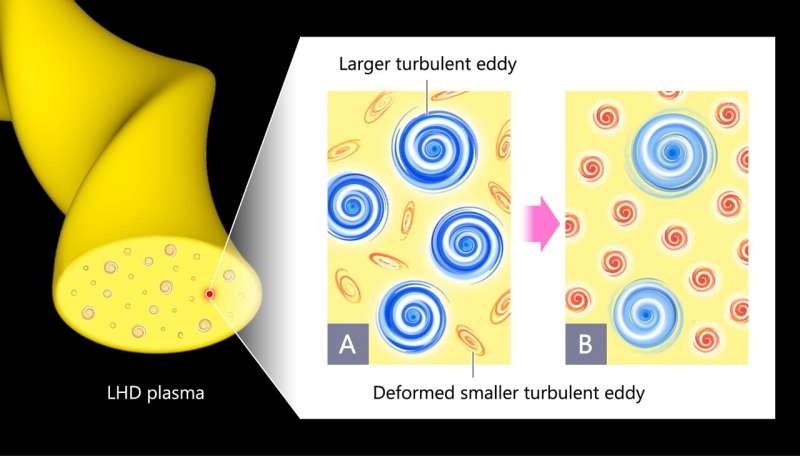
  • Japanese scientists decode dolphin speed with supercomputing: Turbulence, vortices, and the hidden physics of propulsion
    Japanese scientists decode dolphin speed with supercomputing: Turbulence, vortices, and the hidden physics of propulsion
  • FRONTPAGE
  • LATEST
  • POPULAR
  • REGISTER
  • SOCIAL
  • VIDEO
  • SUBSCRIPTION
  • RSS
  • GUIDELINES
  • PRIVACY
  • TOS
  • ABOUT
  • +1 (816) 799-4488
  • editorial@supercomputingonline.com
© 2001 - 2026 SuperComputingOnline.com, LLC. All rights reserved. This material may not be published, broadcast, rewritten or redistributed without permission.
Sign In
  • FRONT PAGE
  • LATEST
    • MEDIA KIT
    • MOST READ
    • RSS FEED
    • ACADEMIA
    • AEROSPACE
    • APPLICATIONS
    • ASTRONOMY
    • AUTOMOTIVE
    • BIG DATA
    • BIOLOGY
    • CHEMISTRY
    • CLIENTS
    • CLOUD
    • DEFENSE
    • DEVELOPER TOOLS
    • EARTH SCIENCES
    • ECONOMICS
    • ENGINEERING
    • ENTERTAINMENT
    • HEALTH
    • INDUSTRY
    • INTERCONNECTS
    • GAMING
    • GOVERNMENT
    • MANUFACTURING
    • MIDDLEWARE
    • MOVIES
    • NETWORKS
    • OIL & GAS
    • PHYSICS
    • PROCESSORS
    • RETAIL
    • SCIENCE
    • STORAGE
    • SYSTEMS
    • VISUALIZATION
  • VIDEOS
    • ADD YOUR VIDEOS
    • MANAGE VIDEOS
  • COMMUNITY
    • TRADE SHOWS
    • SOCIAL NETWORK VIDEOS
    • SURVEYS
    • APPLICATIONS BROWSER
    • CONVERSATION INBOX
    • SOCIAL ADVERTISER
    • GROUPS
    • MARKETPLACE LISTINGS
    • PAGES
    • LEADERBOARD
    • POINTS LISTING
      • BADGES
    • PRIVACY CONFIRM REQUEST
    • PRIVACY CREATE REQUEST

Hey there! We noticed you’re using an ad blocker.