The proposed model-checking approach can be utilized to specify and verify quantum circuits along with their desired properties.

Japanese scientists present a new approach to quantum circuit verification

Quantum computing, considered a groundbreaking technology, has the potential to revolutionize computational power by leveraging the principles of quantum physics. A recent study conducted by Assistant Professor Canh Minh Do and Professor Kazuhiro Ogata from Japan Advanced Institute of Science and Technology (JAIST) introduces a symbolic model-checking approach to verify quantum circuits, aiming to ensure error-free quantum computing.

The researchers propose using the Maude programming language, known for its formal specification and verification abilities, to analyze quantum circuits and confirm their intended operation. This approach involves utilizing a set of quantum physics laws and basic matrix operations to evaluate the functionality of various quantum communication protocols, such as Quantum Teleportation and Entanglement Swapping.

While the study highlights the potential of this symbolic model-checking approach in enhancing the verification process of quantum circuits, there are some lingering doubts. One major limitation is the need for further research and refinement of the method, raising questions about its effectiveness in handling more complex quantum algorithms and cryptography protocols.

Moreover, concerns exist about the practical application of this approach in real-world scenarios. The gap between model-checking quantum programs and quantum circuits, as acknowledged by the researchers, suggests potential challenges in translating theoretical verification into functional quantum systems.

As the research community eagerly anticipates advancements in quantum computing, the proposed symbolic model-checking approach by Assistant Professor Canh Minh Do and Professor Kazuhiro Ogata presents an intriguing avenue for exploration. Nevertheless, the skepticism surrounding its limitations and the practicality of implementation urges a cautious approach toward hailing it as a solution for error-free quantum computing.

Unlocking the power of AI: Can superintelligence learn like us?

In the rapidly advancing field of artificial intelligence (AI), there is a debate about whether machines can learn and adapt like humans. Today’s AI is highly skilled at reading, conversing, and processing large amounts of data to make important business decisions, displaying human-like abilities. However, AI still has significant limitations.

Kyle Daruwalla, a NeuroAI Scholar at Cold Spring Harbor Laboratory (CSHL), has been leading a groundbreaking effort to enhance the potential of AI. He explains,As impressive as ChatGPT and other current AI technologies are, they are still very limited when it comes to interacting with the physical world. Even in tasks such as solving math problems and writing essays, they require billions of training examples to perform well.”

Daruwalla has explored unconventional methods to create AI that can overcome computational obstacles. The breakthrough involves a change in how data is processed and moved, drawing inspiration from the efficiency of the human brain, one of the most powerful and energy-efficient computational systems in existence. 

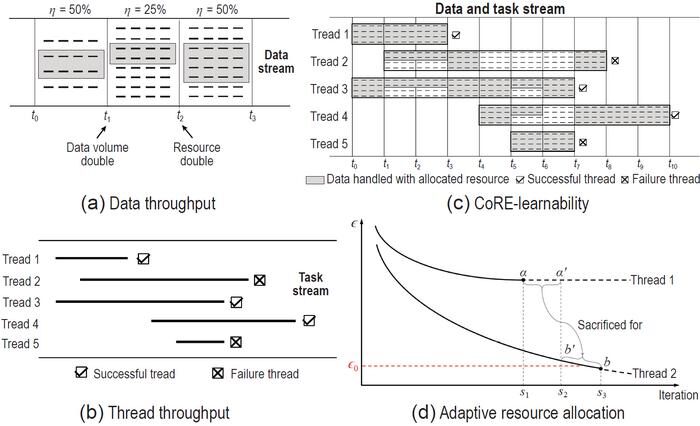
By deviating from traditional computing methods, Daruwalla has developed a new approach for AI algorithms to process and move data with remarkable efficiency. This innovative design mimics how our brains absorb new information, allowing individual AI "neurons" to receive immediate feedback and adjust in real time, significantly reducing the need for data to travel long distances before being processed.

“In our brains, our connections are constantly changing and adjusting,Daruwalla elaborates.It’s not like you stop everything, adjust, and then resume being you.This approach fundamentally challenges traditional circuit-based systems, representing a transformative leap toward AI learning that more closely resembles the dynamic processes of human cognition.

Daruwalla’s model not only offers potential breakthroughs in AI development but also provides evidence supporting the relationship between working memory and learning, which is crucial for academic performance. This revolutionary perspective on the interplay between working memory and synaptic updates could reshape the foundations of AI and deepen our understanding of memory and learning processes.

Daruwalla’s study provides a pathway for a new generation of AI that learns and adapts like humans, promising greater efficiency and widespread accessibility. Furthermore, this significant advancement in neuroAI embodies a meaningful intersection of disciplines, as AI - a field historically influenced by neuroscience - now sheds light on our understanding of cognitive processes.

Daruwalla's visionary achievements have been made possible through the support of the U.S. Air Force Research Laboratory and the National Science Foundation, emphasizing the collaborative effort and dedication driving this transformative endeavor.

As we stand on the verge of a new era in AI, let us draw inspiration from Daruwalla's visionary pursuit, paving the way for a future where artificial intelligence not only mirrors our cognitive abilities but also reshapes the limits of human potential. This unprecedented synergy between science and technology encourages us to embrace the endless possibilities ahead, illuminating a world where AI's remarkable capabilities gracefully merge with human ingenuity.

A neutron star
A neutron star

Uncovering the mysteries of neutron stars: Lessons from three young, cool oddballs

In the vast expanse of the universe, there are few celestial objects as enigmatic as neutron stars. However, recent discoveries by ESA's XMM-Newton and NASA's Chandra spacecraft have brought forth groundbreaking insights, shedding light on the captivating mysteries concealed within these dense remnants of stellar explosions.

Neutron stars are the remnants of massive stars that have undergone cataclysmic supernova explosions. These incredibly dense objects harbor matter that has been squeezed to the extremes under intense gravitational forces. Within their cores, the fundamental constituents of matter are subject to conditions so extreme that scientists have yet to fully comprehend its nature.

A recent discovery has astounded the astrophysics community - three young neutron stars, known for their unusual chilliness relative to their age, have defied the conventional models. Typically, as neutron stars age, they cool at a predictable rate. However, these 'oddball' stars have exhibited temperatures 10-100 times colder than expected, perplexing scientists and challenging existing models that describe the physical processes occurring within neutron stars.

In a quest to unravel these cosmic anomalies, scientists have delved into a realm of theoretical models known as the equation of state. This theoretical framework attempts to describe the exotic behaviors that occur within neutron stars, unveiling the uncharted territory of matter under unparalleled stress and density. The exhaustive search for the elusive equation of state has led scientists to confront the perplexing conundrum of pinpointing the one model that encapsulates and governs the behavior of all neutron stars.

The implications of these discoveries extend far beyond the boundaries of space. Unraveling the true equation of state for neutron stars is akin to peering into the cosmic playbook, offering crucial insights into the fundamental laws of the universe. It provides a unique opportunity to scrutinize the interplay between two powerful realms of physics - general relativity, which elucidates the effects of gravity on a grand scale, and quantum mechanics, which explores the intricacies of particle-level phenomena.

A pivotal aspect of this discovery is the innovative fusion of astrophysical exploration with the cutting-edge technology of machine learning. Through the adept utilization of machine learning techniques, scientists have been able to sift through the multitude of theoretical models and discern the ones that align with the observed properties of these enigmatic neutron stars. This interdisciplinary approach has demonstrated the power of collaboration, showcasing how the synergy between diverse scientific disciplines can drive forward our understanding of the cosmos.

The study provides a tangible glimpse into the monumental strides made by scientists in deciphering the cosmic conundrums presented by neutron stars. This monumental achievement signifies a testament to the triumphs of human ingenuity and the unyielding pursuit of knowledge that propels us forward in our quest to fathom the intricacies of the universe.

In closing, the lessons from these three young and unusually cold neutron stars fill us with a sense of awe and wonder, igniting the flames of curiosity and inspiring us to delve deeper into the enigmatic cosmos that surround us. As we journey through the mists of space, may these revelations kindle our spirits and embolden us to continue our tireless pursuit of cosmic understanding.

Woolpert secures a $6.8 million contract to gather aerial LiDAR data across Southern California for the USGS

The U.S. Geological Survey (USGS) has recently awarded a significant contract worth $6.8 million to Woolpert. The firm will be responsible for acquiring Quality Level 1 (QL1) lidar data and conducting ground control survey operations across Southern California. This initiative aims to support the 3D Elevation Program and enhance The National Map.

Led by the USGS National Geospatial Program, the 3D Elevation Program provides the nation's primary baseline of seamless high-resolution topographic elevation data, which is then integrated into The National Map. These data play a pivotal role in informing decisions that directly impact public safety, property, and the environment and are essential for effective long-term infrastructure planning.

Under this newly awarded task order, Woolpert is set to collect aerial lidar data covering an area of 23,007 square miles across Inyo County, which includes parts of the Mojave Desert and Death Valley National Park. The data collection will be conducted using a Leica TerrainMapper at a rate of 8 points per square meter.

John Gerhard, Woolpert's Vice President and Program Director, expressed the company's long-standing commitment to supporting the USGS 3D Elevation Program, a partnership that spans nearly a decade. Gerhard stressed the critical importance of accurate and accessible elevation data in everyday decision-making processes and emphasized the company's pride in continuing its support for the USGS as it endeavors to create the nation's first-ever consistent, high-resolution elevation data.

Moreover, the lidar data collected for this project will also contribute to the USGS 3D Hydrography Program.

The region earmarked for the data collection holds unique significance, as it includes the gathering of critical data for Badwater Basin, known as the lowest point in North America, situated at the bottom of Death Valley. Notably, the recent rare heavy rainfall experienced across the region resulted in the reappearance of an ancient lake in Badwater Basin, presenting Woolpert with an exceptional opportunity to capture data during this rare phenomenon.

The project is currently in progress, with data acquisition expected to be completed by the fall of 2024.

Woolpert, a premier architecture, engineering, geospatial (AEG), and strategic consulting firm, is driven by a vision to become one of the world's leading companies. The company operates within and across diverse markets to effectively serve clients from the public, private, and government sectors worldwide.

Founded in 1911 in Dayton, Ohio, Woolpert has garnered numerous accolades, including being recognized as a Global Top 100 Geospatial Company, securing a place among the Top Global Design firms, and earning seven Great Place to Work certifications. The firm actively fosters a culture of growth, inclusion, diversity, and respect.

Moreover, Woolpert has been the fastest-growing AEG firm in America since 2015. With over 2,500 employees and more than 60 offices situated across five continents.

The surface of Titan. Credits:Credit: NASA/JPL; University of Arizona; University of Idaho

Doubts cast on claims of Titan's lakes being shaped by waves

The recent study conducted by MIT researchers, suggesting that waves may be shaping the lakes and seas on Saturn's moon Titan, has sparked debate among experts in the field. The research used simulations on supercomputers to analyze erosion patterns on Titan's shorelines, but it has been met with skepticism due to its indirect approach and lack of concrete evidence.

Titan is known for its unique landscape, featuring rivers, lakes, and seas filled with liquid methane and ethane, which has long intrigued scientists. The initial confirmation of Titan's liquid bodies came in 2007 through images captured by NASA's Cassini spacecraft. However, the presence of waves on Titan has remained a contentious issue, with conflicting interpretations from researchers.

The MIT team, led by Professor Taylor Perron, aimed to shed light on this debate by modeling erosion scenarios on Titan's seas. Their simulations suggested that waves were the most likely cause of shaping the moon's shorelines. While the results are intriguing, the researchers themselves acknowledge that more direct observations are needed to confirm the presence of waves on Titan.

The study's lead author, Rose Palermo, emphasized the need for caution when interpreting the results, stating, "We can say, based on our results, that if the coastlines of Titan’s seas have eroded, waves are the most likely culprit." However, the lack of direct evidence of wave activity on Titan's surface leaves room for doubt regarding the validity of their conclusions.

Critics argue that relying on modeling and simulations, rather than empirical research, makes it difficult to support claims about wave erosion on Titan. The complex nature of Titan's environment and the limitations of remote observations make it difficult to draw definitive conclusions without physical evidence of wave activity.

As the scientific community grapples with the tantalizing possibility of waves shaping Titan's lakes, many remain cautious about embracing the findings as conclusive proof. The debate over the role of waves in sculpting Titan's landscape is far from settled, highlighting the need for further research and direct observations to unravel the mysteries of this enigmatic moon.

In the quest to unveil the secrets of Titan's alien seas, skepticism serves as a reminder of the importance of rigorous scientific inquiry and the critical assessment of speculative claims. Until concrete evidence of wave activity on Titan emerges, the question of whether its lakes are truly shaped by waves will continue to be met with skepticism by the scientific community.