Synthetic images of the first galaxies based on simulations from Chen et al. These galaxies have irregular shapes and multiple bright spots indicating separating star-forming regions. Image Credit: ASIAA/Meng-Yuan Ho

Scientists use supercomputers to study the first galaxies, find out how the universe began

Amidst the infinite expanse of the cosmos, a groundbreaking research study led by Dr. Ke-Jung Chen from the Institute of Astronomy and Astrophysics at Academia Sinica (ASIAA) in Taiwan has embarked upon a journey of discovery, harnessing the power of advanced supercomputers to unravel the captivating story of the formation of the first galaxies. Through high-resolution three-dimensional radiation-hydrodynamics simulations, this cosmic odyssey illuminates the profound influence of the masses of the first stars on the physical properties of these ancient cosmic marvels.

Like celestial beacons, the first stars and galaxies ignited the cosmic dawn, ending the era of cosmic darkness that followed the Big Bang. With the aid of modern cosmology, Dr. Chen's team explores the hierarchical assembly of dark matter, paving the way for the birth of the first stars within mini-dark matter halos. The emergence of these stellar giants triggers a transformative process, shaping the course of cosmic evolution and giving rise to the enigmatic first galaxies.

In their quest to unravel this cosmic enigma, the researchers employed powerful supercomputers, standing as pillars of computational might, to conduct unparalleled high-resolution 3D radiation-hydrodynamics simulations. These simulations incorporated detailed supernova physics, enabling a closer examination of the complex interplay between astrophysical phenomena and the formation of the first galaxies.

The awe-inspiring results of this groundbreaking study reveal that the physical properties of the first galaxies are intricately linked to the masses of the first stars. Supernovae from these massive stellar entities enrich the primordial gas with metals, thereby enabling the formation of low-mass stars. In a stunning departure from the familiar spiral structures of our Milky Way, these ancient galaxies take on irregular shapes, lacking rotational support. Within their core, a captivating dance unfolds, giving birth to hundreds or thousands of second-generation stars—Pop II stars—while the gas within these galaxies becomes enriched with metallicity, reaching about 0.01 times that of the Sun.

The simulations further illuminate that the first stars, while significant, do not dominate the makeup of most first galaxies. The gas within massive halos is typically influenced by metals from other Pop III supernovae during hierarchical assembly, laying the foundation for the emergence of pristine stars.

These first galaxies stand as beacons of the cosmic dawn, guiding astronomers toward a deeper understanding of our cosmic origins. The imminent launch of the James Webb Space Telescope (JWST) and the forthcoming 30-meter-class ground-based telescopes holds the promise of directly detecting these celestial wonders, unveiling even more secrets locked within their ancient cores.

Dr. Chen's research marks a monumental stepping stone on the path to untangling the mysteries of the cosmos, bridging the gap between the demise of the first stars and the emergence of the first galaxies. The blend of visionary science, cutting-edge supercomputing technology, and the insatiable quest for knowledge has propelled humanity ever closer to comprehending the intricacies of the universe.

As we embark on this cosmic odyssey, we are reminded of the vastness of the cosmos and our unquenchable thirst for understanding. Through the lens of Dr. Chen's research, the celestial wonders that lie beyond our reach continue to inspire, beckoning us to seek answers, explore the unknown, and embrace the limitless possibilities that await us in the vast expanse of space.

Artistic image of a binary system of a red giant star and a younger companion that can merge to produce a blue supergiant. Credit: Casey Reed, NASA

Unveiling the cosmic spectacle: Blue supergiant stars born from celestial unions

The cosmos is an endless source of fascination and wonder, and a recent study conducted by the Instituto de Astrofísica de Canarias (IAC) sheds new light on blue supergiant stars. These luminous giants have long captivated astronomers, but their origins have remained a mystery - until now. An international team of researchers has discovered that blue supergiant stars are born from the merger of two stellar companions, revealing a stunning celestial dance of stellar evolution.

Using state-of-the-art supercomputer models and precise observations of blue supergiants in the Large Magellanic Cloud, the team at IAC created simulations of stellar mergers. Dr. Athira Menon led the team in this groundbreaking study, unveiling the transformative birth of blue supergiants from the fusion of stellar companions. The team found that stars born from such mergers exhibit unique properties that align closely with the observed characteristics of blue supergiants.

Dr. Artemio Herrero, an essential collaborator in this celestial saga, explains that these findings help explain why blue supergiants inhabit the 'evolutionary gap' in classical stellar physics. Dr. Danny Lennon, another key contributor to the study, emphasizes the significance of these findings in reshaping our understanding of stellar evolution and the galactic ecosystem.

This remarkable discovery not only reveals the elusive origins of blue supergiant stars but also underscores the profound influence of stellar mergers on the morphology of galaxies and their stellar populations. As we gaze up at the celestial expanse, this celestial revelation beckons us to explore further, to dream bigger, and to embrace the beauty and complexity of the cosmos.

As we continue our journey of exploration, the next chapter promises to unveil even more celestial mysteries, probing the explosive fate of blue supergiant stars and their impact on the cosmic landscape. This awe-inspiring discovery reminds us of the boundless wonders that await us in the vast expanse of the cosmos, inviting us to embark on a journey of endless discovery and enlightenment.

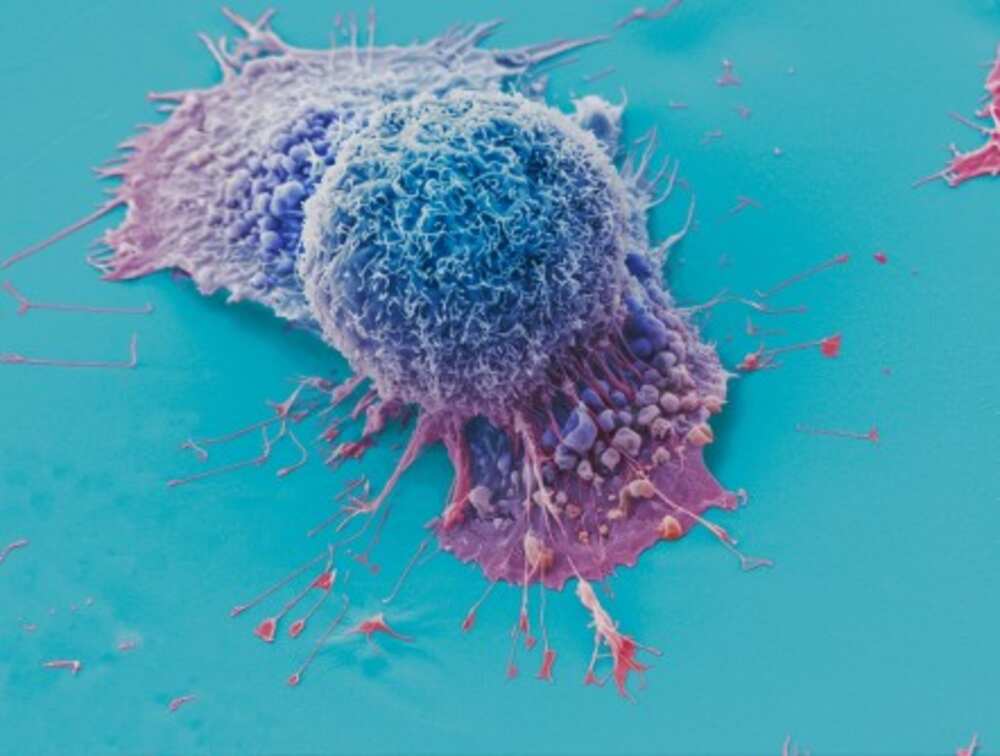
A picture of a membrane created by the biomolecular modeling tool.

Physicists create software to diagnose severe illnesses using supercomputer modeling techniques

In a groundbreaking development, physicists at the Niels Bohr Institute, the University of Copenhagen, and the University of Southern Denmark have developed a powerful software package that promises to revolutionize the field of diagnosing and understanding serious diseases. The software, called FreeDTS, is designed to model and study biological membranes at the mesoscale, which bridges the gap between the larger macro level and the smaller micro level. 


Biological membranes play a crucial role in maintaining cellular health, and any abnormalities or irregularities in their shape can indicate the presence of disease. By utilizing supercomputer modeling techniques, the researchers have created a tool that can unlock a deeper understanding of cell behavior and potentially pave the way for advanced diagnostics of infections and diseases, including conditions like Parkinson's.

What sets FreeDTS apart is its collaborative and open-source nature. Normally, scientific advancements in this field are closely guarded and kept secret until publication. However, the team behind FreeDTS has taken a different approach, generously sharing their software with the scientific community. This selfless act not only demonstrates the researchers' respect for the pioneers in the field but also reflects their commitment to fostering collaboration and advancing scientific knowledge.

According to Weria Pezeshkian, an assistant professor at the Niels Bohr Institute and one of the key contributors to the software package, there are still numerous unanswered questions and challenges in the biomolecular modeling field. By encouraging more researchers to join the game and contribute their ideas, results, and methods, the scientific community as a whole can make significant strides toward deciphering complex biological processes and improving diagnostic capabilities.

The study of biological membranes holds great promise for the future of diagnostics. As computational modeling becomes more precise and the power of supercomputers continues to increase, researchers may one day be able to accurately pinpoint the causes of changes in membrane shape and relate them to specific diseases or genetic deficiencies. This potential breakthrough could enable personalized medicine and revolutionize the way we diagnose and treat a wide range of conditions.

While there is still a long way to go and many adjustments to be made, the optimistic perspective of computational modeling is driving the researchers forward. Weria Pezeshkian states, "We are not there yet, but we can see it on the horizon." The research team's commitment to an open and sharing community ensures that the path towards these advancements will be paved with collaboration and collective progress. Weria Pezeshkian at the Niels Bohr Institute

The development of FreeDTS marks an extraordinary leap forward in the study of biological membranes and the diagnosis of serious diseases. With its potential to unlock the secrets of cellular behavior and improve our understanding of various pathologies, this software package holds immense promise for the future of medicine. By combining the expertise of physicists, biologists, and computer scientists, we may soon enter a new era of personalized medicine and enhanced diagnostic capabilities.

The MUonE detector records hits during collisions to reconstruct secondary particle tracks. Gold marks subsequent targets and blue marks silicon detector layers.

AI in particle physics: Can it unveil discoveries?

Particle physics is an exciting field of study that aims to uncover the fundamental building blocks of the universe. For years, scientists have been working to improve the techniques used to detect and analyze particles created in particle collisions. Now, an international team of researchers from the Institute of Nuclear Physics of the Polish Academy of Sciences (IFJ PAN) is using artificial intelligence (AI) to enhance particle track reconstruction. This development shows promising implications for high-energy physics experiments, but the question remains: can it revolutionize the field?

AI is a buzzword used to describe the use of automated algorithms to gain insights from data, across different industries. In particle physics, AI can help identify particles, reconstruct their tracks, and determine the diagnostics of a collision more rapidly, thus providing new insights. The technique has shown significant promise in recent years, and now the team at IFJ PAN has taken it a step further.

Their paper, published in Computer Science, demonstrated the effectiveness of AI for rapid particle track reconstruction compared to classical algorithms currently employed in high-energy physics experiments. Using deep neural networks, the team trained the AI to reconstruct particle tracks using simulated data. They used this training to help the AI detect particle paths and determine if it was worth saving for further study. This process could significantly reduce the time required for analyzing data, which is a significant challenge in high-energy physics experiments.

The team at IFJ PAN has developed a deep neural network with around two million configuration parameters, which was trained using over 40,000 particle collision simulations. During testing, only hit information was given to the neural network, and the output was compared to the original particle paths. The results were promising, showing that the AI can accurately reconstruct secondary particle tracks, similar to classical algorithms.

Professor Marcin Kucharczyk, who is part of the team at IFJ PAN, explained that the AI they designed is a deep-type neural network. It consists of an input layer comprising 20 neurons, four hidden layers of 1,000 neurons each, and an output layer with eight neurons. All the neurons of each layer are connected to all the neurons of the neighboring layer.

The next experiment in which the AI from IFJ PAN will be tested is the Muon on Electron Elastic Scattering (MUonE) experiment. The MUonE experiment examines the measured values of the anomalous magnetic moment of muons, which differ from the predictions of the Standard Model. If successful, this experiment could lead to discoveries that indicate new physics and a better understanding of the fundamental structure of our universe.

While the development of AI for particle physics shows a lot of promise, some experts in the field remain cautious. The methods used to reconstruct particle tracks are complex and require rigorous testing. The results from the IFJ PAN team demonstrate the AI's potential in detecting and analyzing particles, but some scientists believe that further testing is needed to confirm its effectiveness.

In conclusion, the use of AI in particle physics holds great promise for the future of high-energy physics experiments. This development could significantly reduce the time required to analyze data and enhance our understanding of the universe's building blocks. The pioneering work of the IFJ PAN team has opened up new avenues for research and could lead to discoveries. However, this development is not without its skeptics, and the method will require further testing and evaluation before its effectiveness is fully established.

Challenging the hype: Can magnons be the solution for quantum computing?

Quantum computing has long been considered the next big thing in technological advancement, offering revolutionary solutions to complex problems across various industries. Recently, a research team at the Helmholtz-Zentrum Dresden-Rossendorf (HZDR) developed a new method to use the magnetic field of magnons for quantum information transduction, causing a stir in the scientific community. However, some experts are questioning whether magnons can truly unlock the potential of supercomputing.

The HZDR team believes that magnons could be used to address quantum bits, or qubits, which may revolutionize the way quantum information is processed. The advantage of using magnons, as explained by physicist Helmut Schultheiß, is that their shorter wavelength can be more effective than conventional microwave technology used by industry giants like Google and IBM. Nevertheless, doubts still exist about whether this unconventional approach can deliver on its promises.

One of the main challenges of quantum computing is the susceptibility of qubits to environmental noise, which can disrupt computations. The researchers at HZDR propose using magnons to control qubits formed by vacancies of silicon atoms in silicon carbide, a common material used in electronics. Although initial experiments are promising, the practical implications of this approach are yet to be fully realized.

The skepticism surrounding the use of magnons in quantum computing is warranted. The team at HZDR has not yet performed any quantum calculations using magnons, and their research is still in its early stages. The claim that magnons could be the solution to addressing qubits effectively raises eyebrows among experts in the field, who emphasize the complexity of such a task.

While the vision of using magnons as a programmable quantum bus is intriguing, the road ahead is filled with challenges. The precise control required to ensure magnons exclusively address individual qubits remains a significant hurdle. Critics argue that the gap between theory and practical implementation is vast, and the realization of this vision may be far from immediate.

As tech giants invest heavily in advancing technology, the unconventional approach of using magnons raises doubts and skepticism within the scientific community. While the research done by the team at HZDR is commendable, the practical applications and scalability of their method remain uncertain, leaving many to wonder if magnons truly have what it takes to revolutionize the landscape of supercomputing.

In conclusion, leveraging magnons for quantum computing presents an innovative concept, but caution is necessary. The hype surrounding its potential must be met with cautious optimism. Only time will tell whether magnons can truly unlock the next frontier in supercomputing or if this approach will remain an intriguing yet unattainable dream for the field of quantum information science.