Igniting the next frontier: Koulopoulos' vision at SC25 keynote

At the bustling halls of the SC25 conference in St. Louis, thousands of high-performance computing (HPC) professionals gathered in America's Ballroom for what may become a pivotal moment in the evolution of digital life. Futurist and author Thomas Koulopoulos delivered a keynote titled "Gigatrends: The Exponential Forces Shaping Our Digital Future", and the tone was nothing short of electric.
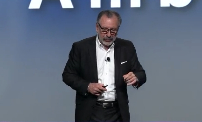
Koulopoulos opened with a challenge: the world is not merely moving forward, it is accelerating. From healthcare to workspaces, from the rise of digital selves to emergent trust frameworks, he mapped a future where computing is no longer a tool but a partner. "We're entering an era where the machine forest breathes alongside us," he said his phrase a metaphor for aligning human intent and computational systems.

He laid out three central pillars of change:

  • Exponential connectivity and intelligence: As compute density and network reach expand, machines and humans will co-evolve. The keynote emphasized how existing architectures must shift from linear updates to fractal, self-optimising systems.
  • Human-machine symbiosis: Beyond "augmented human," Koulopoulos depicted a world where the digital self (our data profile, our algorithmic twin) participates in decision-making, personal, corporate, societal.
  • Trust as an infrastructure: He argued that in the upcoming "digital life" epoch, trust mechanisms (data governance, identity, transparency) will become as fundamental as power grids or fibre-optic networks.

When the slides lit up with a visualization of interconnected nodes representing human lives, devices, data flows, and decisions, the audience sat up. For many in the room, this was more than another HPC talk; it was an invitation to imagine themselves as builders of society's next operating system.

One memorable line: "If you're just scaling faster, you're not doing the job. You're slipping into the past at a higher velocity." This served as both a warning and a rallying cry for the HPC community gathered at SC25.

The keynote did more than inspire, it landed practical imperatives. Koulopoulos urged attendees to:

  • rethink how HPC infrastructure supports not just simulation but intelligence-at-scale;
  • design systems that are ethically transparent and resilient;
  • treat data not as a trace but as a partner ecosystem that learns and gives back.

It resonated. As one attendee later remarked in the lobby, "I came expecting hardware specs and benchmarks; I left thinking about human destiny."

The message resonates deeply with the conference's mission: the annual ACM/IEEE Supercomputing Conference (SC) series brings together thousands of scientists, engineers, researchers, and developers working at the bleeding edge of compute, networking, storage, and analysis.

By choosing Koulopoulos as the keynote, SC25 clearly signalled that the conversation is shifting. The focus isn't just "what can we compute?" but "how should we live alongside our machines?" The keynote sets the tone for what promises to be a week where HPC meets philosophy, infrastructure meets intention, a perfect fit for the city of St. Louis and its spirit of innovation.

Final thought:

In an age of compute-saturation and data deluge, the real frontier is alignment: aligning machines with human values, aligning infrastructure with insight, aligning rapid change with timeless purpose. SC25's opening address made that frontier visible and invited us all to step into it.

HMCI, Rapt.ai deploy NVIDIA GB10 systems to power Rancho Cordova’s new AI & Robotics Ecosystem

A first-of-its-kind municipal AI initiative is taking shape in Rancho Cordova, CA, where the Human Machine Collaboration Institute (HMCI) and Rapt.ai have announced the deployment of NVIDIA GB10 systems to anchor a new regional AI & Robotics Ecosystem. The public–private partnership aims to make advanced computing accessible to students, startups, educators, and civic innovators across the Greater Sacramento region.
 
The announcement, made at SC25 in St. Louis, marks a significant municipal investment in applied AI. Backed by $5 million from the City of Rancho Cordova, the ecosystem will serve as a shared development space where local talent can access the same class of high-performance infrastructure used by commercial AI labs and university research centers.
 
At the center of the build-out is NVIDIA’s new GB10 Grace Blackwell Superchip, deployed in GB10 systems to support both high-throughput training workloads and real-time robotics simulation. The ecosystem blends this on-premises performance with cloud elasticity through Rapt.ai’s workload-aware GPU orchestration and seamless scalability into NeoCloud (FarmGPU), a GPU cloud designed for distributed training, inference, and data-intensive science.
 
“This initiative is about unlocking opportunity through accessibility,” said Sadie St. Lawrence, CEO of HMCI. “By bringing NVIDIA-powered infrastructure to the Sacramento region and combining it with Rapt’s orchestration and NeoCloud’s scalability, we’re giving students, startups, and civic teams the power to innovate locally and impact globally.”
 
Rapt.ai CEO Charlie Leeming underscored the affordability gap the partnership aims to close. “NVIDIA GB10 systems deliver world-class AI performance at a fraction of traditional cloud cost,” he said. “Together with HMCI and FarmGPU, we’re proving that cities can lead the next wave of applied AI by providing practical, scalable, affordable infrastructure.”
 
FarmGPU CEO JM Hands added that the collaboration builds on existing momentum within Rancho Cordova’s tech corridor. “FarmGPU is proud to extend HMCI’s local AI capacity with our NeoCloud platform, strengthened by our partnership with Solidigm’s AI Central Lab in Rancho Cordova.”
 
Set to launch in early 2026, the AI & Robotics Ecosystem will offer both on-site and remote access for model evaluation, fine-tuning, multimodal experimentation, robotics simulation, and large-scale data science. The organizers aim to lower the barrier to AI innovation and create a civic hub where academia, industry, and government can develop applied AI solutions together.
 
This initiative positions Rancho Cordova as a regional leader in democratized AI infrastructure, an emerging trend at SC25, where cities, universities, and startups are increasingly exploring hybrid public–private models to support local innovation.
 
As the deployment moves forward, HMCI and Rapt.ai will release more details on curriculum programs, startup accelerator partnerships, and public-access options ahead of the 2026 rollout.

At SC25, Phison pushes AI storage to Gen5 speeds, brings AI agents to everyday laptops

SuperComputing 2025 (SC25) delivered no shortage of big swings this week, but Phison presented a rare, cohesive vision that extends from the densest enterprise racks to the laptops in classrooms and corporate offices. At booth 4532, the storage leader debuted two new PCIe Gen5 enterprise SSDs, Pascari X201 and Pascari D201, and a live demo showcasing AI agents running on an integrated-GPU laptop using its aiDAPTIV+ technology. The message was clear: AI acceleration shouldn't be restricted to high-end GPUs or data center budgets.

PCIe Gen5 Muscle for AI and Cloud

Phison’s new Pascari X201 and D201 drives push Gen5 performance to the edge of the envelope:
  • Up to 14.5 GB/s read, 12 GB/s write
  • Up to 3.3M / 1.05M random read/write IOPS
  • Configurations up to 30.72 TB (X201) and 15.36 TB (D201)
The X201 targets high-intensity applications, including AI training nodes, analytics engines, financial modeling, and HPC workloads. The D201 is designed for hyperscalers and cloud builders who need high density with predictable QoS, particularly for object storage and large-scale database clusters. Both represent the steady march toward AI-first storage design: low latency, deterministic operations, and the throughput needed to saturate GPU clusters.

AI Agents on iGPUs, 25× Faster Than Before

The unexpected star of Phison’s booth was a consumer-class laptop demo. With aiDAPTIV+, the system turned an integrated GPU, normally the weak link in AI workflows, into a surprisingly capable AI agent platform.
 
Phison says the tech delivers:
  • Up to 25× faster AI agent performance
  • A drop in latency from 73 seconds to ~4 seconds in one real-world demo, GenAI inference on YouTube video content.
This is significant beyond mere convenience. Universities, IT departments, and early-stage businesses can now conduct meaningful AI experiments using their existing hardware. For students and corporate employees, this indicates a move toward AI agents becoming as commonplace as web browsers or office software.

Scaling Toward Extreme Capacity

Phison reminded SC25 attendees that the capacity race is not slowing. The company's Pascari D205V, a 122.88TB E3.L behemoth already shipping to selected OEMs, continues to set the ceiling for PCIe Gen5. Phison confirmed a roadmap path to 245TB, a number that would have sounded like science fiction just a few cycles ago.

Industry Voices at SC25

Michael Wu, GM and President of Phison US, framed the announcement in the larger arc of AI adoption: “Every sector is somewhere on the AI journey… Storage is vital at every stage.”

Why SC25 Cares

SC25 is increasingly the place where the AI stack, compute, networking, storage, and software gets pressure-tested. Phison’s lineup shows a company positioning itself not just as a NAND supplier but as a critical backbone for AI at every tier:
  • Client: AI agents on iGPUs
  • Enterprise: X201 for training and HPC
  • Cloud/hyperscale: D201 and the ultra-dense D205V series
With shipments of the X201 and D201 headed to enterprise customers by year-end and iGPU systems with aiDAPTIV+ coming in early 2026, the company is clearly betting on a future where AI workloads blur across devices and form factors.

Availability

  • Pascari X201 / D201: Shipping to select enterprise customers and OEMs by end of 2025
  • aiDAPTIV+ iGPU systems: OEM rollouts in early 2026
  • More details at phison.com
Phison didn't just bring new hardware to SC25; they presented a clear vision: AI infrastructure should be fast, scalable, power-efficient, and accessible to everyone, from hyperscale operators to students with a laptop. The future of AI won't be confined to one place, and Phison seems determined to connect it all.