

Two research physicists from the U.S. Naval Research Laboratory were named Citation Laureates "Researchers of Nobel Class" by Clarivate on Sept. 23 - Thomas L. Carroll and Louis M. Pecora - for research in nonlinear dynamics including synchronization of chaotic systems.
They were selected out of 24 world-class researchers from six countries identified as Citation Laureates. 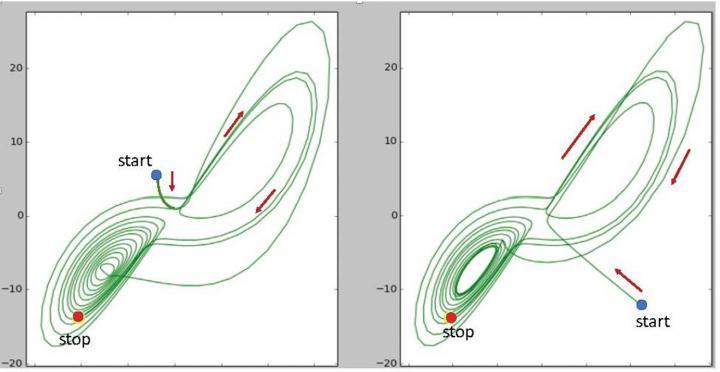 {module INSIDE STORY}
Science's highest honor, the Nobel Prize in Physics, will be awarded by The Royal Swedish Academy of Sciences in Stockholm, Sweden, Tuesday, Oct. 6 at 11:45 (CEST) via live stream at http://www.nobelprize.org. To date, 54 Citation Laureates listed in the Hall of Citation Laureates have gone on to receive a Nobel Prize.
Carroll and Pecora's paper is cited over 7,000 times out of more than 50 million articles and proceedings indexed in the Web of Science since 1970, only 5,700 or .01 percent have been cited 2,000 or more times.
Authors from this group are identified and selected as Citation Laureates. They are individuals whose research reports are highly cited and whose contributions to science have been extremely influential, even transformative.
"It is an honor to have so many other scientists using our work," Carroll said. "As scientists, we all want to do something that makes a difference, and this award shows we have succeeded."
Carroll and Pecora's basic research in nonlinear dynamics is the study of how to model, analyze, and measure systems evolving in time, sometimes in complicated ways, including the motion now called "chaos."
Synchronization of chaotic systems started as a basic scientific idea, but the concept of chaotic systems has been widely applied to biology, communications, machine learning, and radar.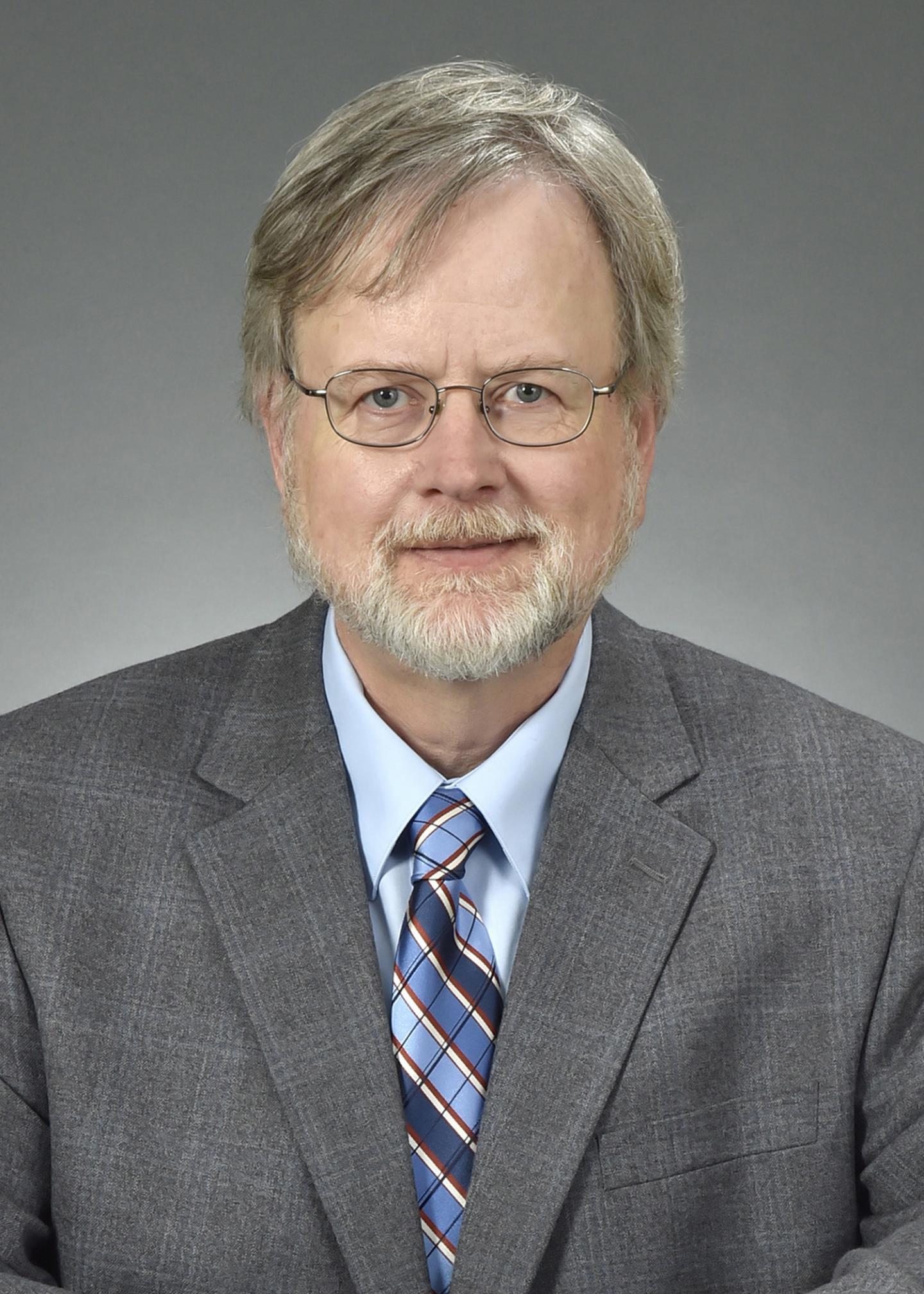
"Chaotic signals look like noise to an uninformed observer, but with the right knowledge they can carry information, which can be decoded by chaotic synchronization," Carroll said. "Recent work has even used chaotic signals to combine communications with radar on the same signal, leading to less spectrum congestion."
Many machine-learning techniques such as reservoir computing depend on the principles of chaotic synchronization.
"Neither Tom or I thought this would happen, in a lot of scientific breakthroughs serendipity plays a role," Pecora said. "We came along when there was just enough known about nonlinear dynamics to take to the next step and produce something interesting and, hopefully, useful."
Carroll and Pecora in 1990 developed a method to synchronize chaotic systems, which they confirmed with simulations and experiments. This greatly stimulated research into the uses of chaos for communication and resulted in a Physical Review Letter entitled "Synchronization in Chaotic Systems," which is now the 11th most cited paper in Physical Review Letters.
"The research described in the paper was a breakthrough on how to construct a new dynamical system in which two chaotic systems came into complete synchrony," Pecora said. "This caused an avalanche of research, leading to another ground-breaking paper by Carroll and Pecora on synchronizing dynamical systems in arbitrarily structured networks."
What might the U.S. Navy want with chaotic motion?
"This caused us to consider what might be done with chaotic motion in some type of system," Pecora said. "What we thought about was that it might be possible to generate chaotic or rather complicated signals and use them to send messages."
More recently, their ideas have shown up in other areas of research. Several concepts developed in their work now underlie the description and design of reservoir computers and an active area of artificial intelligence. This is in addition to guiding research in the dynamics of power grids, computer networks, and modeling how neurons might interact in some brain functions.
A chaotic motion has a rigorous mathematical description. It's a pattern of motion extremely complicated due to instabilities inherent in the system doing the motion. No outside noise or interference causes complicated motions. These instabilities make the motion hard to predict far into the future.
"This is not just some mathematical quirk of an unusual model," Pecora said. "The weather is chaotic in the technical sense and that's what makes it hard to predict. Even our solar system is somewhat chaotic making predictions of planetary trajectories for long times into the future very difficult."
Carroll and Pecora both hail from the Magnetic Materials and Nonlinear Dynamics Section at NRL where they continue research into networks and individual systems such as radars, radios, and structures. They help solve signal-processing problems in radar and communications.
 {module INSIDE STORY}