Salk Prof Graham McVicker wins Genomic Innovator Award

Salk Assistant Professor Graham McVicker has been awarded a National Human Genome Research Institute (NHGRI) Genomic Innovator Award, which supports early-career scientists who conduct innovative, creative research in genomics. The award, which provides $2.85 million over five years, is in recognition of McVicker’s efforts using computational and experimental approaches to investigate how human genetic diversity leads to metabolic, cardiovascular, autoimmune, and other diseases.

“Graham is pushing the boundaries of computational genetics as he unravels the molecular drivers of disease states,” says Salk President and Professor Rusty Gage. “We are thrilled to see Graham get recognized for his talent and contributions to the field of genomics.”

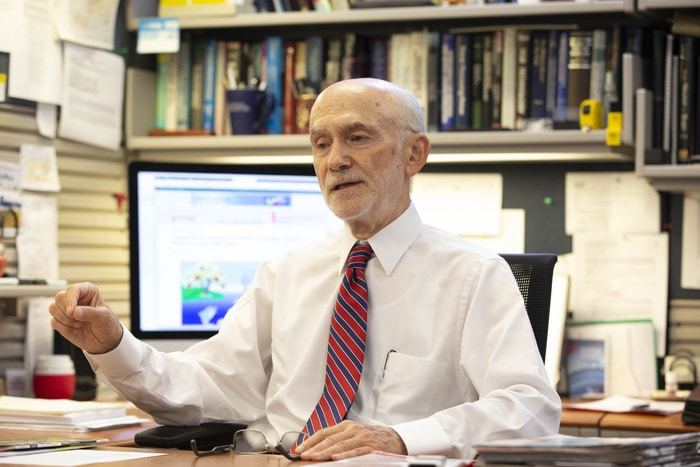
McVicker, who holds the Frederick B. Rentschler Developmental Chair, studies how differences in human DNA (genetic variants) affect gene regulation in order to understand the genetic underpinnings of complex human diseases. He seeks to identify the disease-associated regulatory variants that act in a variety of cell types, including immune cells, neuronal cells, and cancer cells. Currently, he is utilizing a combination of technologies for altering genes and computational analyses to discover regulatory sequences, interpret genetic variants that do not code for proteins, and connect them to the genes they regulate. In much of his research, he develops sophisticated super computational and statistical methods to extract subtle signals from experimental data. Graham McVicker

West Nile virus cases predicted to increase in New York, Connecticut due to climate change

A group of scientists affiliated with the University at Albany and New York State Department of Health (NYSDOH) is predicting that the total number of West Nile virus (WNV) cases will increase, and be more geographically widespread, across New York and Connecticut in the future years due to warming trends.

The scientists, part of the Climate Change and Emerging Infectious Disease (CCEID) working group, created two machine learning-based statistical models that use a combination of observational climate data and current numbers of human WNV cases to estimate future rates of the virus. A regional version of the model was trained to run simulations using data from each state, with numbers broken down to the county level. An analog version was trained using data from Maryland, Virginia, Washington, D.C., and Delaware as a contiguous region that is expected to be similar in future climate. 

Both regional and analog versions of the model predicted significant increases in future WNV cases across both New York and Connecticut, with decreases in some counties, including those in New York City and Long Island, that are currently at the highest risk for the virus. When counties were grouped by region, eight regions were predicted to see increases in human WNV cases, two regions were predicted to have fewer human WNV cases, and one was predicted to show no change.

An independent trait-based model based on mosquito and virus responses to temperature changes also predicted a future increase in WNV cases across both states.

Findings were published in Global Change Biology.

“Research on West Nile virus and emerging infectious diseases is important to safeguarding public health and safety, especially in the context of climate change,” said Alexander “Sasha” Keyel, the paper’s lead author, and a post-doctoral researcher in UAlbany's Department of Atmospheric and Environmental Sciences (DAES) and the NYSDOH Wadsworth Center. “Many of these disease systems can change in complex and non-intuitive ways with changes in climate and land use.”

“Future research on viral evolution under climate change is especially important, as we know these viruses are evolving, but that is not currently reflected in the future projections,” he added.

nature photography leaf green insect macro 1046343 pxhere.com 5b78c

Improving Vector-Borne Disease Prediction

WNV has infected more than 50,000 people and caused more than 2,200 deaths in the last 20 years across the United States. While numbers fluctuate annually, a CDC report found that diseases caused by tick, mosquito, and flea bites more than tripled in the U.S. between 2004 and 2016.

UAlbany partnered with the NYSDOH Wadsworth Center to form the CCEID working group in 2015. Together, the group has collaborated to better understand how environmental factors increase or decrease human health risk from vector-borne diseases. The group also joined seven other universities, and other state departments, in 2017, to create a $10 million Northeast Regional Center for Excellence in Vector-Borne Diseases (NEVBD) hosted at Cornell University.

The group created a “Random Forest” statistical model that uses a series of climate-related variables along with other relevant factors, such as a region’s human population, mosquito abundance, and presence of wastewater treatment plants, to provide seasonal forecasts for WNV and pinpoint locations with increased risk for the disease.

This latest study adds to their previous findings that indicated low soil moisture and/or warm summer nights are associated with increased WNV numbers. Most human cases of the virus are contracted during the months of July to September.

“Finding cause and effect relations between climate and WNV infection rates is a challenging research problem that can only be tackled through interdisciplinary collaborations,” said Oliver Elison Timm, a DAES associate professor, and paper co-author. “We relied on modern machine learning tools to analyze large sets of climate and environmental data. To make sure that our future projections are not just a statistical artifact, we applied the three independent models and identified the robustness of our results.”

Other co-authors included Ajay Raghavendra, a recent graduate of UAlbany’s doctoral program in Atmospheric Sciences and Meteorology, and Alexander Ciota of the NYSDOH Wadsworth Center and UAlbany’s School of Public Health.

Those interested in learning more about WNV and other vector-borne diseases can visit the NYSDOH’s FAQ page

Dartmouth researchers discover fractal brain networks that support complex thought

Understanding how the human brain produces complex thought is daunting given its intricacy and scale. The brain contains approximately 100 billion neurons that coordinate activity through 100 trillion connections and those connections are organized into networks that are often similar from one person to the next. A Dartmouth study has found a new way to look at brain networks using the mathematical notion of fractals, to convey communication patterns between different brain regions as people listened to a short story. 

“To generate our thoughts, our brains create this amazing lightning storm of connection patterns,” said senior scholar Jeremy R. Manning, an assistant professor of psychological and brain sciences, and director of the Contextual Dynamics Lab at Dartmouth. “The patterns look beautiful, but they are also incredibly complicated. Our mathematical framework lets us quantify how those patterns relate at different scales, and how they change over time.” Zoomed in detail of the Mandelbrot set, a famous fractal, at different spatial scales of 1x, 4x, 16x, and 64x (from left to right).  CREDIT Image by Jeremy R. Manning.

In the field of geometry, fractals are shapes that appear similar at different scales. Within a fractal, shapes and patterns are repeated in an infinite cascade, such as spirals comprised of smaller spirals that are in turn comprised of still-smaller spirals, and so on. Dartmouth’s study shows that brain networks organize in a similar way: patterns of brain interactions are mirrored simultaneously at different scales. When people engage in complex thoughts, their networks seem to spontaneously organize into fractal-like patterns. When those thoughts are disrupted, the fractal patterns become scrambled and lose their integrity.

The researchers developed a mathematical framework that identifies similarities in network interactions at different scales or “orders.” When brain structures do not exhibit any consistent patterns of interaction, the team referred to this as a “zero-order” pattern. When individual pairs of brain structures interact, this is called a “first-order” pattern. “Second-order” patterns refer to similar patterns of interactions in different sets of brain structures, at different scales. When patterns of interaction become fractal— “first-order” or higher— the order denotes the number of times the patterns are repeated at different scales.

The study shows that when people listened to an audio recording of a 10-minute story, their brain networks spontaneously organized into fourth-order network patterns. However, this organization was disrupted when people listened to altered versions of the recording. For example, when the story’s paragraphs were randomly shuffled, preserving some but not all of the story’s meaning, people’s brain networks displayed only second-order patterns. When every word of the story was shuffled, this disrupted all but the lowest level (zero-order) patterns.

“The more finely the story was shuffled, the more the fractal structures of the network patterns were disrupted,” said first author Lucy Owen, a graduate student in psychological and brain sciences at Dartmouth. “Since the disruptions in those fractal patterns seemed directly linked with how well people could make sense of the story, this finding may provide clues about how our brain structures work together to understand what is happening in the narrative.”

The fractal network patterns were surprisingly similar across people: patterns from one group could be used to accurately estimate what part of the story another group was listening to.

The team also studied which brain structures were interacting to produce these fractal patterns. The results show that the smallest scale (first-order) interactions occurred in brain regions that process raw sounds. Second-order interactions linked these raw sounds with speech processing regions, and third-order interactions linked to sound and speech areas with a network of visual processing regions. The largest-scale (fourth-order) interactions linked these auditory and visual sensory networks with brain structures that support high-level thinking. According to the researchers, when these networks organize at multiple scales, this may show how the brain processes raw sensory information into complex thought—from raw sounds to speech, to visualization, to full-on understanding.

The researchers’ computational framework can also be applied to areas beyond neuroscience and the team has already begun using an analogous approach to explore interactions in stock prices and animal migration patterns.