

SUPERCOMPUTING NEWS SUPERCOMPUTING NEWS
    • MEDIA KIT
    • MOST READ
    • RSS FEED
    • ACADEMIA
    • AEROSPACE
    • APPLICATIONS
    • ASTRONOMY
    • AUTOMOTIVE
    • BIG DATA
    • BIOLOGY
    • CHEMISTRY
    • CLIENTS
    • CLOUD
    • DEFENSE
    • DEVELOPER TOOLS
    • EARTH SCIENCES
    • ECONOMICS
    • ENGINEERING
    • ENTERTAINMENT
    • GAMING
    • GOVERNMENT
    • HEALTH
    • OIL & GAS
    • INDUSTRY
    • INTERCONNECTS
    • MANUFACTURING
    • MIDDLEWARE
    • MOVIES
    • NETWORKS
    • PHYSICS
    • PROCESSORS
    • RETAIL
    • SCIENCE
    • STORAGE
    • SYSTEMS
    • VISUALIZATION
    • AcyMailing subscription form

    • ADD YOUR VIDEOS
    • MANAGE VIDEOS
    • CONVERSATION INBOX
    • SOCIAL ADVERTISER
    • SOCIAL NETWORK VIDEOS
    • SURVEYS
    • GROUPS
    • PAGES
    • MARKETPLACE LISTINGS
    • APPLICATIONS BROWSER
    • PRIVACY CONFIRM REQUEST
    • PRIVACY CREATE REQUEST
    • LEADERBOARD
    • POINTS LISTING
      • BADGES
    • TRADE SHOWS
Sign In
Tyler O'Neal, Staff Editor ENGINEERING August 18, 2022, 4:58 pm

UK prof builds a model of neutron stars that improves insights gleaned from gravitational waves

The oscillations in binary neutron stars before they merge could have big implications for the insights scientists can glean from gravitational wave detection. A neutron star merger. Credit: NASA's Goddard Space Flight Center/CI Lab
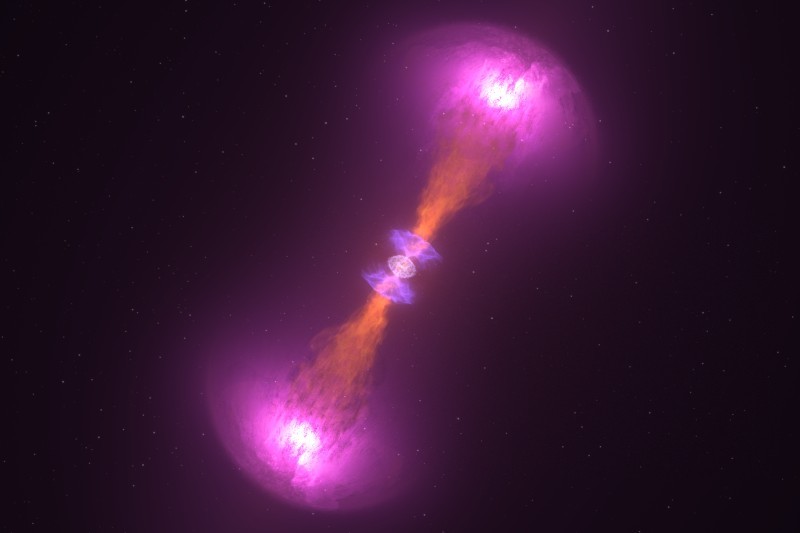
Researchers at the University of Birmingham have demonstrated the way in which these unique vibrations, caused by the interactions between the two stars’ tidal fields as they get close together, affect gravitational-wave observations. The study is published in Physical Review Letters. 

Taking these movements into account could make a huge difference to our understanding of the data taken by the Advanced LIGO and Virgo instruments, set up to detect gravitational waves – ripples in time and space – produced by the merging of black holes and neutron stars.

The researchers aim to have a new model ready for Advanced LIGO’s next observing run and even more advanced models for the next generation of Advanced LIGO instruments, called A+, which are due to begin their first observing run in 2025.

Since the first gravitational waves were detected by the LIGO Scientific Collaboration and Virgo Collaboration in 2016, scientists have been focused on advancing their understanding of the massive collisions that produce these signals, including the physics of a neutron star at supra nuclear densities.

Dr. Geraint Pratten, of the Institute for Gravitational Wave Astronomy at the University of Birmingham, is the lead writer of the paper. He said: “Scientists are now able to get lots of crucial information about neutron stars from the latest gravitational wave detections. Details such as the relationship between the star’s mass and its radius, for example, provide crucial insight into the fundamental physics behind neutron stars. If we neglect these additional effects, our understanding of the structure of the neutron star as a whole can become deeply biased.”

Dr. Patricia Schmidt, a co-author of the paper and Associate Professor at the Institute for Gravitational Wave Astronomy, added: “These refinements are really important. Within single neutron stars, we can start to understand what’s happening deep inside the star’s core, where matter exists at temperatures and densities we cannot produce in ground-based experiments. At this point, we might start to see atoms interacting with each other in ways we have not yet seen – potentially requiring new laws of physics.”

The refinements devised by the team represent the latest contribution from the University of Birmingham to the Advanced LIGO program. Researchers in the University’s Institute for Gravitational Wave Astronomy has been deeply involved in the design and development of the detectors since the program’s earliest stages. Looking ahead, Ph.D. student Natalie Williams is already progressing to work on calculations to further refine and calibrate the new models.
UTSW computational biologist uses ML to help determine structure of a key player in antibiotic resistance

Tyler O'Neal, Staff Editor ENGINEERING August 17, 2022, 2:05 pm

With antibiotic-resistant bacteria on the rise, scientists have been searching for ways to shut down the Type IV secretion system (T4SS), a protein complex on the outer envelope of bacterial cells that helps them to exchange DNA with neighboring bacteria and resist antibiotics.

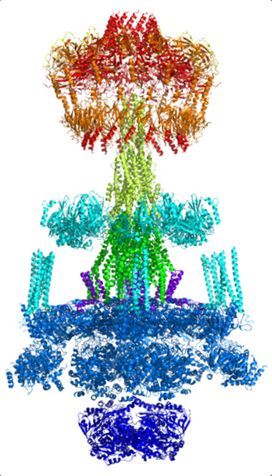
Now a collaboration between University of Texas Southwestern computational biologist Qian Cong, Ph.D., and molecular biologists at the University of London has elucidated the structure of the T4SS complex, providing a blueprint that could help researchers design drugs that slow the development of antibiotic resistance. The 3D structure of T4SS

“For the first time, we determined the 3D structure of the entire T4SS complex,” said Dr. Cong, Assistant Professor of Biophysics in the Eugene McDermott Center for Human Growth and Development at UTSW.

The team in London was led by Gabriel Waksman, Ph.D., whose lab has been working for more than two decades to understand T4SS, especially how it forms a thin, hollow structure called a pilus, which connects to nearby bacteria to share genes. For this project, his team used cryo-electron microscopy (cryo-EM) – a process that freezes proteins and uses beams of electrons to obtain high-resolution microscopic images – to elucidate the structure of T4SS. This was no small feat since the T4SS complex is larger than 99.6% of all those included to date in the worldwide library of protein structures.

Dr. Cong then used her background in statistics and machine learning to analyze T4SS protein sequences from several bacteria to generate structural predictions, which were compared to the cryo-EM data. Her computational analysis supported the cryo-EM data and suggested a hypothesis about the function of T4SS. While it was already known that T4SS is involved in pilus assembly, she predicted how it occurs. With that prediction in hand, Dr. Waksman’s team was able to make specific mutations within the relevant pieces of the complex and validate Dr. Cong’s hypothesis in live bacteria.

“In addition to the contribution we have made toward the development of drugs to slow the spread of antibiotic resistance genes, this study showcases the power of modern computational methods to validate experimental results and suggest functional insights beyond available experimental data,” said Dr. Cong, a Southwestern Medical Foundation Scholar in Biomedical Research.

Other researchers who contributed to this study include Kévin Macé, Abhinav K. Vadakkepat, Adam Redzej, Natalya Lukoyanova, Clasien Oomen, Nathalie Braun, Marta Ukleja, Fang Lu, Tiago R. D. Costa, and Elena V. Orlova of the Institute of Structural and Molecular Biology, Birkbeck College, University of London; and David Baker of the University of Washington.

Japanese researchers use ML methods on a large dataset of trauma patients to determine the factors that correlate with survival

Tyler O'Neal, Staff Editor ENGINEERING August 17, 2022, 1:00 pm

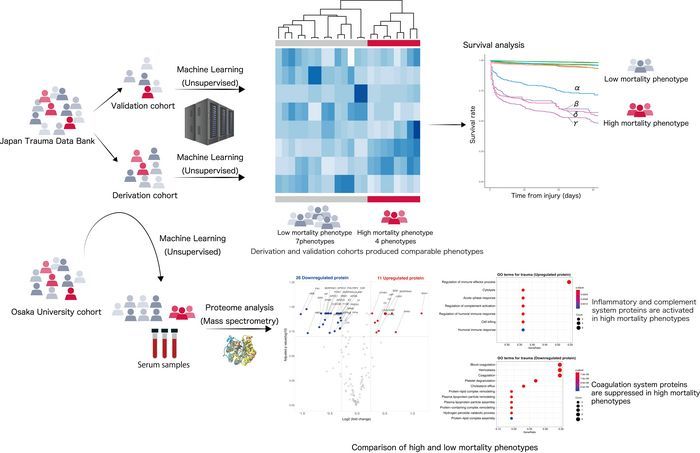
Scientists from the Department of Traumatology and Acute Critical Medicine at the Osaka University Graduate School of Medicine developed an AI algorithm to predict the risk of mortality for patients suffering a major injury. Using the Japan Trauma Data Bank for the years 2013 to 2017, they were able to obtain records for over 70,000 patients who had experienced blunt-force trauma, which allowed the researchers to identify critical factors that could guide treatment strategies more precisely. Schematic overview of the study  CREDIT Jotaro Tachino

Trauma doctors in emergency rooms must make life-and-death decisions quickly, and often with very limited information. Part of the challenge is that the factors that would indicate the likelihood of adverse clinical outcomes are not completely understood, and sometimes the body’s inflammatory and blood clotting changes in response to major injuries do more harm than good. A more rigorous and comprehensive approach to trauma care is clearly needed.

Now, a team of researchers from the Osaka University Graduate School of Medicine have analyzed a database of all trauma cases recorded in Japan using machine learning algorithms. This included patient information, such as age and type of injury. In addition, mass spectrometry and proteome analysis were performed on serum from trauma patients at the hospital in Osaka. This provided more specific information on blood markers that could indicate an increase or decrease of specific proteins. “Our study has important clinical implications. It can help identify the patients at highest risk who may benefit most from early intervention,” says first author Jotaro Tachino.

The team used a hierarchical clustering analysis on the data and found that 11 variables were most correlated with an increased mortality rate, which included the type and severity of the injury. In addition, they saw that patients at highest risk often exhibited excessive inflammation or even an acute inflammatory response. They also found protein markers that signaled downregulated coagulation strongly associated with negative outcomes.

“The method that we used for this project can also be extended to the development of new treatment strategies and therapeutic agents for other medical conditions for which large datasets are available,” says senior author Hiroshi Ogura. This work may greatly optimize the allocation of scarce ER healthcare resources to save more people. The team also hopes that this research might help shed light on ways to help calm the inflammation pathways that can run out of control in the wake of traumatic injuries.

  1. UC Riverside modeler shows a sleeping giant that could end deep ocean life
  2. Stony Brook scientists take another theoretical step toward uncovering the mystery of dark matter, black holes

Page 40 of 78

  • 35
  • 36
  • 37
  • 38
  • 39
  • 40
  • 41
  • 42
  • 43
  • 44
POPULAR RIGHT NOW
  • Supercomputers replace ‘bathtub’ flood maps with physics-based digital twins of Britain’s coastline
    Supercomputers replace ‘bathtub’ flood maps with physics-based digital twins of Britain’s coastline
  • Supercomputers push neural quantum simulation beyond previous limits
    Supercomputers push neural quantum simulation beyond previous limits
  • Intel’s AI supercomputing revival: Q2 financial surge signals new era for CPU-powered HPC infrastructure
    Intel’s AI supercomputing revival: Q2 financial surge signals new era for CPU-powered HPC infrastructure
  • AWS supercomputing investment reaches historic scale as Amazon’s AI strategy powers record financial results
    AWS supercomputing investment reaches historic scale as Amazon’s AI strategy powers record financial results
  • AI infrastructure financing fears shake semiconductor sector
    AI infrastructure financing fears shake semiconductor sector
  • Catching the wave of the future: Supercomputers unlock the hidden dynamics of Venus
    Catching the wave of the future: Supercomputers unlock the hidden dynamics of Venus
  • NCAR supercomputers run planet scale climate experiments impossible in the real world
    NCAR supercomputers run planet scale climate experiments impossible in the real world
  • AI hunts the cosmos: Machine learning helps astronomers discover the first ‘Wandering’ supermassive black hole caught destroying a star
    AI hunts the cosmos: Machine learning helps astronomers discover the first ‘Wandering’ supermassive black hole caught destroying a star
  • Supercomputing for the masses: Meta's vision of a personal superintelligence for everyone
    Supercomputing for the masses: Meta's vision of a personal superintelligence for everyone
  • NVIDIA helps turn AI compute into a new asset class as Wall Street mobilizes $500 billion
    NVIDIA helps turn AI compute into a new asset class as Wall Street mobilizes $500 billion
THIS YEAR'S MOST READ
  • Wall Street wants to trade supercomputing power like oil
    Wall Street wants to trade supercomputing power like oil
  • Beamforming the future: BeammWave's 6G push signals the rise of orbital-terrestrial wireless networks
    Joakim Axmon
    Joakim Axmon
  • Cosmic ambition at scale: UK’s supercomputer unlocks a 2.5 petabytes universe
    Cosmic ambition at scale: UK’s supercomputer unlocks a 2.5 petabytes universe
  • Hidden order, revealed at scale: Supercomputing, electron ptychography uncover the inner workings of relaxor ferroelectrics
    Hidden order, revealed at scale: Supercomputing, electron ptychography uncover the inner workings of relaxor ferroelectrics
  • Intel's Q1 results signal supercomputing surge driving Xeon momentum
    Intel's Q1 results signal supercomputing surge driving Xeon momentum
  • When stars fall apart: Supercomputing reveals the hidden physics of black holes
    When stars fall apart: Supercomputing reveals the hidden physics of black holes
  • MIT develops computational framework to probe dark matter via gravitational waves
    MIT develops computational framework to probe dark matter via gravitational waves
  • Explainable AI moves into the watershed: FAMU-FSU engineers build predictive framework for real-time E. coli forecasting
    FAMU-FSU College of Engineering Assistant Professor Nasrin Alamdari. (Scott Holstein/FAMU-FSU College of Engineering)
    FAMU-FSU College of Engineering Assistant Professor Nasrin Alamdari. (Scott Holstein/FAMU-FSU College of Engineering)
  • Multi-layer simulations reveal the hidden supply chain of solar prominences
    Multi-layer simulations reveal the hidden supply chain of solar prominences
  • Japanese scientists decode dolphin speed with supercomputing: Turbulence, vortices, and the hidden physics of propulsion
    Japanese scientists decode dolphin speed with supercomputing: Turbulence, vortices, and the hidden physics of propulsion
  • FRONTPAGE
  • LATEST
  • POPULAR
  • REGISTER
  • SOCIAL
  • VIDEO
  • SUBSCRIPTION
  • RSS
  • GUIDELINES
  • PRIVACY
  • TOS
  • ABOUT
  • +1 (816) 799-4488
  • editorial@supercomputingonline.com
© 2001 - 2026 SuperComputingOnline.com, LLC. All rights reserved. This material may not be published, broadcast, rewritten or redistributed without permission.
Sign In
  • FRONT PAGE
  • LATEST
    • MEDIA KIT
    • MOST READ
    • RSS FEED
    • ACADEMIA
    • AEROSPACE
    • APPLICATIONS
    • ASTRONOMY
    • AUTOMOTIVE
    • BIG DATA
    • BIOLOGY
    • CHEMISTRY
    • CLIENTS
    • CLOUD
    • DEFENSE
    • DEVELOPER TOOLS
    • EARTH SCIENCES
    • ECONOMICS
    • ENGINEERING
    • ENTERTAINMENT
    • HEALTH
    • INDUSTRY
    • INTERCONNECTS
    • GAMING
    • GOVERNMENT
    • MANUFACTURING
    • MIDDLEWARE
    • MOVIES
    • NETWORKS
    • OIL & GAS
    • PHYSICS
    • PROCESSORS
    • RETAIL
    • SCIENCE
    • STORAGE
    • SYSTEMS
    • VISUALIZATION
  • VIDEOS
    • ADD YOUR VIDEOS
    • MANAGE VIDEOS
  • COMMUNITY
    • TRADE SHOWS
    • SOCIAL NETWORK VIDEOS
    • SURVEYS
    • APPLICATIONS BROWSER
    • CONVERSATION INBOX
    • SOCIAL ADVERTISER
    • GROUPS
    • MARKETPLACE LISTINGS
    • PAGES
    • LEADERBOARD
    • POINTS LISTING
      • BADGES
    • PRIVACY CONFIRM REQUEST
    • PRIVACY CREATE REQUEST

Hey there! We noticed you’re using an ad blocker.