NOIRLab unveils stunning image of merging spiral galaxies

An evocative new image captured by the Gemini North telescope in Hawai‘i reveals a pair of interacting spiral galaxies — NGC 4568 and NGC 4567 — as they begin to clash and merge. These galaxies are entangled by their mutual gravitational field and will eventually combine to form a single elliptical galaxy in around 500 million years. Also visible in the image are the glowing remains of a supernova that was detected in 2020. The merging galaxy pair NGC 4568 and NGC 4567 and supernova SN 2020fqv (callout box). This image from the Gemini North telescope in Hawai‘i reveals a pair of interacting spiral galaxies — NGC 4568 (bottom) and NGC 4567 (top) — as they begin to clash and merge. The galaxies will eventually form a single elliptical galaxy in around 500 million years. Also shown in the image is the glowing remains of a supernova that was detected in 2020. Credit: International Gemini Observatory/NOIRLab/NSF/AURA. Image processing: T.A. Rector (University of Alaska Anchorage/NSF's NOIRLab), J. Miller (Gemini Observatory/NSF's NOIRLab), M. Zamani (NSF’s NOIRLab) & D. de Martin (NSF’s NOIRLab)
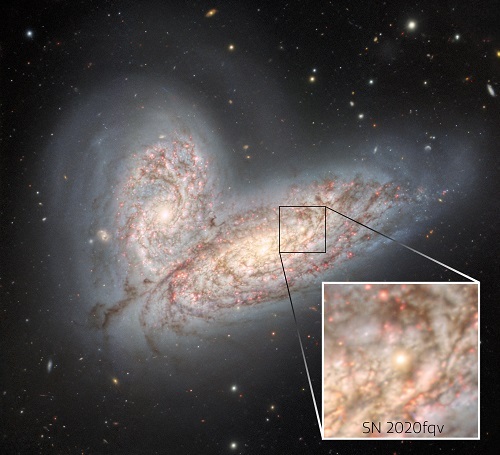
Gemini North, one of the twin telescopes of the International Gemini Observatory, operated by NSF’s NOIRLab, has observed the initial stages of a cosmic collision approximately 60 million light-years away in the direction of the constellation Virgo. The two stately spiral galaxies, NGC 4568 (bottom) and NGC 4567 (top) are poised to undergo one of the most spectacular events in the Universe, a galactic merger. At present, the centers of these galaxies are still 20,000 light-years apart (about the distance from Earth to the center of the Milky Way) and each galaxy still retains its original, pinwheel shape. Those placid conditions, however, will change.

As NGC 4568 and NGC 4567 draw together and coalesce, their dueling gravitational forces will trigger bursts of intense star formation and wildly distort their once-majestic structures. Over millions of years, the galaxies will repeatedly swing past each other in ever-tightening loops, drawing out long streamers of stars and gas until their structures are so thoroughly mixed that a single, essentially spherical, galaxy emerges from the chaos. By that point, much of the gas and dust (the fuel for star formation) in this system will have been used up or blown away.

This merger is also a preview of what will happen when the Milky Way and its closest large galactic neighbor the Andromeda Galaxy collide in about 5 billion years. 

A bright region in the center of one of NGC 4568’s sweeping spiral arms is the fading afterglow of a supernova — known as SN 2020fqv — that was detected in 2020. The new Gemini image was produced from data taken in 2020. 

By combining decades of observations and supercomputer modeling, astronomers now have compelling evidence that merging spiral galaxies like these go on to become elliptical galaxies. Likely, NGC 4568 and NGC 4567 will eventually resemble their more-mature neighbor Messier 89, an elliptical galaxy that also resides in the Virgo Cluster. With its dearth of star-forming gas, Messier 89 now exhibits minimal star formation and is made up primarily of older, low-mass stars and ancient globular clusters.

{media id=284,layout=solo}

Advanced technology on the Gemini North telescope, including the Gemini Multi-Object Spectrograph North (GMOS-N) and the dry air above the summit of Maunakea, allowed astronomers to capture this spectacular image. 

The image was obtained by NOIRLab’s Communication, Education & Engagement team, as part of the NOIRLab Legacy Imaging Program.
UTSW prof uses AI to predict regulatory role, 3D structure of DNA

Sequence modeling algorithms could eventually lead to new ways to fight diseases caused by genetic mutations

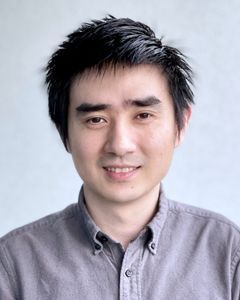
Newly developed artificial intelligence (AI) programs accurately predicted the role of DNA’s regulatory elements and three-dimensional (3D) structure based solely on its raw sequence, according to two recent studies. These tools could eventually shed new light on how genetic mutations lead to disease and could lead to a new understanding of how genetic sequence influences the spatial organization and function of chromosomal DNA in the nucleus, said study author Jian Zhou, Ph.D., Assistant Professor in the Lyda Hill Department of Bioinformatics at UTSW.

“Taken together, these two programs provide a more complete picture of how changes in DNA sequence, even in noncoding regions, can have dramatic effects on its spatial organization and function,” said Dr. Zhou, a member of the Harold C. Simmons Comprehensive Cancer Center, a Lupe Murchison Foundation Scholar in Medical Research, and a Cancer Prevention and Research Institute of Texas (CPRIT) Scholar.

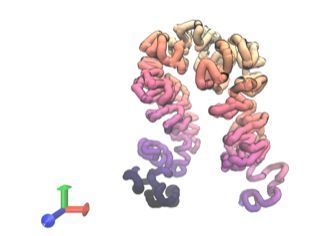
Predicted 3D structure for a segment of human genomic DNA

Only about 1% of human DNA encodes instructions for making proteins. Research in recent decades has shown that much of the remaining noncoding genetic material holds regulatory elements – such as promoters, enhancers, silencers, and insulators – that control how the coding DNA is expressed. How sequence controls the functions of most of these regulatory elements is not well understood, Dr. Zhou explained.

To better understand these regulatory components, he and colleagues at Princeton University and the Flatiron Institute developed a deep learning model they named Sei, which accurately sorts these snippets of noncoding DNA into 40 “sequence classes” or jobs – for example, as an enhancer for stem cell or brain cell gene activity. These 40 sequence classes, developed using nearly 22,000 data sets from previous studies studying genome regulation, cover more than 97% of the human genome. Moreover, Sei can score any sequence by its predicted activity in each of the 40 sequence classes and predict how mutations impact such activities.

By applying Sei to human genetics data, the researchers were able to characterize the regulatory architecture of 47 traits and diseases recorded in the UK Biobank database and explain how mutations in regulatory elements cause specific pathologies. Such capabilities can help gain a more systematic understanding of how genomic sequence changes are linked to diseases and other traits. The findings were published this month.

In May, Dr. Zhou reported the development of a different tool, called Orca, which predicts the 3D architecture of DNA in chromosomes based on its sequence. Using existing data sets of DNA sequences and structural data derived from previous studies that revealed the molecule’s folds, twists, and turns, Dr. Zhou trained the model to make connections and evaluated the model’s ability to predict structure at various length scales. Jian Zhou, Ph.D.

The findings showed that Orca predicted DNA structures both small and large based on their sequences with high accuracy, including for sequences carrying mutations associated with various health conditions including a form of leukemia and limb malformations. Orca also enabled the researchers to generate new hypotheses about how DNA sequence controls its local and large-scale 3D structure.

Dr. Zhou said that he and his colleagues plan to use Sei and Orca, which are both publicly available on web servers and as open-source code, to further explore the role of genetic mutations in causing the molecular and physical manifestations of diseases – research that could eventually lead to new ways to treat these conditions.

UCLA researchers use AI to speed critical information on drug overdose deaths

Faster data processing is crucial to devising a rapid public health response to curb overdose deaths

An automated process based on computer algorithms that can read text from medical examiners’ death certificates can substantially speed up data collection of overdose deaths – which in turn can ensure a more rapid public health response time than the system currently used, new UCLA research finds.

The analysis, to be published Aug. 8 in the peer-reviewed JAMA Network Open, used tools from artificial intelligence to rapidly identify substances that caused overdose deaths.

 “The overdose crisis in America is the number one cause of death in young adults, but we don’t know the actual number of overdose deaths until months after the fact,” said study lead Dr. David Goodman-Meza, assistant professor of medicine in the division of infectious diseases at the David Geffen School of Medicine at UCLA. “We also don’t know the number of overdoses in our communities, as rapidly released data is only available at the state level, at best. We need systems that get this data out fast and at a local level so public health can respond. Machine learning and natural language processing can help bridge this gap.”

As it now stands, overdose data recording involves several steps, beginning with medical examiners and coroners, who determine a cause of death and record suspected drug overdoses on death certificates, including the drugs that caused the death. The certificates, which include unstructured text, are then sent to local jurisdictions or the Centers for Disease Control and Prevention (CDC) which code them according to the International Statistical Classification of Diseases and Related Health Problems, Tenth Edition (ICD-10). This coding process is time-consuming as it may be done manually. As a result, there is a substantial lag between the date of death and the reporting of those deaths, which slows the release of surveillance data. This in turn slows the public health response.

Further complicating matters is that under this system, different drugs with different uses and effects are aggregated under the same code – for instance, buprenorphine, a partial opioid used to treat opioid use disorder, and the synthetic opioid fentanyl are listed under the same ICD-10 code.

For this study, the researchers used “natural language processing” (NLP) and machine learning to analyze nearly 35,500 death records for all of 2020 from Connecticut and from 9 U.S. counties: Cook (Illinois); Jefferson (Alabama); Johnson, Denton, Tarrant and Parker (Texas), Milwaukee (Wisconsin), and Los Angeles and San Diego. They examined how combining NLP, which uses computer algorithms to understand text, and machine learning can automate the deciphering of large amounts of data with precision and accuracy.

They found that of the 8,738 overdose deaths recorded that year the most common specific substances were fentanyl (4758, 54%), alcohol (2866, 33%), cocaine (2247, 26%), methamphetamine (1876, 21%), heroin (1613, 18%), prescription opioids (1197, 14%), and any benzodiazepine (1076, 12%). Of these, only the classification for benzodiazepines was suboptimal under this method and the others were perfect or near perfect.

Most recently the CDC released preliminary overdose data that was no sooner than four months after the deaths, Goodman-Meza said.

“If these algorithms are embedded within medical examiner’s offices, the time could be reduced to as early as toxicology testing is completed, which could be about three weeks after the death,” he said.

The rest of the overdose deaths were due to other substances such as amphetamines, antidepressants, antipsychotics, antihistamines, anticonvulsants, barbiturates, muscle relaxants, and hallucinogens researchers note some limitations to the study, the main one being that the system was not tested on less common substances such as anticonvulsants or other designer drugs, so it is unknown if it would work for these. Also, given that the models need to be trained to rely on a large volume of data to make predictions, the system may be unable to detect emerging trends.

But rapid and accurate data are needed to develop and implement interventions to curb overdoses, and “NLP tools such as these should be integrated into data surveillance workflows to increase rapid dissemination of data to the public, researchers, and policymakers.”