

BU researchers win NSF grant across five centers to work together to prevent future pandemics

A multidisciplinary team of researchers was awarded funding from the National Science Foundation (NSF) to develop models that predict disease emergence and spread and to devise pandemic mitigation strategies.  brian mcgowan gkpszAElZf8 unsplash scaled e1659470264920 0e533
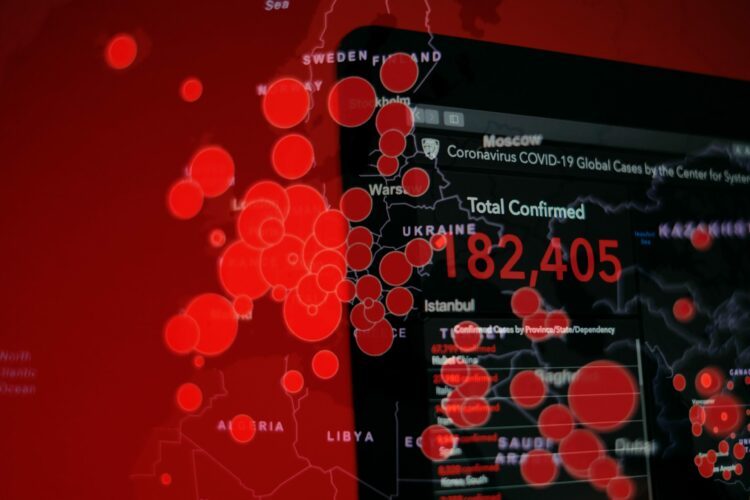
A multidisciplinary team of researchers at Boston University will work towards predicting and preventing future pandemics as part of a new $1 million project funded by the National Science Foundation (NSF). Faculty members from the Rafik B. Hariri Institute for Computing and Computational Science & Engineering, the Center for Information & Systems Engineering (CISE), the Center for Emerging Infectious Diseases Policy and Research (CEID), the Bioengineering Technology & Entrepreneurship Center (BTEC), and the National Emerging Infectious Diseases Laboratories (NEIDL) will work with researchers from EcoHealth Alliance to develop a set of models that can predict disease emergence and spread, and to devise effective pandemic mitigation strategies.

“We have all seen what a global pandemic can cause and have realized that effective responses must be multifaceted. This grant is an opportunity to bring together our amazingly interdisciplinary team and have them work on one of the most consequential topics of our time: how to prevent another pandemic,” says Yannis Paschalidis, Director of the Hariri Institute and a Principal Investigator (PI) of the project.  Other PIs include Eric KolaczykDiane Joseph-McCarthy (BTEC), Nahid Bhadelia (CEID, NEIDL), and Jonathan Epstein (EcoHealth Alliance).

The team will focus its efforts on determining when a disease transitions from an epidemic, manifested by an unexplained increase in disease locally, to a pandemic, or exponential increase in disease on a global scale.  Viruses far outnumber humans, so determining all the pathogens that might pose a threat before their emergence would be difficult and costly, says Joseph-McCarthy, Executive Director of BTEC. “The window between emergence and pandemic affords researchers and medical professionals the best opportunity to focus efforts on the highest impact activities.”

Researchers will identify location hot spots for pathogen emergence across the globe and determine which mutagenic viruses are more likely to cause an outbreak in these areas. Then using data from COVID-19, H1N1 flu, and Ebola Virus Disease, the team will develop a set of models that characterize a pathogen to determine its spread, detect disease anomalies in healthcare settings to understand patient outcomes and determine therapeutics, vaccines, or policies to mitigate the impacts of the disease.

The long-term repercussions of a pandemic warrant a collaborative and interdisciplinary response to disease outbreaks. Researchers on the project will bring expertise in epidemiology, ecology, biology, virology, engineering, statistics, artificial intelligence, media science, behavioral science, and more. “This project brings together a world-class transdisciplinary team of scientists to address the challenge of predicting where outbreaks may occur, detecting them faster when they do, and developing interventions that directly address the things that can prevent local outbreaks from becoming global pandemics: human behavior, policies, and effective communication,” says Jon Epstein, Vice President for Science and Outreach at EcoHealth Alliance.

The researchers plan to focus their efforts on developing algorithms that are less biased and more equitable than existing tools for predicting the spread of disease. “Infectious diseases do not respect political boundaries and rapidly can become global problems,” says Laura White, a core faculty member at CEID, Professor of Biostatistics, and member of the research team on the grant, “I hope that this project helps create more infrastructure for public health in lower resource settings.”

UMBC creates the first global map of cargo ship pollution; reveals the effects of fuel regulations

In a new study in Science Advances led by the University of Maryland, Baltimore County, UMBC’s Tianle Yuan used satellite data from 2003 – 2020 to determine the effect of fuel regulations on pollution from cargo ships. The research team’s data revealed significant changes in sulfur pollution after regulations went into effect in 2015 and 2020. Their extensive data set can also contribute to answering a bigger question: How do pollutants and other particles interact with clouds to affect global temperatures overall?  Tianle Yuan. (Image courtesy of Tianle Yuan)

Tiny particles in the atmosphere, which are called aerosols and include pollution, can harm human health, but they also often have a cooling effect on the planet because of the way they interact with clouds. However, estimates of the extent of that effect range by a factor of 10—not very precise for something so important.

“How much cooling the aerosols cause is a big unknown right now, and that’s where ship tracks come in,” says Yuan, an associate research scientist at the Goddard Earth Sciences Technology and Research (GESTAR) II Center.

Sea of data

When pollutant particles from ships enter clouds low in the atmosphere, they decrease the size of individual cloud droplets without changing the total volume of the cloud. That creates more droplet surface area, which reflects more energy entering Earth’s atmosphere back to space and cools the planet.

Instruments on satellites can detect these differences in droplet size. And the air over the ocean is generally very clean, making the relatively narrow ship tracks that snake across the ocean easy to pick out. “Most of the original cloud is unpolluted, and then some of it is polluted by the ship, so that creates a contrast,” Yuan explains.

While ship tracks can be relatively obvious in satellite data, you have to know where to look and have the time and resources to search. Before advances in supercomputing power and machine learning, Yuan says, Ph.D. students could focus their entire thesis on identifying a group of ship tracks in satellite data.

“What we did is automate this process,” Yuan says. His group “developed an algorithm to automatically find these ship tracks from the sea of data.” 

This huge advance allowed them to generate a comprehensive, global map of ship tracks over an extended period (18 years) for the first time. Next, they will share it with the world—opening the door for anyone to dig into the data and make further discoveries.

Disappearing act

Even before pollution-limiting regulations were put into place, Yuan and his colleagues found that ship tracks didn’t occur everywhere ships were traveling. Only areas with certain types of low cloud cover had ship tracks, which is useful for adjusting the role of clouds in climate models. They also found that after Europe, the U.S., and Canada instated Emission Control Areas (ECAs) along their coastlines in 2015, ship tracks nearly disappeared in those regions, demonstrating the efficacy of such regulations for reducing pollution in port cities.

However, shipping companies didn’t necessarily reduce their pollution output across the board. Instead, they made changes to adapt to the new rules. Ports in northern Mexico (not part of the ECA system) saw increased activity, and pollution “hot spots” built up along the boundaries of the ECAs as ships altered their routes to spend as few miles as possible inside the restrictive zones. 

In 2020, though, an international agreement set a much more restrictive standard for shipping fuel across the entirety of global oceans, rather than only near coastlines. After that, the only ship tracks the team’s algorithm could detect were those in the cleanest clouds. In clouds with even mild background pollution, the presumed ship tracks blended right in.

Climate conundrum

It seems obvious that reducing pollution from ships would produce a net benefit. However, because particles (such as shipping pollution) have a cooling effect when interacting with clouds, reducing them significantly could contribute to a problematic uptick in global temperatures, Yuan says. 

That’s another reason it’s important to firm up the degree to which particulate pollution cools the planet. If the cooling effect of these pollutants and other particles is significant, humans will need to balance the need to prevent extensive warming with the need to reduce pollution where people and other species live—which creates difficult choices.

“Ship pollution alone can create a substantial cooling effect,” Yuan says, “because the atmosphere over the ocean is so clean.” There is a physical limit to how small cloud droplets can get, so at a certain point, adding more pollution doesn’t increase the clouds’ cooling effect. But over the ocean, because the background is largely unpolluted, even a small amount of pollution from ships has an effect. 

Ocean pollution is also an outsize driver of the cooling effect of aerosols, because low clouds, which are most conducive to creating ship tracks, are more common over water than on land. And, as Yuan reminds us, “the ocean covers two-thirds of the Earth’s surface.”

The bigger picture

Moving forward, Yuan and his colleagues are helping address this conundrum by continuing their work to define more precisely the role clouds play in climate. “We can take advantage of the millions of ship track samples we have now to start to get hold of the overall aerosol-cloud interaction problem,” Yuan says, “because ship tracks can be used as mini-labs.”

By analyzing data from a relatively simple and well-controlled system—narrow ship tracks running through very clean clouds—they can come to conclusions they can be confident about.”

Other research teams can also use the team’s data set and algorithm to come to their own conclusions, amplifying the potential public impact of this work. That spirit of collaboration will help scientists and communities determine how best to approach global challenges like pollution and temperature change.

UBC Okanagan modeling aims to inform restoration, conservation of coral reefs

A UBC Okanagan research team has created a supercomputer modeling program to help scientists predict the effect of climate damage and eventual restoration plans on coral reefs around the globe.

This is a critical objective, says Dr. Bruno Carturan, because climate change is killing many coral species and can lead to the collapse of entire coral reef ecosystems. But, because they are so complex, it’s logistically challenging to study the impact of devastation and regeneration of coral reefs. A UBCO researcher has created a modelling program that can help scientists plan for the restoration and conservation of coral reefs impacted by climate change. Photo credit: Jean-Philippe Maréchal.

Real-world experiments are impractical, as researchers would need to manipulate and disrupt large areas of reefs, along with coral colonies and herbivore populations, and then monitor the changes in structure and diversity over many years.

“Needless to say, conducting experiments that will disturb natural coral reefs is unethical and should be avoided while using big aquariums is simply unfeasible,” says Dr. Carturan, who recently completed his doctoral studies with the Irving K. Barber Faculty of Science. “For these reasons, no such experiments have ever been conducted, which has hindered our capacity to predict coral diversity and the associated resilience of the reefs.”

For his latest research, published recently in Frontiers in Ecology and Evolution, Dr. Carturan used models to create 245 coral communities, each with a unique set of nine species and each occupying a surface of 25 square meters. The model represents coral colonies and different species of algae that grow, compete, and reproduce together while also being impacted by climate.

Crucially, he notes, all the key components of the model, including species’ traits such as competitive abilities and growth rates, are informed by pre-existing, real-world data from 800 species.

The research team simulated various scenarios—including strong waves, a cyclone, or intense heat—and then measured each model reef’s resilience taking note of damage, recovery time, and the quality of the habitat 10 years after the disturbance.

By running so many scenarios with supercomputer modeling, the team found that more diverse communities—those with species having highly dissimilar traits—were most resilient. They were better at recovering from damage and had greater habitat quality 10 years after the disturbances.

“More diverse communities are more likely to have certain species that are very important for resilience,” Dr. Carturan explains. “These species have particular traits—they are morphologically complex, competitive, and with a good capacity to recover. When present in a community, these species maintained or even increased the quality of the habitat after the disturbance. Contrastingly, communities without these species were often dominated by harmful algae at the end.”

Coral diversity determines the strength and future health of coral reefs, he adds. Coral species are the foundation of coral reef ecosystems because their colonies form the physical habitat where thousands of fish and crustaceans live. Among those are herbivores, such as parrotfish and surgeonfish, which maintain the coral habitat by eating the algae. Without herbivores, the algae would kill many coral colonies, causing the coral habitat to collapse, destroying its many populations.

“What is unique with our study is that our results apply to most coral communities in the world. By measuring the effect of diversity on resilience in more than 245 different coral communities, the span of diversity likely overlaps the actual coral diversity found in most reefs.”

At the same time, the study provides a framework to successfully manage these ecosystems and help with coral reef restoration by revealing how the resilience of coral communities can be managed by establishing colonies of species with complementary traits.

Looking forward, there are other questions the model can help answer. For instance, the coral species vital for resilience are also the most affected by climate change and might not be able to recover if strong climatic heatwaves become too frequent.

“It is a very real, and sad conclusion that we might one day lose these important species,” Dr. Carturan says. “Our model could be used to experiment and perhaps determine if losing these species can be compensated by some other, more resistant ones, that would prevent the eventual collapse of the reefs.”