Columbia engineering team combines quantum mechanics, machine learning to predict chemical reactions

Extracting metals from oxides at high temperatures is essential not only for producing metals such as steel but also for recycling. Because current extraction processes are very carbon-intensive, emitting large quantities of greenhouse gases, researchers have been exploring new approaches to developing “greener” processes. This work has been especially challenging to do in the lab because it requires costly reactors. Building and running computer simulations would be an alternative, but currently, there is no computational method that can accurately predict oxide reactions at high temperatures when no experimental data is available.

Columbia Engineering team reports that they have developed a new computation technique that, through combining quantum mechanics and machine learning, can accurately predict the reduction temperature of metal oxides to their base metals. Their approach is computationally as efficient as conventional calculations at zero temperature and, in their tests, more accurate than computationally demanding simulations of temperature effects using quantum chemistry methods. The study was led by Alexander Urban, assistant professor of chemical engineeringSchematic of the bridging of the cold quantum world and high-temperature metal extraction with machine learning  CREDIT Rodrigo Ortiz de la Morena and Jose A. Garrido Torres/Columbia Engineering

“Decarbonizing the chemical industry is critical if we are to transition to a more sustainable future, but developing alternatives for established industrial processes is very cost-intensive and time-consuming,” Urban said. “A bottom-up computational process design that doesn’t require initial experimental input would be an attractive alternative but has so far not been realized. This new study is, to our knowledge, the first time that a hybrid approach, combining computational calculations with AI, has been attempted for this application. And it’s the first demonstration that quantum-mechanics-based calculations can be used for the design of high-temperature processes.”

The researchers knew that, at very low temperatures, quantum-mechanics-based calculations can accurately predict the energy that chemical reactions require or release. They augmented this zero-temperature theory with a machine-learning model that learned the temperature dependence from publicly available high-temperature measurements. They designed their approach, which focused on extracting metal at high temperatures, to also predict the change of the “free energy'' with the temperature, whether it was high or low. 

“Free energy is a key quantity of thermodynamics and other temperature-dependent quantities can, in principle, be derived from it,” said José A. Garrido Torres, the study’s first scholar who was a postdoctoral fellow in Urban’s lab and is now a research scientist at Princeton. “So we expect that our approach will also be useful to predict, for example, melting temperatures and solubilities for the design of clean electrolytic metal extraction processes that are powered by renewable electric energy.”

“The future just got a little bit closer,” said Nick Birbilis, Deputy Dean of the Australian National University College of Engineering and Computer Science and an expert for materials design with a focus on corrosion durability, who was not involved in the study. “Much of the human effort and sunken capital over the past century has been in the development of materials that we use every day – and that we rely on for our power, flight, and entertainment. Materials development is slow and costly, which makes machine learning a critical development for future materials design. For machine learning and AI to meet their potential, models must be mechanistically relevant and interpretable. This is precisely what the work of Urban and Garrido Torres demonstrates. Furthermore, the work takes a whole-of-system approach for one of the first times, linking atomistic simulations on one end engineering applications on the other – via advanced algorithms.” 

The team is now working on extending the approach to other temperature-dependent materials properties, such as solubility, conductivity, and melting, that are needed to design electrolytic metal extraction processes that are carbon-free and powered by clean electric energy.

RIKEN researcher Nomura develops ML method for modeling quantum spin liquids

A method for predicting exotic states of matter could be useful for processing quantum information

The properties of a complex and exotic state of a quantum material can be predicted using a machine learning method created by a RIKEN researcher and a collaborator. This advance could aid the development of future quantum supercomputers. Figure 1: By using a machine learning algorithm that mimics the network of neurons in the brain, a RIKEN physicist and a collaborator have developed a method for modeling quantum spin liquid states.© JESPER KLAUSEN / SCIENCE PHOTO LIBRARY

We have all faced the agonizing challenge of choosing between two equally good (or bad) options. This frustration is also felt by fundamental particles when they feel two competing forces in a special type of quantum system.

In some magnets, particle spins—visualized as the axis about which a particle rotates—are all forced to align, whereas in others they must alternate in direction. But in a small number of materials, these tendencies to align or counter-align compete, leading to so-called frustrated magnetism. This frustration means that the spin fluctuates between directions, even at absolute zero temperature where one would expect stability. This creates an exotic state of matter known as a quantum spin liquid.

“This intriguing and unusual ‘liquid’ state of quantum spins is expected to have unique quantum entanglement properties that differ from those of an ordinary ‘solid’-state system,” explains Yusuke Nomura of the RIKEN Center for Emergent Matter Science in Hirosawa, Wako, Saitama, Japan. “And these entanglement properties are potentially useful for quantum computations in quantum computers.”

However, modeling a quantum spin liquid is highly challenging because the number of interdependent spin configurations that make up its quantum state increases exponentially with the number of particles.

Now, Nomura and a collaborator have overcome this problem by developing a machine learning method that can model quantum many-body systems. It can reveal the existence of a quantum spin liquid phase in a frustrated magnet in which the next nearest neighbor spins interact within a specific range of strengths relative to those between nearest-neighbor spins.

“Our newly developed machine learning method has overcome the difficulty associated with these complex systems,” says Nomura. “It has established the existence of a quantum spin liquid in a two-dimensional spin system.”

The study provides a useful guideline for realizing quantum spin liquid phases in real materials. But there is a broader message: the research highlights the power of machine learning as a tool for solving grand challenges in physics. “Using machine learning as a novel tool, we have resolved a long-standing problem in physics that was difficult to solve with the unaided human brain,” says Nomura. “In the future, the use of ‘machine brains’ in addition to human brains will shed new light on other unsolved problems. It marks the beginning of a new era of research in physics.”

UVA joins forces with Virginia Department of Elections in statewide effort to prepare future cybersecurity leaders for protecting critical infrastructure

Faculty in the University of Virginia School of Engineering and Applied Science has earned a $3 million grant to lead a network of Virginia universities, in partnership with the Virginia Department of Elections, in creating an innovative educational program to train future cybersecurity professionals to protect election infrastructure.

The Virginia Cyber Navigator Program will consist of a new elections cybersecurity course to be offered to Virginia university students next spring, followed by internships that will give college students real-world experience in supporting information systems at Virginia localities, particularly critical infrastructure used in elections.

The Virginia Department of Elections, with input from localities, will inform the course’s curriculum to ensure alignment with industry-recommended system security standards. UVA will lead the rollout of the program across the network of partner universities and handle administrative duties associated with the grant.

Daniel Persico, chief information officer of the Virginia Department of Elections, is managing the project for the Commonwealth of Virginia. He has overseen technology and security for the Virginia elections since 2019.

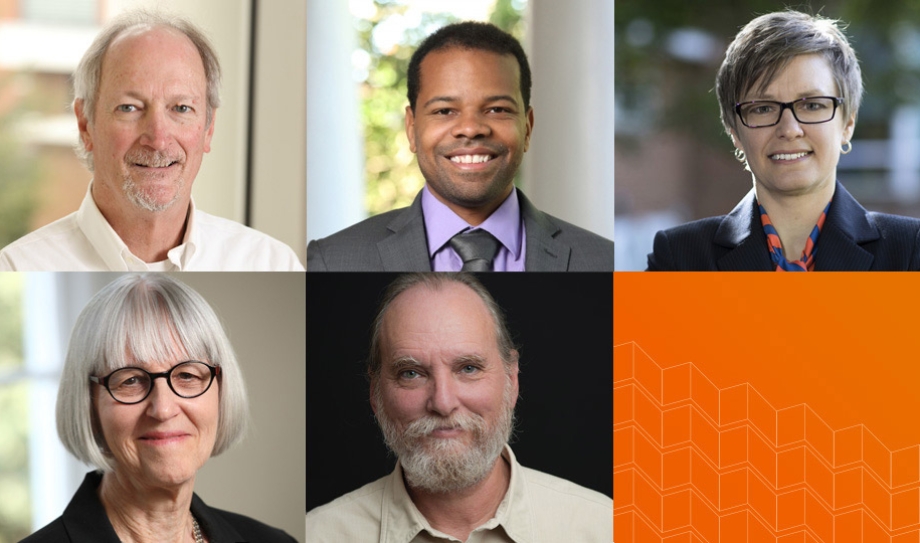
“Virginia is leading the way in cybersecurity and elections. This program is a demonstration of innovation that not only solves real-world problems but also offers hands-on training to our future cybersecurity professionals,” said Persico. “The program will go a long way to support the communities where we live and work in the face of continually emerging threats. Staying a step ahead of cyber adversaries is our goal.” UVA Engineering’s team includes Jack Davidson, professor of computer science; Daniel G. Graham, assistant professor of computer science; Angela Orebaugh, assistant professor of computer science; Deborah G. Johnson, Anne Shirley Carter Olsson Professor emeritus of applied ethics and interim chair of the Department of Engineering and Society; and, Worthy Martin, associate professor of computer science.

UVA Engineering’s team includes Jack Davidson, professor of computer science; Daniel G. Graham, assistant professor of computer science; Deborah G. Johnson, Anne Shirley Carter Olsson Professor emeritus of applied ethics and interim chair of the Department of Engineering and Society; Worthy Martin, associate professor of computer science; and Angela Orebaugh, assistant professor of computer science.

The university network UVA is leading includes George Mason University, Norfolk State University, Old Dominion University, Virginia Commonwealth University, and Virginia Tech.

“Technology is becoming central to more public services than just utilities, communications, and transportation. Computer systems used to manage elections are also critical infrastructure,” said Davidson, who directs UVA Engineering’s cyber defense program of study. “It is important to build a pipeline of computer scientists who are ready to hit the ground running to support local governments that are rapidly integrating cyber technologies.”

The grant came from the National Centers of Academic Excellence in Cybersecurity program - within the National Security Agency - promoting academic excellence for institutions that are equipping the cybersecurity workforce to protect critical infrastructure. UVA earned the National Center of Academic Excellence in Cyber Defense and the National Center of Academic Excellence in Cyber Research designations in 2018 and 2019, respectively.

The grant highlights the long-standing strength of UVA’s cybersecurity curriculum and experiential learning opportunities, which result in UVA graduating some of the nation’s most-sought cybersecurity professionals.  

Central to the new Virginia Cyber Navigator Program is the prerequisite course for students who will enter internships. Virginia Department of Elections officials is working with university network partners to finalize the curriculum for the course, which will be called “Cybersecurity and Elections.” The course will be offered at all six universities in spring 2022 and teach foundational skills for identifying and securing vulnerabilities in software systems used to support elections.

Students from across the state who complete “Cybersecurity and Elections” will gather at UVA to participate in a multi-day boot camp – with faculty, Department of Election members, and industry advisors – for intensive, pre-internship preparation. Then, in the summer of 2022, students will work as embedded teams in various Virginia localities, supported by faculty advisors, to learn from and assist the localities in enhancing their security posture.

Under the multi-year grant, the Virginia Cyber Navigator Program will be revised from observations made in the field. Student interns will play a key role in this process by gathering at UVA in fall 2022 to share lessons learned during their work with Virginia’s localities. University network members, along with government and industry advisors, will rely on the feedback to inform refinements to the program, which will be offered again in the Spring of 2023.

UVA Engineering has long emphasized research and teaching that analyze the implications of technology for society, particularly through initiatives such as the UVA Cyber Innovation and Society Institute. Co-led by Davidson and Johnson, the institute seeks to anticipate the impacts of emerging cyber technologies to support projects and education that promote the use of the technology in ways that benefit society.

“A major impetus for offering the course is to give students, many who will be entering public sector careers, the chance to engage in civic-minded technology projects,” said Davidson. “Opportunities to collaborate with government leaders on behalf of the local community is a critical component in learning how to deploy technologies that serve the public good.” 

Davidson is a Commonwealth Cyber Initiative, or CCI, Fellow and notes the program also supports CCI’s mission of cybersecurity workforce development.

The Virginia Cyber Navigator Program is expected to become a model for the nation. Course curriculum and supplemental materials will be shared and open-source, so that other states’ universities can adapt the program and offer it to their students.