

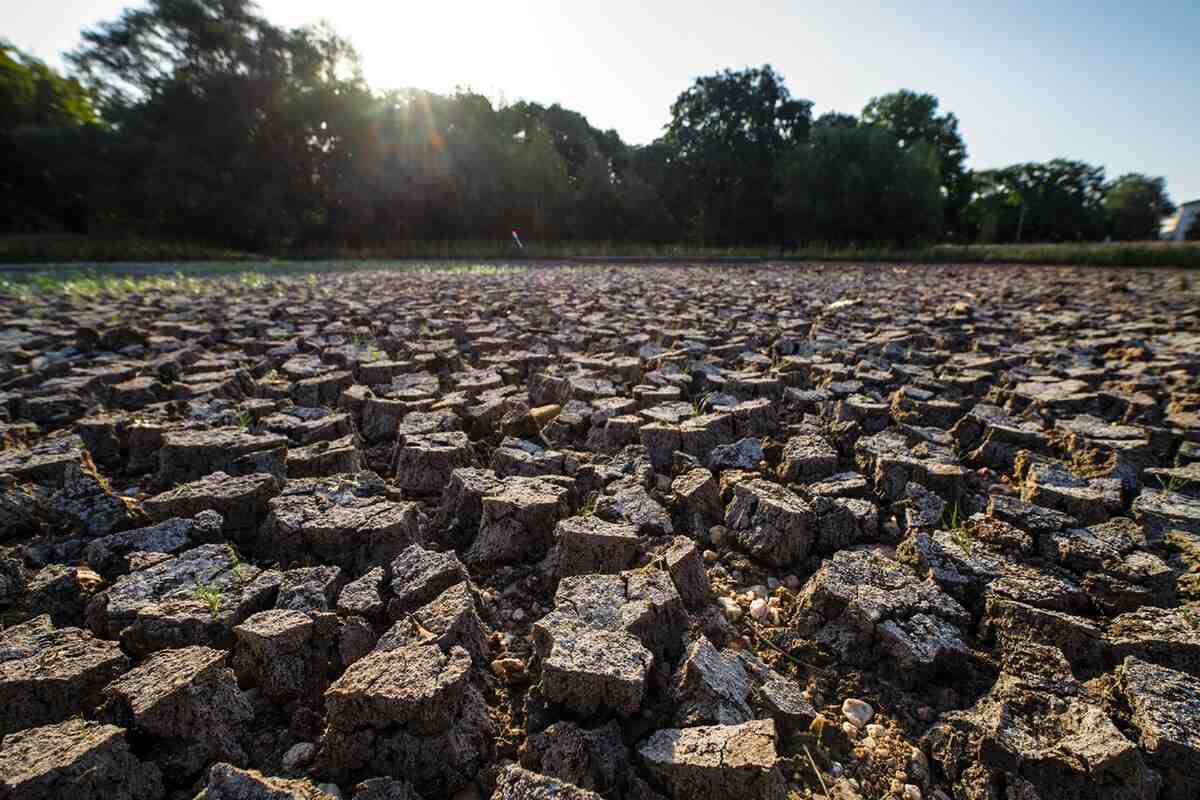
Climate change intensifies extreme heat in the soil Photo: André Künzelmann / UFZ

Uncovering the impact of climate change: Extreme heat in the soil

Soil temperatures have been often ignored for a long time, and there is hardly any reliable data available about it, unlike air temperatures near the surface. Measuring soil temperature is more complex, which resulted in a lack of attention. However, a research team led by the Helmholtz Centre for Environmental Research (UFZ) in Germany has discovered that soil and air temperatures can differ and climate change has a much greater impact on the intensity and frequency of heat extremes in the soil than in the air. This is particularly true in Central Europe, according to a recent study by scientists.

In a recent study, a team of researchers led by Dr Almudena García-García from UFZ collected data from various sources, including meteorological measuring stations, remote sensing satellites, the ERA5-Land data reanalysis set, and supercomputing simulations of Earth system models. The team used this data to calculate the TX7d index, which reflects the intensity of heat extremes by averaging the daily maximum temperature in the hottest week of the year. The index was calculated for the 10-cm-thick upper soil layer and the near-surface air at a height of up to 2 m for the years 1996 to 2021. The researchers found that at two-thirds of the 118 meteorological measuring stations evaluated, the trend in heat extremes is stronger in the soil than in the air. This suggests that heat extremes develop much faster in the soil than in the air, especially in Germany, Italy, and southern France. According to station data, the intensity of heat extremes in Central Europe is increasing 0.7°C/decade faster in the soil than in the air.

The research team also looked at the frequency of heat extremes in the soil using the TX90p index. This index considers the percentage of days per month when the daily maximum temperature was higher than the statistical limit between 1996 and 2021. The calculations showed that the number of days with heat extremes is increasing twice as fast in the soil as in the air.

"For example, if there are currently high temperatures in the soil and air on 10% of the days in a month, a decade later, there will be high temperatures in the air on 15% of the days and high temperatures in the soil on 20%", says García-García. Soil moisture is a key factor that affects the exchange of heat between the air and soil. The amount of soil moisture depends on the type of land cover. Trees in forests can draw water from deep in the soil with their roots, thus reducing water loss through evaporation during the summer. However, crops and grasslands can only access water from the soil surface. It's worth noting that soil temperature can rise much faster than air temperature, causing additional heat to be released into the lower atmosphere if the soil temperature is higher than that of the air. As a result, atmospheric temperatures are likely to increase.

"Soil temperature acts as a factor in the feedback between soil moisture and temperature and can thus intensify heat periods in certain regions", explains Dr. Jian Peng, co-author and head of the UFZ Remote Sensing Department. This feedback affects agriculture, ecosystems, and carbon storage. "In view of these results, studies on the effects of heat extremes, which consider mainly air temperatures but have underestimated the factor of heat extremes in the soil, would have to be re-evaluated", he says.

The research team used Earth system supercomputer models to investigate how extreme soil temperatures could amplify heat waves in the atmosphere, based on different global climate scenarios. They discovered that if the 2-degree or 3-degree scenario occurs, Central Europe will be more severely impacted than with a 1.5-degree warming. For instance, there could be 8% more hot days when soil releases heat into the atmosphere, intensifying periods of hot weather in the air. García-García mentioned that this can imply that soils will play a more crucial role in the development of heat extremes.

To conclude, climate change is increasing extreme heat in the soil, which can have severe implications for soil health, and the plants and animals that rely on it. This emphasizes the significance of reducing emissions and taking action to mitigate the effects of climate change to protect our soils and the ecosystems they support.
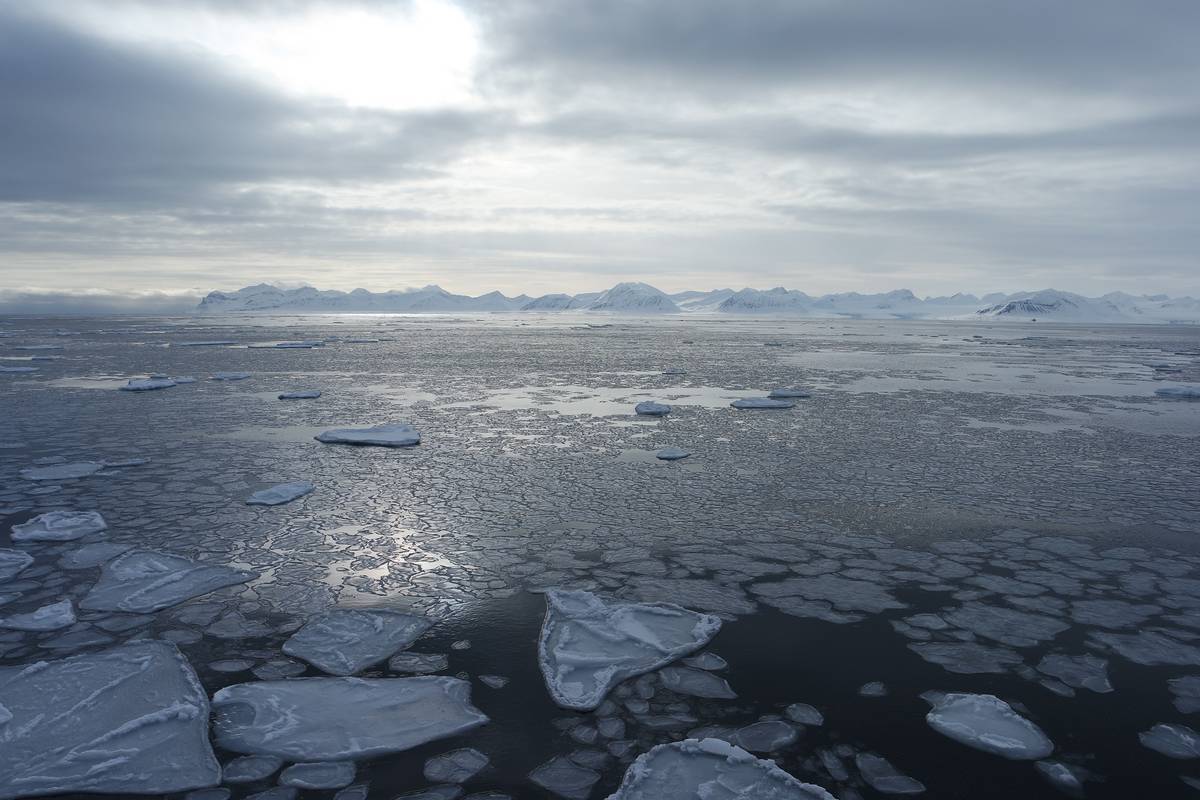
Ice floes cover a bay off the coast of Svalbard. (Photo: Finn Heukamp)

German scientists deliver a new study shedding light on Arctic sea ice fate

The Azores High and Icelandic Low have a significant impact on the amount of warm water transported to the Arctic along the Norwegian coast. This interplay can be disrupted for extended periods due to unusual atmospheric pressure conditions over the North Atlantic. The experts from the Alfred Wegener Institute, Helmholtz Centre for Polar and Marine Research have finally explained why low-pressure areas are diverted from their usual path, disrupting the coupling between the Azores High, the Icelandic Low, and the winds off the Norwegian coast. This finding is a crucial step towards refining climate models and more accurately predicting the fate of Arctic sea ice in the face of advancing climate change.

The Alfred Wegener Institute, Helmholtz Centre for Polar and Marine Research, a member of the Helmholtz Association of German Research Centres, conducts research in the high and mid-latitude oceans, the Arctic, and the Antarctic. The institute was founded in 1980 and named after meteorologist, climatologist, and geologist Alfred Wegener. Its research topics include North Sea research, marine biological monitoring, and technical marine developments. 

During winter, the Norwegian coast experiences harsh weather conditions, characterized by the wind blowing out of the southwest for days or even weeks. Low-pressure areas move along the coast, bringing rain and snow and determining the amount of warm water the Atlantic carries from southerly latitudes to the Barents Sea and the Arctic. However, the flow of warm water may vary, and it is essential to understand the cause of these fluctuations in the complex air and ocean currents off the coast of Norway and in the Barents Sea to improve climate models.

Temporary decoupling

A recent study conducted by oceanographer Finn Heukamp and his team at the Alfred Wegener Institute, Helmholtz Centre for Polar and Marine Research (AWI) focused on analyzing ocean currents along the Norwegian coast and into the Barents Sea. The study examined the North Atlantic Oscillation (NAO), which is the atmospheric pressure difference between the Azores High and the Icelandic Low, and how it affects the currents off the coast of Norway. The team aimed to understand why there were significant deviations from the typical interplay between the NAO and weather conditions, which caused extreme ocean currents in some cases.

The intensity of winds and ocean currents is mainly influenced by the atmospheric pressure difference in the NAO. When the NAO is more pronounced, it creates powerful air currents that drive low-pressure areas across the North Atlantic and past Norway on their way north. When the atmospheric pressure difference lessens, both the winds and the low-pressure areas lose momentum. The NAO, the low-pressure areas' track, and the ocean current intensity off the coast of Norway are closely interconnected under normal circumstances. However, the study observed a decoupling of the NAO and ocean currents in the Barents Sea from the late 1990s. 

The unusual decoupling phenomenon frequently occurred in winter between 1995 and 2005, but the reason behind it was unclear. The experts have now found the answer thanks to a mathematical ocean model that simulates the Arctic Ocean at high resolution. The decoupling is attributed to an unusual change in the low-pressure areas' track. Finn Heukamp discovered that the stream of low-pressure areas that move from the southwest to the north and pass by Norway is sometimes disrupted by powerful, nearly stationary high-pressure areas, known as blocking highs. These areas push the fast-moving low-pressure areas out of their normal track, temporarily decoupling the NAO and the northward flow of warm water.

Improving Climate Models

“At the moment, we still can’t say how often this type of situation arises – for instance, if it repeats every few decades – because the observational data we use to compare with our ocean model only goes back roughly 40 years,” says Heukamp. Nevertheless, the findings are very important for climate modeling. “Global climate models simulate on a comparatively broad scale,” the researcher explains. “With the latest results from our high-resolution analysis for the North Atlantic and the Arctic, we’ve now added an important detail for making climate modeling for the Arctic even more accurate.” 

The research conducted by German researchers highlights the need to consider the NAO, low-pressure areas over the Atlantic, and ocean currents together in the future. Since both the transport of warm water and the path of lows over the Atlantic impact weather in the middle latitudes, the findings are useful for predicting the future climate and weather in Central Europe with greater accuracy.

The study has provided valuable insight into the future of Arctic sea ice. The findings of the study suggest that the Arctic sea ice is likely to decrease in the coming years due to the effects of climate change. This is an alarming trend that needs to be addressed urgently. However, the study also provides hope that the effects of climate change can be mitigated through the implementation of effective policies and strategies. It is now up to us to take the necessary steps to ensure that the Arctic sea ice is preserved for future generations.

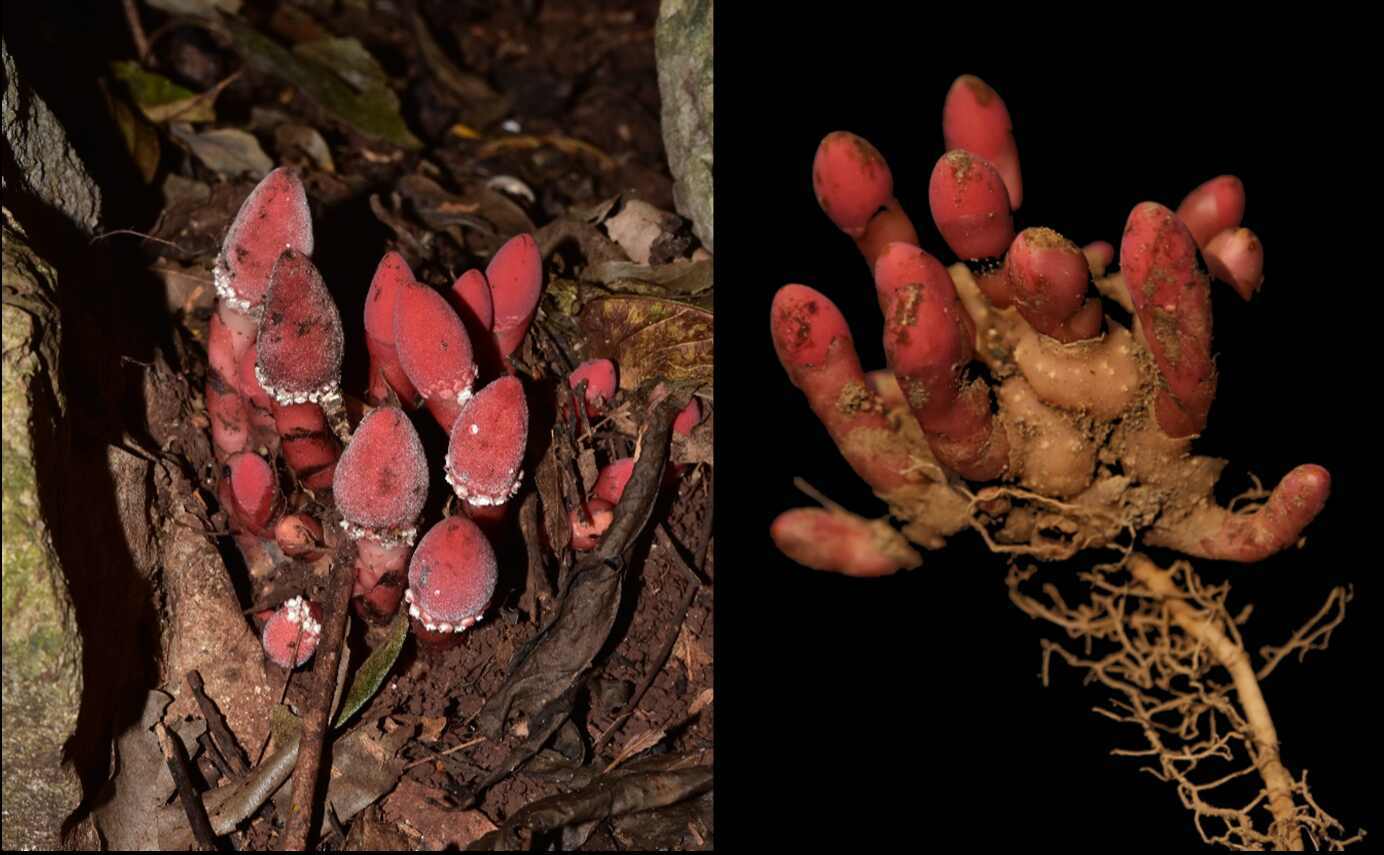
Left: the morphology of Balanophora subcupularis and their habits. (Photo by Ze Wei, Plant Photo Bank of China) Right: the above-ground tissues (mainly flower stem and inflorescence), below-ground named tubers, and the root of the host. (Photo by Xiaoli Chen, BGI-Research)

Chinese researchers study Balanophora to gain insights into plant parasitism evolution

Scientists from BGI-Research, Kunming Institute of Botany, the University of British Columbia in Canada, and others published a research study today. They have studied Balanophora, a holoparasitic plant that depends entirely on its host plant for nutrients and water and cannot perform photosynthesis. The research sheds light on how genomic adaptations impact the evolution of plant parasitism.

BGI Group is a Chinese genomics company headquartered in the Yantian District of Shenzhen. The company was initially established in 1999 as a research center for genetics, to contribute to the Human Genome Project. BGI Group also specializes in sequencing the genomes of various animals, plants, and microorganisms.

Plants are typically self-sufficient organisms that can produce their food through photosynthesis. However, there are around 5,000 plant species that have evolved to depend on other host plants for their survival, and some of them have even lost their ability to photosynthesize.

During the 10,000 Plant Genome Project (10KP), Balanophora caught the attention of BGI researchers. Dr. Xiaoli Chen, a researcher at BGI-Research and the lead author of the paper, said, "We were curious about what happened to them when they evolved to become holoparasites and lost the critical function that typically defines green plants - the ability to photosynthesize."

The research team gathered and examined genomes of members of the sandalwood order, which included a stem hemiparasite, Scurrula, and two Balanophora root holoparasites. The genome comparison revealed that Scurrula and other hemiparasites, which have a moderate degree of parasitism, suffered a relatively minor degree of gene loss compared to autotrophic plants. In contrast, Balanophora experienced significant gene loss.

Scientists observed substantial gene loss in Balanophora and Sapria, two extreme parasitic plants from different families. “The extent of common gene loss observed in Balanophora and Sapria is striking,” says Dr. Chen. “It points to a very strong convergence in the genetic evolution of holoparasitic lineages, despite their outwardly distinct life histories and appearances, and despite their having evolved from different groups of photosynthetic plants.”

Unveiling the Mysteries of Balanophora: Unlocking the Evolution of Plant Parasitism

The scientists discovered that holoparasites have lost many genes associated with photosynthesis, as well as genes related to other vital biological processes such as root development, nitrogen absorption, and regulation of flowering development. This indicates that these parasites only retain genes that are essential to their survival and eliminate those that are no longer necessary. 

The analysis of transcriptome data revealed unusual and novel interactions between Balanophora and its host plant, as well as the host-parasite tuber interface tissues. The researchers found evidence of mRNA exchange, substantial and active hormone exchange, and immune responses in both the parasite and host. 

For instance, while Balanophora and Sapria have lost genes involved in the synthesis of the major plant hormone abscisic acid (ABA), which is responsible for plant stress responses and signaling, the researchers discovered that there was still an accumulation of the ABA hormone in the flowering stems of Balanophora. Additionally, genes related to the response to ABA signaling were still retained in these holoparasites. This suggests that the parasites are capturing and utilizing the ABA hormone synthesized by their host plants.

According to Dr. Sean Graham, Professor of Botany at the University of British Columbia, and an author of the paper: “The majority of the lost genes in Balanophora are probably related to functions essential in green plants, which have become functionally unnecessary in holoparasites. That said, there are probably instances where the gene loss was beneficial, rather than reflecting a simple loss of function. The loss of their entire ABA biosynthesis pathway may be a good example of this, as it may help them to maintain physiological synchronization with the host plants. This needs to be tested in the future.”

Dr. Huan Liu, a researcher at BGI-Research and the corresponding author of the paper, explains: “The study of parasitic plants deepens our understanding of dramatic genome alterations and the complex interactions between parasitic plants and their hosts. The genomic data provides valuable insights into the evolution and genetic mechanisms behind the dependency of parasitic plants on their host, and how they manipulate host plants to survive.”

Through the study of Balanophora, unique genomic adaptations have been discovered that shed light on the evolution of plant parasitism. This research provides valuable insight into the mechanisms and evolutionary history of plant parasitism, which could be used to inform future studies. However, further research is necessary to fully understand the implications of these findings and their potential applications in agriculture and conservation.