Russian scientists build model that will accelerate creation of alloys with specified properties

Scientists at the Ural Federal University have proposed a method for significantly accelerating the synthesis of aluminum-based alloys. Using computer modeling, researchers can control the internal structure of the alloy and influence its physical properties. In the process of creating the mathematical model, physicists performed unique calculations, the results of which are presented in the Journal of Physics: Condensed MatterAccording to Lubov Toropova, simulation of alloy synthesis can also be applied in the chemical and biotechnological areas.  CREDIT Ilya Safarov / UrFU

“We made calculations for silumin, an alloy of aluminum and silicon. It is actively used for casting parts in the automotive, motorcycle, and aircraft industries because of its ability to form castings without defects. We were able to develop a mathematical model to describe the different shapes of dendritic crystals formed in the alloy structure at different supercooling temperatures. The shape of the crystals in the alloy predetermines the physical properties of the materials - strength and ductility, thermal conductivity, and electrical conductivity. With the help of modeling, we can determine what shape of crystals is necessary to improve certain properties of the alloy, and produce parts with the specified characteristics,” explains Lubov Toropova, Senior Researcher at the Laboratory of Mathematical Modeling of Physical and Chemical Processes in Multiphase Media at UrFU.

The researchers verified their model at the electromagnetic levitation experimental facility at the Friedrich Schiller University Jena in Germany. The theoretical models obtained as part of the project allow described real experimental data on the kinetics of crystal growth in melts.

“The unique equipment makes it possible to conduct real experiments and describe the dendritic structure of the alloy. Additionally, we use numerical simulation methods in our calculations, with the help of which we can immediately adjust the composition and characteristics of the alloy. For example, we found that in some cases dendritic crystals growing from pure silicon evolve faster than crystals growing from silumin melt, and this improves the microstructure and properties of the final material, in other words, it is necessary to adjust the melt composition if we want to speed up the process of casting parts,” said Lubov Toropova.

According to the scientists, the mathematical models under development will allow to quickly create alloys of different metals with the necessary properties. Based on experimental studies of the model, physicists have created software and received a certificate of state registration of the computer program. The software will make it possible to simulate complex processes of structural-phase transformations that take place in alloys of different metals and to create new generation materials with improved characteristics.
China enhances historical climate model data using super-resolution technology

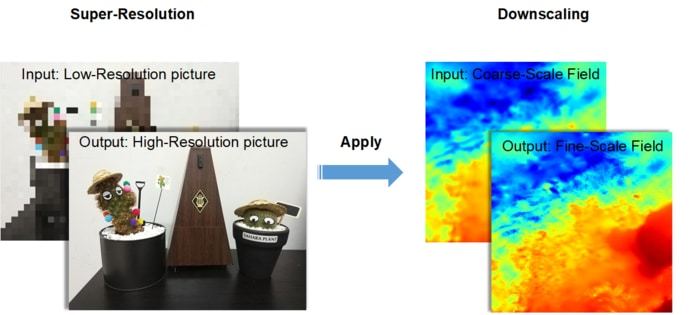
Super-resolution technology is a new supercomputing method used to enhance older meteorological model data so that scientists can better assess Earth's global climate history. Like upscaling digital photos and videos super-resolution calculations are an important analysis tool to calculate historical high-resolution model assimilation data, according to Dr. Chunxiang Shi, Chief Scientist at the National Meteorological Information Center of China Meteorological Administration. Like video and image enhancements, machine learning can improve model resolution  CREDIT Ruian Tie

"Due to the sparse historical observation data, the China Meteorological Administration land data assimilation system (CLDAS) cannot generate high-quality and high-resolution data," said Dr. Shi. "At the beginning of last year, I learned that super-resolution technology can be used to complete high-resolution reconstruction of videos and pictures. We can also integrate this technology into reconstructing high-resolution historical assimilation data.”

Dr. Shi and her team from the National Meteorological Information Center of China Meteorological Administration are also known for CMA’s Land Data Assimilation System (CLDAS) and China's 40-year global atmospheric/land surface reanalysis dataset (CRA-40). Recently, they published their super-resolution downscaling research based on CLDAS data in Advances in Atmospheric Sciences.

Specifically, the team built a deep learning downscaling model CLDASSD (CLDAS Statistical Downscaling). Using 2m temperature model data within the Beijing-Tianjin-Hebei region, researchers performed their downscaling test, making large-scale (low resolution) model output available to enhance local scale forecasts (high resolution). Their method successfully reconstructed fine textures in complex mountain areas, where human observation may be impossible. Through comparison with observational data, the root mean square error of CLDASSD is smaller than the general interpolation-based downscaling methods used with different daily times, seasons, and terrain.

"Natural images and meteorological data have similarities in some respects, some computer vision techniques (Super-resolution, semantic segmentation, etc.) may be applied in the atmosphere," said Dr. Shi. "In the future, we will learn from even better super-resolution technologies to upgrade our model and carry out more experiments using soil moisture, 10m wind, precipitation, etc. elements throughout China to fill the gap in CLDAS."

CMIP6 models have improved in simulating sea surface salinity, freshwater flux

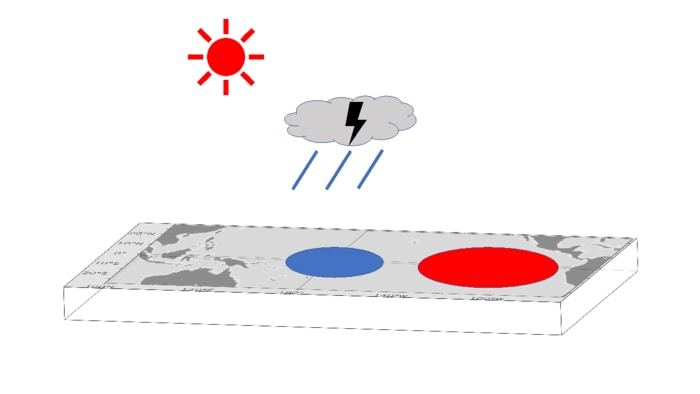
Salinity changes the ocean stratification by affecting the density, which has a certain impact on the thermodynamic processes of the ocean and then modulates sea surface salinity variations. With the development of numerical models in recent years, climate models have become an important tool for studying the mechanism of climate change and predicting climate change. It is feasible and necessary to study the underlay mechanisms of variation in El Niño–Southern Oscillation (ENSO) by examining the temporal and spatial characteristics of sea surface salinity in the tropical Pacific. The Coupled Model Intercomparison Projects (CMIPs) were initiated by the Working Group on Coupled Modeling (WGCM) of the World Climate Research Program (WCRP) in 1995. With the rapid development and growth of global ocean-atmosphere models, the CMIPs provide the basis for multimodel assessments that reveal differences between models and observations. Relationship between sea surface salinity anomalies, sea surface temperature anomalies, and freshwater flux anomalies in the tropical Pacific. The sea surface salinity anomalies in the tropical western Pacific correspond to SST anomalies in the equatorial eastern Pacific, while the sea surface salinity anomalies correspond to precipitation and evaporation anomalies during ENSO. The blue area indicates sea surface salinity anomalies and the red sea surface temperature anomalies.  CREDIT Hai Zhi

With Prof. Hai Zhi from Nanjing University of Information Science and Technology, as the first author, and Prof. Pengfei Lin from the Institute of Atmospheric Physics, Chinese Academy of Sciences, as the corresponding author, led a study in which CMIP data were used to compare model outputs and observations to effectively evaluate model simulations, and to obtain strengths and weaknesses of individual models and the differences between the models. These results have been recently published in Atmospheric and Oceanic Science Letters.

By comparing CMIP5 and CMIP6 simulations of the sea surface salinity and freshwater flux response to ENSO in the tropical Pacific, it is shown that both CMIP5 and CMIP6 can better simulate the spatial distribution of sea surface salinity and freshwater flux variability associated with ENSO. Compared with the CMIP5 models, the interannual variabilities in sea surface salinity and freshwater flux simulated by the CMIP6 models show greater improvement in some regions, correcting the underestimation of the spatial relationship between the variability of sea surface salinity and freshwater flux in the central-western Pacific and ENSO. However, some CMIP6 models overestimate the strength of the interannual variability of sea surface salinity. The CMIP5 and CMIP6 models still have large uncertainties in simulating the interannual variation of sea surface salinity, and the related physical processes need to be improved.

“The results of our study, as part of the evaluation of CMIP, can be used as an assessment of the simulation results of CMIP5- and CMIP6-related models for the interannual variabilities in salinity and freshwater flux in the tropical Pacific, and can provide an important reference for the study of the impact of ENSO on global climate”, says Prof. Zhi.