

Raijin supercomputer illuminates key insights into fusion plasma turbulence

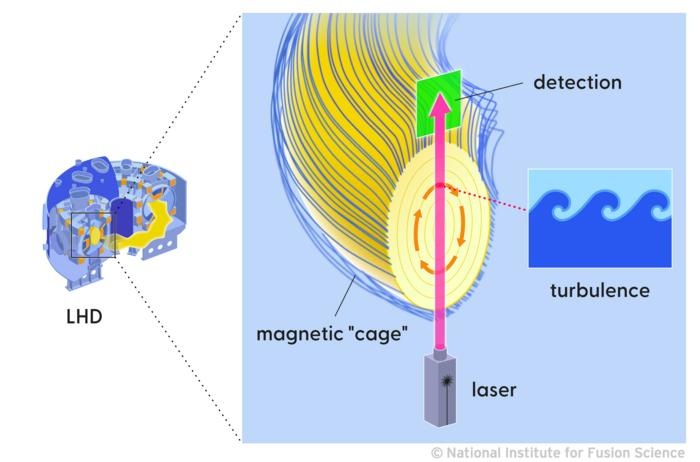
The National Institutes of Natural Sciences in Japan recently published a groundbreaking study uncovering new insights into turbulence in fusion plasmas. The study, led by a team of esteemed researchers including Toshiki Kinoshita, Kenji Tanaka, and Akihiro Ishizawa, focused on understanding the suppression of turbulence during what they called the "turbulence transition." Their experiments revealed a critical point at which turbulence is notably subdued at a certain plasma density, leading to significant changes in plasma dynamics.

To validate their findings, the researchers used the Raijin supercomputer to simulate the factors governing turbulence in fusion plasmas. The simulations identified a fundamental shift in turbulence behavior below and above the transition density, with ion-temperature gradients primarily driving turbulence below the threshold, and pressure gradients and plasma resistivity playing a major role above it.

These findings have far-reaching implications, potentially offering a path toward more efficient and viable fusion power generation. The researchers are now focusing on identifying the turbulence transition condition based on the physics of turbulence, to devise novel strategies to optimize fusion power plant operation. They also plan to extend their findings to deuterium/tritium mixed plasmas and explore innovative plant design solutions, paving the way for the early realization of fusion energy as a clean, abundant, and sustainable energy source.
Breakthrough in superconducting magnet development unleashes new possibilities through AI

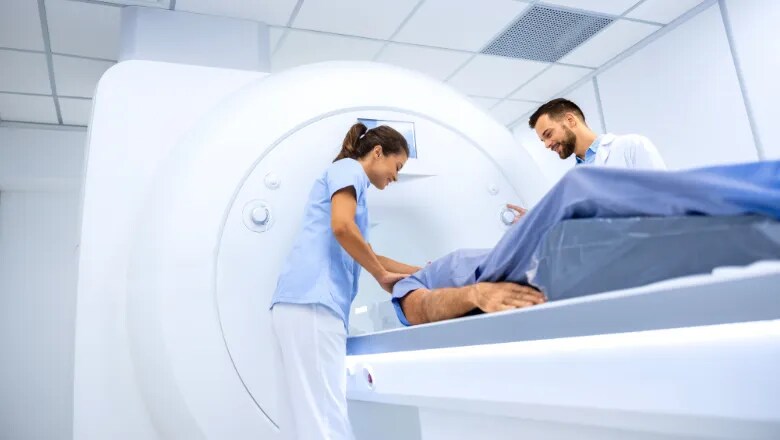
A team of scientists from King's College London and research institutions in Japan has achieved a breakthrough in superconducting magnet technology. They have created the world's strongest iron-based superconducting magnet, which has potential applications in magnetic resonance imaging (MRI) machines and electrified transport systems.

This development promises to make superconducting magnet technology more affordable and widely available. It could lead to the creation of smaller and lighter MRI machines as well as find applications in electric aircraft and nuclear fusion, revolutionizing medical imaging and transportation technology.

Dr. Mark Ainslie of the King's Department of Engineering led the research. The team used artificial intelligence (AI) and machine learning (ML) to develop a cost-effective and powerful iron-based superconducting magnet. This breakthrough could enable the development of more compact and efficient devices while reducing manufacturing costs.

Dr. Ainslie highlighted the impact of this advancement, explaining that superconducting magnets are essential for imaging cancers with MRI machines and will be vital for electric aircraft and nuclear fusion. However, traditional copper-based wire superconductors are costly. The team's use of ML has led to a scalable, cost-effective alternative using iron, offering flexibility and potential for industrial implementation.

The researchers employed a new machine learning system called BOXVIA to optimize and fabricate superconductors. This system has streamlined the superconductor creation process in the laboratory, significantly reducing the time required for designing and testing new superconductors.

Additionally, scientists have unveiled a paradigm shift in the microscopic structure of the superconductors produced by AI. These samples exhibited a distinctive nanostructure composition characterized by a wide range of iron-based crystals, a departure from the uniform structure pursued by human researchers.

This achievement represents a milestone in superconducting magnet technology, driven by the integration of AI, machine learning, and scientific inquiry. The implications of diagnostic imaging, transportation, and future technological advancements are set to revolutionize various industries and transform the course of superconducting magnet research and development.

Sean McWilliams
Sean McWilliams

Exploring space: WVU scientist studies gravitational waves

An Intriguing Journey into the Heart of the Universe

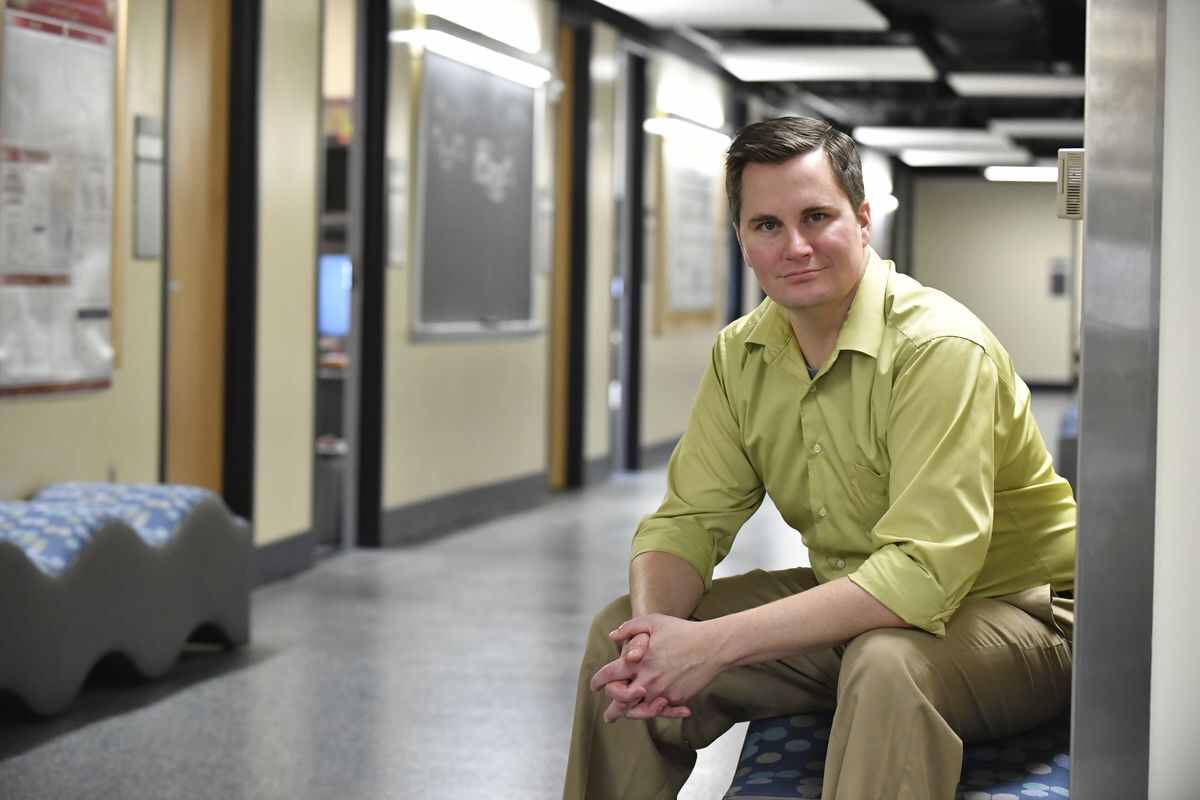
West Virginia University's astrophysicist, Sean McWilliams, is leading the way in pioneering advancements in gravitational wave detection. With NASA's generous backing of $750,000 through the Established Program to Stimulate Competitive Research, McWilliams is set to develop cutting-edge models to enhance observations from the upcoming space probe, LISA (Laser Interferometer Space Antenna).

Gravitational waves, first theorized by Albert Einstein in 1916, are cosmic ripples resulting from massive cosmic events such as the merging of black holes, colliding neutron stars, and remnants of the Big Bang. McWilliams and his team will focus on studying the movement of binary systems and colossal binaries within merging galaxies. The insights gained from LISA's observations have the potential to revolutionize our understanding of the universe, shedding light on phenomena that have remained mysterious.

McWilliams' expertise is expected to refine the accuracy of gravitational wave modeling, surpassing previous detections such as those achieved by the Laser Interferometer Gravitational-Wave Observatory (LIGO) in 2015. With LISA's launch scheduled for 2035, McWilliams is determined to enhance modeling accuracy, paving the way for a clearer view of the cosmos.

McWilliams has developed a groundbreaking method called the "backward one-body method," which simplifies the process of interpreting signals from merging black holes, providing a more efficient way for scientists to understand gravitational waves.

McWilliams' team, including Zach Etienne, an adjunct associate professor, is at the forefront of this celestial expedition, using their expertise and determination to explore the unknown frontiers of space-time. Encouraged by the support they have received, McWilliams humbly acknowledges the responsibility to ensure the success of LISA's mission. The team continues their journey armed with advanced computational models, supercomputer simulations, and an insatiable curiosity to unravel the universe's deepest secrets.