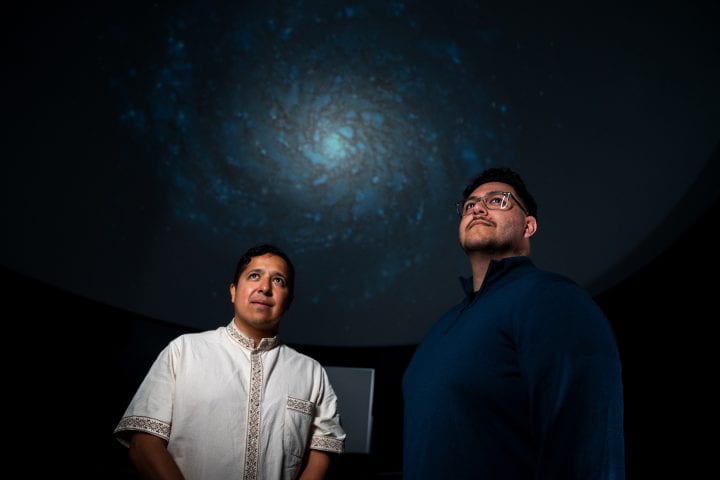
Georgetown's Dr. Issacs simulates estrogen blockers for women with elevated breast cancer risk

While it has long been recognized that drugs that block the cancer-promoting activity of estrogen reduce the risk of developing new breast cancers, a new supercomputer modeling study led by researchers at Georgetown Lombardi Comprehensive Cancer Center and colleagues showed that these treatments could also reduce the risk of dying from the disease in women who are at high risk.

The finding appeared on December 1, 2022, in the Journal of Clinical Oncology.

“Recent studies have shown that women diagnosed with estrogen receptor (ER) positive tumors continue to experience breast cancer recurrence and death for as long as 30 years after their primary diagnosis,” says Claudine Issacs, M.D., Leader of the Breast Cancer Program, medical director of the Fisher Center for Hereditary Cancer and Clinical Genomics Research at Georgetown Lombardi and one of the study’s two senior authors.

She says this new evidence prompted researchers to re-examine the lifetime benefits and harms of risk-reducing medications developed for the primary prevention of breast cancer to see if the drugs could, over the long run, reduce the rate of death from the disease.

Based on the available data, recommendations for preventing ER-positive breast cancer with tamoxifen or aromatase inhibitors presumed that women at elevated risk who took the drugs reduced their chances of developing the disease. Still, our modeling study found that, over the long run, there could also be a significant impact on mortality” Isaacs says. “Giving an estrogen blocker to a woman in her 30s who is at high risk could potentially forestall death due to breast cancer for 20 years or more, which would be significant.”

Over the past several decades, a number of large, federally-funded randomized clinical trials have shown that risk-reducing antiestrogen medications such as tamoxifen and aromatase inhibitors could decrease the incidence of ER-positive breast cancer by 30 to 50 percent in women who are at high risk of developing the disease. Despite evidence from these trials, the drugs have remained underutilized, perhaps due to the risk, albeit low, of endometrial cancer conferred by the drugs as well as other factors.

"What has been missing from our conversation until now is our ability to say to women that these drugs can not only prevent them from getting breast cancer but they can ultimately prevent them from dying of the disease,” Isaacs says.

Studies have shown that chemoprevention drugs are most effective if taken for five years and not longer. This latest study shows that the impact on mortality could confer a long-term and persistent benefit for a decade or more.

The study used supercomputer models developed by the Cancer Intervention and Surveillance Modeling Network (CISNET), a National Cancer Institute-sponsored consortium, to determine the lifetime benefits and harms of estrogen blockers for women with a five-year risk of developing breast cancer equal to or greater than three percent. The researchers evaluated the effects of estrogen blockers along with annual screening mammograms (and magnetic resonance imaging, or MRI, if necessary) to calculate the risk of invasive breast cancer, breast cancer death, side effects, false positives, and chances of overdiagnosis.

Tamoxifen, and the use of annual mammography (and MRIs, if necessary), reduced the risk of developing new invasive breast cancers by 40% and reduced the risk of breast cancer deaths by 57%.  This translates to 95 fewer invasive breast cancers and 42 fewer breast cancer deaths per 1,000 women compared to women who didn’t get a mammogram, an MRI, or risk-reducing drugs. The scientists noted that the drugs were not without downsides, as tamoxifen could increase the number of new endometrial cancers by up to 11 per 1,000 women.

“The Institute of Medicine [now the National Academy of Medicine] suggests that modeling approaches such as ours are going to provide the most definitive answers about the value of these drugs because, given size and cost considerations, a clinical trial would be impractical, even putting aside the fact that evidence of benefit from a clinical trial would take close to 20 years to accrue,” says Isaacs.

In addition to Isaacs, the other authors from Georgetown include Jinani Jayasekera (now at the National Cancer Institute), Amy Zhao, Suzanne O’Neill, and Marc Schwartz.  Clyde B. Schechter is at the Albert Einstein College of Medicine, Bronx, NY. Allison Kurian is at Stanford University School of Medicine, Stanford, California. Karen Wernli is at the Kaiser Permanente Washington Health Research Institute, Seattle. Kathryn Lowry is at the University of Washington, Seattle Cancer Care Alliance, Seattle. Natasha Stout and Jennifer Yeh are at Harvard Medical School, Boston.

National Cancer Institute supported the study grants K99CA241397, R03CA259896, 5P30CA051008-28, P01CA154292, U54CA163303, National Institute of Health grant PCS-1504-30370 and Agency for Health Research and Quality grant R01 HS018366-01A1.

Claudine Isaacs has received research funding support from Tesaro/GSK, Seattle Genetics, Pfizer, AstraZeneca BMS, Genentech, and Novartis; consultation fees from Genentech, PUMA, Seattle Genetics, AstraZeneca, Novartis, Pfizer, ESAI, Sanofi, ION and Gilead; royalties from Wolters Kluwer (UptoDate) and McGraw Hill (Goodman and Gillman) and is the Medical Director of the non-profit SideOut Foundation. Jinani Jayasekera, Clyde B. Schechter, Kathryn Lowry, Jennifer Yeh, Marc Schwartz, Suzanne O’Neill, Karen Wernli, and Natasha Stout, report no disclosures. Allison Kurian has received research funding for her institution from Myriad Genetics.

In the fingerprint-embedding framework for drug-target binding affinity prediction (FingerDTA), fingerprints of drugs and targets are calculated from the whole SMILES sequence and the whole amino acid sequence. Global information is extracted from these fingerprints by some fully connected layers. The global information is combined with baseline convolutional neural network models through an attention-like process that guides the convolutional neural network model training.

Wuhan University builds FingerDTA for discovering new drugs

Wuhan University researchers in China have developed a new computational framework that holds promise in the work to discover new drugs. Their framework uses an artificial intelligence method called the convolutional neural network to provide global information about potential novel drug candidates.

The team developed a fingerprint-embedding framework for drug-target binding affinity prediction (FingerDTA), with the capability to find novel drug candidates. The fingerprints, or descriptors, of drugs and targets, are calculated. These targets are molecules that are related in some way to the disease – targets can be useful in the ways drugs are used to fight a particular disease. Then the team uses the general information from the fingerprint of a drug or a target in a convolutional neural network model and promotes its performance in predicting drug-target binding affinity. FingerDTA is a powerful model for discovering new drugs.

Traditional in vivo drug discovery, where researchers work with living subjects to find new drugs for fighting diseases, is a costly, time-consuming process. Researchers can use virtual pre-screening of potential drugs to guide their experiments. This virtual process can reduce costs and improve the success rate of discovering the right drug.

Researchers have widely used two virtual screening methods for drug discovery. One method is high throughput screening where large compound libraries are tested in a short period of time. Another method involves strategies based on simulated molecular docking, where they study how two or more molecular structures fit together, predicting how a protein interacts with small molecules. While these two methods have been used successfully in drug discovery, they require in-depth experimental design and verification, making them unsuitable for gigantic-scale drug screening.

A third method uses drug-target affinity prediction models, where scientists look for a strong attraction between the drug and the target as a means of identifying drugs that might be candidates for treating a disease. This third method has great advantages in both efficiency and cost. Scientists have been able to successfully apply deep neural networks to predict drug-target binding affinity. So the Wuhan University research team focused their work on a deep learning model for drug-target binding affinity prediction.

Scalability is a major problem when complex algorithms are used to analyze a big data set in terabytes or beyond on a cluster or cloud. The widely used MapReduce type programming model is often used to process large amounts of data across hundreds or thousands of servers. But MapReduce is not scalable to big data because of its memory dependence and high communication costs. The research team proposes a Non-MapReduce computing framework to improve the scalability of cluster supercomputing on big data. Their framework reduces the data communication cost and enables approximate computing, which is less dependent on memory.

“This new computing framework also generates a few benefits in big data computing, such as quickly sampling multiple random samples for ensemble machine learning and approximate computing, directly executing serial algorithms on local random samples without data communications among the nodes, and facilitating big data exploration and cleansing. Besides, Non-MapReduce computing simplifies big data computing and can save energy in cloud computing,” said Juan Liu, a professor at the School of Computer Science at Wuhan University.

The research team believes that drug-target binding affinity prediction holds promise in discovering new drugs that can inhibit viruses from attaching to their targets. “The FingerDTA can help discover some potential drugs for deactivating COVID-19 by binding to the spike target,” said Liu.  It can provide precise guidance to save substantial manpower and material resources, while also accelerating new drug research.

Looking ahead, the team hopes to implement the FingerDTA framework in big data platforms and put it in real applications. “Our ultimate goal is to develop such technology and systems for users to tackle the application problems of analyzing extremely big data distributed in several data centers,” said Juan Liu.

The research team includes Xuekai Zhu, Juan Liu, Jian Zhang, Zhihui Yang, Feng Yang, and Xiaolei Zhang, all from the Wuhan University School of Computer Science.

The research is funded by the China National Key Research and Development Program.

CHOP pinpoints potential genetic variants linked to increased cancer risk in children with birth defects

Study on understudied non-chromosomal birth defects provides information critical to the potential early detection of malignant tumors

Researchers from the Children’s Hospital of Philadelphia (CHOP) have identified several genetic variants associated with an increased risk of cancer in children with non-chromosomal birth defects, such as congenital heart disease and defects of the central nervous system. While the risk of developing cancer is not as high as in children with chromosomal birth defects, it is significantly higher than in children with no birth defects at all, and the findings may provide a basis for early detection in these understudied patients.

Children with birth defects are more likely to develop cancer, and that increased risk of cancer persists into adulthood. Prior studies have demonstrated that children with chromosomal birth defects, such as Down syndrome and Klinefelter syndrome, are more than 11 times more likely to be diagnosed with cancer than children without any birth defects. However, children with non-chromosomal birth defects are up to  2.5 times more likely to be diagnosed with cancer than those without birth defects. With birth defects of any kind occurring in 1 in every 33 births in the United States each year, that increased risk implicates a significant number of children.

The underlying genetics of non-chromosomal birth defects have not been studied in great detail. Researchers at the Center for Applied Genomics (CAG) at CHOP wanted to determine what molecular mechanisms were at play and potentially identify genetic clues that could lead to early identification of cancer in these patients.

“We assembled one of the largest pediatric oncology and birth defects projects in children as part of the Gabriella Miller Kids First program project, which helps to uncover new insights into childhood cancer and structural birth defects,” said Hakon Hakonarson, MD, Ph.D., director of the CAG at CHOP and senior author of the study. “With this partnership, we sought to identify functional molecular pathways based on mutations we identified as part of this study.”

In this study, researchers used data obtained from whole genome sequencing of blood samples from 1,653 individuals without chromosomal abnormalities that were acquired from the Kids First Data Resource Center. These samples included 541 birth defect probands – the first person in a family to receive genetic counseling or testing for hereditary risk of disease – with at least one type of malignant tumor, 767 birth defect probands without malignant tumors, and 345 healthy family members who are parents or siblings of the aforementioned probands. Additionally, once variants were identified, whole genome sequencing data from 40 birth defect probands from outside the data resource center, including 25 patients with at least one type of cancer, were used to further validate the study.

The study identified thousands of variants of interest, including 119 genes with at least two variants in coding regions – regions of the gene that will eventually be transcribed and translated into proteins to carry out essential functions – and  478 genes with at least 20 variants in their non-coding regions. Five genes in particular – AXIN2BMP1CR1ERBB2, and RYR1 – are associated with birth defects and increased risk of cancer. Additionally, the researchers built a deep learning model to assess the variants of interest identified in the Kids First cohort when compared with the 40 validation samples and found that they had achieved approximately 75% accuracy, with even greater accuracy for variants that were associated with non-coding regions.

Further detailed analysis of this data could identify genes and noncoding mutations that not only result in specific birth defects but also identify which types of cancer they are more prone to and whether the risk is more pronounced in childhood or adulthood.

“While more research is needed to delve into the variants of interest we identified, this study represents a critical step toward the earlier detection of cancer children with non-chromosomal birth defects,” Hakonarson said.

The sequencing data was provided through the Gabriella Miller Kids First Pediatric Research Program consortium (Kids First), supported by the Common Fund of the Office of the Director of the National Institutes of Health. The study was supported by Institutional Development Funds from CHOP to the CAG.