

Stanford researchers develop a new way to forecast beach water quality

Less than two days of water quality sampling at local beaches may be all that's needed to reduce illnesses among millions of beachgoers every year due to contaminated water, according to new Stanford research. The study, published in Environmental Science & Technology, presents a modeling framework that dependably predicts water quality at beaches after only a day or two of frequent water sampling. The approach, tested in California, could be used to keep tabs on otherwise unmonitored coastal areas, which is key to protecting the well-being of beachgoers and thriving ocean economies worldwide.

"This work combines knowledge of microbiology, coastal processes, and data science to produce a tool to effectively manage one of our most precious resources and protect human health," said senior author Alexandria Boehm, a Stanford professor of civil and environmental engineering.

Measuring concentrations of fecal indicator bacteria (FIB) - which denote the presence of fecal matter and can lead to unsafe water conditions - at beaches ensures the health and safety of the public. While all ocean water contains some degree of pathogens, such as bacteria or viruses, they're typically diluted to harmless concentrations. However, changes in rainfall, water temperature, wind, runoff, boating waste, storm sewer overflow, proximity to waste treatment plants, animals, and waterfowl can lead to an influx of water contamination. Exposure to these contaminants can cause many ailments, including respiratory diseases and gastrointestinal illnesses, along with skin, eye, and ear infections to swimmers. Stanford researcher Ryan Searcy collects water samples from a tide pool at the Fitzgerald Marine Reserve, in Moss Beach, California.  CREDIT Meghan Shea{module INSIDE STORY}
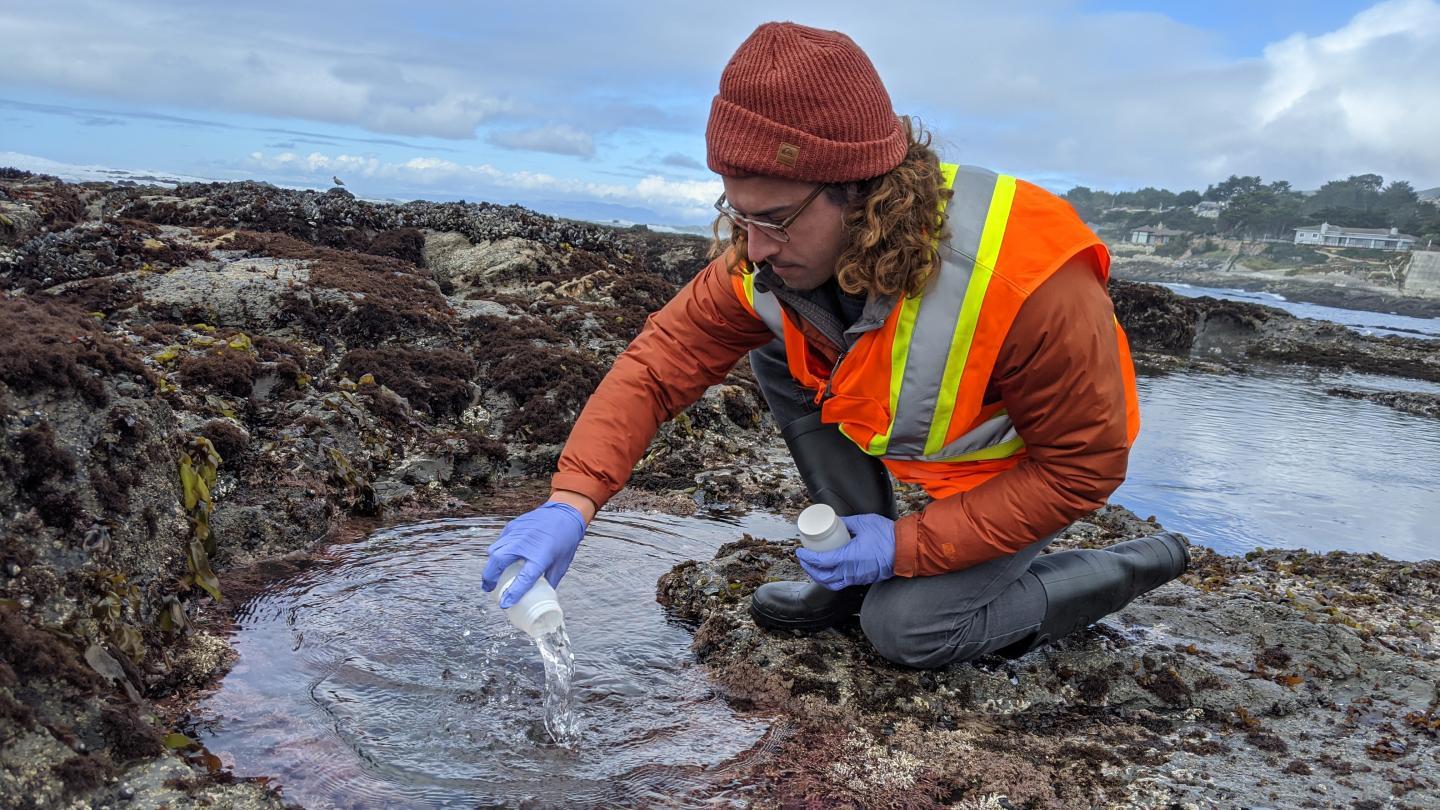
Protecting coastal waters and the people that use them remains essential for much of California's 840 miles of coastline. Over 150 million people swim, surf, dive, and play at one of the state's 450 beaches annually, generating over $10 billion in revenue. According to the California State Water Resources Control Board, health agencies across 17 counties, publicly owned sewage treatment plants, environmental groups and several citizen-science groups perform water sampling across the state. However, not all waters are routinely checked due to accessibility issues, budget resource constraints, or the season, despite their use by the public.

Another obstacle to safeguarding public health lies in the lag time between sampling and results - up to two-days - leading beach managers to make decisions reflecting past water quality conditions. When monitored waters contain high levels of bacteria and pose a health risk, beach managers post warning signs or close beaches. The delay in current testing methods could unknowingly expose swimmers to unhealthy waters.

To overcome these limitations, the researchers combined water sampling and environmental data with machine learning methods to accurately forecast water quality. While predictive water quality models aren't new, they have generally required historical data spanning several years to be developed.

The team used water samples collected at 10-minute intervals over a relatively brief timeframe of one to two days at beaches in Santa Cruz, Monterey, and Huntington Beach. Among the three sites, 244 samples were measured for FIB concentrations and marked as above or below the acceptable level deemed safe by the state. The researchers then collected meteorological data such as air temperature, solar radiation, and wind speed along with oceanographic data including tide level, wave heights, and water temperature (all factors influencing FIB concentrations) over the same timeframe.

Using the high-frequency water quality data and machine learning methods, they trained supercomputer models to accurately predict FIB concentrations at all three beaches. The researchers found hourly water sampling for 24 hours straight - capturing an entire tidal and solar cycle - proved enough for reliable results. Feeding the framework meteorological and tidal data from longer time periods resulted in future water quality predictions that were dependable for at least an entire season.

"These results are really empowering for communities who want to know what's going on with water quality at their beach," Searcy said. "With some resources to get started and a day of sampling, these communities could collect the data needed to initiate their own water quality modeling systems."

The framework code, which is publicly accessible, could also be developed for accurate predictions of other contaminants such as harmful algae, metals, and nutrients known to wreak havoc on local waters. The researchers point out that more analysis is needed to better determine the exact timeframe these models remain accurate and note that continually assessing and retraining the models remains a best practice for accurate predictions.
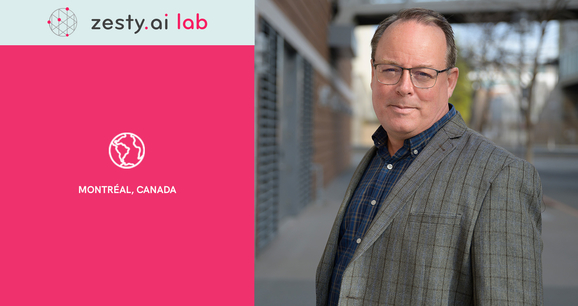
Zesty.ai Lab to open in Montréal under leadership of AI executive with focus on the insurance industry

Zesty.ai announces the opening of Zesty.ai Lab in Montréal, Canada. The newly established data science center of excellence will focus on research and development of new artificial intelligence (AI) technologies for the insurance industry.

With this investment, Zesty.ai will accelerate digital transformation in the property & casualty insurance industry using powerful data and cutting-edge AI technologies. Under the leadership of Bryan M. Minor, Ph.D., an executive with more than two decades of experience in AI, Zesty.ai lab will develop new risk insights for data-driven underwriting, rating, and digital consumer and agent experiences.

The increased frequency of natural disasters, such as floods, wildfires, and storms among others, now affects more than 160 million people around the globe every year. Those impacts are felt by both consumers and the insurance industry. Zesty.ai is pioneering technology to bring a decades-old understanding of catastrophe risk into the modern era using AI and more than 130 billion data points. To date, the company has partnered with leading insurance carriers, reinsurers and MGAs in catastrophe risk assessment, property insights, and property condition monitoring. Bryan M. Minor

The models that Zesty.ai builds are mainly driven by machine learning. In the past, running this many models and producing real-time results wouldn't have been possible. Today, they're able to crunch massive amounts of data in the supercomputing cloud whether that's the analysis of thousands of individual addresses simultaneously or pre-processing the entire state of California for wildfire risk. {module INSIDE STORY}

Zesty.ai Lab serves as a cornerstone for the company’s AI development. By choosing Montréal, the emerging AI hub in North America, Zesty.ai is well-positioned to attract local talent in computer vision and data science, which is both plentiful and of high quality in the city. The research center, under the leadership of Dr. Minor, will build a sizable team of data scientists with the unique skill sets that are required for the digital transformation of the insurance industry.

“Bryan’s deep experience in data science makes him the ideal executive to lead Zesty.ai Lab. His hands-on experience in building data-intensive products and proven track record in rapidly scaling talented teams in AI is a rare combination,” said Michael Ulin, Head of Machine Learning at Zesty.ai.

“We’re in an incredible position to create risk insights that have never before been available to the insurance industry and to the communities impacted by disasters. AI is quickly changing the way we understand the world around us and there is no doubt that Montréal will be at the forefront of that change,” added Bryan M. Minor, Head of Zesty.ai Lab. “In partnership with Montréal International, Investissement Québec, and the support of our colleagues in Silicon Valley, Zesty.ai Lab is set to scale up quickly and build cutting-edge risk assessment products powered by AI.”

“We welcome Zesty.ai’s decision to set up its brand new lab in Montréal. Thanks to its university network and world-class research community, the reputation of Montréal’s AI ecosystem is well established now. With its enviable quality of life, Montréal has the ability to attract the best international talent and support the growth of activities that will have a significant impact on our lives," said Luc Rabouin, responsible for economic and commercial development for the City of Montréal's Executive Committee.

“The Montréal AI ecosystem is still growing. More and more investors are settling here to develop new technologies which can then be applied by Québec’s companies, all sectors combined,” said Stéphane Paquet, President, and CEO of Montréal International, the economic promotion agency for Greater Montréal. “There’s a sense of kinship between the ecosystems of California and Montréal. In 2019, we supported 12 Californian companies; it’s the American state we work the most with.”

 “We welcome Zesty.ai’s decision to open a facility here in Québec, a move that speaks to the strength and expertise of Montréal’s artificial intelligence ecosystem. The industry is booming, and the depth of its talent pool makes it fertile ground for any company interested in investing here. We are proud to have played a role in showcasing the Montréal and Québec advantage for this key player in artificial intelligence for organizational applications,” said Hubert Bolduc, President of Investissement Québec International. 

Cyxtera spins-off cybersecurity business; names Mike Aiello CEO

Cyxtera Technologies has announced its intention to split off its cybersecurity business into a separate company to accelerate its efforts in the rapidly changing cybersecurity industry. The new business will operate as AppGate, Inc.

AppGate brings together a set of differentiated cloud- and hybrid-ready security and analytics products and services. These include AppGate SDP, the industry’s leading software-defined perimeter solution, the Total Fraud Protection suite of risk-based authentication and digital threat protection capabilities and a range of innovative threat management and analytics offerings including the Brainspace digital investigations platform and the company’s Immunity range of offense-oriented software and adversary simulation services. Today, these products secure more than 1,000 organizations across 40 countries.

The companies will share the same ownership structure as the existing Cyxtera business, led by private equity firms BC Partners and Medina Capital, while the spin-off will allow each organization to pursue the most appropriate business strategy to leverage its respective market opportunity. The spin-out is expected to be completed in the early first quarter of 2020. {module INSIDE STORY}

“Customers and partners are looking for a clear leader in the emerging Zero Trust cybersecurity landscape, and we believe the time to accelerate mind and market share is right now,” said Manuel D. Medina, Chief Executive Officer for Cyxtera. “The new company will intensify our efforts in this arena, bringing a dedicated focus to helping protect enterprise and government information systems from today’s emerging threats, and providing the ability to act with precision and agility in a rapidly changing market.”

The company also announced the appointment of Mike Aiello as Chief Executive Officer for AppGate Inc. Aiello has spent the last 20 years as a cybersecurity innovator and entrepreneur, most recently at Google where he directed product management for Google Cloud Platform Security. He was formerly Chief Information Security Officer for Goldman Sachs’s Consumer and Commercial Bank. 

“Cyxtera has built the most comprehensive solutions for secure access and fraud protection. These solutions are backed by leading investigative analytics and adversary simulation capabilities. The team’s deep offensive expertise and defensive capabilities are built for today’s complex, hybrid infrastructures making things simple for our customers and complex for their adversaries,” said Aiello. “I’m delighted to join an exceptionally talented team as CEO to help enterprises and government agencies defend themselves in the world’s most hostile environments.”

Cyxtera and AppGate will work closely together as strategic partners, with AppGate leveraging the data center leader’s highly connected global footprint to accelerate deployments and expand as-a-service capabilities. Cyxtera will integrate AppGate products into the ecosystem of capabilities connected via its innovative CXD on-demand marketplace, providing customers with a cyber-resilient data center platform.