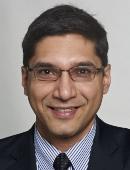
Mount Sinai researchers build artificial intelligence to scan doctors’ notes distinguishing between types of back pain

Mount Sinai researchers have designed an artificial intelligence model that can determine whether lower back pain is acute or chronic by scouring doctors’ notes within electronic medical records, an approach that can help to treat patients more accurately, according to a study published in the Journal of Medical Internet Research in February.

About 80 percent of adults experience lower back pain in their lifetime; it is the most common cause of job-related disability. Many argue that prescribing opioids for lower back pain contributed to the opioid crisis; thus, determining the quality of lower back pain in clinical practice could provide an effective tool not only to improve the management of lower back pain but also to curb unnecessary opioid prescriptions.

Acute and chronic lower back pain are different conditions with different treatments. However, they are coded in electronic health records with the same code and can be differentiated only by retrospective reviews of the patient’s chart, which includes the review of clinical notes. The single code for two different conditions prevents appropriate billing and therapy recommendations, including different return-to-work scenarios. The artificial intelligence model in this study, the first of its kind, could be used to improve the accuracy of coding, billing, and therapy for patients with lower back pain. Ismail Nabeel, MD{module INSIDE STORY}

The researchers used 17,409 clinical notes for 16,715 patients to train artificial intelligence models to determine the severity of lower back pain.

“Several studies have documented increases in medication prescriptions and visits to physicians, physical therapists, and chiropractors for lower back pain episodes,” said Ismail Nabeel, MD, MPH, Associate Professor of Environmental Medicine and Public Health at the Icahn School of Medicine at Mount Sinai. “This study is important because artificial intelligence can potentially more accurately distinguish whether the pain is acute or chronic, which would determine whether a patient should return to normal activities quickly or rest and schedule follow-up visits with a physician. This study also has implications for diagnosis, treatment, and billing purposes in other musculoskeletal conditions, such as the knee, elbow, and shoulder pain, where the medical codes also do not differentiate by pain level and acuity.”

CHOP researchers develop computational tool for tracking pediatric sepsis epidemiology using clinical data

Researchers at Children's Hospital of Philadelphia (CHOP) have developed a novel computational algorithm to track the epidemiology of pediatric sepsis, allowing for the collection of more accurate data about outcomes and incidence of the condition over time, which is essential to the improvement of care.

The tool was described in a paper published in the February 2020 issue of Pediatric Critical Care Medicine.

"We were able for the first time to have a consistent, objective, and unbiased definition of sepsis applied over a period of eight years, without having to rely on laborious and expensive manual chart review or claims data that suffer from variability across providers and time," said Scott Weiss, MD, MSCE, an attending physician in the pediatric intensive care unit at CHOP and first author of the study. {module INSIDE STORY}

Sepsis is a deadly complication to infection that occurs when the immune system stops fighting the infectious agent and instead turns on itself, attacking tissue in the lungs, kidneys and other vital organs. It is a leading cause of death in hospitals and contributes significantly to high health care costs.

Tracking the incidence of sepsis is critical to understanding the prevalence of the condition and improving outcomes and survival, but to date, there has not been an effective tool for monitoring sepsis incidence in the pediatric population. Current methods that involve gathering insurance claims data or manual chart reviews are inconsistent and often leave outpatients groups, such as those who transfer to a hospital for sepsis treatment when their sepsis was diagnosed elsewhere.

To allow for more precise tracking, the research team developed an algorithm with the help of the CHOP Research Institute's Arcus Pediatric Knowledge Network, an integrated data science platform that links the clinical and research data of more than 2 million patients. The program developed the algorithm using data from suspected or confirmed sepsis cases seen at CHOP between September 1, 2017, and June 30, 2018. Researchers then validated the algorithm on suspected or confirmed sepsis cases seen at CHOP between July 1, 2018, and January 31, 2019. 

Once researchers had developed and validated the algorithm, they then applied it to the 832,550 patients seen at CHOP in an emergency department or inpatient visit between 2011 and 2018 to gather the epidemiology of sepsis at CHOP.

They found that among more than 200,000 hospital admissions over the study period, the incidence of sepsis was 2.8%, and the incidence of sepsis among all hospital encounters increased over time after controlling for age, sex, and race. They also found that mortality was 6.7% and did not change over time, in contrast to claims-based sepsis data that have shown mortality has trended downward over time.

"This study is one example of how our program can partner with Arcus and the CHOP Research Institute to become a national leader in sepsis care," said Fran Balamuth, MD, Ph.D., Co-Director of CHOP's Center for Sepsis Excellence, Director of Research in the Emergency Department, and co-author of the paper. "The next step will be to externally validate the algorithm across different hospitals to make sure that it is not just applicable to CHOP, but at other academic children's hospitals and community hospitals as well."

Bielefeld wins five million euros for the 'de.NBI' bioinformatics network

Further funding for the project based in Bielefeld five years after its start

It should be possible for researchers in the life sciences to draw on powerful technological services throughout Germany when they need to analyze large data sets. This is why the Federal Ministry of Education and Research (BMBF) invested about 80 million euros in a major large-scale project: the German Network for Bioinformatics Infrastructure (de.NBI). Bielefeld University is coordinating the project. On Thursday 13 February, scientists and politicians celebrated the fifth anniversary and the previous successes of the network with a symposium in Berlin. These successes include a distributed cloud infrastructure, eight service centers throughout the nation, and 40 participating bioinformatics groups. The BMBF has now announced continued funding for the de.NBI. Until the end of 2021, Bielefeld University alone will have up to 5.3 million euros at its disposal to continue the project.

The administration office of the de.NBI (pronounced 'Dennbi') is located at Bielefeld University's Center for Biotechnology (CeBiTec). Up to now, it has brought together a total of 250 scientists who are cooperating in building up the bioinformatics infrastructure throughout Germany. 'The progress they have made since 2015 is the topic of the symposium,' says the de.NBI coordinator Professor Dr. Alfred Pühler. CAPTION For the de.NBI, they are coordinating supercomputing power and services for bioinformatics in Germany (from left to right): Professor Dr Andreas Tauch, Professor Dr Alexander Sczyrba, Professor Dr Jens Stoye, and Professor Dr Alfred Pühler.  CREDIT Photo: Bielefeld University/M.-D. Müller{module INSIDE STORY}

The network offers researchers in the life sciences IT infrastructure that can be used to analyze data over de.NBI's own computer network. 'We took an innovative approach here and set up a national cloud at what are now six locations,' says Professor Dr. Alexander Sczyrba, head of the Computational Metagenomics research group at Bielefeld University's Faculty of Technology. 'This cloud is available free of charge to all researchers in the life sciences. It is restricted to Germany, thereby ensuring that no sensitive research data leave the country.' More than 100 bioinformatics programs are available to researchers in the life sciences with which to analyze their data.

However, supercomputing power and software alone would not be enough to support bioinformatics research. 'What is decisive is to enable researchers to acquire the necessary competencies to handle the technology and to support them with services,' says Alfred Pühler. The network has succeeded in setting up eight service centers throughout Germany in which 40 groups of bioinformatics experts offer their IT services, advice, and training courses.

The centers focus on different fields covering, among others, human, plant, and microbial bioinformatics. 'Bielefeld runs the service center for microbial bioinformatics focusing on the bioinformatics analysis of all molecular data on micro-organisms but also on microbial communities,' says Professor Dr. Jens Stoye, head of the Genome Informatics research group at the Faculty of Technology. Research at Bielefeld University also profits from the de.NBI according to Professor Dr. Martin Egelhaaf, Bielefeld University's Vice-rector for Research and Research Transfer. 'Thanks to the possibilities provided by the network, our scientists can perform bioinformatic analyses more quickly and with fewer complications than before. That applies to the greatest variety of disciplines--from biotechnology to medicine,' says Egelhaaf.

'Each year, the network organizes more than 80 training courses on how to use the bioinformatics programs. This means that we have trained more than 6,000 scientists since the beginning of the initiative,' says Professor Dr. Andreas Tauch. He heads the de.NBI administration office that coordinates the network's services and training courses and refers users to the specialized service centers.

'Bielefeld University has become an outstanding center for bioinformatics infrastructure in Germany,' concludes the Network Coordinator Alfred Pühler. He emphasizes that the de.NBI is designed to become a permanent structure. 'Scientists in the life sciences depend on having a stable central infrastructure so that they can process their enormous data sets and communicate them in uncomplicated ways,' says Pühler. Currently, they are working on a way to make the network permanent. 'The Federal Ministry of Education and Research (BMBF) has agreed to finance the network until the end of 2021 to give more time for these discussions.'