

FAU wins $800K state grant for cybersecurity, IT training

The state of Florida awarded Florida Atlantic University more than $800,000 as part of a $15.6 million initiative to prepare students and mid-career professionals for jobs in the burgeoning fields of cybersecurity and information technology. Credit: Getty Images/Florida Atlantic University

The $838,483 grant will help FAU market and grow existing cybersecurity, cryptology, and business management certification courses and programs in the College of Business, the Charles E. Schmidt College of Science, and the College of Engineering and Computer Science. These undergraduate and graduate courses and programs will help address a labor market shortage by encouraging more people to pursue careers in these fields.

While each of the three colleges features its own cybersecurity program and set of courses, they are uniquely linked, providing flexibility to meet the needs of students.

FAU will use the grant money to fund CAREERS in Cybersecurity. The project aims to provide curricular enhancements, expanded industry collaboration and internships, K-12 outreach activities, an interactive and informative website, and a regional mass marketing campaign to reach all interested students and workers in the community.

“This is a powerful partnership, having three colleges work together with industry to increase the cybersecurity workforce,” said Nancy Romance, Ed.D., FAU’s principal investigator in the College of Engineering and Computer Science and co-author of the grant proposal.

The funding comes from a joint effort of the Florida Department of Education, Gov. Ron DeSantis, and the Florida Center for Cybersecurity.

Cybersecurity jobs are expected to grow by a faster-than-average 33 percent over the next 10 years, according to a U.S. Bureau of Labor Statistics report cited by the governor’s office. In addition, cybersecurity-related job postings have increased by 43 percent in the past year, as reported by the CyberSeek website.

“The CAREERS project provides all students and interested adults with a viable pathway to successful, high-quality jobs in cybersecurity, while also addressing the critical shortage of workers in these fields,” said Hari Kalva, Ph.D., co-author of the grant proposal and associate chair and professor in the College of Engineering and Computer Science.

FAU’s award, one of 24 throughout Florida, will help the Department of Information Technology and Operations Management in the College of Business enhance its existing cybersecurity-related curriculum, said Nataliia Neshenko, Ph.D., a co-author of the grant proposal.

“Today's cybersecurity reality calls for a close collaboration between academia and industry to address the shortage of highly skilled professionals,” she said.

The Charles E. Schmidt College of Science approaches cybersecurity from perhaps its most technical side, cryptography, according to Edoardo Persichetti, Ph.D., another co-author. He said the college has four cryptography professors, but a lagging enrollment in those classes.

“This grant is a very important step toward establishing a healthy increase in the number of students and professionals in cybersecurity in the College of Science,” he said.

FAU will work with South Florida Tech Hub, a nonprofit membership association representing more than 240 companies. Tech Hub will assist in finding career opportunities for those who complete the courses and certificate programs.
Russian economists find best forecast for creditors’ insurance price

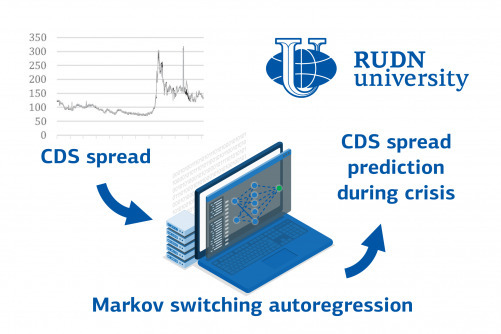
RUDN economists have found the best mathematical method for predicting the price of a credit default swap - a creditors' insurance instrument. Results are published in Expert Systems with Applications. image 5 94e37

A credit default swap (CDS) is a kind of insurance for a creditor. Swap can be bought and sold just like regular insurance. It is worth buying it for the one who issued the loan and fears that the debtor will not return it (for example, due to bankruptcy). The seller of the swap assumes the obligation to repay the loan for the debtor if the debtor goes bankrupt. Now CDS has another role. It is bought not only to avoid the risks of bankruptcy of the borrower but to resell at a higher price. CDS has become an independent object in the market, and its price depends on credit risks, so it is necessary to learn how to predict CDS price changes. RUDN economists compared several mathematical approaches and identified the most effective tool.

“The forecasting of systematic patterns is mostly related to predicting the prices of various assets, however, only a few studies forecast credit default swaps. Such forecasting, which has a non-stationary nature, is very difficult because it is chaotic, dynamic, and nonlinear,” said Darko Vukovich, Ph.D., Associate Professor of the Department of Finance and Credit of RUDN University.

Economists took credit default swap price data from 513 leading US companies from 2009 to 2020. In total, RUDN economists tested four methods, including models with machine learning. The data included daily one-year, 4 years, 7 years and 10 years CDS purchase costs. Data from 2009 to 2018 was used to train the model. Then, changing the parameters, the economists obtained three forecasts for each of the four methods - two before March 11, 2020, and one after this date. March 11, 2020, is the day the WHO declared the COVID-19 pandemic. Thus, scientists were able to evaluate how the proposed models work in a crisis.

An autoregressive model with Markov switching (MSA) turned out to be the most relevant for forecasting. Before and after the pandemic, for 1 year, 4 years, 7 years, and 10 years, the MSA forecast turned out to be the most accurate more often than others were. At the same time, in general, for all methods, the COVID crisis reduces the accuracy of the forecast, although only slightly. For example, according to the MSA method for a four-year CDG before the pandemic, the errors were 3.3%, and during the COVID pandemic - 6.4%.

“MSA outperforms all other methods more frequently than the others. The change in relative predictability during COVID-19 is small. We found that the market was less efficient during COVID-19, but there are no big differences in forecasting indicators before and during the pandemic,” said Elena Grigorieva, Ph.D. in Economics, Deputy Dean for Research at RUDN University Faculty of Economics.

UK modelers discover considering farmers at an individual level when controlling livestock disease outbreaks

The findings are the latest from the BBSRC-funded Farmer-led Epidemic and Endemic Disease-management (FEED) project, an interdisciplinary research group including epidemiologists, mathematical modelers, behavioral scientists, and veterinarians from the Universities of Warwick and Nottingham. The research is published this week, in the journal PLOS Computational Biology, in a paper entitled “Modelling livestock infectious disease control policy under differing social perspectives on vaccination behavior.” image small a30d7

Using sophisticated mathematical models, researchers at Warwick’s Zeeman Institute for Systems Biology and Infectious Disease Epidemiology Research (SBIDER) and from the University of Nottingham have examined the optimal behaviors each farmer can follow during a disease outbreak, which can help them not only lessen their own immediate costs but also to slow the spread of infection and reduce losses for the whole industry.

The research team simulated livestock disease outbreaks in several different scenarios. It worked out how the best outcomes could be reached — from the perspective of both government policymakers who are looking to protect the wider livestock industry, and from those farmers who have businesses and animals to save.

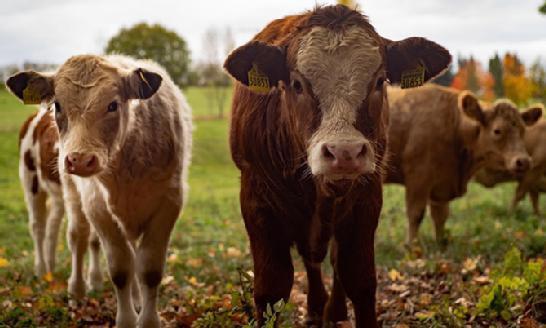
In their models, the researchers analyzed representative livestock systems in the English counties of Devon and Cumbria, looking at the outcomes of various potential disease outbreaks and the actions that might be taken by farmers, for example, vaccinating animals as a precaution; as a reaction; or not vaccinating at all.

The researchers found that what one individual farmer may consider the most effective way to reduce infection risk in their own livestock may not have the same benefit for other farmers.

The researchers found, that just as the COVID-19 pandemic has shown how crucial individual behavior is in controlling the spread of an infectious disease in a human population, during a livestock infection the response of each farmer could be critical to protecting animal welfare nationally and keeping the farming industry afloat.

Therefore, the researchers concluded that the actions of individual farmers should be considered in any major policy framework for tackling future livestock disease outbreaks.

Dr. Ed Hill from the University of Warwick is the corresponding author of the paper. He said:

"Our analysis of livestock infectious disease control policies, under differing social perspectives on vaccination behavior, can indicate to those developing veterinary health policy the nature of control measures that is optimal both from the industry and the individual farmer-level perspectives.”

Co-author Professor Michael Tildesley from the University of Warwick commented:

“Going forward, we would like to build strong ties between the data being gathered on farmer beliefs and the structure of models that contain both disease spread and behavioral dynamics. Ensuring the data used are as reliable and accurate as possible enhances the informative capabilities and robustness of model outputs.”

Professor Matt Keeling from the University of Warwick said:

“Most models of livestock disease treat farmers as obeying government rules without question or behaving simply to maximize their own profits. The FEED project adds far greater realism, understanding the different factors that drive farmer behavior in the face of an emerging disease.”

Professor Eamonn Ferguson from the University of Nottingham added:

“This paper really highlights the importance of considering and integrating the role of individual behavior when modeling the effect of policies to manage infection. Such interdisciplinary approaches benefit both science and society.“