

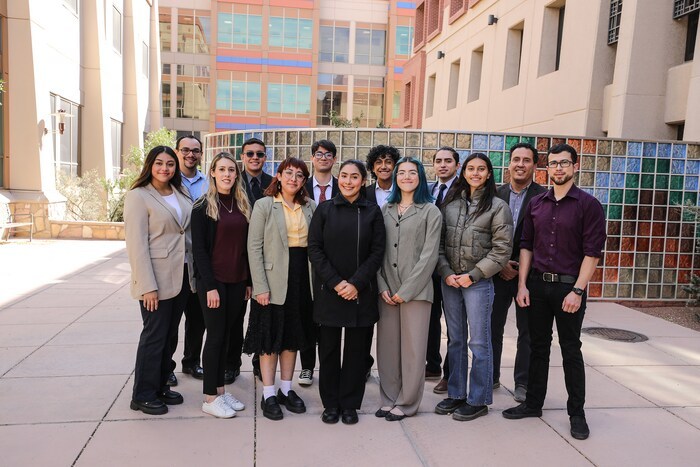
The University of Texas at El Paso received a $5 million grant from the National Science Foundation (NSF) to provide financial support and professional development experiences to talented students in the field of computer science. The initiative will provide partial scholarships to 26 students at UTEP who are working on their bachelor’s degrees and focusing on data science or cybersecurity.

University of Texas at El Paso wins $5M grant to support computer science students

The program offers scholarships to UTEP and EPCC students

The University of Texas at El Paso received a $5 million grant from the National Science Foundation (NSF) to provide financial support and professional development experiences to talented students in the field of computer science.

As part of NSF’s Scholarships for STEM (S-STEM) program, the initiative will provide partial scholarships to 26 students at UTEP who are working on their bachelor’s degrees and focusing on data science or cybersecurity.

The UTEP Computer Science Department also will collaborate with El Paso Community College (EPCC) to fund scholarships for 15 students who start at EPCC and transfer to UTEP to complete their bachelor’s degrees.

“This S-STEM program builds on years of NSF support in the Paso del Norte region,” said Kenith Meissner, Ph.D., dean of the College of Engineering. “Moreover, the coordinated effort between UTEP and EPCC will help broaden the talent pool needed to address critical national needs in data science and cybersecurity. We are excited to be part of this collaboration that expands opportunities for highly motivated students in high-demand STEM areas.”

The grant was first awarded to UTEP in 2016. Salamah Salamah, Ph.D., chair of the computer science department and the project’s principal investigator, said it’s unusual for the S-STEM grant to be awarded twice to the same institution.

“The stature of UTEP and what we’re doing here in this department is something that can’t be ignored,” he said. “NSF understands the great things we’re doing.”

Of the 41 students who received scholarships under the first S-STEM grant, nearly all graduated with a bachelor’s degree, 40 attended conferences, 15 were involved in research, and 15 pursued a graduate degree. Additionally, more than half of the program participants were women.

“The S-STEM program has provided the ideal bridge for students from EPCC who want to pursue their computing degree at UTEP,” said Christian Servin, Ph.D., associate professor of computer science at EPCC. “This partnership prepares students mentally and financially to succeed at the four-year institution once they transfer, speeding up the process of developing marketable skills, including research and computational thinking skills.”

Influenced by the best practices pioneered by the Computing Alliance for Hispanic-Serving Institutions (CAHSI), UTEP’s computer science department provides S-STEM scholars with professional development training and opportunities that can build their confidence and give them an edge in the job market. For example, professors accompany students to the annual Great Minds in STEM conference, where students learn how to network with job recruiters, share their stories and highlight their skills.

“One of the greatest things you can see is how the students start to become leaders,” said Diego Aguirre, Ph.D., co-principal investigator of the grant and assistant professor of computer science. “Many of them come into the program with a desire to help others. As they learn skills and move into this space, they start sharing that newfound knowledge with others. The program's impact is not just in the students who get the scholarships, it’s in the impact those students have wherever they go.”
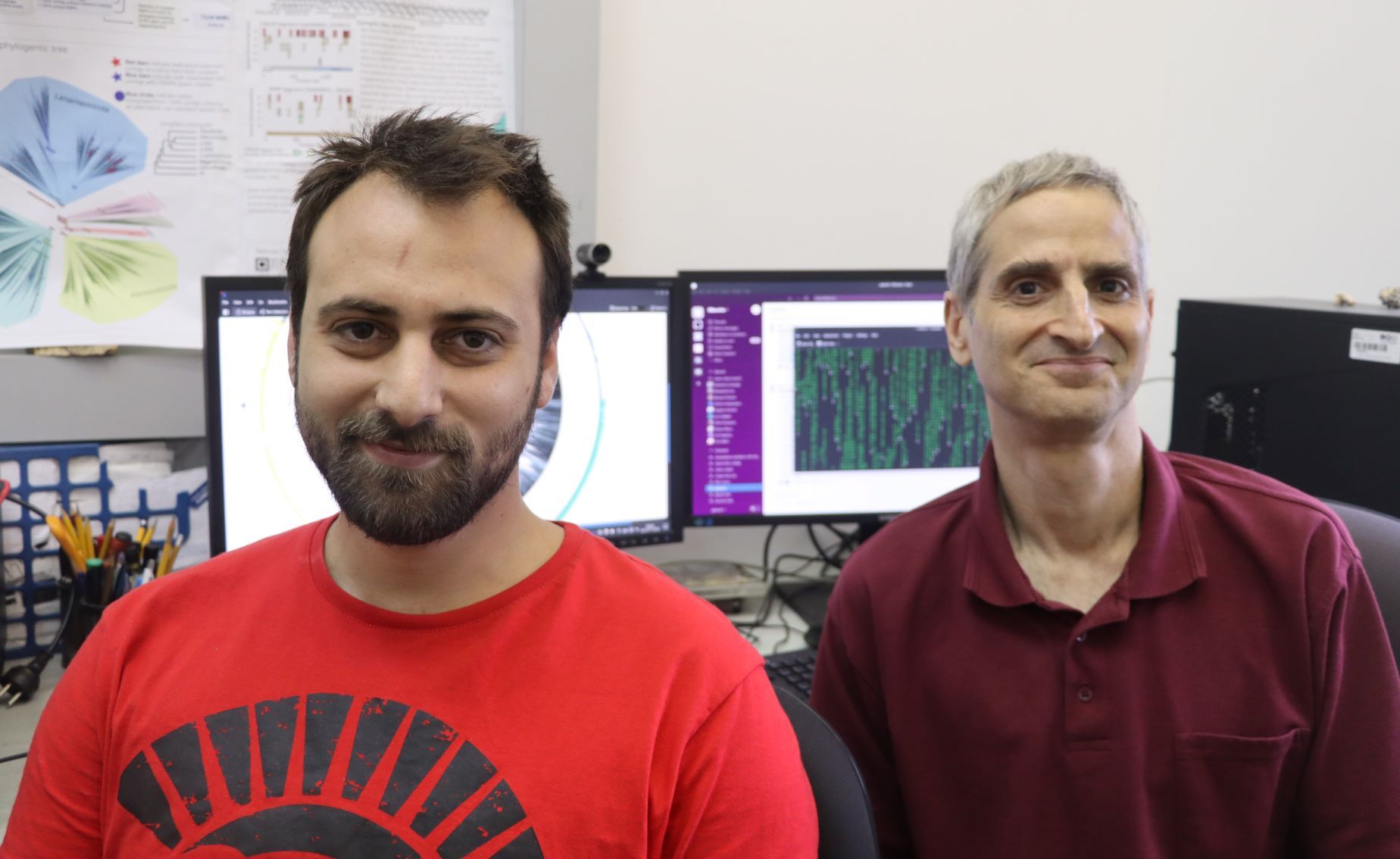
 Left to Right: Uri Neri and Prof. Uri GophnaCredit: Tel Aviv University
Left to Right: Uri Neri and Prof. Uri GophnaCredit: Tel Aviv University

Israeli researchers discover one hundred thousand new types of viruses

A groundbreaking Tel Aviv University study has discovered about 100,000 new types of previously unknown viruses – a ninefold increase in the number of RNA viruses known to science until now. These viruses were discovered in global environmental data from soil samples, oceans, lakes, and a variety of other ecosystems. The researchers believe that their discovery may help in the development of anti-microbial drugs and in protecting against agriculturally harmful fungi and parasites.

The study was led by doctoral student Uri Neri under the guidance of Prof. Uri Gophna of the Shmunis School of Biomedicine and Cancer Research in the Wise Faculty of Life Sciences at Tel Aviv University. The research was conducted in collaboration with the US-based research bodies NIH and JGI, as well as the Pasteur Institute in France. The research was published in the academic journal Cell and comprised data collected by more than a hundred scientists around the world.

Viruses are genetic parasites, meaning they must infect a living cell in order to replicate their genetic information, produce new viruses, and complete their infection cycle. Some viruses are disease-causing agents that can cause harm to humans (such as the coronavirus), but the vast majority of viruses do not harm us and infect bacterial cells – some of them even live inside our bodies without us even being aware of it.

Uri Neri says that the study used new super computational technologies to mine genetic information collected from thousands of different sampling points around the world (oceans, soil, sewage, geysers, etc.). The researchers developed a super sophisticated computational tool that distinguishes between the genetic material of RNA viruses and that of the hosts and used it to analyze the big data. The discovery allowed the researchers to reconstruct how the viruses underwent diverse acclimation processes throughout their evolutionary development in order to adapt to different hosts.

In analyzing their findings, the researchers were able to identify viruses suspected of infecting various pathogenic microorganisms, thus opening up the possibility of using viruses to control them. Prof. Gophna: “The system we developed makes it possible to perform in-depth evolutionary analyses and to understand how the various RNA viruses have developed throughout evolutionary history. One of the key questions in microbiology is how and why viruses transfer genes between them. We identified a number of cases in which such gene exchanges enabled viruses to infect new organisms. Furthermore, compared to DNA viruses, the diversity, and roles of RNA viruses in microbial ecosystems are not well understood. In our study, we found that RNA viruses are not unusual in the evolutionary landscape and, in fact, in some aspects, they are not that different from DNA viruses. This opens the door for future research, and for a better understanding of how viruses can be harnessed for use in medicine and agriculture.”

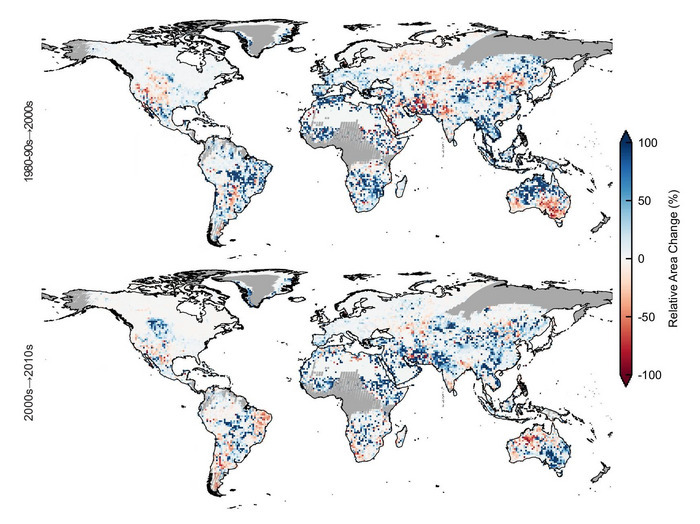
The figure shows the changes in lake areas during the investigated periods

Denmark's KU builds GLAKES dataset that shows Earth’s many new lakes

The number of lakes on our planet has increased substantially in recent decades, according to a unique global survey of 3.4 million lakes that the University of Copenhagen (KU) in Denmark has taken part in. There has been a particular increase in the number of small lakes, which, unfortunately, emit large amounts of greenhouse gas. The development is of great importance for Earth’s carbon account, global ecosystems, and human access to water resources.

Bacteria and fungi feeding on dead plants and animals at the bottom of a lake emit vast amounts of CO2, methane, nitrous oxide, and other gases. Some of these gases end up in the atmosphere. This mechanism causes lakes to act like greenhouse gas factories. In fact, freshwater lakes probably account for 20% of all global CO2 fossil fuel emissions into Earth’s atmosphere. Forecasts suggest that climate change will cause lakes to emit an ever-greater share of greenhouse gases in the future.

This is just one of the reasons why it is important to know how many and how big these lakes are and how they develop. Until now, this information was unknown. Scientific researchers from the University of Copenhagen and other universities have now prepared a more accurate and detailed map of the world's lakes than has ever existed. The researchers mapped 3.4 million lakes and their evolution over the past four decades using high-resolution satellite imagery combined with artificial intelligence.

The survey shows that between 1984 and 2019, the area of global lake surfaces grew by over 46,000 km2 – slightly more than the surface area of Denmark.

"There have been major and rapid changes with lakes in recent decades that affect greenhouse gas accounts, as well as ecosystems and access to water resources. Among other things, our newfound knowledge of the extent and dynamics of lakes allows us to better calculate their potential carbon emissions," explains Jing Tang, an Assistant Professor at the Department of Biology and co-author of the study.

According to the study's calculations, the annual increase of CO2 emissions from lakes during the period is 4.8 teragrams (10^12, trillion) of carbon – which equals to the CO2 emission increase of the United Kingdom in 2012. 

The GLAKES dataset constructed in this study is based on high-resolution satellite imagery and a deep learning algorithm. The dataset is publicly available.

Small lakes, significant COemissions

More and more small lakes (<1 km2) have appeared since 1984. The number of these small lakes is especially important according to the researchers because they emit the most greenhouse gas in relation to their size. While small lakes account for just 15% of the total lake area, they account for 25% of COand 37% of methane emissions. Furthermore, they also contribute to 45% and 59% of the net increases of the lake CO2 and CH4 emissions, respectively, over the period 1984-2019.

"Small lakes emit a disproportionate amount of greenhouse gases because they typically accumulate more organic matter, which is converted into gases. And also, because they are often shallow. This makes it easier for gases to reach the surface and up into the atmosphere," explains Jing Tang, who continues:

"At the same time, small lakes are much more sensitive to changes in climate and weather, as well as to human disturbances. As a result, their sizes and water chemistry fluctuate greatly. Thus, while it is important to identify and map them, it is also more demanding. Fortunately, we’ve been able to justify that."

The mapping also reveals two main reasons for Earth’s many new lakes: climate change and human activities. Reservoirs account for more than half of the increased lake area – i.e., artificial lakes. The other half is primarily created by melting glaciers or thawing permafrost.

New figures sent to the UN

According to the researchers, the new dataset offers a range of regional and global applications. 

"I have sent our new greenhouse gas emission estimates to the people responsible for calculating the global carbon budget, those who are behind the UN's IPCC climate reports. I hope they include them in updating the global emission numbers," says Jing Tang.

She adds, "Furthermore, the dataset can be used to make better estimates of water resources in freshwater lakes and to better assess the risk of flooding, as well as for better lake management – because lake area impacts biodiversity too."