

French prof Moulines wins ERC grant to tackle a new paradigm in AI

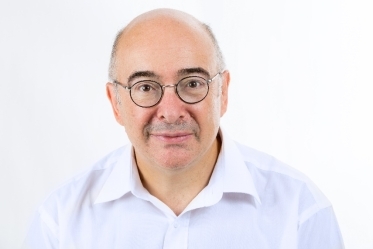
3 ff5d5The European Research Council has announced that Éric Moulines, professor at École Polytechnique, was awarded an ERC Synergy Grant for the OCEAN project with Michael Jordan, UC Berkeley, Christian Robert, Université Paris Dauphine-PSL and Gareth Roberts from the University of Warwick.

Awarded by the European Research Council (ERC), Synergy Grants support groups of two to four researchers to jointly address ambitious research problems that could not be addressed by the individual principal investigators and their teams working alone.

The project OCEAN, On IntelligenCE And Networks, aims to push back the limits of the current artificial intelligence model by developing a new learning methodology, shared between the different users, each one keeping its autonomy and control over its data.

The starting point of this collaboration is federated learning, where several agents participate in the learning task while keeping control over their data. OCEAN will first focus on some identified shortcomings, such as dealing with uncertainty about the outcome of an algorithm or the fact that some users, free-riders, may want to take advantage of others' data without providing viable data themselves, before looking for a new central learning model.

For Éric Moulines, Professor at École Polytechnique’s CMAP: "A key aspect of our vision is that it is explicitly economic and strategic. Agents can be expected to seek fair compensation for the various costs they incur in a collective learning process, including loss of privacy, communication and latency costs, and loss of competitiveness.

A natural form of compensation is the ability to obtain more accurate predictions, where the prediction is no longer defined globally, but locally and contextually. Agents who expect compensation for their participation act as economic agents. They may adopt strategic behaviors, such as wanting to manipulate the data they share, for example by revealing only a subset or by adding noise. The full scope of our project includes a wide variety of other types of interactions between economic agents: competition, data security, and legal constraints. Data collection and analysis are often associated with feedback loops in which agents may try to optimize the model's predictions to their benefit. Our approach explicitly combines microeconomic concepts with federated machine learning concepts.”

Funded by the European Research Council (ERC), to the tune of €10 million over 6 years, the project is a collaboration between interdisciplinary research teams from several institutions, led respectively by Éric Moulines, École Polytechnique, Michael Jordan, UC Berkeley, Christian Robert, Université Paris Dauphine-PSL and Gareth Roberts from the University of Warwick.

Rockefeller's prof Cohen suggests counties are still unprepared for COVID spikes

If one COVID patient infects two people, we would expect cases to increase exponentially, according to the study. But there would still be occasional, random events that could result in infinitely large spikes.America was unprepared for the magnitude of the pandemic, which overwhelmed many counties and filled some hospitals. A new paper suggests there may have been a mathematical method, of sorts, to the madness of those early COVID days.
The study tests a model that closely matches the patterns of case counts and deaths reported, county by county, across the United States between April 2020 and June 2021. The model suggests that unprecedented COVID spikes could, even now, overwhelm local jurisdictions.

“Our best estimate, based on the data, is that the numbers of cases and deaths per county have infinite variance, which means that a county could get hit with a tremendous number of cases or deaths,” says Rockefeller’s Joel Cohen. “We cannot reasonably anticipate that any county will have the resources to cope with extremely large, rare events, so it is crucial that counties—as well as states and even countries—develop plans, ahead of time, to share resources.”

Predicting 99 percent of a pandemic

Ecologists might have guessed that the spread of COVID cases and deaths would at least roughly conform to Taylor’s Law, a formula that relates a population’s mean to its variance (a measure of the scatter around the average). From how crop yields fluctuate, to the frequency of tornado outbreaks, to how cancer cells multiply, Taylor’s Law forms the backbone of many statistical models that experts use to describe thousands of species, including humans.

But when Cohen began looking into whether Taylor’s Law could also describe the grim COVID statistics provided by The New York Times, he ran into a surprise.

Ninety-nine percent of counties’ counts of cases and deaths between April 2020 and June 2021 conformed to a “lognormal” distribution of Taylor’s Law, which predicts that the variance of cases or deaths in each location will be proportional to the squared mean of cases or deaths. For example, if the average number of cases per county is 50 in Arizona and 100 in California, this version of Taylor’s Law would predict that the scatter of case counts in California would be four times larger than the scatter of case counts in Arizona. Similarly, if the case counts per county in those two states were 50 and 150, respectively, the scatter would be nine times larger in California.

The top one percent of counts of cases and deaths, however, did not fit the lognormal distribution. Instead, the high counts matched the Pareto distribution—a model more often seen in economics than biology, in which extremely high values are rarely but regularly observed (think: income or wealth distribution). What made this particular Pareto distribution unique was that it also had infinite variance, implying that the scatter would increase beyond any finite limit, the more counts of cases or deaths observed. The challenge was to understand why even the top 1% of counts still conformed to Taylor’s Law with the same exponent as the lower 99%.

“It was a puzzle,” Cohen recalls. “And I sat on that puzzle, every so often taking it out, torturing it a bit, and putting it away. Until, one day, I called in the heavy artillery.”

The remaining one percent

Cohen sent his computer simulations and unproved conjectures to Richard A. Davis of Columbia University and Gennady Samorodnitsky of Cornell University, asking for their input. A few months later, the two sent him some theorems: the missing proof that Taylor’s Law would hold even for the Pareto-distributed top 1% of counties, with the same exponent as the 99% of lognormally distributed counties. “These theorems helped prove that Taylor’s Law accurately describes all of the data,” Cohen says. “The pandemic produced an orderly pattern of counts of cases per county and deaths per county. The unexpected part of that order was that, in the most extreme cases, there was no limit to how bad things could get.”

Infinite variance, near-infinite trouble

Why the pandemic follows this hybrid (lognormal-Pareto) version of Taylor’s Law so closely is unclear. One possibility is that Taylor’s Law—which describes the variance of many ecological systems, including infectious diseases like measles and Chagas’s disease—simply captures the nature of the infection. If one patient infects two people (with some probability) and each of those two patients infects another two people (with some probability), we would expect cases to increase exponentially (with some probability), and occasional random events could cause infinite variance.

Cohen hopes that the study will sound an alarm for policymakers. An infinite variety of cases and deaths per county means that there is a very unlikely but possible scenario in which a COVID spike gets every individual in that county sick, or worse. Although the advent of vaccines makes such a scenario increasingly unlikely, areas in the United States and abroad with low vaccination rates still face the possibility of spikes that they cannot handle.

The math, Cohen says, suggests that COVID cases and deaths could far exceed the capacity of local jurisdictions to cope. “Governments had better be prepared to call in their friends,” he says.

UC Davis study adds the lightness of water vapor to simulate clouds

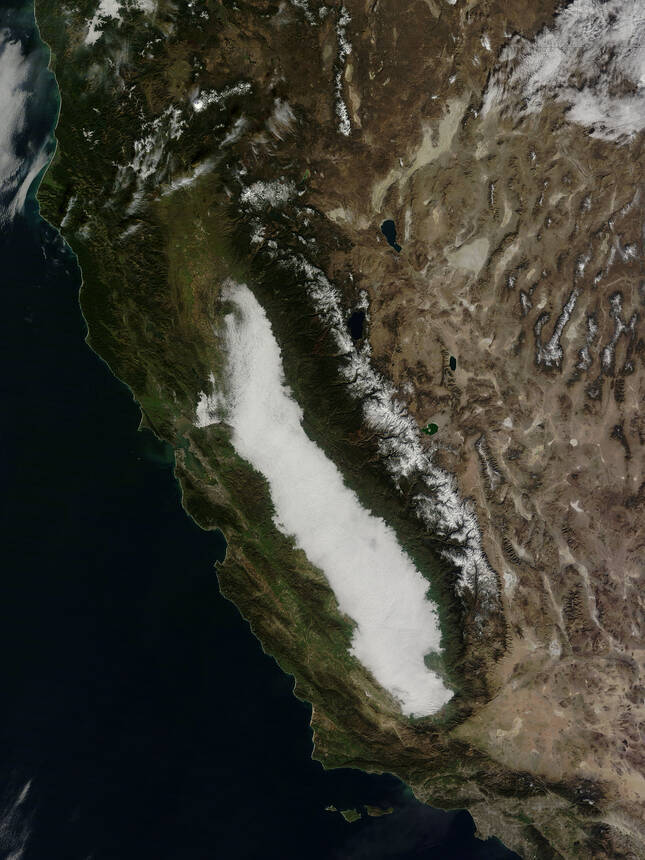
Clouds form over the California coast in 2002. (Jacques Descloitres, NASA/GSFC)Clouds are notoriously hard to pin down, especially in climate science. 

A study from the University of California, Davis, shows that air temperature and cloud cover are strongly influenced by the buoyancy effect of water vapor, an effect currently neglected in some leading global climate models.

Global climate models are the primary tools used to study Earth’s climate, predict its future changes and inform climate policymaking. However, climate models often differ on the precise degree of future warming, largely due to their representation of clouds. 

“Climate models are the best tool we have to predict future climate change,” said lead author Da Yang, an assistant professor of atmospheric science at UC Davis and faculty scientist at Lawrence Berkeley National Lab. “It’s important that we actively try to improve them.”

Does cold air rise? 

While conventional wisdom has it that hot air rises, the reverse is true in the tropical atmosphere, the study notes. Previous research by Yang and his colleagues proposed that cold air rises in the tropics because humid air is lighter than dry air. This effect is known as vapor buoyancy, and it regulates the number of low clouds over the subtropical ocean. 

“Vapor buoyancy influences the distribution of low clouds—the kind of clouds we have off the California coast, which contribute greatly to the global energy balance,” said Yang. “The biggest challenge in accurately predicting future climate change in clouds, so we have to get vapor buoyancy right.”

The study reported that six of the 23 widely-used climate models analyzed do not yet include this effect because water vapor is a trace gas, so its buoyancy effect has been considered negligible. But the study shows the vapor buoyancy effect is more significant than previously realized. In climate models without vapor buoyancy, the low cloud cover can be off by about 50% in certain regions.  

How clouds affect climate change

Low clouds are among the most important clouds for climate change and the energy balance of the planet because they reflect so much sunlight. Fewer low clouds can result in more absorbed sunlight and a warmer planet. More low clouds can make for a cooler landscape. 

“In a warmer climate, the buoyancy effect of water vapor would be increasingly important due to more atmospheric water vapor,” Yang said. “It is worth spending more effort to understand how water vapor buoyancy regulates Earth’s climate.”

The study’s additional co-authors include UC Davis graduate student Seth Seidel and Wenyu Zhou, a former member of Yang’s group, now at the Pacific Northwest National Laboratory. 

The study was funded by Packard Fellowship for Science and Engineering, the National Science Foundation, the Lawrence Berkeley National Laboratory, and the U.S. Department of Energy.