Tufts uses AI to improve tuberculosis treatments

Researchers in the Aldridge Lab have devised rules for a faster, more effective way to identify potential new drug cocktails against this infectious disease

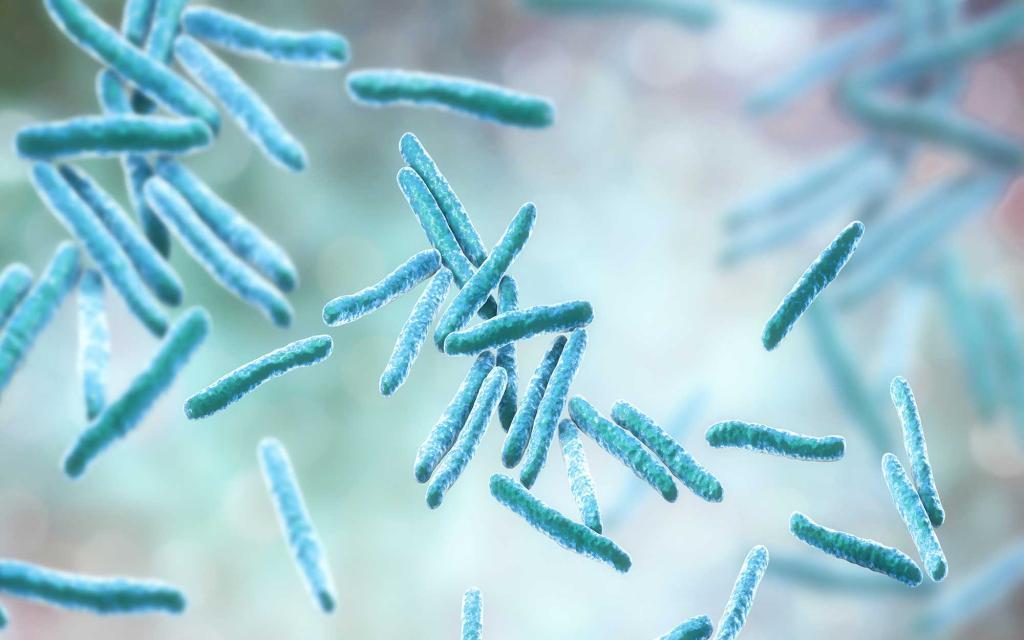
Imagine you have 20 new compounds that have shown some effectiveness in treating a disease like tuberculosis (TB), which affects 10 million people worldwide and kills 1.5 million each year. For effective treatment, patients will need to take a combination of three or four drugs for months or even years because the TB bacteria behave differently in different environments in cells—and in some cases evolve to become drug-resistant. Twenty compounds in three- and four-drug combinations offer nearly 6,000 possible combinations. How do you decide which drugs to test together? 220914 tuberculosis bacteria 86cb4

In a recent study, published in the September issue of Cell Reports Medicine, researchers from Tufts University used data from large studies that contained laboratory measurements of two-drug combinations of 12 anti-tuberculosis drugs. Using mathematical models, the team discovered a set of rules that drug pairs need to satisfy to be potentially good treatments as part of three- and four-drug cocktails.

The use of drug pairs rather than three- and four-drug combination measurement cuts down significantly on the amount of testing that needs to be done before moving a drug combination into further study.

“Using the design rules we’ve established and tested, we can substitute one drug pair for another drug pair and know with a high degree of confidence that the drug pair should work in concert with the other drug pair to kill the TB bacteria in the rodent model,” says Bree Aldridge, associate professor of molecular biology and microbiology at Tufts University School of Medicine and of biomedical engineering at the School of Engineering, and an immunology and molecular microbiology program faculty member at the Graduate School of Biomedical Sciences. “The selection process we developed is both more streamlined and more accurate in predicting success than prior processes, which necessarily considered fewer combinations.”

The lab of Aldridge, who is the corresponding author on the paper and also associate director of Tufts Stuart B. Levy Center for Integrated Management of Antimicrobial Resistance, previously developed and uses DiaMOND, or diagonal measurement of n-way drug interactions, a method to systemically study pairwise and high-order drug combination interactions to identify shorter, more efficient treatment regimens for TB and potentially other bacterial infections. With the design rules established in this new study, researchers believe they can increase the speed at which scientists determine which drug combinations will most effectively treat tuberculosis, the second leading infectious killer in the world.

MIT biologists glean insight into repetitive protein sequences

Super computational analysis reveals that many repetitive sequences are shared across proteins and are similar in species from bacteria to humans.

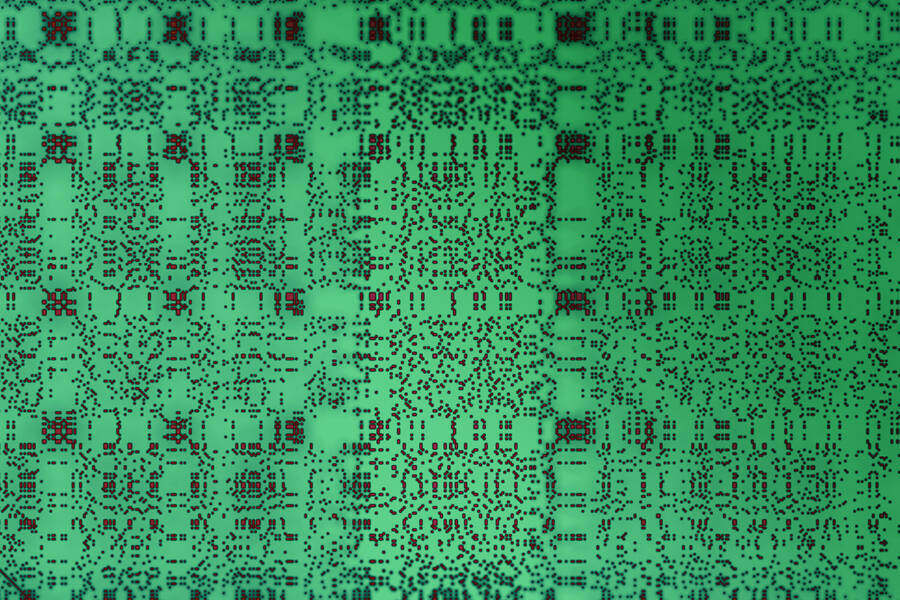
About 70 percent of all human proteins include at least one sequence consisting of a single amino acid repeated many times, with a few other amino acids sprinkled in. These “low-complexity regions” are also found in most other organisms. MIT researchers used a technique called dot-plot matrix, which is a way to visually represent amino acid sequences, to compare protein sequences known as “low-complexity regions” across many different species. Credits:Image: Courtesy of the researchers, and edited by MIT News.
The proteins that contain these sequences have many different functions, but MIT biologists have now come up with a way to identify and study them as a unified group. Their technique allows them to analyze similarities and differences between LCRs from different species and helps them to determine the functions of these sequences and the proteins in which they are found.

Using their technique, the researchers analyzed all of the proteins found in eight different species, from bacteria to humans. They found that while LCRs can vary between proteins and species, they often share a similar role — helping the protein in which they’re found to join a larger-scale assembly such as the nucleolus, an organelle found in nearly all human cells.

“Instead of looking at specific LCRs and their functions, which might seem separate because they’re involved in different processes, our broader approach allows us to see similarities between their properties, suggesting that maybe the functions of LCRs aren’t so disparate after all,” says Byron Lee, an MIT graduate student.

The researchers also found some differences between LCRs of different species and showed that these species-specific LCR sequences correspond to species-specific functions, such as forming plant cell walls.

Lee and graduate student Nima Jaberi-Lashkari are the lead authors of the study, which appears today in eLife. Eliezer Calo, an assistant professor of biology at MIT, is the senior author of the paper.

Large-scale study

Previous research has revealed that LCRs are involved in a variety of cellular processes, including cell adhesion and DNA binding. These LCRs are often rich in single amino acids such as alanine, lysine, or glutamic acid.

Finding these sequences and then studying their functions individually is a time-consuming process, so the MIT team decided to use bioinformatics — an approach that uses computational methods to analyze large sets of biological data — to evaluate them as a larger group.

“What we wanted to do is take a step back and instead of looking at individual LCRs, try to take a look at all of them and to see if we could observe some patterns on a larger scale that might help us figure out what the ones that have assigned functions are doing, and also help us learn a bit about what the ones that don't have assigned functions are doing,” Jaberi-Lashkari says.

To do that, the researchers used a technique called dot plot matrix, which is a way to visually represent amino acid sequences, to generate images of each protein under study. They then used computational image processing methods to compare thousands of these matrices at the same time.

Using this technique, the researchers were able to categorize LCRs based on which amino acids were most frequently repeated in the LCR. They also grouped LCR-containing proteins by the number of copies of each LCR type found in the protein. Analyzing these traits helped the researchers to learn more about the functions of these LCRs.

As one demonstration, the researchers picked out a human protein, known as RPA43, that has three lysine-rich LCRs. This protein is one of many subunits that make up an enzyme called RNA polymerase 1, which synthesizes ribosomal RNA. The researchers found that the copy number of lysine-rich LCRs is important for helping the protein integrate into the nucleolus, the organelle responsible for synthesizing ribosomes.

Biological assemblies

In a comparison of the proteins found in eight different species, the researchers found that some LCR types are highly conserved between species, meaning that the sequences have changed very little over evolutionary timescales. These sequences tend to be found in proteins and cell structures that are also highly conserved, such as the nucleolus.

“These sequences seem to be important for the assembly of certain parts of the nucleolus,” Lee says. “Some of the principles that are known to be important for higher-order assembly seem to be at play because the copy number, which might control how many interactions a protein can make, is important for the protein to integrate into that compartment.”

The researchers also found differences between LCRs seen in two different types of proteins that are involved in nucleolus assembly. They discovered that a nucleolar protein known as TCOF contains many glutamine-rich LCRs that can help scaffold the formation of assemblies, while nucleolar proteins with only a few of these glutamic acid-rich LCRs could be recruited as clients (proteins that interact with the scaffold).

Another structure that appears to have many conserved LCRs is the nuclear speckle, which is found inside the cell nucleus. The researchers also found many similarities between LCRs that are involved in forming larger-scale assemblies such as the extracellular matrix, a network of molecules that provides structural support to cells in plants and animals.

The research team also found examples of structures with LCRs that seem to have diverged between species. For example, plants have distinctive LCR sequences in the proteins that they use to scaffold their cell walls, and these LCRs are not seen in other types of organisms.

The researchers now plan to expand their LCR analysis to additional species.

“There’s so much to explore because we can expand this map to essentially any species,” Lee says. “That gives us the opportunity and the framework to identify new biological assemblies.”

The research was funded by the National Institute of General Medical Sciences, National Cancer Institute, the Ludwig Center at MIT, a National Institutes of Health Pre-Doctoral Training Grant, and the Pew Charitable Trusts.


FAU lands NASA grant to inspire local high school students

Researchers from Florida Atlantic University’s College of Engineering and Computer Science have received a three-year $478,699 grant from the National Aeronautics and Space Administration (NASA) for a project titled, “MAA Experiential Learning Opportunities for South Florida Underserved High School Students.”

FAU was one of only eight institutions in the nation to be awarded NASA’s Minority University Research and Education (MUREP) award for the MUREP Aerospace Academy (MAA). Through cooperative agreement awards, MAA funding allows minority-serving institutions to develop exciting new avenues to inspire local high school students in the STEM (science-technology-engineering-mathematics) fields.

Administered through NASA’s Office of STEM Engagement, MUREP supports the training and development of students and faculty at minority-serving institutions in STEM fields. MUREP awards are established to strengthen and develop these institutions’ research capacity and infrastructure in areas of strategic importance and value to NASA’s mission and national priorities.

With this NASA grant, FAU is partnering with Florida Memorial University to offer students from Boyd Anderson High School in Broward County and Lake Worth Community High School in Palm Beach County, which serves predominantly black and Hispanic student populations, experiential learning opportunities, field trips, study tours, engagement with STEM professionals, and near-peer mentoring. NASA themes will be explored, including earth observations and aeronautics.

“We are incredibly excited that Florida Atlantic University was selected by NASA as one of only eight recipients in the United States to receive their Minority University Research and Education award,” said Stella Batalama, Ph.D., dean, FAU College of Engineering and Computer Science. “We remain committed to our mission to produce top-notch students and graduates in the STEM fields. This NASA grant will enable professors Arockiasamy and Nagarajan to provide exceptional training and research opportunities for underrepresented high school students in collaboration with outstanding partner institutions.”

The project is spearheaded by Madasamy Arockiasamy, Ph.D., principal investigator, professor, and director, Center for Infrastructure and Constructed Facilities, in FAU’s Department of Civil, Environmental, and Geomatics Engineering. His research expertise includes non-contact infrastructure condition monitoring, ocean, wind, and wave energy utilization, offshore/coastal structures, advanced high-strength composites, and sustainability and climate change impact on infrastructure.

“Data show that less than 3 percent of minority students nationwide have degrees in engineering or are employed in this field,” said Arockiasamy. “We are very grateful for receiving this NASA grant, which will help aspiring engineers to explore space and aeronautics, and importantly, to help us increase the number of America’s minority students entering into STEM-related programs and professions.”

Sudhagar Nagarajan, Ph.D., associate chair and associate professor, FAU’s Department of Civil, Environmental and Geomatics Engineering, is serving as co-principal investigator of the project. His research expertise includes non-contact infrastructure modeling, terrestrial, aerial, and space-borne laser scanning, multi-sensor-based registration and change detection, and drones for mapping. 

“Experiential learning is an essential part of high school and higher education at all levels. Internships, field experiences, and cooperative learning all help to prepare students for a successful transition into the workforce,” said Nagarajan.

Arockiasamy and Nagarajan plan to partner with various organizations throughout Florida for the MAA Experiential Learning Opportunities for South Florida Underserved High Students, including the South Florida Water Management District, Lockheed Martin, Aerojet Rocketdyne, NASA Centers – Kennedy Space Center, Glenn Research Center, Ames Research Center, Florida Space Grant Consortium, and the Gangals Nonprofit Organization.