

SUPERCOMPUTING NEWS SUPERCOMPUTING NEWS
    • MEDIA KIT
    • MOST READ
    • RSS FEED
    • ACADEMIA
    • AEROSPACE
    • APPLICATIONS
    • ASTRONOMY
    • AUTOMOTIVE
    • BIG DATA
    • BIOLOGY
    • CHEMISTRY
    • CLIENTS
    • CLOUD
    • DEFENSE
    • DEVELOPER TOOLS
    • EARTH SCIENCES
    • ECONOMICS
    • ENGINEERING
    • ENTERTAINMENT
    • GAMING
    • GOVERNMENT
    • HEALTH
    • OIL & GAS
    • INDUSTRY
    • INTERCONNECTS
    • MANUFACTURING
    • MIDDLEWARE
    • MOVIES
    • NETWORKS
    • PHYSICS
    • PROCESSORS
    • RETAIL
    • SCIENCE
    • STORAGE
    • SYSTEMS
    • VISUALIZATION
    • AcyMailing subscription form

    • ADD YOUR VIDEOS
    • MANAGE VIDEOS
    • CONVERSATION INBOX
    • SOCIAL ADVERTISER
    • SOCIAL NETWORK VIDEOS
    • SURVEYS
    • GROUPS
    • PAGES
    • MARKETPLACE LISTINGS
    • APPLICATIONS BROWSER
    • PRIVACY CONFIRM REQUEST
    • PRIVACY CREATE REQUEST
    • LEADERBOARD
    • POINTS LISTING
      • BADGES
    • TRADE SHOWS
Sign In
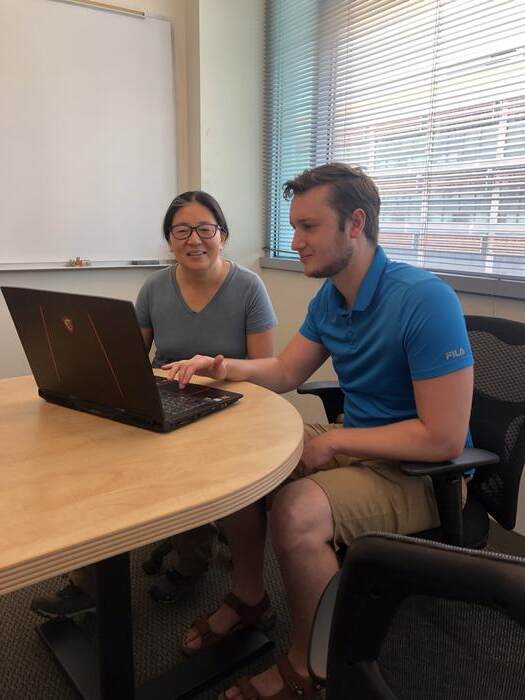
Shan-Wen Tsai (left) and Troy Losey
Tyler O'Neal, Staff Editor SCIENCE July 10, 2024, 5:00 pm

UC Riverside unveils solid-state spin centers in quantum computing

In the exciting field of quantum mechanics, a significant advancement has ignited curiosity and fascination among researchers. Quantum computing has taken a big step forward. Explore the role of spin centers in shaping the future of quantum simulation.

A UC Riverside-led research team has proposed using quantum magnetic objects called spin centers to simulate different magnetic phases of matter and their transitions in the presence of an external magnetic field, opening up new possibilities for scientific exploration.

Professor Shan-Wen Tsai, a luminary in physics and astronomy, leads this pioneering charge, offering a glimpse into the potential applications of these spin centers. Tsai's graduate student and first author of the paper, Troy Losey, emphasized that this innovation could pave the way for the study of more efficient methods of storing and transferring information, a critical stepping stone towards realizing room-temperature quantum computers.

But what is a quantum simulator, exactly? Tsai clarifies that it is a device harnessing the extraordinary behaviors of quantum mechanics to simulate intricate physics conundrums that are beyond the grasp of conventional computers. Unlike its quantum computing counterpart, which operates with qubits and universal gate operations, the quantum simulator is tailor-made to tackle specific problems. With the potential to revolutionize the study of exotic magnetic phases and phase transitions, the implications of this work transcend the conventional boundaries of scientific exploration.

The practical implications of this device are significant. The techniques used in its construction could also be used to develop spin-centered quantum computers, which show promise for enabling quantum computing at room temperature. These advancements also suggest that quantum simulators could become accessible tools for tackling problems that regular computers currently struggle to solve, bridging the gap between theoretical potential and practical application.

We are on the brink of a quantum revolution, with the discovery of solid-state spin centers opening up exciting possibilities for researchers and enthusiasts to explore. However, the path to manipulating spin centers, growing pure crystals, and working at low temperatures to build the proposed quantum simulator comes with its own set of challenges. Yet, the potential that this endeavor holds is quite promising, inviting further exploration and innovation in the constantly evolving field of quantum computing.

The work of the UC Riverside team shows us a new way forward, redefining the limits of computation and exploration. It encourages us to think about the endless possibilities that quantum mechanics offer, sparking a curiosity that drives us to explore new frontiers of discovery and innovation.
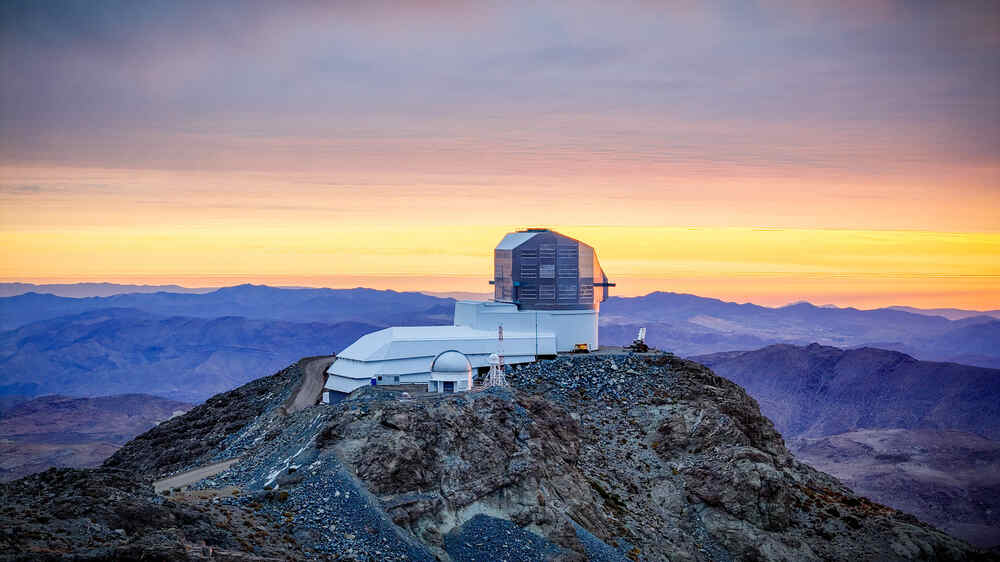
Rubin Observatory at sunset, May 2024. Credit: Olivier Bonin

Duke researchers build a prototype of the cosmos

Tyler O'Neal, Staff Editor SCIENCE July 9, 2024, 8:00 am

The desire to explore the mysteries of the universe has fascinated people for generations. Thanks to the efforts of researchers and scientists, we are on the brink of a new era in celestial discovery. The upcoming launch of the Vera C. Rubin Observatory in 2025 and the NASA Nancy Grace Roman Space Telescope in 2027 are expected to reveal the secrets of galaxies and stars, expanding our understanding of the cosmos. Even before the launch of these advanced instruments, a team at Duke University is already developing a prototype of the universe, offering a glimpse of what lies ahead.

This ambitious project is heavily reliant on supercomputing. In preparation for the massive data flow expected from these telescopes, Duke's physics professor, Michael Troxel, has led an extraordinary effort to create a virtual replica of the cosmos. Each simulated image contains about 80,000 galaxies and objects, making the task incredibly complex. To computationally recreate the light of every star and galaxy, and to trace its journey through time and space, the team used the computational power of a supercomputer capable of running thousands of trillions of calculations per second. This impressive technological feat was accomplished using the now-retired Theta cluster at Argonne National Lab in Illinois, showcasing the limitless potential of human innovation when we challenge what is achievable.

The impact of this work extends beyond the scientific community. By bringing together researchers and experts from diverse backgrounds, the project engages a wide range of perspectives in pursuit of a common goal. The collaborative effort of over 1300 researchers and the coordination across multiple cosmology teams underscores the universality of scientific inquiry. This inclusivity and diversity of thought enrich the project, yielding a tapestry of ideas and insights that will define the future of our understanding of the universe.

As we stand on the precipice of a new era in astronomy, the efforts of the team at Duke University inspire us to dream bigger, reach further, and explore beyond the boundaries of what we know. The seamless fusion of cutting-edge supercomputing and diverse perspectives is a testament to the incredible potential at the intersection of technology and collaboration. It is a reminder that when we unite our collective knowledge and passion, we can interpret the cosmos and unravel its mysteries in ways that were once thought impossible.

In the immersive universe of data and possibilities, the groundwork laid by the Duke team ensures that, when the telescopes begin their task, we will be ready. Armed with a wealth of simulated images and a spirit of unwavering determination, we are poised to embark on an exhilarating voyage of discovery from day one. As we honor the incredible achievements of the past, let us look to the stars with renewed optimism and anticipation, knowing that the wonder and beauty of the cosmos will soon reveal its secrets to all who dare to dream.

On September 12, 2019, the rare carbonaceous chondrite meteorite "Flensburg" fell to Earth. It weighs just under 25 grams and contains minerals formed in the presence of water. The analysis of this meteorite has helped scientists understand the formation of small celestial bodies at different temperatures, preserving water over time. Photo credit: Carsten Jonas, CC BY-SA 4.0

Germany unlocks the secrets of the early solar system: How supercomputing helps us understand better

Tyler O'Neal, Staff Editor SCIENCE July 9, 2024, 7:00 am

Imagine the birth of our solar system, a cosmic dance of swirling dust and rocks coalescing into the majestic planets we know today. This captivating journey has now been illuminated by a remarkable study, shedding light on the origins of water-rich planets and the vital role they play in the emergence of life. Thanks to the ingenious fusion of cutting-edge supercomputing and interdisciplinary collaboration, scientists at Heidelberg University in Germany have unraveled pivotal secrets of our cosmic past.

In a groundbreaking investigation involving experts from Heidelberg University, a trailblazing approach has revealed intriguing insights. Deploying computational models, this international team ventured into the depths of the early solar system, scrutinizing the age data of certain meteorite classes. What they unearthed casts a new light on the celestial bodies that shaped our very existence.

It turns out that planetesimals, the building blocks of planets, played an extraordinary role in shaping Earth's destiny. These small bodies roamed the young solar system, carrying precious water to our home planet. Through the innovative use of supercomputing, the researchers discerned a crucial distinction - while early planetesimals were too hot to harbor ice, those emerging at later stages, in the frigid outskirts of the solar system, were rich in solid-state water. This realization unravels one of the universe's most captivating mysteries - it was these latecomers, arising at lower temperatures, that delivered the precious water that nurtured life on Earth.

The implications of this revelation reach far beyond our cosmic backyard - it extends to the tantalizing possibility of water-rich planets existing in distant corners of the universe. As Prof. Mario Trieloff of Heidelberg University envisions, the physical laws governing the formation of planetesimals in our own solar system can offer a glimpse into the potential habitability of exoplanets. If these distant worlds have been blessed with water from similar cosmic wanderers, they might indeed harbor the fertile grounds for the genesis of life. The ramifications of this transcendent understanding are nothing short of awe-inspiring.

This groundbreaking research, not only redefines our perception of the early solar system but also showcases the power of collaboration and relentless exploration. The diversified perspectives brought forth by a global network of scientists, backed by funding from institutions like the German Research Foundation and the Klaus Tschira Foundation, have paved the way for a truly transformative journey through time and space.

The story of these intrepid explorers, propelled by the engine of supercomputing and united in their quest for cosmic truth, serves as a powerful testament to the indomitable spirit of human curiosity. It is a reminder that when diverse talents converge with cutting-edge technology, humanity reaches ever closer to the heart of the cosmos, unlocking its deepest enigmas and embracing the boundless possibilities that await in the great beyond. With every discovery, our collective dreams soar to new vistas, inspiring generations to come in the relentless pursuit of knowledge and understanding.

So, as we contemplate the origins of water-rich planets and the cosmic ballet that fashioned our own blue oasis, let us marvel at the remarkable journey that brings us closer to the stars. For in the intrepid footsteps of these visionary scientists, we find the enduring spirit of discovery and the unwavering belief that, in the mysteries of the universe, humanity's greatest adventures await.

  1. Chinese professor unveils an exciting vision for the advancement of intelligent supercomputing facilities
  2. Simulator predicts the fate of CO2 underground

Page 15 of 61

  • 10
  • 11
  • 12
  • 13
  • 14
  • 15
  • 16
  • 17
  • 18
  • 19
POPULAR RIGHT NOW
  • Supercomputers replace ‘bathtub’ flood maps with physics-based digital twins of Britain’s coastline
    Supercomputers replace ‘bathtub’ flood maps with physics-based digital twins of Britain’s coastline
  • Supercomputers push neural quantum simulation beyond previous limits
    Supercomputers push neural quantum simulation beyond previous limits
  • Intel’s AI supercomputing revival: Q2 financial surge signals new era for CPU-powered HPC infrastructure
    Intel’s AI supercomputing revival: Q2 financial surge signals new era for CPU-powered HPC infrastructure
  • AWS supercomputing investment reaches historic scale as Amazon’s AI strategy powers record financial results
    AWS supercomputing investment reaches historic scale as Amazon’s AI strategy powers record financial results
  • AI infrastructure financing fears shake semiconductor sector
    AI infrastructure financing fears shake semiconductor sector
  • Catching the wave of the future: Supercomputers unlock the hidden dynamics of Venus
    Catching the wave of the future: Supercomputers unlock the hidden dynamics of Venus
  • NCAR supercomputers run planet scale climate experiments impossible in the real world
    NCAR supercomputers run planet scale climate experiments impossible in the real world
  • AI hunts the cosmos: Machine learning helps astronomers discover the first ‘Wandering’ supermassive black hole caught destroying a star
    AI hunts the cosmos: Machine learning helps astronomers discover the first ‘Wandering’ supermassive black hole caught destroying a star
  • Supercomputing for the masses: Meta's vision of a personal superintelligence for everyone
    Supercomputing for the masses: Meta's vision of a personal superintelligence for everyone
  • NVIDIA helps turn AI compute into a new asset class as Wall Street mobilizes $500 billion
    NVIDIA helps turn AI compute into a new asset class as Wall Street mobilizes $500 billion
THIS YEAR'S MOST READ
  • Wall Street wants to trade supercomputing power like oil
    Wall Street wants to trade supercomputing power like oil
  • Beamforming the future: BeammWave's 6G push signals the rise of orbital-terrestrial wireless networks
    Joakim Axmon
    Joakim Axmon
  • Cosmic ambition at scale: UK’s supercomputer unlocks a 2.5 petabytes universe
    Cosmic ambition at scale: UK’s supercomputer unlocks a 2.5 petabytes universe
  • Hidden order, revealed at scale: Supercomputing, electron ptychography uncover the inner workings of relaxor ferroelectrics
    Hidden order, revealed at scale: Supercomputing, electron ptychography uncover the inner workings of relaxor ferroelectrics
  • Intel's Q1 results signal supercomputing surge driving Xeon momentum
    Intel's Q1 results signal supercomputing surge driving Xeon momentum
  • When stars fall apart: Supercomputing reveals the hidden physics of black holes
    When stars fall apart: Supercomputing reveals the hidden physics of black holes
  • MIT develops computational framework to probe dark matter via gravitational waves
    MIT develops computational framework to probe dark matter via gravitational waves
  • Explainable AI moves into the watershed: FAMU-FSU engineers build predictive framework for real-time E. coli forecasting
    FAMU-FSU College of Engineering Assistant Professor Nasrin Alamdari. (Scott Holstein/FAMU-FSU College of Engineering)
    FAMU-FSU College of Engineering Assistant Professor Nasrin Alamdari. (Scott Holstein/FAMU-FSU College of Engineering)
  • Multi-layer simulations reveal the hidden supply chain of solar prominences
    Multi-layer simulations reveal the hidden supply chain of solar prominences
  • Japanese scientists decode dolphin speed with supercomputing: Turbulence, vortices, and the hidden physics of propulsion
    Japanese scientists decode dolphin speed with supercomputing: Turbulence, vortices, and the hidden physics of propulsion
  • FRONTPAGE
  • LATEST
  • POPULAR
  • REGISTER
  • SOCIAL
  • VIDEO
  • SUBSCRIPTION
  • RSS
  • GUIDELINES
  • PRIVACY
  • TOS
  • ABOUT
  • +1 (816) 799-4488
  • editorial@supercomputingonline.com
© 2001 - 2026 SuperComputingOnline.com, LLC. All rights reserved. This material may not be published, broadcast, rewritten or redistributed without permission.
Sign In
  • FRONT PAGE
  • LATEST
    • MEDIA KIT
    • MOST READ
    • RSS FEED
    • ACADEMIA
    • AEROSPACE
    • APPLICATIONS
    • ASTRONOMY
    • AUTOMOTIVE
    • BIG DATA
    • BIOLOGY
    • CHEMISTRY
    • CLIENTS
    • CLOUD
    • DEFENSE
    • DEVELOPER TOOLS
    • EARTH SCIENCES
    • ECONOMICS
    • ENGINEERING
    • ENTERTAINMENT
    • HEALTH
    • INDUSTRY
    • INTERCONNECTS
    • GAMING
    • GOVERNMENT
    • MANUFACTURING
    • MIDDLEWARE
    • MOVIES
    • NETWORKS
    • OIL & GAS
    • PHYSICS
    • PROCESSORS
    • RETAIL
    • SCIENCE
    • STORAGE
    • SYSTEMS
    • VISUALIZATION
  • VIDEOS
    • ADD YOUR VIDEOS
    • MANAGE VIDEOS
  • COMMUNITY
    • TRADE SHOWS
    • SOCIAL NETWORK VIDEOS
    • SURVEYS
    • APPLICATIONS BROWSER
    • CONVERSATION INBOX
    • SOCIAL ADVERTISER
    • GROUPS
    • MARKETPLACE LISTINGS
    • PAGES
    • LEADERBOARD
    • POINTS LISTING
      • BADGES
    • PRIVACY CONFIRM REQUEST
    • PRIVACY CREATE REQUEST

Hey there! We noticed you’re using an ad blocker.