

SUPERCOMPUTING NEWS SUPERCOMPUTING NEWS
    • MEDIA KIT
    • MOST READ
    • RSS FEED
    • ACADEMIA
    • AEROSPACE
    • APPLICATIONS
    • ASTRONOMY
    • AUTOMOTIVE
    • BIG DATA
    • BIOLOGY
    • CHEMISTRY
    • CLIENTS
    • CLOUD
    • DEFENSE
    • DEVELOPER TOOLS
    • EARTH SCIENCES
    • ECONOMICS
    • ENGINEERING
    • ENTERTAINMENT
    • GAMING
    • GOVERNMENT
    • HEALTH
    • OIL & GAS
    • INDUSTRY
    • INTERCONNECTS
    • MANUFACTURING
    • MIDDLEWARE
    • MOVIES
    • NETWORKS
    • PHYSICS
    • PROCESSORS
    • RETAIL
    • SCIENCE
    • STORAGE
    • SYSTEMS
    • VISUALIZATION
    • AcyMailing subscription form

    • ADD YOUR VIDEOS
    • MANAGE VIDEOS
    • CONVERSATION INBOX
    • SOCIAL ADVERTISER
    • SOCIAL NETWORK VIDEOS
    • SURVEYS
    • GROUPS
    • PAGES
    • MARKETPLACE LISTINGS
    • APPLICATIONS BROWSER
    • PRIVACY CONFIRM REQUEST
    • PRIVACY CREATE REQUEST
    • LEADERBOARD
    • POINTS LISTING
      • BADGES
    • TRADE SHOWS
Sign In
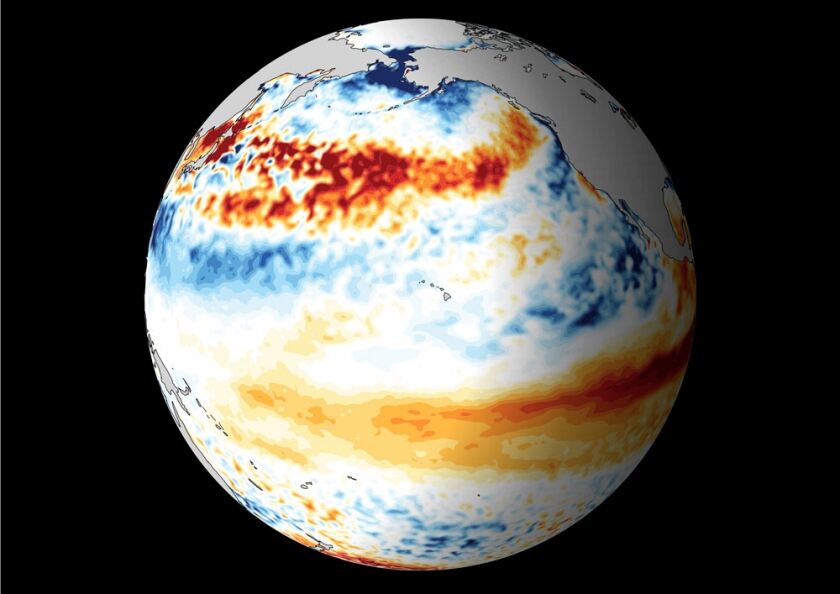
Japanese-built supercomputer simulations illuminate El Niño's influence on East Asian winter climates
Tyler O'Neal, Staff Editor SCIENCE July 3, 2024, 5:00 pm

Japanese-built supercomputer simulations illuminate El Niño's influence on East Asian winter climates

In Japan, the Research Institute for Applied Mechanics at Kyushu University has utilized advanced supercomputer simulations to study the complex relationship between El Niño and winter climate patterns in East Asia. Conducted by Post-doctoral Fellow Masahiro Shiozaki and Professor Hiroki Tokinaga, the research has revealed valuable insights into how the timing of El Niño onset affects weather anomalies in Japan and surrounding regions.

The El Niño phenomenon significantly impacts global climate dynamics, disrupting normal atmospheric flow and giving rise to extreme and abnormal weather conditions across various regions. In the case of Japan, historical data has shown a connection between El Niño and the prevalence of warmer winters, such as the notably mild winter season of 2023-2024. However, there have also been colder winters during El Niño years, like the one experienced in 2014-2015. This has prompted the research team to further explore this puzzle.

The study is based on an analysis of 100 different climate simulations spanning over 61 years. It aims to explain the relationship between El Niño and winter climates in East Asia. The supercomputer simulations revealed an important link between the early onset of El Niño, occurring around June, and the presence of warm winter climates in the region. Conversely, a late onset of El Niño has been associated with colder winters, highlighting the complex interplay between El Niño timing and winter climate anomalies.

The analysis also uncovered that El Niño's significant influence on East Asian winters is not solely due to this climate phenomenon. Anomalous warming of the tropical Indian Ocean has emerged as a key factor driving warmer East Asian winters. The early onset of El Niño leads to a warming effect on the Indian Ocean from summer to winter, which suppresses atmospheric convection over the tropical western Pacific, resulting in reduced rainfall and atmospheric heating. This triggers atmospheric waves and abnormal circulation patterns, ultimately leading to warm winter climates in East Asia.

The research team took an innovative approach by running simulations of weather patterns over the past sixty years in 100 different scenarios. They made adjustments to the patterns to understand how El Niño directly affects the atmosphere. This method helped to reduce background noise in the data, providing a clearer understanding of how El Niño impacts winter climate patterns in East Asia.

The team hopes that their findings will lead to improvements in predicting climate patterns, especially during active El Niño phases. By using their insights, researchers and meteorologists could better predict winter climates months ahead of time, helping society prepare for the impact of these unusual weather patterns.

Given the increasing impact of global warming on climate patterns, the team believes it is essential to further explore how rising water temperatures, especially in the Indian Ocean, and other tropical climate phenomena may shape winters in East Asia in the future. Professor Hiroki Tokinaga emphasizes the need for continued research to understand the complex dynamics of climate change and its effects on winter climates in the region.

Kyushu University's Research Institute for Applied Mechanics stands at the forefront of cutting-edge research and technological advancements with its pioneering supercomputer simulations, illuminating promising avenues for comprehending and harnessing the complexities of climate dynamics and meteorological phenomena.
Parker Hannifin, Packaged Aeroderivative GTs: The solution for keeping the power grid stable

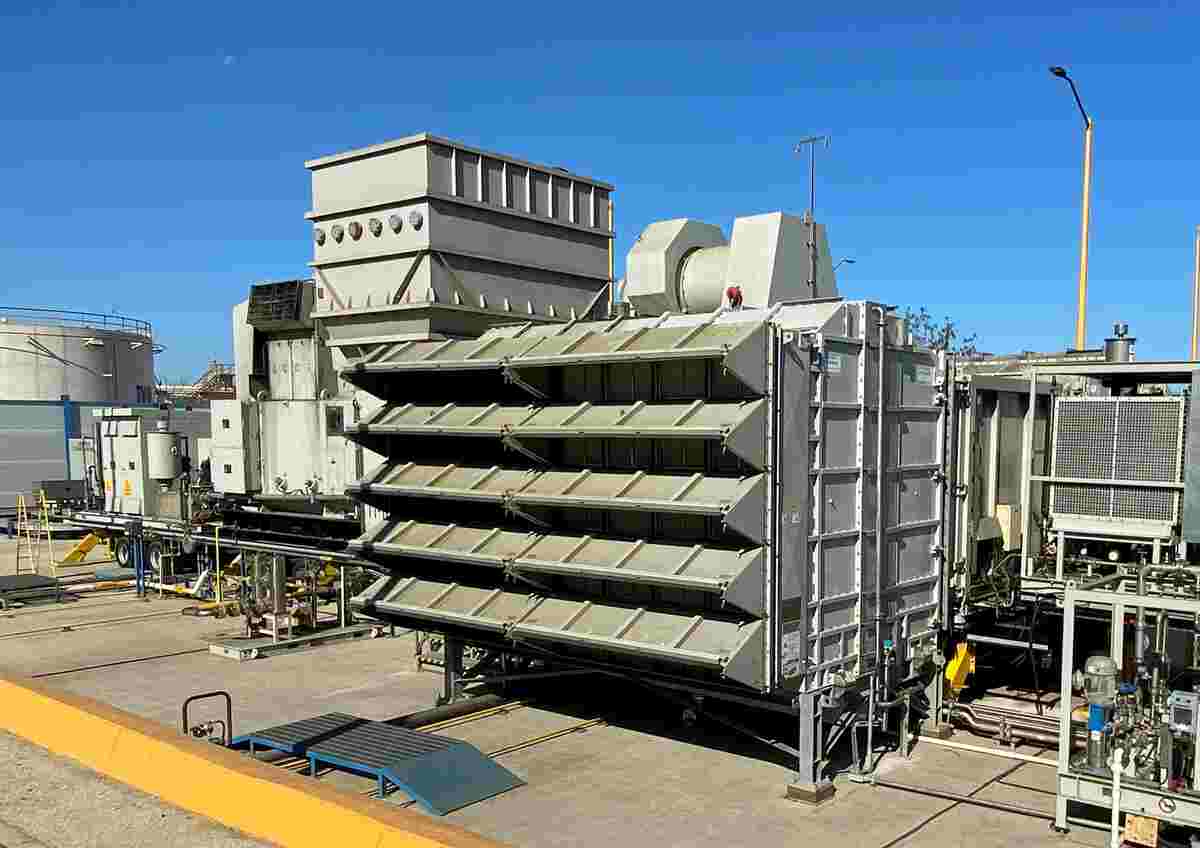
Parker Hannifin, Packaged Aeroderivative GTs: The solution for keeping the power grid stable

Tyler O'Neal, Staff Editor SCIENCE July 3, 2024, 9:08 am

In the constantly changing realm of integrating renewable energy, ensuring grid stability remains a significant challenge. As renewable sources like wind and solar power continue to expand, there is an increasing need for reliable solutions to address grid instability. Aero-derivative gas turbines have emerged as agile and efficient solutions for grid firming at a local level.

Parker Hannifin, a pioneer in air filtration technology and a trusted name in the industry, has taken the lead in developing innovative solutions for aero-derivative gas turbines. With a strong focus on rapid response rates, flexibility, and high efficiency, Parker Hannifin's compact and modular filter houses are revolutionizing our approach to grid stability.

Using advanced tools such as Computational Fluid Dynamics (CFD) modeling and cutting-edge supercomputer simulations, Parker Hannifin has been able to optimize its filtration systems for maximum performance. By carefully selecting materials and ensuring quality control, they have created a filtration system that optimizes airflow without compromising efficiency.

In collaboration with leading turbine OEMs, Parker Hannifin has unveiled their 9th generation compact modular multistage filtration system. This comprehensive suite of equipment, including filters, silencers, winterization kits, chillers, and noise abatement options, ensures seamless integration with aero-derivative gas turbines.

The impact of Parker Hannifin's innovative approach cannot be overstated. By providing reliable, rapid start capabilities and high cycling efficiency, their filtration systems are crucial in supporting the transition to a renewable-dominated energy system.

As the industry moves towards smaller, more agile solutions, Parker Hannifin stands at the forefront, offering a complete grid stability solution that is efficient and sustainable. With their expertise and dedication to excellence, Parker Hannifin is shaping the future of grid firming and paving the way for a more stable and resilient energy grid.

Researchers can now use a new statistical technique called prediction-powered inference to safely test scientific hypotheses using machine learning predictions. DALL-E, an AI system, has generated an artistic interpretation of the technique, as shown in the image. This breakthrough was made possible due to the efforts of Michael Jordan.

How to use AI for discovery without leading science astray

Tyler O'Neal, Staff Editor SCIENCE November 9, 2023, 3:00 pm

In the last decade, artificial intelligence (AI) has played a significant role in scientific research. Machine learning models have been employed to predict protein structures, estimate deforestation levels in the Amazon rainforest, and classify distant galaxies to identify potential exoplanets. However, although AI has the potential to accelerate scientific discovery, there is a risk of misleading or false results. Machine learning models, like chatbots that sometimes produce fictitious responses, can sometimes produce inaccurate outcomes.

To address this issue, researchers at the University of California, Berkeley, have introduced a new statistical technique called prediction-powered inference (PPI). This technique allows scientists to use predictions obtained from machine learning models while correcting for potential errors and biases. In this article, we will explore how PPI works, its applications in various scientific domains, and its significance in data-intensive research.

When conducting scientific experiments, researchers aim to obtain a range of plausible answers instead of a single definitive answer. They achieve this by calculating confidence intervals, which assess the variability of results obtained through repeated experiments. However, machine learning systems focus primarily on individual data points and cannot provide scientists with the uncertainty assessments they require.

For instance, AlphaFold, a popular machine learning model used for predicting protein structures, can only offer a single structure prediction without any measure of confidence. Scientists may be tempted to treat these predictions as data and compute classical confidence intervals, disregarding the fact that machine learning models have hidden biases that come from the training data. Such biases can skew the results, especially when exploring phenomena at the boundaries between known and unknown realms.

To address these limitations, researchers at UC Berkeley developed a technique called Prediction-Powered Inference (PPI). PPI leverages a small amount of unbiased real-world data to correct the output of large, general models like AlphaFold, specifically in the context of scientific inquiries. By combining these two sources of evidence, PPI enables the formation of valid confidence intervals.

The central idea behind PPI is to combine the predictions from machine learning models with unbiased data related to the specific hypothesis being investigated. This approach allows scientists to leverage the benefits of machine learning models while correcting for potential errors and biases. The key advantage of PPI is its ability to provide reliable confidence intervals even when the nature of errors in the machine learning model is unknown at the outset.
Applying PPI in Scientific Research

PPI has proven to be effective in various scientific domains, ranging from environmental studies to astrophysics and genetics. Let's delve into some notable applications of PPI in these fields:

  • Environmental Studies: Estimating Deforestation Levels in the Amazon

One of the uses of PPI is in estimating deforestation levels in the Amazon rainforest by utilizing satellite imagery. Machine learning models trained on satellite data can accurately identify deforestation in specific regions of the forest. However, when combined to estimate deforestation across the entire Amazon, these models can yield skewed confidence intervals due to their inability to recognize newer patterns of deforestation. PPI helps to correct this bias by incorporating a small number of human-labeled regions of deforestation.

  • Protein Folding: Predicting Protein Structures with Confidence

Protein folding is a critical process in comprehending protein function and designing therapeutics. AlphaFold, a machine learning model, has shown remarkable success in predicting protein structures. However, it cannot provide confidence intervals for its predictions. By applying PPI, scientists can integrate additional unbiased data to obtain valid confidence intervals for protein structures predicted by AlphaFold.

  • Astrophysics: Classifying Distant Galaxies

Machine learning models have been utilized to classify distant galaxies based on their characteristics, aiding in the search for exoplanets. However, these models might generate unrealistic output when faced with phenomena at the edge of our current knowledge. PPI offers a solution by allowing scientists to correct potential errors and biases in the models using unbiased data.

  • Genetics: Exploring Gene Expression Levels

Understanding gene expression levels is crucial in deciphering genetic mechanisms and their role in various biological processes. Machine learning models can be used to predict gene expression levels based on diverse factors. PPI enables scientists to incorporate additional unbiased data to obtain valid confidence intervals for gene expression predictions.

Other Applications of PPI

The potential applications of PPI are vast and not limited to the examples mentioned above. The technique can be utilized in diverse research fields, including but not limited to plankton counting, investigating the relationship between income and private health insurance, and exploring other scientific phenomena.

AI has transformed scientific research by speeding up processes and enabling predictions in various domains. However, it is crucial to use AI models with caution, considering the potential for misleading or false results. UC Berkeley researchers have developed the prediction-powered inference (PPI) technique to overcome this challenge, enabling scientists to use machine learning models while correcting for errors and biases.

PPI incorporates a small amount of unbiased data to form valid confidence intervals, providing scientists with the necessary uncertainty assessments. By applying PPI, scientists can leverage the power of AI models in diverse scientific inquiries, ranging from environmental studies to astrophysics and genetics. This technique contributes to the advancement of modern data-intensive, model-intensive, and collaborative science.

With the advent of PPI, researchers can confidently embrace AI for scientific discovery, knowing that they can mitigate potential errors and biases. The future of AI in scientific research appears promising, with PPI becoming an integral component of data analysis, hypothesis testing, and decision-making processes. As scientists continue to unlock the mysteries of the natural world, PPI will play a crucial role in ensuring the reliability and validity of AI-driven insights and predictions.

  1. MIT builds AI model that can help determine where a patient's cancer arose
  2. Japanese-built supercomputers discover gas streamers feed triple-baby stars

Page 18 of 61

  • 13
  • 14
  • 15
  • 16
  • 17
  • 18
  • 19
  • 20
  • 21
  • 22
POPULAR RIGHT NOW
  • Supercomputers replace ‘bathtub’ flood maps with physics-based digital twins of Britain’s coastline
    Supercomputers replace ‘bathtub’ flood maps with physics-based digital twins of Britain’s coastline
  • Supercomputers push neural quantum simulation beyond previous limits
    Supercomputers push neural quantum simulation beyond previous limits
  • Intel’s AI supercomputing revival: Q2 financial surge signals new era for CPU-powered HPC infrastructure
    Intel’s AI supercomputing revival: Q2 financial surge signals new era for CPU-powered HPC infrastructure
  • AWS supercomputing investment reaches historic scale as Amazon’s AI strategy powers record financial results
    AWS supercomputing investment reaches historic scale as Amazon’s AI strategy powers record financial results
  • AI infrastructure financing fears shake semiconductor sector
    AI infrastructure financing fears shake semiconductor sector
  • Catching the wave of the future: Supercomputers unlock the hidden dynamics of Venus
    Catching the wave of the future: Supercomputers unlock the hidden dynamics of Venus
  • NCAR supercomputers run planet scale climate experiments impossible in the real world
    NCAR supercomputers run planet scale climate experiments impossible in the real world
  • AI hunts the cosmos: Machine learning helps astronomers discover the first ‘Wandering’ supermassive black hole caught destroying a star
    AI hunts the cosmos: Machine learning helps astronomers discover the first ‘Wandering’ supermassive black hole caught destroying a star
  • Supercomputing for the masses: Meta's vision of a personal superintelligence for everyone
    Supercomputing for the masses: Meta's vision of a personal superintelligence for everyone
  • NVIDIA helps turn AI compute into a new asset class as Wall Street mobilizes $500 billion
    NVIDIA helps turn AI compute into a new asset class as Wall Street mobilizes $500 billion
THIS YEAR'S MOST READ
  • Wall Street wants to trade supercomputing power like oil
    Wall Street wants to trade supercomputing power like oil
  • Beamforming the future: BeammWave's 6G push signals the rise of orbital-terrestrial wireless networks
    Joakim Axmon
    Joakim Axmon
  • Cosmic ambition at scale: UK’s supercomputer unlocks a 2.5 petabytes universe
    Cosmic ambition at scale: UK’s supercomputer unlocks a 2.5 petabytes universe
  • Hidden order, revealed at scale: Supercomputing, electron ptychography uncover the inner workings of relaxor ferroelectrics
    Hidden order, revealed at scale: Supercomputing, electron ptychography uncover the inner workings of relaxor ferroelectrics
  • Intel's Q1 results signal supercomputing surge driving Xeon momentum
    Intel's Q1 results signal supercomputing surge driving Xeon momentum
  • When stars fall apart: Supercomputing reveals the hidden physics of black holes
    When stars fall apart: Supercomputing reveals the hidden physics of black holes
  • MIT develops computational framework to probe dark matter via gravitational waves
    MIT develops computational framework to probe dark matter via gravitational waves
  • Explainable AI moves into the watershed: FAMU-FSU engineers build predictive framework for real-time E. coli forecasting
    FAMU-FSU College of Engineering Assistant Professor Nasrin Alamdari. (Scott Holstein/FAMU-FSU College of Engineering)
    FAMU-FSU College of Engineering Assistant Professor Nasrin Alamdari. (Scott Holstein/FAMU-FSU College of Engineering)
  • Multi-layer simulations reveal the hidden supply chain of solar prominences
    Multi-layer simulations reveal the hidden supply chain of solar prominences
  • Japanese scientists decode dolphin speed with supercomputing: Turbulence, vortices, and the hidden physics of propulsion
    Japanese scientists decode dolphin speed with supercomputing: Turbulence, vortices, and the hidden physics of propulsion
  • FRONTPAGE
  • LATEST
  • POPULAR
  • REGISTER
  • SOCIAL
  • VIDEO
  • SUBSCRIPTION
  • RSS
  • GUIDELINES
  • PRIVACY
  • TOS
  • ABOUT
  • +1 (816) 799-4488
  • editorial@supercomputingonline.com
© 2001 - 2026 SuperComputingOnline.com, LLC. All rights reserved. This material may not be published, broadcast, rewritten or redistributed without permission.
Sign In
  • FRONT PAGE
  • LATEST
    • MEDIA KIT
    • MOST READ
    • RSS FEED
    • ACADEMIA
    • AEROSPACE
    • APPLICATIONS
    • ASTRONOMY
    • AUTOMOTIVE
    • BIG DATA
    • BIOLOGY
    • CHEMISTRY
    • CLIENTS
    • CLOUD
    • DEFENSE
    • DEVELOPER TOOLS
    • EARTH SCIENCES
    • ECONOMICS
    • ENGINEERING
    • ENTERTAINMENT
    • HEALTH
    • INDUSTRY
    • INTERCONNECTS
    • GAMING
    • GOVERNMENT
    • MANUFACTURING
    • MIDDLEWARE
    • MOVIES
    • NETWORKS
    • OIL & GAS
    • PHYSICS
    • PROCESSORS
    • RETAIL
    • SCIENCE
    • STORAGE
    • SYSTEMS
    • VISUALIZATION
  • VIDEOS
    • ADD YOUR VIDEOS
    • MANAGE VIDEOS
  • COMMUNITY
    • TRADE SHOWS
    • SOCIAL NETWORK VIDEOS
    • SURVEYS
    • APPLICATIONS BROWSER
    • CONVERSATION INBOX
    • SOCIAL ADVERTISER
    • GROUPS
    • MARKETPLACE LISTINGS
    • PAGES
    • LEADERBOARD
    • POINTS LISTING
      • BADGES
    • PRIVACY CONFIRM REQUEST
    • PRIVACY CREATE REQUEST

Hey there! We noticed you’re using an ad blocker.