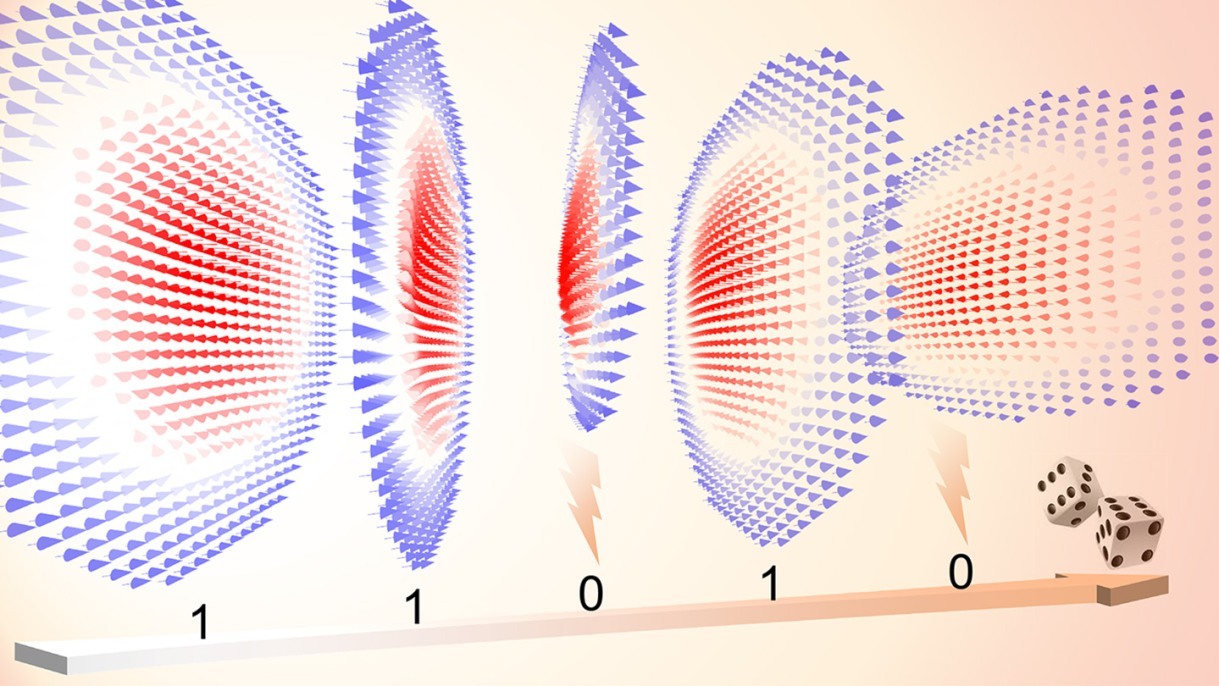
MIT neuroscientists develop a supercomputer model that can answer questions as well as the human brain

The human brain is finely tuned not only to recognize particular sounds but also to determine which direction they came from. By comparing differences in sounds that reach the right and left ear, the brain can estimate the location of a barking dog, wailing fire engine, or approaching car.

MIT neuroscientists have now developed a supercomputer model that can also perform that complex task. The model, which consists of several convolutional neural networks, not only performs the task as well as humans do, it also struggles in the same ways that humans do.

“We now have a model that can actually localize sounds in the real world,” says Josh McDermott, an associate professor of brain and cognitive sciences and a member of MIT’s McGovern Institute for Brain Research. “And when we treated the model like a human experimental participant and simulated this large set of experiments that people had tested humans on in the past, what we found over and over again is it the model recapitulates the results that you see in humans.”

Findings from the new study also suggest that humans’ ability to perceive location is adapted to the specific challenges of our environment, says McDermott, who is also a member of MIT’s Center for Brains, Minds, and Machines.

McDermott is the senior author of the paper, which appears today in Nature Human Behavior. The paper’s lead author is MIT graduate student Andrew Francl.

Modeling localization

When we hear a sound such as a train whistle, the sound waves reach our right and left ears at slightly different times and intensities, depending on what direction the sound is coming from. Parts of the midbrain are specialized to compare these slight differences to help estimate what direction the sound came from, a task also known as localization.

This task becomes markedly more difficult under real-world conditions — where the environment produces echoes and many sounds are heard at once.

Scientists have long sought to build computer models that can perform the same kind of calculations that the brain uses to localize sounds. These models sometimes work well in idealized settings with no background noise, but never in real-world environments, with their noises and echoes.

To develop a more sophisticated model of localization, the MIT team turned to convolutional neural networks. This kind of computer modeling has been used extensively to model the human visual system, and more recently, McDermott and other scientists have begun applying it to audition as well.

Convolutional neural networks can be designed with many different architectures, so to help them find the ones that would work best for localization, the MIT team used a supercomputer that allowed them to train and test about 1,500 different models. That search identified 10 that seemed the best-suited for localization, which the researchers further trained and used for all of their subsequent studies.

To train the models, the researchers created a virtual world in which they can control the size of the room and the reflection properties of the walls of the room. All of the sounds fed to the models originated from somewhere in one of these virtual rooms. The set of more than 400 training sounds included human voices, animal sounds, machine sounds such as car engines, and natural sounds such as thunder.

The researchers also ensured the model started with the same information provided by human ears. The outer ear, or pinna, has many folds that reflect sound, altering the frequencies that enter the ear, and these reflections vary depending on where the sound comes from. The researchers simulated this effect by running each sound through a specialized mathematical function before it went into the computer model.

“This allows us to give the model the same kind of information that a person would have,” Francl says.

After training the models, the researchers tested them in a real-world environment. They placed a mannequin with microphones in its ears in an actual room and played sounds from different directions, then fed those recordings into the models. The models performed very similarly to humans when asked to localize these sounds.

“Although the model was trained in a virtual world, when we evaluated it, it could localize sounds in the real world,” Francl says.

Similar patterns

The researchers then subjected the models to a series of tests that scientists have used in the past to study humans’ localization abilities.

In addition to analyzing the difference in arrival time at the right and left ears, the human brain also bases its location judgments on differences in the intensity of sound that reaches each ear. Previous studies have shown that the success of both of these strategies varies depending on the frequency of the incoming sound. In the new study, the MIT team found that the models showed this same pattern of sensitivity to frequency.

“The model seems to use timing and level differences between the two ears in the same way that people do, in a way that's frequency-dependent,” McDermott says.

The researchers also showed that when they made localization tasks more difficult, by adding multiple sound sources played at the same time, the computer models’ performance declined in a way that closely mimicked human failure patterns under the same circumstances.

“As you add more and more sources, you get a specific pattern of decline in humans’ ability to accurately judge the number of sources present, and their ability to localize those sources,” Francl says. “Humans seem to be limited to localizing about three sources at once, and when we ran the same test on the model, we saw a really similar pattern of behavior.”

Because the researchers used a virtual world to train their models, they were also able to explore what happens when their model learned to localize in different types of unnatural conditions. The researchers trained one set of models in a virtual world with no echoes, and another in a world where there was never more than one sound heard at a time. In a third, the models were only exposed to sounds with narrow frequency ranges, instead of naturally occurring sounds.

When the models trained in these unnatural worlds were evaluated on the same battery of behavioral tests, the models deviated from human behavior, and how they failed varied depending on the type of environment they had been trained in. These results support the idea that the localization abilities of the human brain are adapted to the environments in which humans evolved, the researchers say.

The researchers are now applying this type of modeling to other aspects of audition, such as pitch perception and speech recognition, and believe it could also be used to understand other cognitive phenomena, such as the limits on what a person can pay attention to or remember, McDermott says.

Revolutionary supercomputer-aided drug-discovery approach for drug-resistant TB has important implications for other diseases

Tuberculosis (TB) is a potentially fatal bacterial disease that typically affects the lungs. According to the World Health Organization (WHO) and Centers for Disease Control and Prevention (CDC), there are 9-10 million new TB cases each year, resulting in 1-2 million deaths. TB is one of the top 10 causes of death globally. Hydrogen bond patterns in the EmbR FHA domain  CREDIT Gil Alterovitz

Researchers have previously discovered four first-line drugs that treat mycobacterium tuberculosis (Mtb), the bacteria causing TB. These include ethambutol (EMB), which typically blocks Mtb membrane synthesis. However, around 4% of TB cases have genetic mutations that make them drug-resistant.

Previous studies have identified that some of these cases are caused by EmbR mutations binding with Mtb PknH, a transmembrane kinase. However, researchers have been unable to identify the exact binding site and potential mechanisms of the Mtb mutation.

In a pioneering study, published in the KeAi journal Synthetic and Systems Biotechnology, scientists used a revolutionary approach in computer-aided drug discovery to explore binding sites between resistance-causing mutations of EMB, and a transmembrane kinase. It is the first study to propose this protein-protein interaction site and its binding partner based on its disordered protein nature.  

According to senior author Prof. Gil Alterovitz, of the Harvard Medical School/ Brigham and Women's Hospital in the US, “this kind of computer-aided drug-discovery has the potential to improve the efficiency of discovering new binding sites and binding partners, and aid in the development of many other critical treatments for world-threatening diseases.”

By elaborating findings from a 2006 protein study by Alderwick LJ, et al., the international team determined and investigated the structure of a specific binding site which showed finger-like structures holding the phosphorylated residues displayed looser binding. Hydrogen bond analysis and determination of the C-terminal backbone torsional angles supported the peptides’ binding towards EmbR and involvement in phosphorylation. This phosphorylation can cause structural changes, therefore impacting its overall function.

Prof. Alterovitz adds: “The study’s novel approach empowers new ways of thinking on drug resistance and novel mechanisms for dealing with it. The findings have the potential to revolutionize not only the study of drug-resistant Mtb treatments but also the field of computer-aided drug discovery at large.”

Varma discovers hints of spin-orbit resonances in binary black holes

Research done at Cornell has uncovered from gravitation wave data the first potential signs of spin-orbit resonances in binary black holes, a step toward understanding the mechanisms of supernovas and other big questions in astrophysics. LIGO/Caltech/MIT/Sonoma State (Aurore Simonnet) An artist's conception of a precessing binary black hole. The black holes, which will ultimately spiral together into one larger black hole, are shown here orbiting one another in a plane. The black holes are spinning in a non-aligned fashion, which means they are tilted relative to the overall orbital motion of the pair. This causes the orbit to precess like a top spinning along a tilted axis.

"These resonances were predicted over a decade ago using Einstein’s theory of general relativity,” said astrophysicist Vijay Varma. A former Klarman Postdoctoral Fellow in the College of Arts & Sciences (A&S), Varma analyzes gravitational waves detected by the Laser Interferometer Gravitational-Wave Observatory (LIGO) and the Virgo gravitational wave detector to learn more about binary black holes. “We find the first ‘hints’ of the resonances in gravitational wave data from LIGO and Virgo.”

The rate at which a black hole spin reveals a lot about its history, Varma said: for black holes arranged in an interactive pair, called a binary, the direction of each black hole’s spin is also revelatory, especially to one another.

In “Hints of Spin-Orbit Resonances in the Binary Black Hole Population,” published January 19 in Physical Review Letters, Varma and collaborators report that the two black holes’ spins, when projected onto the orbital plane, tend to be anti-parallel to each other, which can be a signature of spin-orbit resonances. More observations are needed to confirm these tendencies, Varma said.

Varma conducted much of this research while a Klarman Fellow; he is now a Marie Curie fellow at the Max Planck Institute for Gravitational Physics. Collaborators on this work include Syliva Biscoveanu, Maximiliano Isi, Salvatore Vitale from the Massachusetts Institute of Technology, and Will Farr from the Flatiron Institute.

“Resonance effects are ubiquitous in physical systems. They occur when two processes in a system occur at specially related frequencies,” said Saul Teukolsky, the Hans A. Bethe Professor of Physics (A&S), Varma’s faculty mentor at Cornell. “In the black hole systems that Vijay is studying, the resonance is predicted to occur between the spin motion of the black holes and their orbital motion and leaves an imprint on the gravitational waves produced. This work shows that if we analyze the data cleverly, we are much closer to testing this prediction of General Relativity than we thought we were.”

Black holes typically rotate (spin) because they form from dying stars that spin themselves, Varma said. When two such black holes orbit each other in a binary, their spins interact with the orbit.

Binary black holes lose energy to gravitational waves, causing the black holes to move toward each other and eventually merge, Varma said. Some binary black hole spins are aligned along or opposite the orbital angular momentum, leading to a “bland” merger on a fixed plane. But other binary black holes have spins tilted to the orbital angular momentum, setting off an intricate interaction called precession.

“When the spins are tilted with respect to the orbital angular momentum, the orbit precesses like a top that is spinning along a tilted axis,” Varma said.

Spin-orbit resonances can occur in precessing binaries, but this depends on the nature of the supernova mechanism that produces the black holes from their stellar progenitors, Varma said. If the supernova emission is not symmetric in all directions, the black hole gets a recoil velocity at birth, which is similar to the recoil of a fired gun.

“If the supernova recoils are large enough, the binary can end up in a spin-orbit resonance,” Varma said. “These are special configurations where the directions of the spins in the orbital plane are either parallel or anti-parallel.”

It was thought that LIGO and Virgo gravitational wave detectors were not sensitive enough to pick up evidence of spin-orbit resonances. However, Varma and collaborators applied two data-gathering hacks to detect these first hints.

First, Varma applied supercomputer modeling based on simulations of black holes.

“Vijay is a world expert at developing what are called ‘surrogate models,” Teukolsky said in a 2020 interview.

Varma said: “These models accurately capture the effect of the spins from numerical simulations. They allow us to extract as much of this information as possible from gravitational wave observations.”

Second, the researchers learned to measure the spins just before the black holes merge, rather than the standard practice of measuring spins many orbits before the merger. This method of late spin measurement is the topic of a companion paper, “Measuring binary black hole orbital-plane spin orientation,” published January 19 in Physical Review D.

“We are starting to probe the spin-orbit resonances, which we originally thought was impossible until next-generation detectors arrive in the 2030s,” Varma said. “Our hope is that by studying these spin-orbit resonances, we can learn more about the mechanism of the supernova, which has remained an enduring mystery.”

University of Oslo researchers build ML tool for discovering immune receptors that react to many different antigens

Once you know how it works for one disease, immuneML can make diagnostic tools for other types of diseases as well.

Different diseases have different methods for testing if a person has the disease or not. immuneML, a new open-source machine learning platform, can potentially look for a lot of diseases in just one blood sample.  Milena Pavlovic (left) and Lonneke Scheffer. Photo: Eivind Torgersen/UiO

“Once you know how it works for one disease, it can be very easy to make diagnostic tools for other types of diseases as well,” says Lonneke Scheffer.

“From a blood sample, we hope to be able to diagnose if a person has a disease or not. On the individual receptor level we want to see if that one specific receptor is specific to corona or to something else,” says Milena Pavlovic.

Scheffer and Pavlovic are Doctoral Research Fellows at the Department of Informatics at the University of Oslo. They are part of the Research Group for Biomedical Informatics, where they have developed immuneML.

Predicting whether receptors bind to corona

B and T cells in our immune system all have small receptors on the surface. There are millions of different receptors.

“The receptors have a certain 3D shape that makes them able to stick to different antigens,” Scheffer says to Titan.uio.no.

“If we analyze these receptors using machine learning, we hope to be able to say what each of those receptors is specific for; what specific disease, what specific virus or bacteria, even cancer, and autoimmunity,” Pavlovic says.

To do this using machine learning, they need to translate the 3D-shaped receptors into a mathematical language, into mathematical representations. The receptors are proteins, and all proteins have their blueprint in our DNA.

“Then we are looking at a flat line of little letters. These DNA sequences are what we get in, what we can translate to protein sequences in the computer. To predict if the receptor binds to corona or not, you just look at one piece of text, and you want to predict based on this text, does it bind to corona or not,” Scheffer says.

A repertoire of immune receptors

Scheffer and Pavlovic are not just looking at individual receptors and to which antigens they may bind. They also want to analyze the whole collection of receptors someone has in their body, what is called the adaptive immune receptor repertoire (AIRR).

“What is interesting and unique about this AIRR data is that it can potentially work for a lot of different diseases. It is a generalized method.”

“These repertoires are extremely diverse. This is also the reason why they are difficult to analyze because these repertoires have really large amounts of different immune receptors inside them, which is also quite different from person to person,” Scheffer says.

Their machine learning models can look for patterns in these repertoires and make their predictions.

“Basically, what the machine learning models do based on the representation, is to find patterns that appear in that representation, that will be useful to predict the task of interest,” Pavlovic says.

“We use this platform to learn patterns that bind to gluten, which is relevant for coeliac disease. If someone has a dataset on corona, they can use immuneML on that,” Scheffer says.

Open-source platform

immuneML is an open-source platform. Anyone can use it. Scheffer and Pavlovic have made tutorials for people who are not programmers like them.

“The point of immuneML is to have a workspace for someone who has this kind of immunology data and who wants to find out what kind of machine learning methods would work best on their dataset,” Scheffer says.

“We hope that it will encourage people to develop new tools that will also be open source and shared with the research community so that it can improve our understanding of how the immune system actually recognizes the disease,” Pavlovic says.

Very promising so far

Our knowledge about immune receptors is increasing rapidly, but it is a fairly new field of research. It is around ten years behind the DNA analyses that map which parts of the genetic material are important for various diseases.

“The main limitation of a genetic test is that it can only inform on a person's risk for developing a disease,” says Professor Geir Kjetil SandveProfessor Geir Kjetil Sandve. Photo: UiO

“The immune receptors, on the other hand, show responses to already ongoing disease processes. They do not merely tell you about an increased risk of disease. They can tell you that a given disease is already developing in your body and that you will probably notice the symptoms in a few years,” Sandve says to Titan.uio.no.

He believes that immuneML could play an important role in the further development of the field where machine learners meet immunologists.

“Without immuneML, machine learning researchers around the world would spend a lot of time developing their own solutions to many of the same basic problems, wasting time and ending up with completely incompatible tools. If the field is to gain momentum, we must be able to effectively compare and integrate ideas across groups.”

“We have already seen that other research groups use immuneML, and several groups say that they want to have their own developments integrated with our platform. So far it seems very promising,” Sandve says.

Anti-viral drugs can be final solution as WHO warns against lowering our guard to COVID-19

Suggestions that COVID-19 is on the wane have been strongly contradicted by the World Health Organization’s senior pandemics scientist, Dr. Maria Van Kerkhove. Caption: Anti-viral drugs can be final solution as WHO warns against lowering our guard to COVID-19

And her criticism of virus complacency has fuelled calls for research and development of anti-viral drugs to stop all coronaviruses at source, in addition to ongoing vaccines and testing for COVID-19 variants.

Dr. Van Kerkhove, a highly regarded infectious disease epidemiologist and World Health Organization (WHO) Head of the Emerging Diseases and Zoonoses Unit, delivered her wake-up call in a BBC TV interview where she insisted that COVID-19 was still evolving and the world must evolve with it:

“It will not end with this latest wave (Omicron) and it will not be the last variant you will hear us (WHO) speaking about – unfortunately,” she told BBC interviewer Sophie Raworth.

Countries with high immunity and vaccination levels were starting to think the pandemic is over, she added, but despite 10 billion vaccine doses delivered globally, more than three billion people were yet to receive one dose, leaving the world highly susceptible to further COVID mutations - a global problem for which a global solution was needed.

She also challenged assumptions that the COVID Omicron variant was mild: “It is still putting people in hospital…and it will not be the last (variant). There is no guarantee that the next one will be less severe. We must keep the pressure up – we cannot give it a free ride.”

This drew a response from the World Nano Foundation (WNF), a not-for-profit organization that promotes many of the innovations – including nanomedicines, AI and super computational drug development platforms, testing, and vaccine development – that have played vital roles in fighting the COVID pandemic.

WNF Chairman Paul Stannard said: “We welcome Dr. Van Kerkhove’s timely intervention. Too many people think we can sit back with COVID now, forgetting lessons learned the hard way.

“Such as there’s always another variant just around the corner, and testing and vaccines are not the complete answer.

“Even if Omicron seems milder than its predecessors – though this may be due to vaccinations and growing herd immunity – who can say that a more fatal COVID mutation will not follow, or an all-new virus is waiting to strike.

“Many other pathogens have entered humans in last 15 years including SARs Ebola, Zika virus and Indian Flu variants, so permanent pandemic protection investment is vital to restoring confidence in our way of life and the global markets.

“An even older lesson is Spanish Flu (1918-20): the death toll was relatively contained initially, lulling people already fatigued by WW1 devastation into thinking the worst was over.

“But that virus then mutated into its most deadly strain, killing 50 million people when Earth’s population numbered less than two billion. All of which suggests we must maintain or redouble our efforts against COVID-19 and other potential threats.

“We have already benefitted from greater healthcare investment and research due to the pandemic: experts say the first six months of the emergency delivered sector progress equivalent to the previous 10 years.

“This helped unusually rapid deployment of new and better testing and vaccines that have driven down infection, hospitalization, and deaths, but we hope that the WHO view will now foster a new and potentially more effective development against COVID and other threats – anti-viral drugs.

“Instead of attacking the virus-like a vaccine, anti-viral drugs aim to stop it functioning in the human body. Merck and Pfizer say they have re-purposed existing drugs to do just that.

“But a better option is gathering momentum using nanomedicine, AI, and advanced super computational technology to develop all-new drugs more quickly and effectively, potentially delivering breakthroughs against many serious killers, including viruses, cancers, and heart disease.

“WNF believes these can disrupt the traditional pharmaceutical industry as Tesla has done in the auto industry, or SpaceX and Blue Origin have done in space.”

California-based Verseon has developed an AI and computational drug development platform and has six drug candidates, including an anti-viral drug to potentially block all coronaviruses and some flu variants, potentially transforming pandemic protection.

This could be on the market within 18 months after securing a final $60 million investment, a small amount compared to the $1 billion pharma industry norm for a single new drug (source: Biospace), and weighed against 5.6 million COVID deaths globally and an estimated $3 trillion in economic output (source: Statista) lost since the start of the pandemic.

Verseon Head of Discovery Biology Anirban Datta said: “Vaccines and the current anti-viral drugs are retrospective solutions that don’t treat newly emergent strains. We need a different strategy to avoid always being one step behind viral mutations.

“So, we switched target from the virus to the human host. If we stop SARS-CoV-2 (COVID-19) from entering our cells which, unlike viruses, don’t mutate then we have a long-term solution.

“Even better, the strategy should work against other coronaviruses and influenza strains that use the same mechanism as SARS-CoV-2 to infect cells – a key point, since it surely won’t be the last pandemic to affect humanity.”