UWS builds bleeding-edge AI tech that diagnoses Covid-19 in minutes

Pioneering Artificial Intelligence (AI) technology, developed by experts at the University of the West of Scotland (UWS), is capable of accurately diagnosing Covid-19 in just a few minutes. Webp.net resizeimage 2022 01 19T200736.626 4a989

The groundbreaking program can detect the virus far more quickly than a PCR test; which typically takes around 2-hours.
It is hoped that the technology can eventually be used to help relieve strain on hard-pressed Accident and Emergency departments, particularly in countries where PCR tests are not readily available.

The state-of-the-art technique utilizes x-ray technology, comparing scans to a database of around 3000 images, belonging to patients with Covid-19, healthy individuals, and people with viral pneumonia.

It then uses an AI process known as a deep convolutional neural network, an algorithm typically used to analyze visual imagery, to make a diagnosis. During an extensive testing phase, the technique proved to be more than 98% accurate.

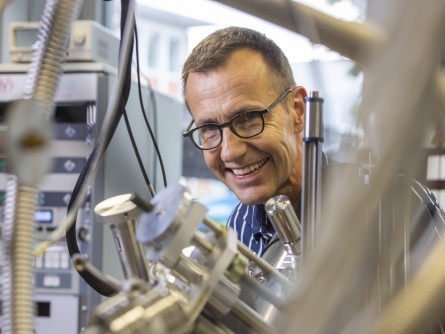
Professor Naeem Ramzan, Director of the Affective and Human Computing for SMART Environments Research Centre at UWS, led the three-person team behind the project, which also involved Gabriel Okolo and Dr. Stamos Katsigiannis. 2fe5bf00 49f7 4db1 8cff c451c6 4b433

He said: “There has long been a need for a quick and reliable tool that can detect Covid-19, and this has become even more true with the upswing of the Omicron variant. 

“Several countries are unable to carry out large numbers of Covid tests because of limited diagnosis tools, but this technique utilizes easily accessible technology to quickly detect the virus.

“Covid-19 symptoms are not visible in x-rays during the early stages of infection, so it is important to note that the technology cannot fully replace PCR tests.

“However, it can still play an important role in curtailing the viruses spread especially when PCR tests are not readily available.

“It could prove to be crucial, and potentially life-saving, when diagnosing severe cases of the virus, helping determine what treatment may be required.” 

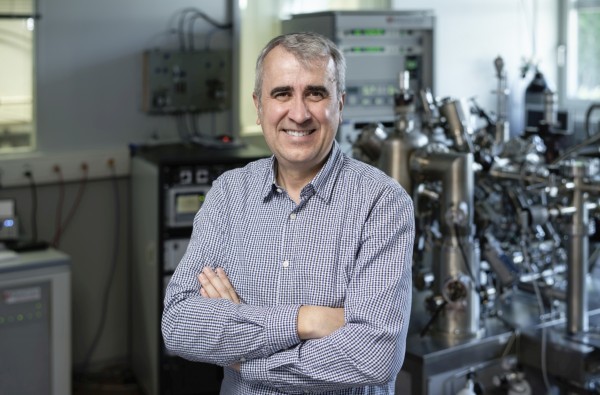
Professor Milan Radosavljevic, Vice-Principal of Research, Innovation, and Engagement at UWS, added: “This is potentially game-changing research. It’s another example of the purposeful, impactful work that has gone on at UWS throughout the pandemic, making a genuine difference in the fight against Covid-19.

“I am incredibly proud of the drive and innovation demonstrated by our internationally renowned academics, as they strive to find solutions to urgent global problems.”

The team now plans to expand the study, incorporating a greater database of x-ray images acquired by different models of x-ray machines, to evaluate the suitability of the approach in a clinical setting.

To read the research in full, visit: https://www.mdpi.com/1424-8220/21/17/5702

New AI model helps discover causes of motor neuron disease

UK scientists have developed a new machine learning model for the discovery of genetic risk factors for diseases such as Motor Neuron Disease (MND). GettyImages 1177118336 10d7b

Designed by researchers from the University of Sheffield in Sheffield, South Yorkshire, England, and the Stanford University School of Medicine in the US, the machine learning tool, named RefMap, has already been utilized by the team to discover 690 risk genes for motor neuron disease, many of which are discoveries.

One of the genes highlighted as a new MND gene, called KANK1, has been shown by the team to produce neurotoxicity in human neurons very similar to that observed in the brains of patients. Although at an early stage, this is potentially a new target for the design of new drugs.

Dr. Johnathan Cooper-Knock, from the University of Sheffield’s Neuroscience Institute, said: “This new tool will help us to understand and profile the genetic basis of MND. Using this model we have already seen a dramatic increase in the number of risk genes for MND, from approximately 15 to 690.

“Each new risk gene discovered is a potential target for the development of new treatments for MND and could also pave the way for genetic testing for families to work out their risk of disease.”

The 690 new genes identified by RefMap lead to a five-fold increase in discovered heritability, a measure that describes how much of the disease is due to a variation in genetic factors.

“RefMap identifies risk genes by integrating genetic and epigenetic data. It is a generic tool and we are applying it to more diseases in the lab,” Sai Zhang, Ph.D., instructor of genetics at the Stanford University School of Medicine said.

Michael Snyder, Ph.D., professor and chair of the department of genetics at the  Stanford School of Medicine and also the corresponding author of this work added: “By doing machine learning for genome analysis, we are discovering more hidden genes for human complex diseases such as MND, which will eventually power personalized treatment and intervention.”

South Korean prof develops Terrain-Aware AI for predicting battle outcomes in StarCraft 2

The proposed model leverages deep-learning techniques to consider many complex in-game factors simultaneously and make accurate predictions low res infographics jpg 0974c

As the need for more sophisticated artificial intelligence (AIs) grows, the challenges that they must face along the way have to evolve accordingly. Real-time strategy (RTS) video games, unlike turn-based board games such as chess, can serve as a vast playground for pushing the limits of AI. In particular, StarCraft II (SC2), one of the world’s most popular and skill-demanding RTS games, has already been the object of a few groundbreaking AI-related studies.

In SC2 matches, each player has to build up and command an army of varied units to defeat their opponent using wit and grit. While AI-based systems can excel at many aspects of the game, improving their decision-making regarding when their units should be sent to or relocated during a battle is remarkably difficult. This is because armies can be composed of virtually endless combinations of different units that synergize depending on various factors. In addition, the characteristics of the battlefield (‘terrain’) where the combat takes place can have a decisive impact on the outcome. So far, no study has focused on both of these aspects simultaneously for making AI-based combat outcome predictions—an essential skill for any SC2 player.

In a recent study, a team of scientists from the Gwangju Institute of Science and Technology (GIST) in Korea tackled this issue using a deep learning-based approach. By building and training a deep neural network (DNN) model, the researchers developed a system that could predict the outcome of an SC2 battle by simultaneously considering the detailed composition of the opposing armies and the type of terrain they would fight at. Their paper was made available online on July 24, 2021, and was published in Volume 185 of Expert Systems With Applications on December 15, 2021.

The proposed DNN model leveraged a technique called ‘parameter sharing,’ which allowed it to effectively and precisely analyze the circumstances of the battlefield in a very short time. “Our AI was capable of taking numerous complex factors into consideration to predict the overall combat result. When implemented, such a model would help an AI player make proper decisions with regards to its offensive and defensive strategies,” highlights Professor Chang Wook Ahn, who led the study.

Perfecting the way an AI makes decisions in a complex video game like SC2 will eventually lead to AI-based systems that can assess and correctly tackle difficult situations in the real world. As Prof. Ahn explains: “We believe that the AIs used in gaming and in industry are not that different and that more AI applications will soon become tangible in our daily life. Thus, our continued study in this topic could become one of the cornerstones of the global endeavor to develop AIs that can perceive situations and behave logically.”

Studies on video game AI systems will likely become increasingly valuable as the gap between games and real-world environments narrows, so keep an eye out for further advances in this field!

German Research Foundation funds project at the University of Göttingen to study causality

How people acquire and use knowledge about causal relationships is the focus of a new project at the Georg Elias Müller Institute of Psychology at the University of Göttingen. The Reinhart Koselleck project on "Mechanisms, Capacities, and Dependencies: A New Theory of Causal Reasoning" has been funded by the German Research Foundation (DFG). The total funding awarded is 1.25 million euros, spread over five years.

Professor Michael Waldmann, head of Cognitive and Decision Sciences at the University of Göttingen and leader of the project, has been studying causal reasoning for many years. "Causal reasoning plays a central role in thinking, for example in predictions, diagnoses, explanations, or planning actions," says the psychologist. "An understanding of biological, medical and physical relationships or the invention of devices such as televisions or mobile phones would be unthinkable without causal knowledge."

Waldmann was one of the first in cognitive psychology to address the question of whether complex statistical models (especially causal Bayes nets) provide adequate theories to explain every day thinking about causality. "However, causal knowledge cannot be expressed solely as a network of statistical relations. Rather, when understanding causal relationships, we also use knowledge about the underlying mechanisms," explains Waldmann. "In philosophy, there has therefore long been a debate about whether understanding causality can be reduced to purely statistical knowledge or knowledge about the underlying mechanisms.”

This project aims to develop a new precise computational theory that integrates the two explanatory approaches within a unified model. Experts from the fields of psychology, philosophy, computer modeling, and anthropology will work together in this interdisciplinary project. The theory will be empirically tested in a series of experiments. In addition to experimental studies with adults, research projects with children and non-human primates are also planned.

Reinhart Koselleck projects aim to provide financial support for outstanding researchers with a proven scientific track record to pursue exceptionally innovative, higher-risk projects.

Agnostiq, Mila partner to bridge quantum supercomputing, ML

The collaboration will enable both organizations to develop and apply advances at the intersection of their respective technologies to solve some of the world's most critical and challenging business and societal issues.

Agnostiq, Inc. has formed a strategic partnership with Montreal-based Mila to bridge the gap between the quantum supercomputing and machine learning communities.

"Quantum computing will have a tremendous impact on many fields and machine learning is no exception," says Oktay Goktas, CEO of Agnostiq. "A partnership with Mila brings us access to a world-class research community that comes with decades of experience in machine learning, which will, in turn, help us design better tools for emergent quantum machine learning use cases."

The new partnership gives Mila access to Agnostiq's quantum researchers, who are working on classes of machine learning problems that are specific to quantum computing, and Agnostiq access to Mila's AI/ML researchers and partner network. Partnering with Mila will help Agnostiq remain at the forefront and be among the first to discover compelling new use cases for quantum machine learning.

"Agnostiq offers an exciting opportunity to explore ML challenges specific to quantum computing, as our strategic alliance with this promising startup will allow us to combine our expertise," says Stéphane Létourneau, Executive Vice President of Mila. "Mila's research community works daily toward improving the democratization of machine learning, developing new algorithms, and advancing deep learning capabilities. We are thrilled to work closely with Agnostiq to continue these important missions."

The partnership will also support Agnostiq's talent attraction and retention efforts, encouraging potential candidates to apply, as they will have the opportunity to collaborate with Mila's world-renowned researchers. Finally, the collaboration further validates Canada's position as a global leader in quantum supercomputing and machine learning research.