Innovative 'Hailstone Library' revolutionizes storm forecasting with realistic data

In today's world, technology plays a crucial role in shaping the future of weather forecasting. Researchers at the University of Queensland have introduced a groundbreaking initiative to redefine our understanding of extreme weather events. The initiative, known as the 'Hailstone Library', contains actual hailstones from intense storms and aims to improve the accuracy and precision of predicting hailstorms and their impacts.

Dr. Joshua Soderholm, an esteemed Honorary Senior Research Fellow at UQ's School of the Environment, and lead researcher PhD candidate Yuzhu Lin from Penn State University, have spearheaded this transformative endeavor. Their research sheds light on the profound impact of using real hailstones in storm simulations, revealing complexities beneath the surface of these meteorological phenomena.

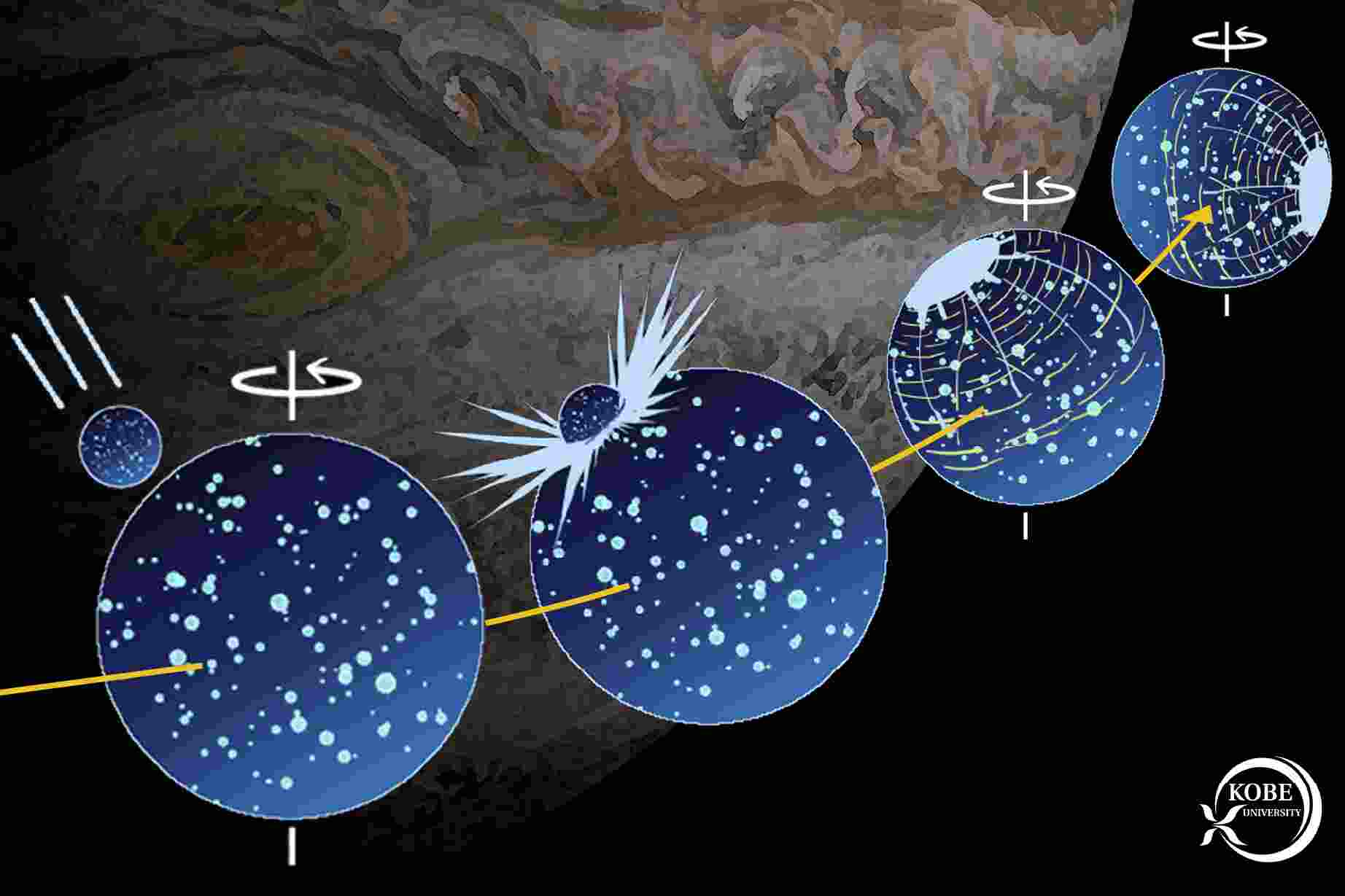
Traditionally, scientific modeling of hailstorms has been based on the assumption of spherical hailstones, overlooking the diverse and intricate shapes that these icy projectiles can exhibit. Dr. Soderholm explains that hail can come in various shapes, from oblong to a flat disk, or with spikes, highlighting the uniqueness of each hailstone.

Ms. Lin emphasizes the significance of their findings, stating that modeling natural hail shapes showed different pathways through the storm, other growth, and landing in different places, affecting the speed and impact on the ground. This approach, previously unexplored in meteorological research, marks a pivotal moment in enhancing storm forecasting capabilities.

Central to this research is the establishment of a 'hailstone library', which contains data drawn from 217 meticulously scanned hail samples. Dr. Soderholm emphasizes the importance of this repository in refining hailstorm simulations, explaining that their study utilized data from 217 hail samples to gain a clear understanding of hailstone shape and structure. This data is now part of a global library.

The implications of this research extend far beyond academia, with potential benefits for industries and communities vulnerable to severe weather events. Dr. Soderholm explains that more accurate forecasts could help the public stay safe during hailstorms and mitigate damages. Additionally, industries such as insurance, agriculture, and solar farming, which are sensitive to hail, could significantly benefit from this research.

The researchers' efforts underscore a message of hope and progress. The 'Hailstone Library' stands as a testament to the power of innovation and collaboration in unraveling the secrets of nature's forces, paving the way for a future where uncertainty is dissipated by knowledge and understanding.

A recent discovery at Georgia State sheds light on the behavior of electrons

In a world where scientific breakthroughs often promise revolutionary changes, skepticism plays a crucial role in maintaining a critical perspective. The recent announcement by a team of researchers from Georgia State University, led by Professor Ramesh G. Mani and recent Ph.D. graduate U. Kushan Wijewardena, claiming to provide "insight into the behavior of electrons" through their study of fractional quantum Hall effects (FQHE), has raised eyebrows among some experts in the field.

According to the researchers, their study focuses on exploring the peculiarities of two-dimensional flatland and the unexpected phenomena exhibited by electrons under specific conditions. They claim that their experiments, conducted in meticulously controlled and extremely cold environments, led to the observation of new non-equilibrium states of the quantum systems, revealing entirely novel states of matter.

While the team's findings have been lauded by some as groundbreaking, others in the scientific community remain cautious. The quantum Hall effect, a well-established area of physics, has indeed played a pivotal role in our understanding of fundamental constants governing the universe. However, the ambitious claims made by the Georgia State researchers regarding the discovery of new states of matter through their experiments have prompted skepticism.

Critics point out that the study's reliance on high mobility semiconductor devices and ultra-cold temperatures raises questions about the practical implications of their findings. The complexity of the experimental setup and the highly specialized nature of the equipment used have also raised concerns about the reproducibility and generalizability of the results.

Moreover, some experts in the field of condensed matter physics have expressed reservations about the implications of the study for future technologies, such as quantum computing and materials science. While the researchers propose that their work could revolutionize data processing and energy efficiency, skeptics argue that the path from laboratory experiments to real-world applications is often fraught with challenges and uncertainties.

As the team at Georgia State University continues to push the boundaries of their research, the scientific community eagerly awaits further validation and replication of their results. Only through robust peer review and independent verification can the claims made in the study be scrutinized and accepted into the broader scientific canon.

In conclusion, while the Georgia State discovery offers a glimpse into the enigmatic world of electrons and quantum systems, it is important to approach such claims with a healthy dose of skepticism. As the researchers embark on further exploration, the scientific community must maintain a critical eye and an open mind to ensure that the pursuit of knowledge remains grounded in empirical evidence and rigorous inquiry.

Image of Abell 2218, a dense galactic cluster located approximately 2 billion light years from Earth. Courtesy of NASA/ESA/Johan Richard.

UW researchers use a new machine-learning tool to analyze millions of galaxies to resolve a long-standing debate among astrophysicists

The universe is a captivating subject that continues to capture the imagination of people worldwide. A recent study conducted by a team of experts from the University of Washington sheds new light on the influence of neighboring galaxies on the size of galaxies. Using a new machine-learning tool, the researchers analyzed millions of galaxies and found that the presence of neighbors affects the size of galaxies. This discovery has significant implications for understanding the evolution of galaxies over billions of years.

For a long time, astrophysicists have debated the relationship between the size of galaxies and their environment. The breakthrough came when the team used a survey of millions of galaxies conducted using the Subaru Telescope in Hawaii. With the help of a new machine learning algorithm, called GaMPEN, the researchers measured the sizes of individual galaxies with unprecedented accuracy.

Their findings revealed that galaxies in densely populated areas of the universe, with more neighboring galaxies, were up to 25% larger than isolated galaxies with similar shapes and masses. The researchers suggested that galaxies with more neighbors may be larger when they first form, or they may be more likely to interact with close neighbors.

The machine-learning tool, GaMPEN, marks a significant advancement in the field of astronomy, as it can be adapted to analyze other large surveys, helping to resolve long-standing debates among astrophysicists.

This research challenges current theories of galaxy formation and evolution, leading researchers to modify existing theories in response to these findings. It highlights the unending quest for knowledge unhampered by preconceived notions and entrenched views.

The study heralds a new era in astronomy, paving the way for future research based on complex analyses of large datasets. With the upcoming launch of new telescopes like the Vera C. Rubin Observatory in Chile, which will collect vast amounts of data from the cosmos every night, tools like GaMPEN can utilize these datasets to answer pressing questions in astrophysics.

In conclusion, the study shows that astronomy is a field full of possibilities that continue to reveal more. Exploring the galaxies offers a sense of wonder and adventure that is unlike anything else, and the study's implications for our understanding of the universe are far-reaching. The prospects of new discoveries using cutting-edge technologies remind us of the limitless potential that lies ahead as we continue to push the frontiers of our knowledge through scientific research.

Quantum reports a 23% decrease in sales

Quantum Corporation has announced its financial results for the fiscal first quarter 2025 ended June 30, 2024. The company reported sales of $71.3 million for FYQ1 2025, representing a decrease of 23 percent compared to the same period in 2024 when sales were $92.5 million. This decline can be attributed to lower sales contribution from hyper-scale customers combined with lower tape media.

Despite the decrease in sales, Quantum's chairman and CEO, Jamie Lerner, expressed that the company's results for the quarter were largely in line with their expectations. Lerner noted that they are seeing improving traction for Myriad and ActiveScale products and that they are dedicated to executing their business initiatives towards achieving sustainable operating performance.

In terms of financial performance, Quantum reported a GAAP net loss of $20.8 million, or ($0.22) per share, for FYQ1 2025. This compares to a net loss of $9.1 million, or ($0.10) per share, in the prior fiscal year quarter. The adjusted non-GAAP net loss for the quarter was $8.4 million, or ($0.09) per share, compared to an adjusted net loss of $4.1 million, or ($0.04) per share, in the same period in 2024.

In terms of operating expenses, total GAAP operating expenses for FYQ1 2025 were $43.9 million, or 61.5% of revenue, compared to $40.8 million, or 44.1% of revenue, in the prior fiscal year quarter. Non-GAAP operating expenses for the quarter were $30.8 million, compared to $35.5 million in the fiscal first quarter of 2024.

Looking ahead, Quantum provided guidance for the fiscal second quarter of 2025. The company expects revenues of $73.0 million, plus or minus $2.0 million, non-GAAP adjusted basic net loss per share of ($0.06), plus or minus $0.02, and adjusted EBITDA of approximately breakeven. These projections assume an effective annual tax rate of negative 14% and an average basic share count of approximately 96 million in the fiscal second quarter of 2025.

Quantum has also taken steps to improve its liquidity and operational initiatives by reaching an agreement with current lenders to improve its balance sheet and capital structure. The company is focused on driving growth, executing divestments of non-core products and assets, and restructuring the organization to become a more efficient business.

Quantum delivers end-to-end data management solutions designed for the AI era. With over four decades of experience, their data platform allows customers to extract the maximum value from their unique, unstructured data. Quantum serves leading organizations in various industries, including life sciences, government, media and entertainment, research, and industrial technology.

While Quantum Corporation's financial results for FYQ1 2025 showed a decrease in sales, it is important to consider diverse perspectives. The company's CEO, Jamie Lerner, points out that the sales decline was primarily attributed to lower sales contribution from hyper-scale customers and lower tape media. It is essential to acknowledge that market conditions and external factors can influence sales performance.

Furthermore, Quantum remains focused on executing its business initiatives to achieve sustainable operating performance. By emphasizing the improving traction for Myriad and ActiveScale products, the company is positioning itself for growth and is committed to becoming a more operationally efficient business.

It is worth noting that Quantum Corporation has taken steps to improve its liquidity and balance sheet by reaching an agreement with its lenders. This move demonstrates the company's commitment to strengthening its financial position and focusing on driving profitable growth.

In conclusion, Quantum Corporation's financial results for FYQ1 2025 indicate a decrease in sales compared to the prior year. However, the company remains optimistic about its strategic initiatives and is actively working towards enhanced operational efficiency and growth in key product areas.

USC researchers develop an AI model that predicts the accuracy of protein-DNA binding

A groundbreaking development in the field of bioinformatics has emerged from the University of Southern California (USC). A team of researchers at USC has successfully developed an innovative artificial intelligence (AI) model that can predict the accuracy of protein-DNA binding with unprecedented precision. This achievement showcases the potential of AI to revolutionize the process of understanding protein-DNA interactions, offering promising prospects for discovering new drugs and medical treatments.

The newly engineered AI tool, Deep Predictor of Binding Specificity (DeepPBS), is a geometric deep learning model designed to forecast how various proteins might bind to DNA across different protein types. DeepPBS eliminates the need for time-consuming high-throughput sequencing or structural biology experiments by enabling scientists and researchers to input the data structure of a protein-DNA complex into an online computational tool.

Professor Remo Rohs, a pioneer in the field of Quantitative and Computational Biology at the USC Dornsife College of Letters, Arts and Sciences, emphasized the significance of DeepPBS in deciphering the intricacies of gene regulation. He pointed out that the tool's ability to predict protein-DNA binding specificity represents a fundamental shift, providing researchers with a versatile and efficient method that transcends the limitations of existing techniques.

This innovative AI model is built on geometric deep learning, a sophisticated machine-learning approach that leverages geometric structures to analyze data. By capturing the chemical properties and geometric contexts of protein-DNA interactions, DeepPBS generates spatial graphs that illustrate the complex relationship between proteins and DNA representations. Unlike conventional methods constrained to specific protein families, DeepPBS stands out by predicting binding specificity across diverse protein families, enabling researchers to explore novel avenues in protein design and manipulation.

The advent of DeepPBS marks a significant advancement in the realm of protein-structure prediction, complementing existing technologies like DeepMind’s AlphaFold that predict protein structures from sequences. USC's new AI tool serves as a complementary resource, especially beneficial for predicting binding specificity when experimental structures of proteins are unavailable. Its versatility extends the potential applications beyond drug development, encompassing advancements in cancer research, synthetic biology, and RNA studies.

The study, led by Professor Remo Rohs and a team of dedicated researchers from USC, alongside collaborators from other esteemed institutions, has been a pivotal step forward in the domain of bioinformatics. Supported primarily by the National Institutes of Health (NIH), this research has laid the groundwork for a transformative approach to predicting protein-DNA interactions, offering a glimpse into a future where AI accelerates scientific discoveries and medical breakthroughs.

In conclusion, USC's development of the DeepPBS AI model stands as a testament to the power of artificial intelligence in revolutionizing the field of bioinformatics. This achievement has the potential to reshape the landscape of protein-DNA binding specificity prediction, paving the way for innovative treatments, personalized therapies, and groundbreaking discoveries in the realms of medicine and biotechnology.