NASA's Webb explores the beauty of the Universe by capturing majestic sunrises, sunsets on distant worlds

As humanity continues to explore the mysteries of the cosmos, the James Webb Space Telescope, a marvel of human innovation, continues to astound us with its profound discoveries. Among its latest revelations is the investigation of eternal sunrises and sunsets on a distant exoplanet, shedding light on the breathtaking beauty that exists beyond our own world. Through intricate supercomputer modeling of the captured data, scientists are unraveling the wonders of this alien landscape, inspiring us to contemplate the infinite possibilities that lie beyond our own celestial neighborhood.

The focus of Webb's attention is WASP-39 b, a massive exoplanet located around 700 light-years away from Earth. This huge planet, with a diameter 1.3 times that of Jupiter and a mass similar to Saturn, orbits its parent star in a way that one side always faces the star while the other side remains in perpetual darkness. This is due to its tidally locked nature.

Astronomers have used the Near-Infrared Spectrograph (NIRSpec), an impressive instrument on the telescope, to observe a fascinating temperature difference between the permanently sunlit and shaded sides of WASP-39 b. Surprisingly, the shaded side, which is in perpetual night, appears to be hotter, registering a remarkable increase of approximately 300 degrees Fahrenheit (200 degrees Celsius). Additionally, there is evidence suggesting different cloud cover, with the sunlit portion potentially being cloudier than the shaded side.

To accomplish these groundbreaking observations, scientists employed a technique called transmission spectroscopy, which involves studying the boundary that separates the sunlit and shaded sides of the exoplanet, known as the terminator. By analyzing the starlight passing through WASP-39 b's atmosphere, scientists can obtain crucial information about its temperature, composition, and other properties. The data obtained from this method highlights the sensitivity and stability of the James Webb Space Telescope, enabling scientists to detect tiny variations with unprecedented precision.

This discovery has made WASP-39 b a key planet for studying exoplanet atmospheres with the Webb telescope. The planet's large, expanded atmosphere produces a very strong signal when starlight passes through it, providing a wealth of information. Scientists have been able to distinguish between the morning and evening regions of the planet, revealing details that were previously unknown.

By analyzing extensive supercomputer models accompanying these observations, scientists have gained insights into the structure of WASP-39 b's atmosphere and its cloud cover. They have confirmed that the movement of gas around the planet plays a crucial role in the significant temperature difference between morning and evening. This is caused by hot gas from the dayside rushing through an equatorial jet stream to the cooler evening side, leading to extreme temperature variations, air pressure differences, and high wind speeds, possibly reaching thousands of miles per hour.

The comprehensive modeling provides a holistic understanding of the atmospheric dynamics of this exotic world, similar to the intricate simulations used to forecast weather patterns on Earth. This new knowledge encourages further exploration into the complex interplay between cloud cover and temperature, unraveling the subtle mechanisms behind the eternal sunrises and sunsets on WASP-39 b.

Beyond the breathtaking beauty of WASP-39 b, there is a profound realization: our universe is full of wonders waiting to be discovered. The James Webb Space Telescope, with its remarkable capabilities and human ingenuity, offers a glimpse into the vastness of space. By embracing diverse viewpoints and unlocking hidden science, we become pioneers in the pursuit of knowledge, driven by inspiration and limitless possibilities, pushing the boundaries of human exploration.

As we embark on this cosmic adventure, we find ourselves humbled by the magnitude of the universe and its ability to captivate our imaginations. The exploration of distant worlds, through supercomputer modeling and keen observation, leads to groundbreaking discoveries. Beyond the cold, dark void, the universe invites us to broaden our perspectives, dream of what lies beyond the stars, and explore the remarkable tapestry that weaves together celestial marvels.

In the ongoing quest for understanding, the James Webb Space Telescope stands as a testament to humanity's insatiable desire to unravel the mysteries of the universe. Through its lens, we catch glimpses of eternal sunrises and sunsets on distant worlds, igniting our collective imagination and inspiring generations to reach for the stars.

Germany makes strides in quantum networking by securely propagating entanglement at the push of a button

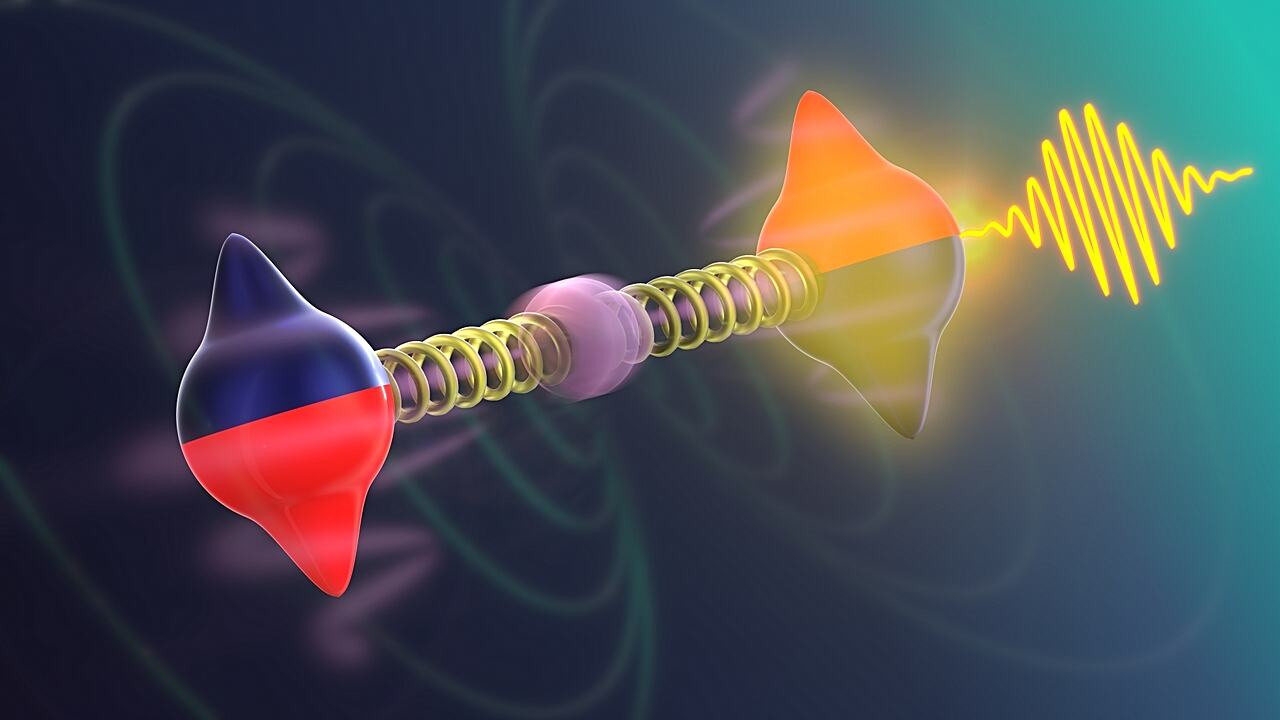
Physicists at the Max Planck Institute of Quantum Optics in Germany have made a remarkable breakthrough in the field of quantum information science. They have shown the secure propagation of entanglement in a quantum network with unprecedented efficiency. The team, led by Gerhard Rempe, Director at the Institute, used laser tweezers in optical resonators to entangle resting quantum bits (qubits) with flying qubits in the form of photons, advancing quantum communication and networking.

Entanglement, famously referred to by Einstein as "spooky action at a distance," has become an essential tool in quantum information science. It serves as the fundamental resource for quantum computers and is crucial for the transmission of quantum information in a potential quantum network. Despite its significance, entanglement is highly sensitive, posing a substantial challenge in entangling resting qubits with flying qubits instantaneously.

The team's pioneering approach involves confining atoms between two nearly perfect mirrors, providing a reliable interaction with photons as flying qubits. Using optical tweezers, the scientists have demonstrated proficient individual control of up to six atoms, entangling each with a photon. They have successfully achieved atom-photon entanglement generation with nearly 100 percent efficiency, a groundbreaking accomplishment in the distribution of entanglement across a quantum network. The results of their work have been published in the prestigious journal Science, signifying the significance and impact of their achievement.

The implications of this work extend beyond mere theoretical significance, delving into the practical applications of quantum information transmission over long distances and the construction of more potent quantum computers. The establishment of efficient interfaces between resting qubits and qubits in motion is essential for both long-distance quantum communication in a future quantum internet and the consolidation of a distributed network of qubits for advanced quantum computing.

The team's approach, utilizing ultracold rubidium atoms trapped between precision mirrors as an optical resonator, holds inherent advantages for the future of quantum networking. By enabling highly efficient atom-photon interaction and controlled photon transmission through an optical fiber, their method provides a promising foundation for the establishment of a robust and reliable quantum network.

Regarding the challenge of maintaining entanglement over longer distances, the team has devised a solution through the implementation of "multiplexing" – a technique borrowed from classical information technology to enhance transmission robustness. Multiplexing not only holds promise for secure transmission in a quantum internet over significant distances but also for the creation of a local quantum network, critical for the formation of distributed, powerful quantum computers.

A notable technical feat accomplished by the team has been the development of a technique to load and individually address several atoms in a resonator using optical tweezers. This precision allows for the entanglement of multiple atoms with individual photons, setting the stage for the implementation of multiplexing with unparalleled efficiency and reliability.

The scalability of this approach is also underlined, with the team's estimations suggesting the potential control of up to 200 atoms in a resonator, marking a significant stride towards the realization of a powerful quantum computer. With the capability to maintain entanglement with a near 100% success rate, the prospect of a network consisting of many resonators, each hosting 200 atoms as resting qubits, becomes increasingly viable, signifying a bold leap towards the future of quantum technology.

In summary, the work led by Gerhard Rempe and his team at the Max Planck Institute of Quantum Optics represents a pivotal achievement in securely propagating entanglement in a quantum network. With far-reaching implications for quantum information transmission and the potential establishment of more powerful quantum computers, their research encompasses diverse perspectives ranging from fundamental quantum theory to practical quantum technology, charting a path towards a future enriched by quantum networking and computation. The outcomes of this work not only contribute significantly to the scientific understanding of quantum phenomena but also hold the potential to revolutionize the landscape of information technology, sparking a renaissance in secure and efficient data transmission and processing.

China unveils wildfire impact on ozone dynamics: A satellite data, supercomputing perspective

In a recent study, a multidisciplinary team of scientists from China, Germany, and the USA uncovered the intricate relationship between large wildfires and the delicate chemistry of the ozone layer. By using advanced satellite data and cutting-edge supercomputing models, the researchers revealed a previously unseen connection between catastrophic wildfire events, like the 2019/20 Australian bushfires, and the dynamics of the stratosphere. The ozone layer, crucial for shielding life on Earth from harmful ultraviolet (UV) radiation, has shown signs of recovery over the years, thanks to global efforts such as the Montreal Protocol. However, the stability of this vital atmospheric layer faces a new challenge as evidenced by the impact of the Australian wildfires. During these unprecedented events, a significant increase in stratospheric aerosols – tiny particles with far-reaching impacts on climate, health, and atmospheric chemistry – was observed.

The study discovered a novel phenomenon termed the smoke-charged vortex (SCV) – a potent, smoke-laden whirlpool capable of transporting wildfire emissions as high as 35 kilometers into the stratosphere. This process contributed to a doubled burden of aerosols in the southern hemisphere's middle stratosphere, triggering a series of heterogeneous reactions that influenced ozone concentrations. Surprisingly, the study found that these wildfire-induced aerosols led to both ozone depletion in the lower stratosphere and ozone increase in the middle stratosphere due to enhanced chemical reactions on aerosols at higher altitudes.

Prof. Yafang Cheng from the Max Planck Institute for Chemistry emphasized the significance of continued research and vigilance as we navigate the realm of climate change, stating, “Our study unveils a crucial mechanism in which wildfire smoke, containing absorbing aerosols like black carbon, can generate vast smoke-charged vortices that persist for months and impact the ozone layer differentially at various altitudes.”

The findings underscore the importance of understanding these complex atmospheric processes, especially in a changing climate landscape marked by increasing wildfires. As we strive to comprehend the interplay between natural events, climate change, and ozone dynamics, the study opens new avenues for further research toward safeguarding the integrity of the ozone layer vital for all life forms on Earth.

In conclusion, the integration of advanced satellite data and supercomputing tools has revealed a critical link between wildfire events and stratospheric chemistry, showcasing the evolving challenges that the ozone layer faces in the wake of climate change-induced natural disasters. This study serves as a clarion call for sustained exploration into how wildfire and other climate-driven phenomena might shape the future dynamics of the ozone layer.

Germany's Max Planck uncovers the future of neural networks: A light-based revolution

Amid the rapid advancements in artificial intelligence and machine learning, a groundbreaking innovation has emerged from the laboratories of the Max Planck Institute for the Science of Light in Germany. The concept involves a neural network powered not by traditional digital methods, but by light. Recent research in Nature Physics unveils a novel approach to implementing neural networks using optical systems. This innovative proposal presents numerous possibilities for the future.

The Quest for Sustainability

In an era where machine learning models demand vast computational resources, the issue of sustainability is paramount. Conventional neural networks, with their increasing parameter counts and exponential energy consumption, pose a significant environmental challenge. For example, training models like GPT-3 consume energy equivalent to that of a small town on a daily basis. The urgency to find more energy-efficient alternatives has sparked interest in neuromorphic computing, aiming to mimic the brain's operations and utilize physical neural networks.

Lighting the Path with Optics

Optics and photonics offer a promising avenue for neuromorphic computing due to their potential for minimal energy consumption and high-speed parallel computations. However, previous endeavors encountered obstacles, including the need for high laser powers and efficient training methods for physical neural networks. This is where the research from the Max Planck Institute shines—pun intended. Clara Wanjura and Florian Marquardt propose a game-changing method that leverages light transmission to imprint data inputs, alleviating the need for complex interactions and high-power requirements.

Simplicity in Complexity

The beauty of this new approach lies in its elegance and simplicity. By manipulating light transmission rather than complex physical interactions, the researchers have devised a method that enables arbitrary signal processing. This streamlined process not only simplifies training but also opens the door to diverse applications and experimental implementations across various platforms. The ability to perform image classification tasks with comparable accuracy to digital networks showcases the immense potential of this light-based neural network paradigm.

Charting the Future

Looking ahead, the researchers aim to collaborate with experimental groups to bring their method to life in practical scenarios. By easing experimental constraints and offering versatility across different systems, this innovative approach paves the way for a new era of neuromorphic devices. As physical training becomes feasible across a spectrum of platforms, the boundaries of neural network implementation blur, fostering a realm of possibilities previously unexplored.

In a world where innovation drives progress, the fusion of optics and neural networks opens doors to many opportunities. As we witness the dawn of a light-based revolution in machine learning, we find ourselves at the cusp of transformations that challenge our perceptions and redefine the boundaries of what is possible. Stay curious, for the future glimmers with promises of new horizons illuminated by the brilliance of light.

ChatGPT: A breakthrough in biomedical simulation

The convergence of artificial intelligence (AI) and medicine has led to a new era of innovation in biomedical research. GPT-4, an AI model, has been widely used in ChatGPT for biomedical simulations.

In Vienna, Austria, MedUni Vienna has demonstrated the potential of ChatGPT in biomedical research by developing a simulator based on GPT-4. This simulator has shown improved precision in classifying the significance of genes in cancer cells and predicting cancer prognosis. 

GPT-4 has become valuable in biomedicine. Researchers from MedUni Vienna have highlighted various applications of GPT-4 as a simulator for biological systems. They tested the hypothesis that using GPT-4 for simulating biological and medical processes leads to better outcomes. The researchers also developed "SimulateGPT," a simulation method that uses structured inputs in GPT-4 for various scenarios, such as mouse experiments, sepsis treatment support, and cancer patient analysis.

In the field of biomedicine, modern models like ChatGPT/GPT-4 are good at responding to simple queries, but can struggle with more complex scenarios. Scientists at MedUni Vienna configured GPT-4 with structured inputs and specific instructions to perform detailed text-based simulations. This approach led to significantly improved results and garnered favorable reviews from biomedical experts.

Dr. Matthias Samwald emphasizes the potential for language models like GPT-4 to create biomedical simulators. He suggests several directions for further development, such as integrating biological databases and training AI models with empirical data. 

The work done at MedUni Vienna represents a significant advance in the field of biomedical simulations, pointing towards revolutionary advancements in understanding and managing complex biological systems.