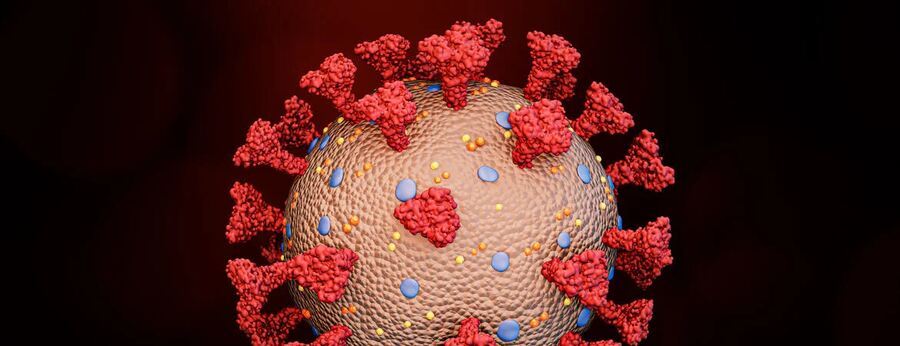
An image that portrays a dwarf star with plate number TOI-1136, created by an artist, demonstrates how exoplanets in its close orbit are affected by radiation and solar flares, which in turn impact their atmospheres. According to researchers at UCI, the magnetic variability around the star creates noise, making it more challenging to measure the masses of the exoplanets. The illustration was created by Rae Holcomb and Paul Robertson from UCI.

UC Irvine-led team sheds light on distant solar system, unlocking secrets of planet formation

Supercomputer models and diverse perspectives are driving astronomical discoveries forward.

In a celestial feat that has left the scientific community in awe, a team of researchers led by the University of California, Irvine has unraveled the mysteries of planet formation and evolution in a distant solar system. Through the combined power of supercomputer models and diverse perspectives, this groundbreaking study has provided unparalleled insights into the characteristics and behaviors of exoplanets.

At the heart of this discovery lies TOI-1136, a dwarf star located more than 270 light years away from our planet. Compiling meticulous measurements obtained from a range of observatories, the team has shed light on the properties of the six confirmed exoplanets orbiting TOI-1136, as well as a potential seventh planet yet to be fully confirmed.

The research highlights the remarkable precision achieved by the team through their use of the TESS-Keck Survey. By combining transit timing variation (TTV) data from the Transiting Exoplanet Survey Satellite with radial velocity analysis of the star, the team was able to determine planetary mass readings of unprecedented accuracy.

Lead author Corey Beard, a UCI Ph.D. candidate in physics, describes the extraordinary effort behind this achievement. "It took a lot of trial and error, but we were really happy with our results after developing one of the most complicated planetary system models in exoplanet literature to date," Beard said.

One of the key factors that drives the team's enthusiasm for further research is the presence of multiple exoplanets in the TOI-1136 system. Co-author Paul Robertson, UCI associate professor of physics and astronomy, highlights the advantage of studying systems with multiple planets: "We can control for the effects of planet evolution that depend on the host star, and that helps us focus on individual physical mechanisms that led to these planets having the properties that they do."

The significance of examining exoplanets within the same system cannot be overstated. Unlike comparing planets in separate solar systems, which introduces numerous variables based on the diverse nature of their host stars and locations, studying exoplanets within the same system allows scientists to explore the effects of similar histories and draw meaningful comparisons.

TOI-1136's youthfulness adds another layer of fascination to this system. At just 700 million years old, the star is considered young, with heightened activity such as magnetism, sunspots, and solar flares. These dynamic processes have a significant impact on the evolution of the planets in the system, shaping their atmospheres and influencing their potential habitability.

The confirmed exoplanets in the TOI-1136 system, classified as "sub-Neptunes" by experts, offer a new and intriguing perspective on planetary diversity. Rae Holcomb, a UCI Ph.D. candidate in physics and co-author of the study, remarks, "They're weird planets to us because we don't have anything exactly like them in our solar system. But the more we study other planet systems, it seems like they may be the most common type of planet in the galaxy."

An additional enigmatic aspect of this solar system is the potential presence of a seventh planet, yet to be conclusively identified. Scientists have detected evidence of resonant forces among the exoplanets, indicating a harmonious relationship in their orbits. This resonance can either destabilize or enhance the stability of the system, offering valuable insights into the dynamics of planetary interactions.

While this study has brought us closer to understanding the intricacies of planet formation and evolution, there is still much more to explore. The team expresses their eagerness to delve into the composition of planetary atmospheres, a field that could be revolutionized by the advanced spectroscopy capabilities of NASA's James Webb Space Telescope.

The collaborative effort among researchers from institutions worldwide, including Spain's Astrophysics Institute of the Canary Islands, Sweden's Chalmers University of Technology, and Japan's Ritsumeikan University, demonstrates the power of diverse perspectives in unraveling astronomical mysteries. By combining their expertise and resources, these scientists have made enormous strides toward unlocking the secrets of the universe.

As we venture into the vast depths of space, armed with supercomputer models and an inclusive mindset, we are reminded of the profound impact our collective knowledge and determination can have on uncovering the mysteries that surround us. With every discovery, we forge new pathways of understanding, inspiring generations to come in the eternal quest for knowledge and exploration.

Is computing in 2040 a ticking time bomb for safety, truth, ownership, and accountability?

As technology continues to advance rapidly, there are growing concerns about the potential risks and challenges that computing technologies could pose in the future. A groundbreaking study conducted by cyber security researchers at Lancaster University has offered some alarming insights into these risks and challenges in 2040.

Led by Dr. Charles Weir from the School of Computing and Communications, the team used a Delphi study technique to gather the opinions of 12 esteemed experts in the field. These experts, including chief technology officers, consultant futurists, and academic researchers, were interviewed to forecast how particular technologies may shape our world over the next 15 years.

One of the key concerns highlighted by the experts was the exponential growth of Artificial Intelligence (AI). While acknowledging its tremendous benefits, many experts voiced apprehensions about the potential corner-cutting in the development of safe AI. They highlighted that nation-states driven by competitive advantage might compromise safety measures, potentially leading to incidents involving multiple deaths.

Dr. Charles Weir, the lead researcher of the study, stated, "The possible magnitude of some of the risks forecasted by experts was staggering. While technological advances offer great benefits, we cannot turn a blind eye to the risks. By identifying and understanding potential risks in advance, we can take proactive steps to avoid major problems."

Another significant concern raised by the experts involved the ease with which misinformation can spread in a technologically advanced world. As technology advances, it becomes increasingly difficult for individuals to distinguish truth from fiction, posing significant challenges for democracies. Misleading content propagated by bad actors can undermine trust and destabilize societies.

"We are already witnessing the perilous impact of misinformation on social media networks," explained Dr. Weir. "The experts foresee that technological progress will only amplify these issues, making it much easier for deceptive information to permeate our lives by 2040."

The study also examined other technologies that are anticipated to have varying impacts by 2040. Quantum supercomputing, despite its potential, was forecasted to have a limited impact within the given timeframe. Similarly, most experts dismissed the notion of Blockchain as a significant source of change.

Looking ahead, the experts confidently projected several key developments related to computing:

  • By 2040, increased competition between nation-states and big tech companies will likely result in corners being cut in the development of safe AI.
  • Quantum computing is not expected to have a substantial impact by 2040, pointing towards a longer timeframe for its integration.
  • Ownership of public web assets will be identified and traded through digital tokens by 2040, potentially posing challenges related to accountability and cybersecurity.
  • Distinguishing truth from fiction will become increasingly difficult as widely accessible AI technology can generate questionable and misleading content.
  • Due to the decentralized nature and complexity of systems, differentiating accidents from criminal incidents will become more challenging by 2040.

In light of these concerning projections, the experts offered potential solutions to mitigate the risks. They suggested that governments should introduce AI purchasing safety principles and enact new laws to regulate AI safety. Additionally, universities could play a vital role by offering courses that combine technical skills with legislation, ensuring professionals are equipped to navigate the complexities of supercomputing.

These thought-provoking forecasts will undoubtedly aid policymakers and technology professionals in making strategic decisions concerning the development and deployment of novel computing technologies. The findings, published in the scholarly journal IEEE Computer under the title "Interlinked Computing in 2040: Safety, Truth, Ownership, and Accountability," emphasize the urgent need for proactive measures to address potential risks associated with supercomputing soon.

As society eagerly embraces the promises of supercomputing, it is crucial to approach these advancements with caution and accountability. Only by fully understanding and preparing for the potential pitfalls can we ensure that the future we create with supercomputing truly benefits humanity.

Uncovering the secrets behind the silent flight of owls: a triumph of computational fluid dynamics

Owls have always fascinated us with their ability to fly silently. Their wings make no noise, allowing them to hunt their prey undetected. Yet, we've never fully understood how they manage to fly without making a sound. That is, until now, thanks to the groundbreaking research conducted by a team of scientists at Chiba University.

Using computational fluid dynamic simulations, the researchers shed light on the enigmatic world of silent owl flight. Led by Professor Hao Liu from the Faculty of Engineering and the Center for Aerial Intelligent Vehicles, they embarked on a mission to understand the intricate details of this astounding phenomenon.

The team started by studying micro-fringes found on owl wings, which led them to question their impact on sound and aerodynamic performance. With advanced simulation techniques, the team meticulously analyzed the effects of these micro-fringes using the principles of computational fluid dynamics.

The results of their simulations were astonishing. The team discovered that the micro-fringes on owl wings effectively suppress noise while maintaining aerodynamic performance comparable to wings without such fringes. Through the interplay of two complementary mechanisms, these fringes enhance airflow and reduce fluctuations, resulting in a reduction of noise production.

Professor Liu explained that their findings demonstrate the intricate interactions between the micro-fringes and various wing features, validating their potential use in reducing noise in practical applications such as drones, wind turbines, propellers, and even flying cars. This research paves the way for the development of advanced biomimetic designs that could revolutionize the field of low-noise fluid machinery.

The implications of this study extend far beyond the realm of silent owl flight. It shows that by harnessing the secrets unveiled through these simulations, we can develop sustainable technology that prioritizes energy and resource-saving manufacturing.

Professor Liu's research aligns with the B3 strategy, a fusion of biomechanics, biomimetics, and bioinspiration. Through this approach, he aims to uncover the fundamental principles underlying the diversity, optimality, and robustness of biological movements. By learning from nature, we can create bio-inspired engineering solutions that drive significant advancements in various fields.

In conclusion, the silent wings of owls exemplify the exquisite craftsmanship of evolution. Through computational fluid dynamics, we can unlock even greater potential. Professor Liu and his team's work represents a triumph of scientific exploration and technological innovation. It reminds us that by studying the marvels of the natural world, we can unveil the secrets to overcoming our greatest challenges.

images/kidney-magnified-body_1_67321.jpg#joomlaImage://local-images/kidney-magnified-body_1_67321.jpg?width=&height=

Scientists use modeling to identify mutations that cause inherited kidney disease

Scientists from Wake Forest University School of Medicine and Charles University in Prague, Czech Republic, have made a groundbreaking discovery in the field of inherited kidney disease. They have successfully identified specific genetic mutations that cause this debilitating condition, using modeling. This discovery brings new hope to thousands of people affected by this disease and paves the way for more targeted treatments in the future.

Hereditary kidney disease is caused by genetic abnormalities, which lead to chronic kidney disease or the need for dialysis or kidney transplantation. Identifying the root cause of this condition is critical to finding effective treatments. The team, led by Dr. Anthony J. Bleyer, spent 20 years studying families with inherited kidney disease, collecting DNA samples from over 500 families. While the genetic cause had already been identified in most cases, some families remained unresolved.

By collaborating with Dr. Stanislav Kmoch from Charles University, the researchers discovered a mutation in the APOA4 gene, which encodes a protein involved in lipid transport, as the cause of kidney disease in these families. This finding was unexpected, as APOA4 is primarily expressed in the intestinal epithelium.

To understand how these mutations cause the disease, the team employed supercomputer modeling to analyze the abnormal protein deposits found in the middle of the kidney. The modeling, carried out by scientists led by Dr. Nelson Leung from the Mayo Clinic, revealed that the mutations make the protein unstable and prone to aggregation. Unlike the normal protein, which is properly filtered and eliminated, the mutant protein accumulates in the medulla of the kidney over time, leading to the progression of chronic kidney disease.

The discovery of this genetic cause of inherited kidney disease is significant. Dr. Bleyer and his team have not only identified a new genetic cause but also shed light on the intricate molecular processes driving its progression. This understanding opens up possibilities for developing targeted interventions to halt or slow down the disease's progression.

The researchers are optimistic about the potential of dietary interventions as a means to lower the production of the abnormal protein, potentially preventing the progression of kidney disease. However, further research and clinical trials are needed to solidify these findings and unlock new treatment options for patients.

This breakthrough provides hope for families grappling with the consequences of inherited kidney disease. Dr. Bleyer emphasized their commitment to helping these families and encouraged those with unidentified causes of inherited kidney disease to reach out to the research team.

Thanks to the power of modeling and a dedicated team of researchers, the path toward more effective treatments for inherited kidney disease has never been clearer. This breakthrough not only brings hope but also showcases the immense potential of advanced technologies in unraveling the mysteries of human health.

Machine learning models teach themselves, but have limits

Scientists at Duke University have made impressive strides in the field of machine learning through their development of a technique called yoked learning. By pairing two machine learning models—one that gathers data and another that analyzes it—researchers believe they can improve the effectiveness of machine learning models. This new technique could potentially make it easier for researchers to use machine learning algorithms in the search for new therapeutics or other materials.

The proposed method, dubbed YoDeL, leverages yoked learning to combine a deep neural network model with an active machine learning algorithm acting as the teacher that guides the data acquisition for the deep neural network 'student'. This technique is meant to overcome the limitations of active machine learning when it is applied to more complex deep neural networks. However, skeptical experts in the field warn that even YoDeL has its own limitations, and caution against overly optimistic projections.

While traditional machine learning models use a dataset to make predictions—a method that is often effective—these models come with limitations. They are bound by the datasets used to train them, which may often lack key information, introducing bias that can affect their accuracy. Although active machine learning is highly effective for machine learning models, applying this technique to more complex deep neural networks remains a challenge. These deep learning models require far more data and supercomputing power than is often available, limiting their accuracy and efficacy.

Furthermore, deep neural networks can learn molecular characteristics without human intervention, making them useful for applications in molecular machine learning. But even these models require large datasets to train on, and incorporating active learning into these models is difficult because it requires retraining of the system each time it gathers a new datapoint, which is practically infeasible.

Despite the mixed reviews on YoDeL, its speed, which takes only a few minutes to complete when deep active learning takes hours or even days, makes it worth watching. As Daniel Reker, assistant professor of biomedical engineering says, the YoDeL's ability to harness the strengths of classical machine learning models to enhance the efficacy of deep neural networks is an exciting tool in a field that is always evolving. At the same time, experts call for the thorough examination of YoDeL to accurately evaluate the technique's effectiveness in practical applications.