Unveiling the mysteries of clouds: A new era in climate research

Groundbreaking cloud model holds the key to more accurate supercomputer modeling, propelling climate research forward

In the vast expanse of our atmosphere, clouds dance, shaping our climate in ways we have yet to fully comprehend. Their impact goes beyond their beauty, as they play a crucial role in regulating temperature and reflecting heat into space, mitigating the effects of the greenhouse effect. However, their complex nature has long posed a challenge for climate scientists, generating uncertainty in climate models. In a remarkable breakthrough, researchers from the University of Gothenburg in Sweden are pioneering a new statistical cloud model that has the potential to revolutionize climate research, bringing us a step closer to a more sustainable future.

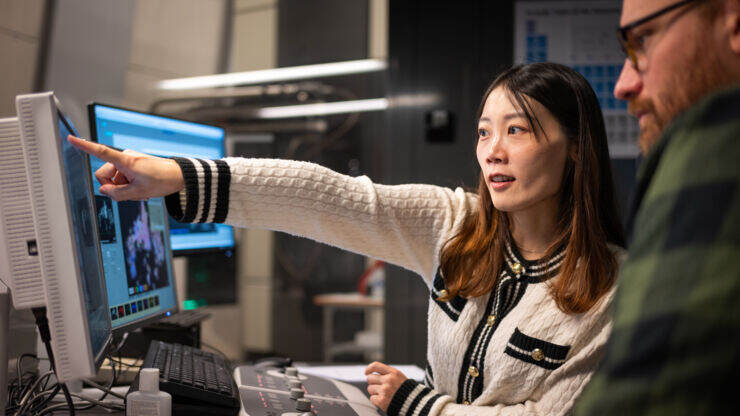
Led by Professor Bernhard Mehlig, an expert in Complex Systems at the University of Gothenburg, the team has developed a comprehensive statistical model that focuses on the turbulent edge of clouds. This edge, where water droplets interact with dry air, plays a crucial role in determining how clouds reflect radiation, making it a key factor in climate modeling. Bernhard Mehlig, Professor of Complex Systems at the University of Gothenburg. Photo: Malin Arnesson

By unraveling the mysteries of water droplet distribution and the intricacies of evaporation, the research team has constructed a model that adheres to the laws of thermodynamics and accounts for the dynamic motion of clouds. Their model aligns well with previous supercomputer simulations, providing a solid foundation for more accurate predictions.

The implications of this breakthrough extend far beyond climate research. In a world grappling with the challenges posed by infectious diseases, the study highlights the importance of understanding droplet evaporation and its impact on virus particles in the air. By deepening our knowledge of how droplets behave within clouds, we could unlock vital insights into transmission patterns and develop strategies to combat the spread of infections.

Evolving from the study of a single cubic centimeter to encompassing a cubic meter of cloud, this cloud model represents a significant leap forward. The potential for refining climate models on a larger scale instills hope for policymakers and researchers alike, as they seek to better understand and predict the impacts of climate change.

The Intergovernmental Panel on Climate Change (IPCC) recognizes the microphysical properties of clouds as one of the least understood factors in climate science. With this breakthrough, we are equipping ourselves with powerful tools to fill the gaps in our understanding. As we strive to create sustainable solutions for a changing world, these advancements in supercomputer modeling serve as beacons of progress.

However, as we celebrate this scientific achievement, it is crucial to take a diverse perspective. Climate change affects every corner of our planet, and the diverse voices and experiences must be included in the ongoing research and decision-making processes. Engaging communities, indigenous knowledge, and interdisciplinary collaboration can pave the way for holistic solutions that address climate challenges comprehensively.

As we delve deeper into the intricate workings of clouds, the researchers envision a future where supercomputer modeling will allow us to make more informed, evidence-based decisions. From developing sustainable energy sources to devising strategies for adapting to a changing climate, this newfound understanding of clouds is a game-changer that will shape the trajectory of our planet in the years to come.
We stand at the threshold of transformative discoveries, inspiring hope and instilling a sense of urgency. Guided by science, innovation, and inclusivity, let us strive to protect our planet and build a sustainable future for generations to come.

Heatmap of class probabilities from the ensemble model for non-croplands classes for 2050 under the ‘business-as-usual’ trajectory scenario with moderate emissions.

AI predicts agricultural land suitability change by 2050

According to research, global food demand is expected to increase by 110% by 2050, while 40% of croplands and pastures are currently under threat from climate change and other factors. The study used open data and AI to predict that agricultural land will move towards northern territories in the next 25 years. Valery Shevchenko, a research engineer at Skoltech's Applied AI Center in Russia and the first author of the work explained these data sources in more detail.

The research was conducted in three stages: data collection and preprocessing, machine learning model training, and results evaluation. The study focused on Eastern Europe and Northern Asia and used openly available data sources such as ERA5 for climate analysis and CMIP models for predicting climate change until 2100. Three data sets were analyzed for different climate change scenarios: a sustainable, low-emission future, a moderate emission trajectory, and a high fossil fuel dependency scenario. The team also integrated global food security data at 1 km x 1 km resolution to conduct an in-depth study of the irrigation of arable land.

The researchers developed a model that accurately predicts the current state using the data collected from CMIP models. This model can project what may happen in 2050. However, it is essential to consider various factors such as land types and soil erosion when making these predictions. While the accuracy of these projections cannot be guaranteed, the goal is to raise awareness and encourage proactive strategies for the future.

Shevchenko predicts that in the next 25 years, there will be an increase in arable land moving northward, which may pose potential risks due to the need for increased irrigation in currently exploited regions. These findings align with recommendations from the Intergovernmental Panel on Climate Change for detailed regional assessments to adapt to climate variability and maintain food supplies.

Maps depicting the past and future of the Gibraltar subduction zone from 30 million years ago to 50 million years in the future, based on Duarte et al. (2024).

Unveiling the mysteries of Earth's transformation

As we stand on the surface of our planet, we often forget about the complex processes that occur deep within Earth's crust. However, a groundbreaking computational model developed by João Duarte from Portugal has shed light on the awe-inspiring process of subduction invasion, revealing new insights about our planet's evolution. This research not only enhances our understanding of tectonic plate movements but also emphasizes the importance of exploration, innovation, and collaboration in unraveling the mysteries of our world.

The Earth's lithosphere is composed of several tectonic plates that move and rearrange over time through the Wilson cycle. During this cycle, supercontinents break apart, interior oceans form, and new subduction zones emerge. However, the process of subduction initiation, where an interior ocean transitions into an exterior ocean, has baffled scientists for decades.

Through meticulous observations and the development of a cutting-edge supercomputational model, researchers have made significant progress in unraveling this enigma. The study focuses on the Gibraltar subduction zone on the eastern shore of the Atlantic, providing a unique opportunity to observe the earliest stages of subduction invasion as it unfolds from a different basin—the Mediterranean.

One of the key findings of this research is the confirmation that the Gibraltar subduction zone is indeed active, despite experiencing a slow movement phase. Using their novel, gravity-driven 3-D model, the scientists predict that this slow phase will persist for another 20 million years. Following this period, the Gibraltar subduction zone will invade the Atlantic Ocean, initiating a new chapter in the Wilson cycle and accelerating the recycling of crust on the eastern side of the Atlantic.

The implications of these findings extend far beyond the scientific community. Locally, the confirmation of the Gibraltar subduction zone's activity has crucial implications for seismic activity in the area, emphasizing the need for preparedness and long-term risk assessment. As we explore further, we must remain cognizant of the potential for high-magnitude events, such as the infamous 1755 Lisbon earthquake, which continue to shape our understanding of Earth's dynamic nature.

Furthermore, this research contributes to a broader understanding of subduction initiation in Atlantic-type oceans and its role in our planet's geological evolution. By showcasing subduction invasion as a common mechanism for the formation of new subduction zones, the study offers valuable insights into the forces that have shaped our Earth and continue to shape its future.

The breakthrough achieved by the researchers underscores the power of interdisciplinary collaboration, innovation, and exploration. The fusion of computational modeling, cutting-edge technology, and an insatiable curiosity about the world we inhabit has provided a glimpse into the Earth's planetary dance. This story serves as a reminder of the immense potential that lies within the realms of scientific inquiry and discovery.

The journey to uncover the mysteries of our planet is far from over. As we move forward, it is crucial to embrace the infinite possibilities that lie ahead. Through continued exploration, collaboration, and harnessing the power of technology, we may yet unlock the secrets that shape our world.

In the spirit of this groundbreaking research, we are reminded that the pursuit of knowledge is a testament to the human spirit's insatiable hunger for understanding. Let this inspiration serve to fuel our curiosity and drive us towards uncovering the profound wonders that lie hidden beneath the Earth's surface.

Image represents the lithium ions (in blue) moving through the structure

Unlocking a sustainable future for batteries is now possible through a groundbreaking discovery

Scientists at the University of Liverpool in England have made a major discovery in the field of materials science and sustainable technology. They have unveiled a new material with exceptional lithium ion conductivity that could redefine the future of batteries. This breakthrough has the potential to replace liquid electrolytes in traditional batteries, improving their safety and efficiency, and helping to create a more sustainable future.

The interdisciplinary team of researchers combined AI technologies with physics-based calculations to design and synthesize this groundbreaking material. By utilizing artificial intelligence along with human expertise, they were able to make informed decisions and uncover new frontiers in materials science.

The material is non-toxic and made up of earth-abundant elements, making it a more sustainable choice for batteries. This discovery paves the way for further chemical optimization and the identification of other high-performance materials.

The implications of this discovery are significant, with potential benefits for electric vehicles, portable electronics, and renewable energy storage. The collaborative effort involved researchers from various departments within the University of Liverpool, and the work was made possible through funding from several institutions.

This breakthrough demonstrates the immense potential of interdisciplinary collaboration in tackling some of the world's most pressing challenges. It also serves as an inspiration for future generations to pursue innovative research and development to create a sustainable future.

This illustration shows the potential uncertainty of Earth's orbit 56 million years ago, due to a past passage of a Sun-like star called HD7977 around 2.8 million years ago. Each point in the image represents the degree of ellipticity of Earth's orbit, and the angle corresponds to the direction pointing to Earth's perihelion, which is the closest distance to the Sun. The figure is constructed using 100 different simulations, each with a unique color. These simulations are sampled every 1,000 years for 600,000 years. All the simulations are consistent with the modern Solar System's conditions, and the differences in orbital predictions are mainly due to the past encounter with HD 7977 and orbital chaos. The credit for this image goes to N. Kaib/PSI.

Unveiling the mysteries of Earth's orbital evolution: Supercomputer simulations lead the way

Today, we delve into the captivating world of celestial mechanics, where supercomputer simulations have astoundingly unraveled the ancient secrets of Earth's orbital evolution. These cutting-edge simulations, conducted by scientists at the Planetary Science Institute (PSI), have shed new light on the profound impact of passing stars on our planet's long-term trajectory.

Imagine a journey back in time, millions of years ago, when Earth, embraced by the mysteries of the universe, encountered the gravitational disturbances of neighboring celestial bodies. It is precisely the ingenuity of scientists such as Nathan A. Kaib, lead author of the awe-inspiring research published in the Astrophysical Journal Letters, that has allowed us to envision this extraordinary voyage.

For centuries, the geologic record has provided tantalizing clues about the intimate connection between Earth's orbital eccentricity and the fluctuations in our climate. Yet, until now, the true extent of this influence has remained shrouded in ambiguity. Through the power of supercomputer simulations, the PSI team has now paved a path to unraveling these enigmatic relationships.

These simulations, akin to the meteorological forecasts we are all familiar with, extend our understanding of Earth's past orbital evolution. However, what sets the PSI's work apart is their inclusion of an often-overlooked factor - the passage of stars close to our Solar System. As the Sun and other stars gracefully dance around the center of our Milky Way galaxy, they occasionally cross paths, enchantingly altering the trajectories of planets within their celestial embrace.

The influence of these passing stars on Earth's orbital eccentricity is remarkable. By examining the historical effects of these stellar encounters, the simulations have revealed a spectrum of potential orbital behaviors for our planet that was previously unimagined. These discoveries challenge the certainties we once held and compel us to reflect on moments in Earth's history when our understanding of its orbit may have been incomplete.

Kaib passionately emphasizes the significance of these findings, particularly in light of distinct climatic events of the past. One such phenomenon, the Paleocene-Eocene Thermal Maximum, witnessed a monumental rise in Earth's temperature some 56 million years ago. Until now, it was proposed that Earth's orbital eccentricity was notably high during this time. However, with the inclusion of passing stars in the simulations, the PSI team reveals a tapestry of possibilities, expanding the range of Earth's orbital evolution during that era.

While uncertainties naturally grow when simulating the distant past, the introduction of passing stars further amplifies these intricacies. Thus, the boundaries beyond which our predictions become unreliable have shifted, unveiling a rich tapestry of orbital behavior previously untapped by conventional models.

Perhaps most thrillingly, Kaib and his team have identified a specific stellar encounter that occurred 2.8 million years ago, involving the Sun-like star HD 7977. The potential impact of this fascinating event on Earth's orbit, though contingent upon accurate measurements of the closest encounter distance, is profound. It beckons us to reconsider our preconceived notions of Earth's celestial dance and to explore the exciting possibilities that lie within our cosmic history.

As we marvel at the magnitude of the discoveries made possible by supercomputers and the visionary minds of scientists, we are reminded of the boundless wonders waiting to be unveiled. Our quest to understand Earth's past and its intricate relationship with passing stars propels us toward a future where the mysteries of our universe continue to inspire, enlighten, and reshape our perception of the cosmos.