Francis Crick Institute-built Taxonium online tool for evolutionary analysis shows SARS-CoV-2 variants converging

A new supercomputer online platform is helping scientists use massive datasets to track the evolution of SARS-CoV-2 and other viruses.

An analysis of massive amounts of genetic data on the SARS-CoV-2 virus suggests that COVID-19 variants worldwide are repeatedly evolving the same mutations, according to a study published today in eLife and carried out by researchers at the Francis Crick Institute.

The analysis was made possible by a new web-based tool called Taxonium that allows the analysis of reams of data collected by scientists around the globe to monitor the genetic trajectory of the virus. Taxonium can be used by scientists to monitor the evolution of SARS-CoV-2 and other viruses or organisms.

Scientists have long tracked the evolution of viruses. But the urgent situation created by the COVID-19 pandemic launched a massive global collaboration that collected and sequenced the genomes of 13 million SARS-CoV-2 samples – far more genetic data than had ever been generated before. However, most existing tools designed to trace viral evolution cannot handle that much data.

"We needed a new tool that would allow us to explore the family tree represented by these millions of SARS-CoV-2 genome sequences," says the study's author Theo Sanderson, a Sir Henry Wellcome Fellow at the Francis Crick Institute in London, UK.

To help, Sanderson built Taxonium – a free, web-based interface that allows scientists to analyze the genetic relationships between tens of millions of virus samples. Scientists can access and analyze the data through a website or a desktop app. Taxonium can help them search for viruses with specific genetic mutations, or in a particular location, and zoom in on large viral family trees to find the information they need.

Sanderson teamed up with scientists at the University of California, Santa Cruz, to build a SARS-CoV-2-specific version of Taxonium called Cov2Tree, which organizes publicly available data on more than six million SARS-CoV-2 sequences into evolutionary trees. Using the tool, the team tracked the recent evolution of the SARS-CoV-2 virus and found that many separate regions of the tree showed the acquisition of similar changes in the Spike protein. The analysis suggests that the same mutations are occurring again and again in different individuals around the world and are persisting.

"Scientists worldwide have used Cov2Tree to track the SARS-CoV-2 virus's evolution," says Sanderson. "But this application is probably just the start. Taxonium could be used to study the evolutionary tree of countless other viruses and bacteria."

Sanderson notes that Taxonium is just one part of a growing ecosystem of freely available online tools to help scientists manage what he calls the "avalanche of sequencing data". Scientists can use many of the tools together, and some of them have distinct features from Taxonium that may be better suited for specific tasks.

"With sequencing getting cheaper and cheaper, genetic sequence datasets as large as those created for SARS-CoV-2 are likely to become more common in the future," concludes Sanderson. "New tools to manage those datasets, like Taxonium, will be crucial to managing this new scale of data."

University of Queensland paleontologist uses AI to investigate footprints made by dinosaurs

AI Dino SMALL 1cda8Artificial intelligence has revealed that prehistoric footprints thought to be made by a vicious dinosaur predator were in fact from a timid herbivore.

In an international collaboration, University of Queensland paleontologist Dr. Anthony Romilio used AI pattern recognition to re-analyze footprints from the Dinosaur Stampede National Monument, southwest of Winton in Central Queensland.

“Large dinosaur footprints were first discovered back in the 1970s at a track site called the Dinosaur Stampede National Monument, and for many years they were believed to be left by a predatory dinosaur, like Australovenator, with legs nearly two meters long,” said Dr. Romilio.

“The mysterious tracks were thought to be left during the mid-Cretaceous Period, around 93 million years ago.

“But working out what dino species made the footprints exactly – especially from tens of millions of years ago – can be a pretty difficult and confusing business.

“Particularly since these big tracks are surrounded by thousands of tiny dinosaur footprints, leading many to think that this predatory beast could have sparked a stampede of smaller dinosaurs.

“So, to crack the case, we decided to employ an AI program called Deep Convolutional Neural Networks.”

It was trained with 1,500 dinosaur footprints, all of which were theropod or ornithopod in origin – the groups of dinosaurs relevant to the Dinosaur Stampede National Monument prints.

The results were clear: the tracks had been made by a herbivorous ornithopod dinosaur.

Dr. Jens Lallensack, the lead author from Liverpool John Moores University in the UK, said that the computer assistance was vital, as the team was originally at an impasse.

“We were pretty stuck, so thank god for modern technology,” Dr. Lallensack said.

“In our research team of three, one person was pro-meat-eater, one person was undecided, and one was pro-plant-eater.

“So – to really check our science – we decided to go to five experts for clarification, plus use AI.

“The AI was the clear winner, outperforming all of the experts by a wide margin, with a margin of error of around 11 percent.

“When we used the AI on the large tracks from the Dinosaur Stampede National Monument, all but one of these tracks was confidently classified as left by an ornithopod dinosaur – our prehistoric ‘predator’.”

The team hopes to continue to add to the fossil dinosaur tracks database and conduct further AI investigations. 

A replica of the dinosaur trackway is on display at the Queensland Museum, Brisbane, and the track site can be visited near southwest of Winton, Queensland.

The latest UK Met Office supercomputer simulations show lightning patterns change with global warming

grid storm and lightning over the mountains bb384New research has shown climate change could alter lightning patterns across Europe.

The Newcastle University and Met Office-led study, published in the journal Environmental Research Letters, finds there could be a picture of changing weather patterns including:

  • More frequent storms with more energy, but locally less lightning mainly due to less cloud ice and frozen particles in storm clouds, with warming
  • More lightning at high altitudes – including over the Alps
  • Less lightning on lower terrain in central Europe and over the sea– subject to circulation changes, which are less certain

The researchers found these changes could lead to an increased risk of wildfires over the mountains and in Northern Europe but as the authors explain it’s not all bad news.

New risks from increases in lightning

Study lead author, Dr Abdullah Kahraman, Senior Researcher in Severe Weather and Climate Change, School of Engineering, Newcastle University and Visiting Scientist - Understanding Regional Climate Change (URCC), Met Office Hadley Centre, said: “While more frequent lightning strikes over mountains and in Northern Europe might trigger more wildfires in higher level forests, we are going to see relatively fewer lightning hazards over more populated areas of Central Europe.”

The researchers say these findings highlight the need to re-evaluate lightning risk to wildfires, properties, and human life across Europe.

Study co-author, Professor Hayley Fowler, Professor of Climate Change Impacts, Newcastle University School of Engineering, added: “This is just more bad news for critical national infrastructure in northern Europe, after the damning report ‘Readiness for storms ahead? Critical national infrastructure in an age of climate change’ by the Joint Committee on the National Security Strategy last week. Our paper has highlighted new risks from increases in lightning, previously unknown, which will require increased investment in climate adaptation measures. Further analysis is needed of the potential impact of these increases in lightning on energy and other critical infrastructure systems to enable policies and measures to be produced that are locally- and sector-relevant for adaptation planning.”  

This is from the latest Met Office climate simulations with the highest local details in meteorological and topographical features down to 2km, which, unlike previous studies, allows individual thunderstorms and their crucial processes resulting in lightning to be simulated across Europe. This is one possible realisation of an unmitigated future climate (RCP8.5 scenario), and uncertainties exist especially in terms of circulation changes. 

Professor Lizzie Kendon, Met Office Science Fellow and co-author on the paper, said that “These new very high-resolution climate projections, which have a resolution on a par with weather forecast models, are providing new insights into future changes in convective storms and their associated hazards - such as heavy downpours, lightning, hail and wind gusts. Changes in lightning in this study are in contrast with previous studies. This shows us that representing the fundamental physical processes within storms themselves is important and can lead to future changes that are even of the opposite sign.”

Japan's Subaru Telescope deploys 2400 new eyes on the sky to see cosmic rainbows

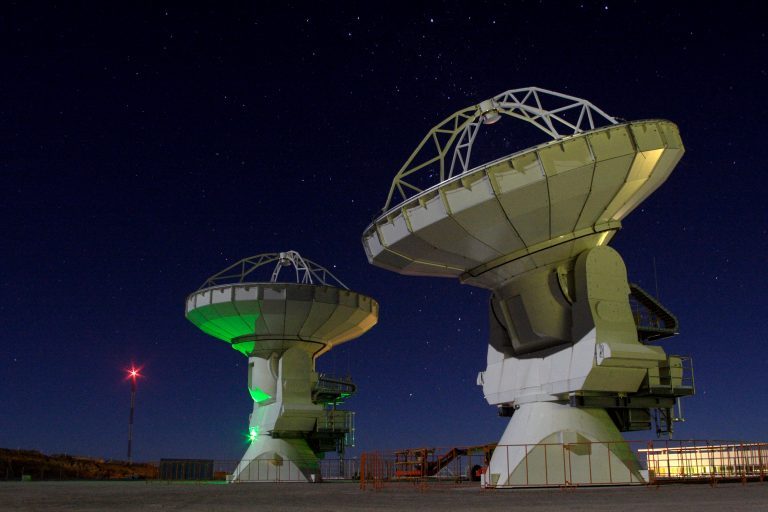
The new instrument for capturing cosmic rainbows mounted on the top of the Subaru Telescope. (Credit: Kavli IPMU)The Subaru Telescope successfully demonstrated engineering first light with a new instrument that will use about 2400 fiberoptic cables to capture the light from heavenly objects. Full operation is scheduled to start around 2024. The ability to observe thousands of objects simultaneously will provide unprecedented amounts of data to fuel supercomputing in astronomy in the coming decade.

In addition to cameras, astronomers also use instruments known as spectrographs to study celestial objects. A spectrograph breaks the light from an object into its component colors, in other words, it creates a precise rainbow. Studying the strengths of the different colors in the rainbow from an object can tell astronomers various details about the object such as its motion, temperature, and chemical composition.

This new instrument, called PFS (Prime Focus Spectrograph), breaks visible light rainbows into two components: the red side and the blue side. So it might be more correct to refer to the data sets as half-rainbows. Combined with the third kind of detector which can see the infrared light invisible to humans, that makes one-and-a-half rainbows for an object studied with all three types of detectors.

Together with a widefield camera (HSC: Hyper Supreme-Cam), PFS will help launch the Subaru Telescope 2.0 project which will reveal the nature of dark matter and dark energy, structure formation in the Universe, and the physical processes of galaxy formation and evolution.

Heinonen uses geochemical modeling tool to show magma floods erupt from deeper sources than earlier believed

The flood basalts in Dronning Maud Land, Antarctica, originate from exceptionally deep mantle source.  CREDIT Arto LuttinenLarge magma eruptions have produced great floods of basalt lava on the continents during Earth’s history. Conventionally, the largest flood basalt eruptions are thought to be possible only in regions where the continental tectonic plates are unusually thin, so that deep mantle material can rise close to the Earth’s surface. In such low-pressure environments, the melting of the hot mantle can generate very large amounts of magma.

A new study by researchers from the University of Helsinki and Aarhus University challenges this widely held view.

"The idea that flood basalt eruptions generally require melting of the mantle under low-pressure conditions is largely based on the trace element compositions of the erupted magmas", explains Dr. Jussi Heinonen, University of Helsinki, the lead author of the recent Journal of Petrology article describing this study.

He specifies further that the relative amounts of rare earth elements in many flood basalts point to magma formation in the presence of low-pressure mantle minerals.

Support from supercomputing

The new study was carried out as part of a research project focusing on the origin of flood basalts that erupted in southern Africa and Antarctica when these continents were attached as parts of Pangaea some 180 million years ago.

"We became curious about the occurrence of most flood basalts in regions where the African and Antarctic tectonic plates are thick rather than thin", describes Dr. Arto Luttinen, leader of the University of Helsinki team. "Moreover, we found that many flood basalts that have rare earth element compositions, suggesting high-pressure formation conditions, are located in thin regions of the tectonic plates."

The idea of an alternative hypothesis started forming after the team discovers a type of flood basalt in Mozambique that shows compositional evidence for exceptionally high eruption temperatures.

"These flood basalts made us consider the possibility that melting of exceptionally hot mantle could lead to the formation of high-pressure magmas with trace element features similar to those of low-pressure magmas", adds Ph.D. student Sanni Turunen from the University of Helsinki.

The researchers decided to test their hypothesis using the geochemical modeling tool REEBOX PRO, which enables realistic simulation of the behavior of minerals, melts and their trace element contents during mantle melting.

"We were thrilled to find out that the simulations supported our hypothesis by predicting total consumption of garnet, a diagnostic mineral of high-pressure conditions when mantle melting occurred at the high temperatures indicated by the flood basalts", says Dr. Eric Brown, Aarhus University, a co-author of the article and one of the developers of the REEBOX PRO tool.

Magmas formed at high pressure can thus chemically resemble low-pressure magmas when the mantle source is very hot. Furthermore, the results indicated the survival of garnet at relatively low pressures when a different kind of mantle source was selected for the modeling.

"Our results help us to understand the apparent controversy between the occurrences of southern African and Antarctic flood basalts and their trace element characteristics. Most importantly, we show that voluminous flood basalts can form in regions of thick tectonic plates and that the trace element compositions of flood basalts are unreliable messengers of magma generation depths unless the influences of mantle temperature and composition are accounted for", the authors conclude.