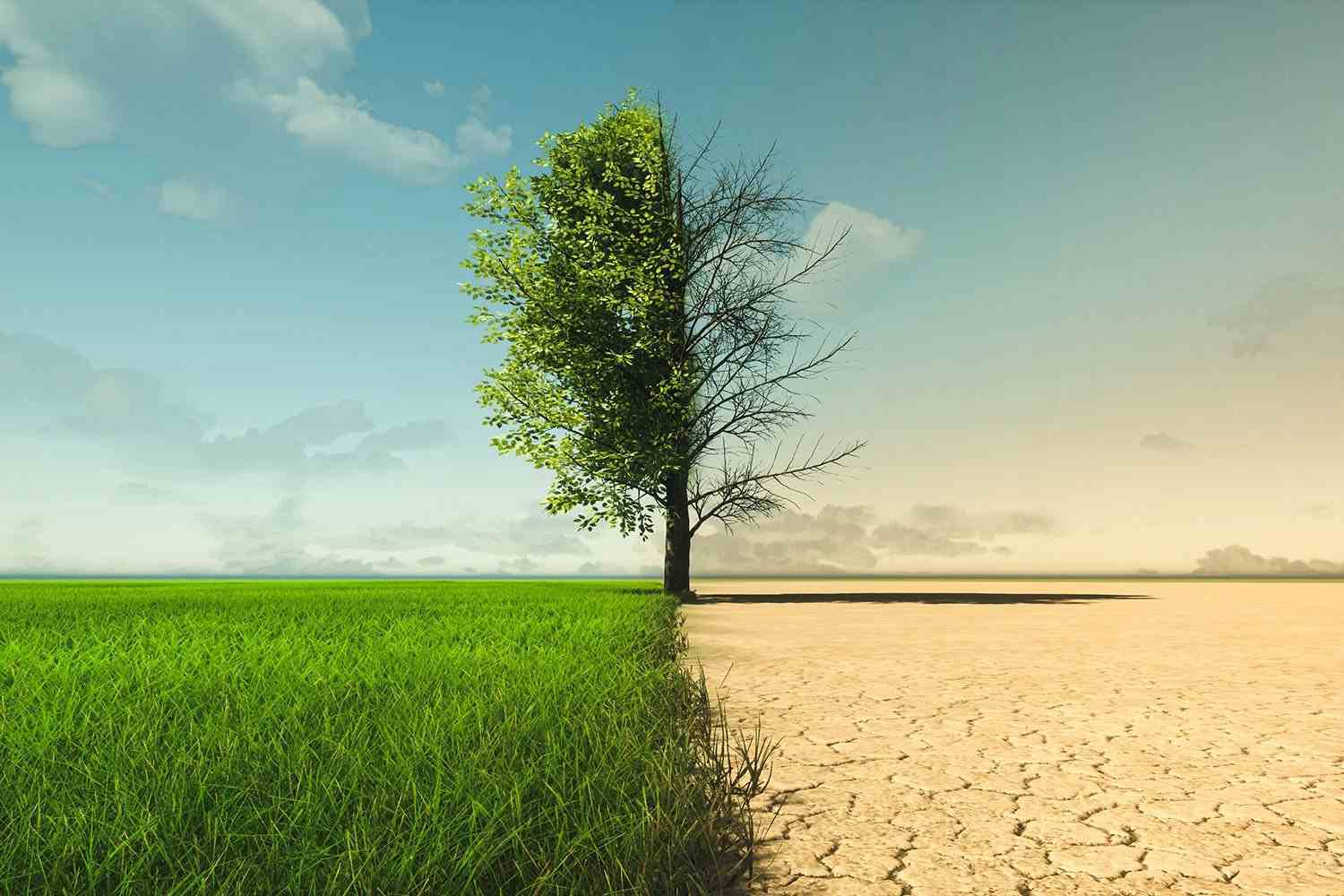
 Based on new analyses of satellite data, scientists have found that hydrologic conditions that increase flash drought risk occur more often than current models predict. The research also shows that incorporating how plants change soil structures can improve Earth system models. The research was supported by a NASA Terrestrial Ecology award through the New Investigator Program and by a NASA MAP program award.
As physical links between the ground and the sky, plants play an important role in shaping Earth’s weather and climate. Now, Stanford University researchers have revealed how a closer look at plants’ inner workings may be able to help improve model predictions of some devastating global disasters.
Flash droughts, which develop rapidly and deplete water availability in a matter of weeks, are associated with changes in evapotranspiration – the process of plants moving moisture from their roots to the air. Water undergoing evapotranspiration is sometimes considered “lost” to the atmosphere, so accurate calculations of this loss can be critical to understanding impacts on water resources and ecosystems.
By analyzing satellite data of both precipitation and moisture belowground, researchers calculated changes in evapotranspiration during droughts that occurred globally from 2003 to 2020. The research reveals more details about evapotranspiration’s role in these devastating events.
“When water is already limited, the evapotranspiration will continue to make the water loss happen even faster – and that will make the drought more severe in a much shorter time period,” said lead study author Meng Zhao, a postdoctoral researcher in Earth system science in the Stanford Doerr School of Sustainability. “We have a very big challenge in predicting flash droughts and the underestimation of water loss could be a major obstacle in that prediction.”
Droughts with fast onset and intensification can impact vulnerable communities and ruin food production, as was seen in the 2012 Central Great Plains flash drought that resulted in more than $30 billion in damages. For models to be improved, the researchers say they need to incorporate a hidden element in the process of evapotranspiration: how plants change the structure and pathways in the soil surrounding their roots.
“We found that the model error seems to be explained by the way plants change how particles are arranged in the soil,” said senior study author Alexandra Konings, an assistant professor of Earth system science. “As a result of these changes to the soil, water flows through the soil differently, changing where and how much water is available for plants to take up and transpire.”
Balancing act
Similar to the way people can live with various diets, exercise habits, and hours of sleep based on available resources, plants respond to droughts with wide variability. The tiny pores in leaves called stomata that release water can close, but not all plants close their stomata equally or at the same rates. During drought, drier atmospheres have a greater ability to pull water out of the land through evapotranspiration, causing it to increase – but if the stomata close sufficiently, it will reduce evapotranspiration relative to non-drought times.
“There’s such a diversity of ways that plants operate that it can be really hard to fully understand, predict, and quantify in the models,” Konings said. “And unfortunately, if this increase in evapotranspiration is happening more often than we realize, it’s intensifying the effect of the drought; there’s even less water in the soil than we realize because more is being lost to the atmosphere.”
Current Earth system models show increases in evapotranspiration, in which stomata are more open, occurring about 25% of the time during droughts. Yet according to the researchers’ new estimate, it occurs about 45% of the time. “This underestimation is particularly large in relatively drier climate and lower biomass regions,” the study authors write.
Researchers combined observations of water storage from the Gravity Recovery and Climate Experiment (GRACE) satellites with precipitation data from the Global Precipitation Climatology Project to calculate evapotranspiration measurements across the globe. Whether a given drought in a particular location leads to high evapotranspiration – and has the potential to develop into a flash drought – depends on a range of factors. The authors found that dry soils are a key control. They further found that current models don’t account for roots’ effect on how water travels through soils. This caused errors in the model simulations of soil dryness and, as a result of that, evapotranspiration.
“We knew that there were problems with the models, but I was really surprised at how off they were,” Konings said. “I hope that other folks in the community who are building different models use the lessons from our paper.”
A transferrable approach
The findings point to the need for improved model representations of soil moisture impacts on evapotranspiration, soil structure effects on water transfer, and plant traits to understand current and future water resources. While the researchers did not calculate how these new evapotranspiration measurements may affect future climate scenarios – which are expected to bring more frequent and severe droughts – they say the findings should be easily transferable to other models. And since it’s based on satellite data, the work doesn’t require on-the-ground resources.
“You can clearly see that the models underestimate the evapotranspiration increase during droughts for arid and semi-arid regions,” Zhao said. “That means our understanding of this phenomenon is especially poor in regions that are already suffering from environmental injustice issues – I think our work can help improve the knowledge of these regions that are already water-stressed.”


 Scientists researching forest carnivores such as martens, foxes, and coyotes spend hours clambering through rugged terrain, sometimes in deep snow, placing and baiting camera traps to learn about animals’ behavior in relation to their habitat.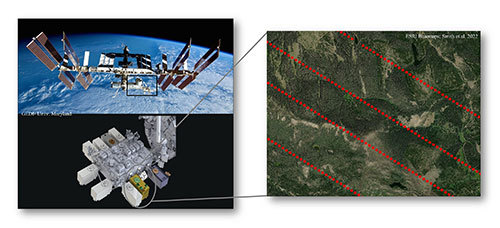

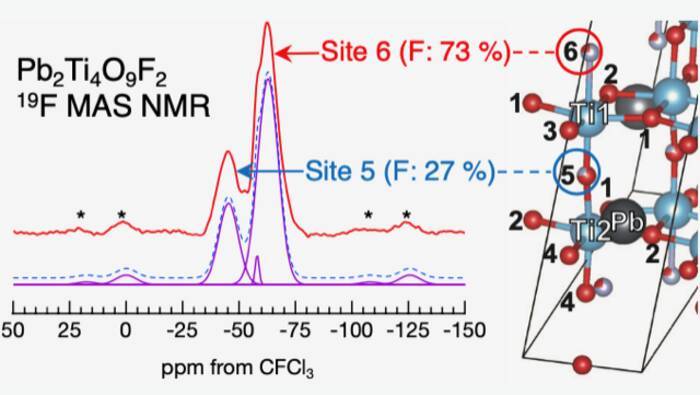 Solid-state materials are widely used in semiconductors, phosphors, and batteries, and have become an indispensable part of modern life. Substitution of elements in these complex composite materials is a popular technique to achieve desired material properties. Especially, various properties can be achieved by partially replacing oxygen in the oxide solid with another element such as fluorine (composite anion technology). However, to tune material properties by substitution, it is important to know the sites in the material where the element is substituted. If the substitution site is near the highly reactive site in the solid, it favors the reaction that develops a certain material property.