

Broad Institute genomic analysis uncovers several genetic markers associated with SARS-CoV-2 infection, COVID-19 severity risk factors

In March of 2020, thousands of scientists around the world united to answer a pressing and complex question: what genetic factors influence why some COVID-19 patients develop severely, a life-threatening disease requiring hospitalization, while others escape with mild symptoms or none at all?

A comprehensive summary of their findings, reveals 13 loci, or locations in the human genome, are strongly associated with infection or severe COVID-19. The researchers also identified causal factors such as smoking and high body mass index. These results come from one of the largest genome-wide association studies ever performed, and it includes nearly 50,000 COVID-19 patients and two million uninfected controls.

The findings could help provide targets for future therapies and illustrate the power of genetic studies in learning more about infectious diseases.

This global effort, called the COVID-19 Host Genomics Initiative, was founded in March 2020 by Andrea Ganna, group leader at the Institute for Molecular Medicine Finland (FIMM), University of Helsinki, and Mark Daly, director of FIMM and institute member at the Broad Institute of MIT and Harvard. The initiative has grown to be one of the most extensive collaborations in human genetics and currently includes more than 3,300 authors and 61 studies from 25 countries.

Ben Neale, co-director of the Program in Medical and Population Genetics at the Broad and co-senior author of the study, said that while vaccines confer protection against infection, there is still substantial room for improvement in COVID-19 treatment, which can be by genetic analysis. He added that improving treatment approaches could help shift the pandemic -- which has necessitated the large shutdowns in much of the world -- to an endemic disease that is more localized and present at low but consistent levels in the population, much like the flu.

"The better we get at treating COVID-19, the better equipped the medical community could be to manage the disease," he said. "If we had a mechanism of treating infection and getting someone out of the hospital, that would radically alter our public health response."

Harnessing diversity

To do their analysis, the consortium pooled clinical and genetic data from the nearly 50,000 patients in their study who tested positive for the virus, and 2 million controls across numerous biobanks, clinical studies, and direct-to-consumer genetic companies such as 23andMe. Because of the large amount of data pouring in from around the world, the scientists were able to produce statistically robust analyses far more quickly, and from a greater diversity of populations, than any one group could have on its own.

Of the 13 loci identified so far by the team, two had higher frequencies among patients of East Asian or South Asian ancestry than in those of European ancestry, underscoring the importance of diversity in genetic datasets.

"We've been much more successful than past efforts in sampling genetic diversity because we've made a concerted effort to reach out to populations around the world," said Daly. "I think we still have a long way to go, but we're making very good progress."

The team highlighted one of these two loci in particular, near the FOXP4 gene, which is linked to lung cancer. The FOXP4 variant associated with severe COVID-19 increases the gene's expression, suggesting that inhibiting the gene could be a potential therapeutic strategy. Other loci associated with severe COVID-19 included DPP9, a gene also involved in lung cancer and pulmonary fibrosis, and TYK2, which is implicated in some autoimmune diseases.

Mari Niemi, also at FIMM and lead analyst for the study, says the consortium prioritized communication as the scientists analyzed data, immediately releasing results on their website after they had been checked for accuracy. The team hopes their results might point the way to useful targets for repurposed drugs.

The researchers will continue to study more data as they come in and update their results. They will begin to study what differentiates "long-haulers", or patients whose COVID-19 symptoms persist for months, from others, and continue to identify additional loci associated with infection and severe disease.

"We'd like to aim to get a good handful of very concrete therapeutic hypotheses in the next year," Daly said. "Realistically, we will most likely be addressing COVID-19 as a serious health concern for a long time. Any therapeutic that emerges this year, for example from repurposing an existing drug based on clear genetic insights, would have a great impact."

A new space for genetics

Ganna emphasized that the scientists were able to find robust genetic signals because of their collaborative efforts, a cohesive spirit of data-sharing and transparency, and the urgency that comes with knowing the entire world faces the same threat at the same time. He added that geneticists, who regularly work with large datasets, have known the benefits of open collaboration for a long time. "This only illustrates just how much better science is -- how much faster it goes and how much more we discover -- when we work together," Ganna said.

Daly, for his part, is excited by how clear and interpretable their results have been for geneticists. He says the insights from this work have been unique and potentially paradigm-shifting for the field of human genetics, which has been dominated by studies of common chronic diseases, rare genetic diseases, and cancer.

"These discoveries have been really informative and that has made us realize that there's a lot of untapped potential in using genetics to understand and potentially develop therapeutics for infectious disease," Daly said. "I hope this sets an example for how we might bring population genetics approaches to a new set of problems that are especially important in developing parts of the world."
Colorado COVID-19 modeling team shows how its models helped reduce spread by informing state policies amidst the pandemic

Colorado researchers have published new findings in Emerging Infectious Diseases that take a first look at the use of SARS-CoV-2 mathematical modeling to inform early statewide policies enacted to reduce the spread of the Coronavirus pandemic in Colorado. Among other findings, the authors estimate that 97 percent of potential hospitalizations across the state in the early months of the pandemic were avoided as a result of social distancing and other transmission-reducing activities such as mask-wearing and social isolation of symptomatic individuals.

The modeling team was led by faculty and researchers in the Colorado School of Public Health and involved experts from the University of Colorado Anschutz Medical Campus, University of Colorado Denver, University of Colorado Boulder, and Colorado State University.

"One of the defining characteristics of the COVID-19 pandemic was the need for rapid response in the face of imperfect and incomplete information," said the authors. "Mathematical models of infectious disease transmission can be used in real-time to estimate parameters, such as the effective reproductive number (Re) and the efficacy of current and future intervention measures, and to provide time-sensitive data to policymakers."

The new paper describes the development of such a model, in close collaboration with the Colorado Department of Health and Environment and the Colorado Governor's office to gauge the impact of early policies to decrease social contacts and, later, the impact of gradual relaxation of Stay-at-Home orders. The authors note that preparing for hospital intensive care unit (ICU) loads or capacity limits was a critical decision-making issue.

The Colorado COVID-19 Modeling team developed a susceptible-exposed-infected-recovered (SEIR) model calibrated to Colorado COVID-19 case and hospitalization data to estimate changes in the contact rate and the Re after emergence of SARS-CoV-2 and the implementation of statewide COVID-19 control policies in Colorado. The modeling team supplemented model estimates with an analysis of mobility by using mobile device location data. Estimates were generated in near real-time, at multiple time points, with a rapidly evolving understanding of SARS-CoV-2. At each time point, the authors generated projections of the possible course of the outbreak under an array of intervention scenarios. Findings were regularly provided to key Colorado decision-makers.

"Real-time estimation of contact reduction enabled us to respond to urgent requests to actively inform rapidly changing public health policy amidst a pandemic. In early stages, the urgent need was to flatten the curve," note the authors. "Once infections began to decrease, there was interest in the degree of increased social contact that could be tolerated as the economy reopened without leading to overwhelmed hospitals."

"Although our analysis is specific to Colorado, our experience highlights the need for locally calibrated transmission models to inform public health preparedness and policymaking, along with ongoing analyses of the impact of policies to slow the spread of SARS-CoV-2," said Andrea Buchwald, Ph.D., lead author from the Colorado School of Public Health at CU Anschutz. "We present this material, not as a final estimate of the impact of social distancing policies, but to illustrate how models can be constructed and adapted in real-time to inform critical policy questions."

SMU prof wins NSF grant for supercomputer models to better aid evacuees after natural disasters

We can do better with a systems approach instead of catching up after each hurricane

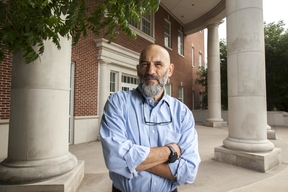
Halit Uster, an engineering professor at SMU, has been awarded a three-year National Science Foundation (NSF) grant of $315,580 to investigate integrated evacuation planning and disaster preparedness models that offer relief to evacuees in a more robust, predictive, timely, and cost-effective manner than was seen in past natural disasters. Halit Üster, an engineering professor at SMU, has been awarded a three-year NSF grant for models to better aid evacuees after natural disasters like Hurricanes Harvey, Katrina.

The optimization and simulation models that will be developed with a systems view will load in information such as where the disaster is expected to occur and its intensity, how many people are expected to flee those places, where they are likely to travel, and how long on average it will take them to get from one spot to another. Using that data, the model will determine the most cost-effective options to move people out of harm's way, make sure those people have enough supplies where they're going, and do all of this as quickly as possible.

This approach will help decision-makers put shelters and the larger supply locations that support those shelters in the right places and size, Uster said, before damaged infrastructure and transportation routes prevent options.

"The complexity of such coordination became obvious in the recent events of Hurricanes Harvey and Irma in 2017 as well as earlier ones, such as Katrina and Rita in 2005. These events created significant awareness of shortcomings in existing response plans," said Uster, who is a professor of Operations Research and Engineering Management at SMU's Lyle School of Engineering.

Too often, Uster said, emergency response plans don't recognize the interdependence that evacuation activities play with the supply-side, and vice versa.

Decision-makers in charge of getting people out of danger from a hurricane or flood are most focused on the removal of people from the danger zone, but they don't give as much thought to where those evacuees are heading, Uster said.

"On the other hand, you have people on the supply side, who are thinking, 'We have people who are moving to different locations. We have to get supplies for them.' But they don't know where those people are going to go," he added.

Planners are left with the choice of sending fewer supplies to various places where they think evacuees might go, or waiting to see what happens with a storm and then trying to send supplies where they are most needed. That approach has not been successful, Uster said.

"If you wait, the hurricane can come in, and the conditions change. So you can't send supplies in time to those places, and it quickly becomes a mess. We can do better proactive planning using a systems approach instead of trying to catch up when things go wrong."

Uster built an earlier model after Hurricanes Katrina and Rita in 2005. He was living in College Station at the time and saw first-hand how that disrupted life in Houston and its environs when so many evacuees fled there.

"When Rita happened, people had learned about the need to evacuate from their experience with Katrina just weeks before, and overnight, we had people everywhere. You could not find anything in any grocery store, and people were just spending nights at gas stations because they couldn't find a place to sleep," he said.

The NSF grant will enable Uster to add more variables and detail to his earlier model and develop solution methods to solve the complicated mathematical optimization models using real data managed by geographical information systems (GIS) using SMU's own supercomputing facilities. For example, he and SMU students will use more recently available data science tools to look through post-event surveys that report why people in harm's way evacuated or didn't, and where they evacuated to look for trends that will build a stronger preparedness model.

"There will always be some uncertainty with a natural disaster," he said. "But our goal is to minimize that and help guide evacuees to open shelters as well as provide them with supplies in a cost-effective, timely fashion."