

SUPERCOMPUTING NEWS SUPERCOMPUTING NEWS
    • MEDIA KIT
    • MOST READ
    • RSS FEED
    • ACADEMIA
    • AEROSPACE
    • APPLICATIONS
    • ASTRONOMY
    • AUTOMOTIVE
    • BIG DATA
    • BIOLOGY
    • CHEMISTRY
    • CLIENTS
    • CLOUD
    • DEFENSE
    • DEVELOPER TOOLS
    • EARTH SCIENCES
    • ECONOMICS
    • ENGINEERING
    • ENTERTAINMENT
    • GAMING
    • GOVERNMENT
    • HEALTH
    • OIL & GAS
    • INDUSTRY
    • INTERCONNECTS
    • MANUFACTURING
    • MIDDLEWARE
    • MOVIES
    • NETWORKS
    • PHYSICS
    • PROCESSORS
    • RETAIL
    • SCIENCE
    • STORAGE
    • SYSTEMS
    • VISUALIZATION
    • AcyMailing subscription form

    • ADD YOUR VIDEOS
    • MANAGE VIDEOS
    • CONVERSATION INBOX
    • SOCIAL ADVERTISER
    • SOCIAL NETWORK VIDEOS
    • SURVEYS
    • GROUPS
    • PAGES
    • MARKETPLACE LISTINGS
    • APPLICATIONS BROWSER
    • PRIVACY CONFIRM REQUEST
    • PRIVACY CREATE REQUEST
    • LEADERBOARD
    • POINTS LISTING
      • BADGES
    • TRADE SHOWS
Sign In
Tyler O'Neal, Staff Editor CHEMISTRY November 3, 2021, 10:00 am

Tel Aviv University prof identifies the proteins in the coronavirus that can damage blood vessels

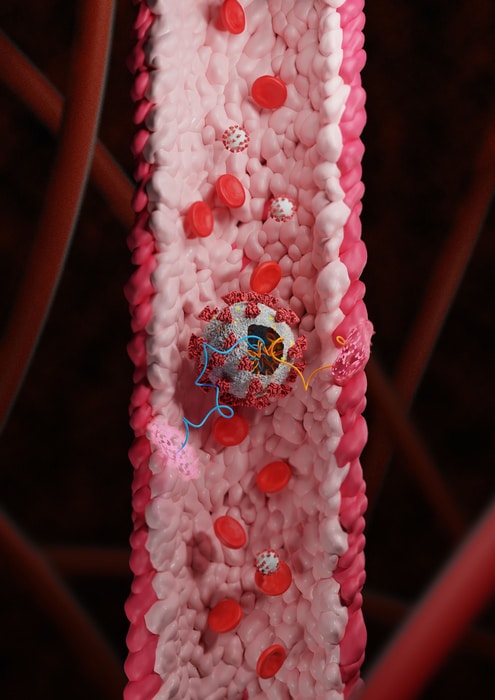
Nearly two years since becoming a global pandemic that has killed millions of people, the mystery of which proteins in the SARS-CoV-2 virus are responsible for severe vascular damage that could even lead to heart attack or stroke has not yet been solved. Now, for the first time, a team of experts led by Tel Aviv University, Israel has been able to identify 5 of the 29 proteins that make up the virus that is responsible for damaging blood vessels. The researchers hope that the identification of these proteins will help develop targeted drugs for COVID-19 that reduce vascular damage. Covid in blood vessel.
The study was led by Dr. Ben Maoz of the Department of Biomedical Engineering and Sagol School of Neuroscience, Prof. Uri Ashery of the Wise Faculty of Life Sciences and Sagol School of Neuroscience, and Prof. Roded Sharan of the Blavatnik School of Computer Science – all Tel Aviv University researchers. Also participating in the study were Dr. Rossana Rauti, Dr. Yael Bardoogo, and doctoral student Meishar Shahoah of Tel Aviv University, and Prof. Yaakov Nahmias of the Institute of Life Sciences at the Hebrew University. The results of the new study were published in the journal eLife.

“We see a very high incidence of vascular disease and blood clotting, for example, stroke and heart attack, among COVID patients,” says Dr. Ben Maoz. “We tend to think of COVID as primarily a respiratory disease, but the truth is that coronavirus patients are up to three times more likely to have a stroke or heart attack. All the evidence shows that the virus severely damages the blood vessels or the endothelial cells that line the blood vessels. However, to this day the virus has been treated as one entity. We wanted to find out which proteins in the virus are responsible for this type of damage.”

The novel coronavirus is a relatively simple virus – it comprises a total of 29 different proteins (compared to the tens of thousands of proteins produced by the human body). The Tel Aviv University researchers used the RNA of each of the COVID-19 proteins and examined the reaction that occurred when the various RNA sequences were inserted into human blood vessel cells in the lab; they were thereby able to identify five coronavirus proteins that damage the blood vessels.

“When the coronavirus enters the body, it begins to produce 29 proteins, a new virus is formed, that virus produces 29 new proteins, and so on,” explains Dr. Maoz. “In this process, our blood vessels turn from opaque tubes into kind of permeable nets or pieces of cloth, and in parallel, there is an increase in blood clotting. We thoroughly examined the effect of each of the 29 proteins expressed by the virus and were successful in identifying the five specific proteins that cause the greatest damage to endothelial cells and hence to vascular stability and function. In addition, we used a computational model developed by Prof. Sharan which allowed us to assess and identify which coronavirus proteins have the greatest effect on other tissues, without having seen them in action in the lab.”

According to Dr. Maoz, the identification of these proteins may have significant consequences in the fight against the virus. “Our research could help find targets for a drug that will be used to stop the virus’s activity, or at least minimize damage to blood vessels.”
Climate Change Could Affect Global Agriculture Within 10 Years

Tyler O'Neal, Staff Editor CHEMISTRY November 3, 2021, 9:03 am
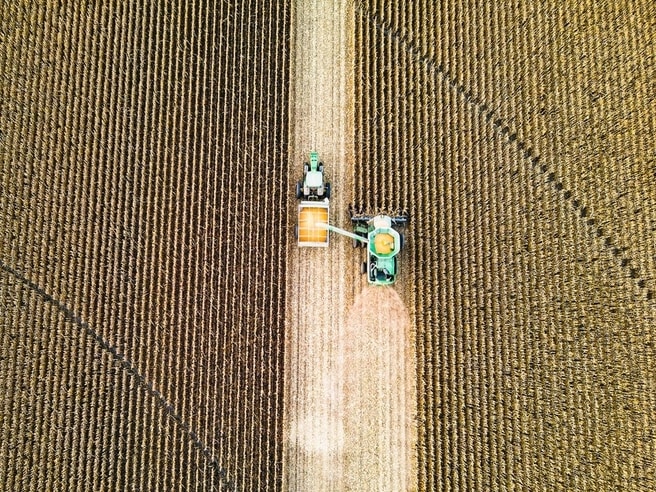
Average global crop yields for maize, or corn, may see a decrease of 24% by late century, with the declines becoming apparent by 2030, with high greenhouse g...
...

Read more https://www.supercomputingonline.com/categories-media/mediaitem/262-climate-change-could-affect-global-agriculture-within-10-years?category_id=60

NASA, PIK study finds climate change to stir up global agriculture within next decade

Tyler O'Neal, Staff Editor CHEMISTRY November 3, 2021, 6:00 am

New supercomputer simulations predict deep changes in growing conditions affecting the productivity of major crops already within the next 10 years if current global warming trends continue. Maize crop yields are projected to decline by almost a quarter by the end of the century, while wheat could potentially see global yield increases of about 17%. Current key breadbasket regions will see severe changes much quicker than previously expected, requiring farmers around the world to adapt to new climate realities now. 

“We see that new climate conditions push crop yields outside of their normal range in more and more regions. Human-made greenhouse gas emissions bring higher temperatures, shifts in rainfall patterns, and more carbon dioxide in the air. This affects crop growth, and we find that the emergence of the climate change signal – the time when extraordinary years become the norm ­­– will occur within the next decade or soon after in many key breadbasket regions globally,” explains lead author Jonas Jägermeyr, a crop modeler and climate scientist at NASA’s Goddard Institute for Space Studies (GISS), The Earth Institute at Columbia University in New York City, and the Potsdam Institute for Climate Impact Research (PIK) in Germany. “This means that farmers need to adapt much faster, for example by changing planting dates or use different crop varieties, to avoid severe losses, but also to realize gains in higher-latitude regions.” Maize will struggle with higher temperatures (Photo by Taylor Siebert on Unsplash)

Maize yields down, wheat yields up

By combining a set of new climate projections and various state-of-the-art crop models, the team of researchers created the largest ensemble of future yield projections as of today. They found significant changes already very soon, and across most important growing regions. Maize is grown in a wide range of latitudes, including sub-tropical and tropical countries where the higher temperature will be more harmful than in cooler high-latitude regions. North and Central America, West Africa, Central, and East Asia will potentially see maize yields decline by more than 20 percent in the coming years. Wheat, which grows best in temperate climates, may, in turn, see productivity increase in current growing areas under climate change, including areas in the Northern United States and Canada, and China. 

{media id=262,layout=solo}

Exacerbating existing inequalities

“One effect the data show clearly is that poorer countries are likely to experience the sharpest declines in yields of their main staple crops. This exacerbates already existing differences in food security and wealth,” says Christoph Müller, co-author and also a researcher at the Potsdam Institute. Importantly, wheat gains in the Global North do not make up for maize losses in the Global South. Poor countries and of course the affected smallholder farmers themselves often lack the means to procure food on the world market. The projected fundamental change in agricultural production patterns could hence in some regions become a risk for food security, while others profit.

Temperature is not the only factor relevant for future crop yields. Higher levels of carbon dioxide in the atmosphere have a positive effect on crop growth, especially for wheat. However, it could also reduce their nutritional value. Rising global temperatures also are linked with changes in rainfall patterns, and the frequency and duration of heatwaves and droughts, which are risks to crop health and productivity. “Even under optimistic climate change scenarios, where societies put in ambitious efforts to limit global temperature rise, global agriculture is facing a new climate reality,” Jägermeyr said.

  1. Tulane University study uses AI to detect colorectal cancer
  2. York scientists build AI model to understand protein-sugar structures better

Page 12 of 18

  • 7
  • 8
  • 9
  • 10
  • 11
  • 12
  • 13
  • 14
  • 15
  • 16
POPULAR RIGHT NOW
  • Meta’s next frontier may not be social media; it may be supercomputing
    Meta’s next frontier may not be social media; it may be supercomputing
  • The future of cancer research runs on supercomputers
    Jill Mesirov, PhD
    Jill Mesirov, PhD
  • Rebuilding a lost continent: Supercomputers reveal Antarctica before the ice
    Antarctic ice meets the rocky coastline. Researchers traced landscape features from the two-kilometre-high coastal escarpment of Dronning Maud Land to the subglacial Gamburtsev Mountains, buried beneath 1–3 km of ice  Credit Matt Palmer
    Antarctic ice meets the rocky coastline. Researchers traced landscape features from the two-kilometre-high coastal escarpment of Dronning Maud Land to the subglacial Gamburtsev Mountains, buried beneath 1–3 km of ice Credit Matt Palmer
  • Supercomputers uncover a new class of cosmic explosions hidden in plain sight
    Supercomputers uncover a new class of cosmic explosions hidden in plain sight
  • AI supercharges the hunt for stronger magnets: Iowa State researchers launch a new era of intelligent materials discovery
    AI supercharges the hunt for stronger magnets: Iowa State researchers launch a new era of intelligent materials discovery
  • IBM's Historic stock collapse raises questions for the future of enterprise supercomputing
    IBM's Historic stock collapse raises questions for the future of enterprise supercomputing
  • Could a novel dark matter theory simultaneously resolve multiple cosmic enigmas? Supercomputer simulations provide a compelling, albeit currently unverified, potential solution
    Could a novel dark matter theory simultaneously resolve multiple cosmic enigmas? Supercomputer simulations provide a compelling, albeit currently unverified, potential solution
  • Melting icebergs may be reshaping Earth’s greatest ocean current
    Melting icebergs may be reshaping Earth’s greatest ocean current
  • Supercomputers replace ‘bathtub’ flood maps with physics-based digital twins of Britain’s coastline
    Supercomputers replace ‘bathtub’ flood maps with physics-based digital twins of Britain’s coastline
  • Supercomputers push neural quantum simulation beyond previous limits
    Supercomputers push neural quantum simulation beyond previous limits
MOST READ THIS YEAR
  • Cosmic ambition at scale: UK’s supercomputer unlocks a 2.5 petabytes universe
    Cosmic ambition at scale: UK’s supercomputer unlocks a 2.5 petabytes universe
  • Hidden order, revealed at scale: Supercomputing, electron ptychography uncover the inner workings of relaxor ferroelectrics
    Hidden order, revealed at scale: Supercomputing, electron ptychography uncover the inner workings of relaxor ferroelectrics
  • Intel's Q1 results signal supercomputing surge driving Xeon momentum
    Intel's Q1 results signal supercomputing surge driving Xeon momentum
  • FRONTPAGE
  • LATEST
  • POPULAR
  • REGISTER
  • SOCIAL
  • VIDEO
  • SUBSCRIPTION
  • RSS
  • GUIDELINES
  • PRIVACY
  • TOS
  • ABOUT
  • +1 (816) 799-4488
  • editorial@supercomputingonline.com
© 2001 - 2026 SuperComputingOnline.com, LLC. All rights reserved. This material may not be published, broadcast, rewritten or redistributed without permission.
Sign In
  • FRONT PAGE
  • LATEST
    • MEDIA KIT
    • MOST READ
    • RSS FEED
    • ACADEMIA
    • AEROSPACE
    • APPLICATIONS
    • ASTRONOMY
    • AUTOMOTIVE
    • BIG DATA
    • BIOLOGY
    • CHEMISTRY
    • CLIENTS
    • CLOUD
    • DEFENSE
    • DEVELOPER TOOLS
    • EARTH SCIENCES
    • ECONOMICS
    • ENGINEERING
    • ENTERTAINMENT
    • HEALTH
    • INDUSTRY
    • INTERCONNECTS
    • GAMING
    • GOVERNMENT
    • MANUFACTURING
    • MIDDLEWARE
    • MOVIES
    • NETWORKS
    • OIL & GAS
    • PHYSICS
    • PROCESSORS
    • RETAIL
    • SCIENCE
    • STORAGE
    • SYSTEMS
    • VISUALIZATION
  • VIDEOS
    • ADD YOUR VIDEOS
    • MANAGE VIDEOS
  • COMMUNITY
    • TRADE SHOWS
    • SOCIAL NETWORK VIDEOS
    • SURVEYS
    • APPLICATIONS BROWSER
    • CONVERSATION INBOX
    • SOCIAL ADVERTISER
    • GROUPS
    • MARKETPLACE LISTINGS
    • PAGES
    • LEADERBOARD
    • POINTS LISTING
      • BADGES
    • PRIVACY CONFIRM REQUEST
    • PRIVACY CREATE REQUEST

Hey there! We noticed you’re using an ad blocker.